
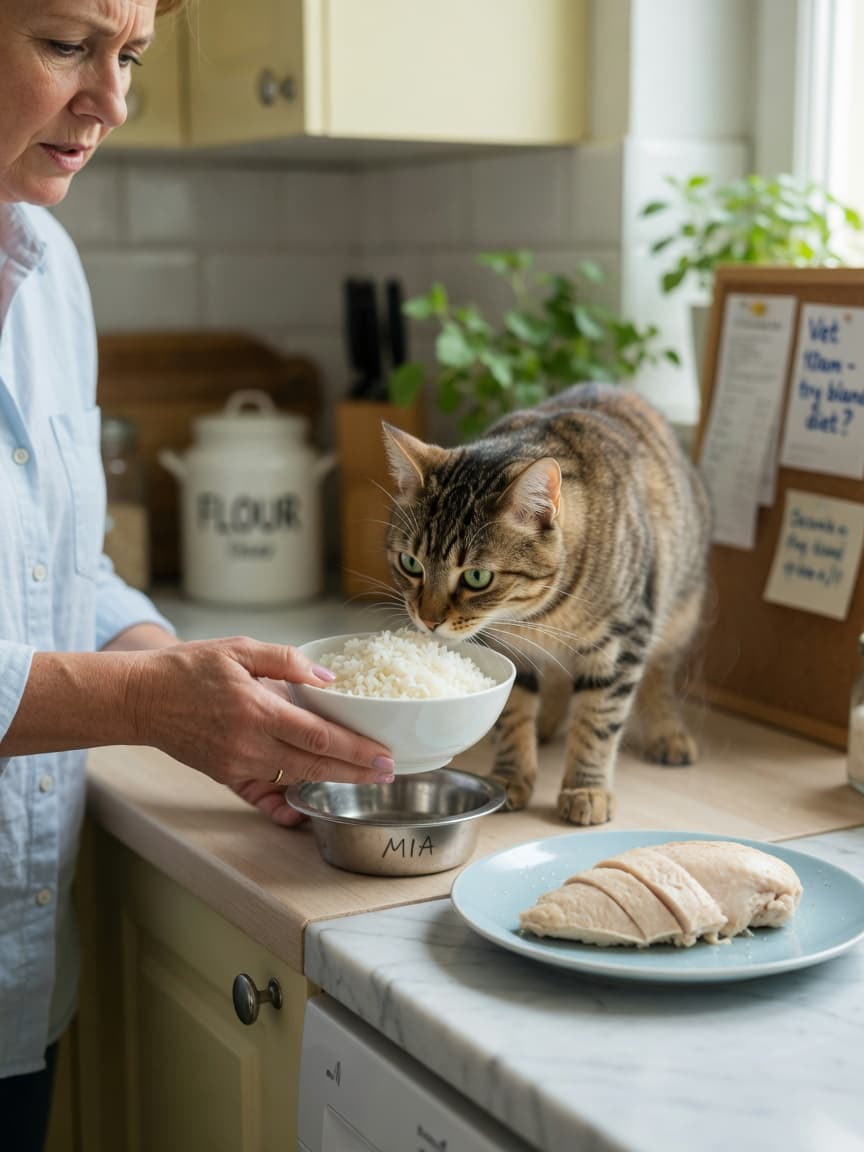
Can Cats Eat Rice? What Vets Say About This Common Bland Food
Plain cooked white rice is not toxic to cats and is commonly used by veterinarians as part of a bland diet to help settle an upset stomach. However, rice provides no meaningful nutrition for cats as obligate carnivores, and it should never become a regular part of their diet. It is a short-term digestive aid, not a food. Brown rice is harder for cats to digest and is generally not recommended. Always serve rice plain, with no salt, butter, sauces, or seasonings.
The Obligate Carnivore Problem With Grains
To understand why rice occupies such a limited role in feline nutrition, you first need to understand what cats are built to eat. Cats are obligate carnivores — a classification that goes beyond dietary preference. Their metabolism is fundamentally structured around animal protein and fat. They have a reduced ability to digest carbohydrates compared to dogs and humans, lower levels of the enzymes needed to break down plant starches, and no dietary requirement for any grain-based food whatsoever.
In the wild, a cat's entire carbohydrate intake comes from trace amounts in the stomach contents of prey animals. This amounts to roughly 1–2% of total calories. By contrast, many commercial dry cat foods contain 25–40% carbohydrates — and the cat's body manages, but not optimally. Rice in particular offers a cat essentially nothing beyond empty starch calories. There are no amino acids it cannot get from meat, no vitamins it cannot get from animal tissue, and no fiber benefit comparable to what pumpkin provides.
So why do vets recommend it? Because when a cat's gut is inflamed, stressed, or recovering from vomiting and diarrhea, a small amount of a highly digestible, low-fat, low-residue carbohydrate can help calm the system. It is not about nutrition — it is about giving the gastrointestinal tract a break.
The Bland Diet: Why Rice Gets Used
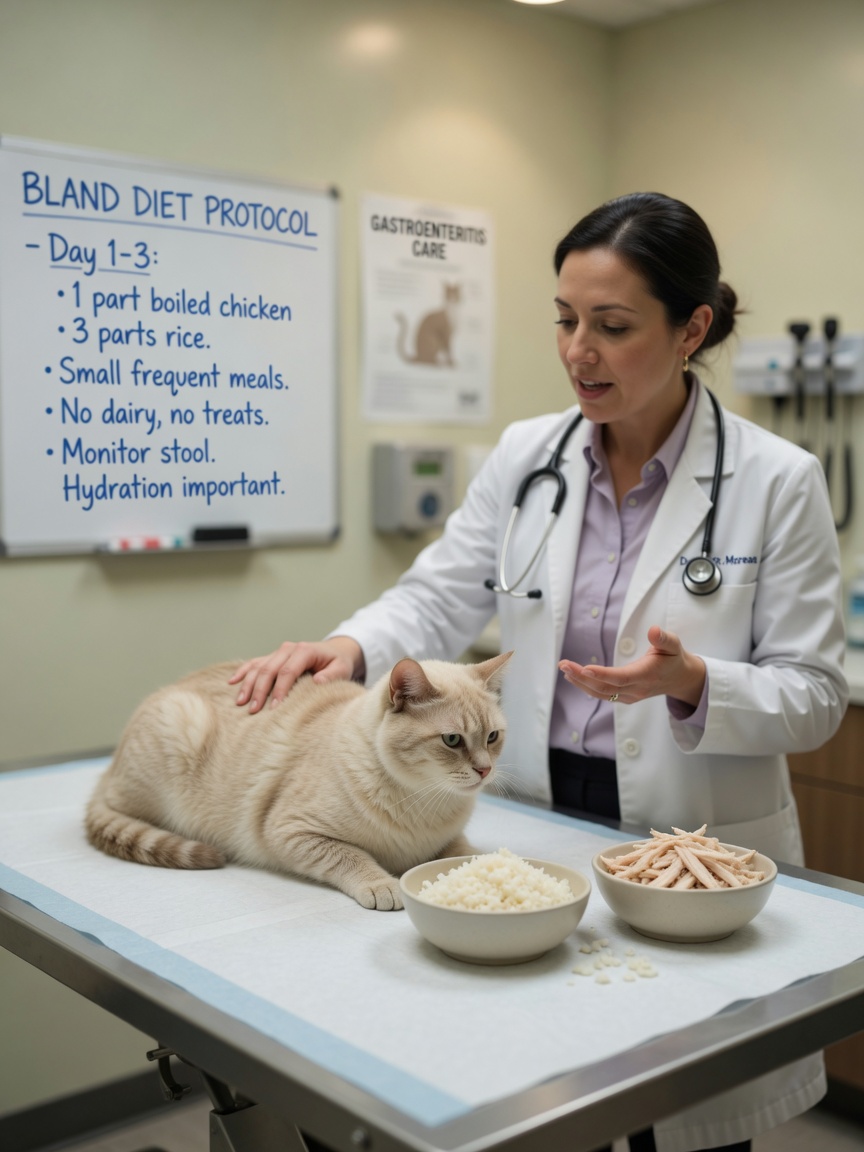
The classic veterinary bland diet for cats experiencing mild gastrointestinal upset combines a lean protein source — typically plain boiled chicken breast or white fish — with a small amount of plain cooked white rice. The ratio is usually around 3:1 or 4:1 in favor of the protein. The rice contributes easy-to-digest carbohydrate that adds a bit of bulk without demanding much from a taxed digestive system.
This approach works well for short-term issues: a cat that vomited once or twice, a cat with loose stools after eating something unusual, or a cat recovering from a mild gastrointestinal infection. It is not intended for ongoing use. After 48–72 hours, the cat should be transitioned back to its normal food.
If your cat is not improving on a bland diet within 24–48 hours, or if symptoms worsen, contact your veterinarian. Persistent vomiting or diarrhea can lead to dangerous dehydration in cats very quickly.
White Rice vs. Brown Rice for Cats
White rice and brown rice are the same grain at different stages of processing. Brown rice retains its outer bran and germ layers, which gives it more fiber, more micronutrients, and a lower glycemic index than white rice. For humans, this makes brown rice the healthier choice. For cats, the opposite logic applies.
Cats cannot digest fiber-dense plant material efficiently. The extra fiber and compounds in brown rice can actually cause more gastrointestinal irritation, not less. White rice, having been milled to remove the bran layer, is more digestible for cats precisely because it has less of what makes brown rice "healthier" for people. For the purpose of a feline bland diet, white rice is the appropriate choice.
That said, even white rice should be given in small amounts — a tablespoon or two mixed into a serving of protein is plenty. More than that tips the balance away from the protein that cats genuinely need.
How to Prepare Rice for Your Cat
Preparation is simple and must stay simple:
- Cook white rice in plain water until fully soft and well-cooked. The softer, the better — it will be easier to digest.
- Allow it to cool completely before serving. Hot food can burn a cat's mouth and esophagus.
- Add no salt, no butter, no broth (unless it is a plain, sodium-free, onion-free broth), no oil, and no seasonings of any kind.
- Mix a small spoonful into the cat's main protein serving rather than offering it separately.
- Serve fresh. Do not refrigerate cooked rice for more than a day before serving, and discard any uneaten portion.
Can Rice Be a Regular Part of a Cat's Diet?
No. Rice should not be a regular component of your cat's meals. Some budget commercial cat foods use rice or other grains as fillers to reduce the cost of production, but this is a compromise driven by economics rather than feline nutritional science. A cat fed a diet where a substantial portion of calories comes from rice or other grains over the long term may develop nutritional imbalances, gain weight due to excess carbohydrates, or experience chronic digestive issues.
If you are cooking for your cat at home, consult a board-certified veterinary nutritionist to ensure the diet is complete and balanced. A homemade diet based primarily on lean protein with no supplementation is also risky — cats have very specific requirements for taurine, arachidonic acid, preformed vitamin A, and niacin that cannot be adequately sourced from plant foods.
Ver alimentos para gatos en Zooplus →Signs That Rice Is Not Helping Your Cat
If you have introduced plain rice and boiled chicken as a bland diet and your cat is showing any of the following, stop and contact your vet:
- Vomiting continues or worsens after 12–24 hours
- Diarrhea becomes bloody or very watery
- The cat refuses to eat at all for more than 24 hours
- Signs of lethargy, weakness, or hiding
- Visible abdominal pain or distension
- Loss of skin elasticity (a sign of dehydration)
These symptoms can indicate something more serious than a passing stomach upset — including pancreatitis, intestinal obstruction, or parasitic infection — all of which require prompt veterinary attention.
Ver alimentos para gatos en Zooplus →- Plain cooked white rice is safe for cats in small amounts and is used in veterinary bland diets for upset stomachs.
- Rice offers no nutritional value to cats as obligate carnivores — it is a digestive tool, not a food.
- Brown rice is harder to digest than white rice and is not the preferred choice for cats.
- Never add salt, butter, or seasonings. Rice must be served plain.
- The bland diet is short-term (48–72 hours maximum). After that, transition back to normal food.
- Rice should never become a dietary staple. High-quality animal protein must remain the core of a cat's nutrition.
- Persistent symptoms require a veterinarian, not more bland food.
References
- Verbrugghe A, Bakovic M. "Peculiarities of one-carbon metabolism in the strict carnivore, the domestic cat." Nutrients. 2013;5(7):2811–2835. PMID: 23873295.
- Jergens AE. "Feline idiopathic inflammatory bowel disease: what we know and what remains to be unraveled." J Feline Med Surg. 2012;14(7):445–458. PMID: 22718563.
- Beynen AC, Baer DJ, Hof MH. "Commercial petfood for cats and dogs: the macronutrient composition differs from prey." J Anim Physiol Anim Nutr (Berl). 2009.