
ForPetsHealthcare
Cats

What Can Cats Eat? Safe Human Foods & Toxic Ingredients

By Julia WrenfieldUpdated August 4, 20264 min read
Evidence-based · Sources checked
{"en": "Cat sitting near safe human foods like cooked chicken and vegetables, with toxic items separated to show what cats can and cannot eat", "es": "Gato sentado cerca de alimentos seguros para humanos como pollo cocido y verduras, con art\u00edculos t\u00f3xicos separados", "fr": "Chat assis pr\u00e8s d'aliments s\u00fbrs pour humains comme du poulet cuit et des l\u00e9gumes, avec des articles toxiques s\u00e9par\u00e9s", "de": "Katze sitzt neben sicheren menschlichen Lebensmitteln wie gekochtem Huhn und Gem\u00fcse, mit giftigen Gegenst\u00e4nden getrennt", "nl": "Kat zittend naast veilig menselijk voedsel zoals gekookt kip en groenten, met giftige items gescheiden", "pt": "Gato sentado perto de alimentos humanos seguros como frango cozido e vegetais, com itens t\u00f3xicos separados", "it": "Gatto seduto vicino a cibi umani sicuri come pollo cotto e verdure, con articoli tossici separati"}

As a cat owner, you've probably wondered whether it's safe to share your meals with your feline friend. While cats are obligate carnivores with specific nutritional needs, several human foods can be offered as occasional treats—and just as importantly, many common household items can cause serious harm. Understanding what's safe and what's dangerous is essential for keeping your cat healthy and preventing accidental poisoning.

Safe Human Foods for Cats

Cats can enjoy a variety of human foods in small quantities, provided they're prepared plainly without seasoning, salt, or added fats:

  • Cooked chicken and turkey – excellent protein sources, completely safe when unseasoned
  • Cooked fish – rich in omega-3 fatty acids; offer occasionally rather than regularly
  • Eggs – a complete protein; serve boiled or scrambled without butter or seasoning
  • Small amounts of cooked pumpkin – beneficial for digestive health
  • Carrots – can be given raw or cooked; low-calorie treat option
  • Watermelon – hydrating and safe in small pieces, without seeds
  • Apples – remove seeds first, as they contain trace amounts of cyanide
  • Plain rice or pasta – digestible carbohydrates for occasional treats

Always introduce new foods gradually and in very small portions to monitor for any adverse reactions.

Strictly Toxic Foods to Avoid
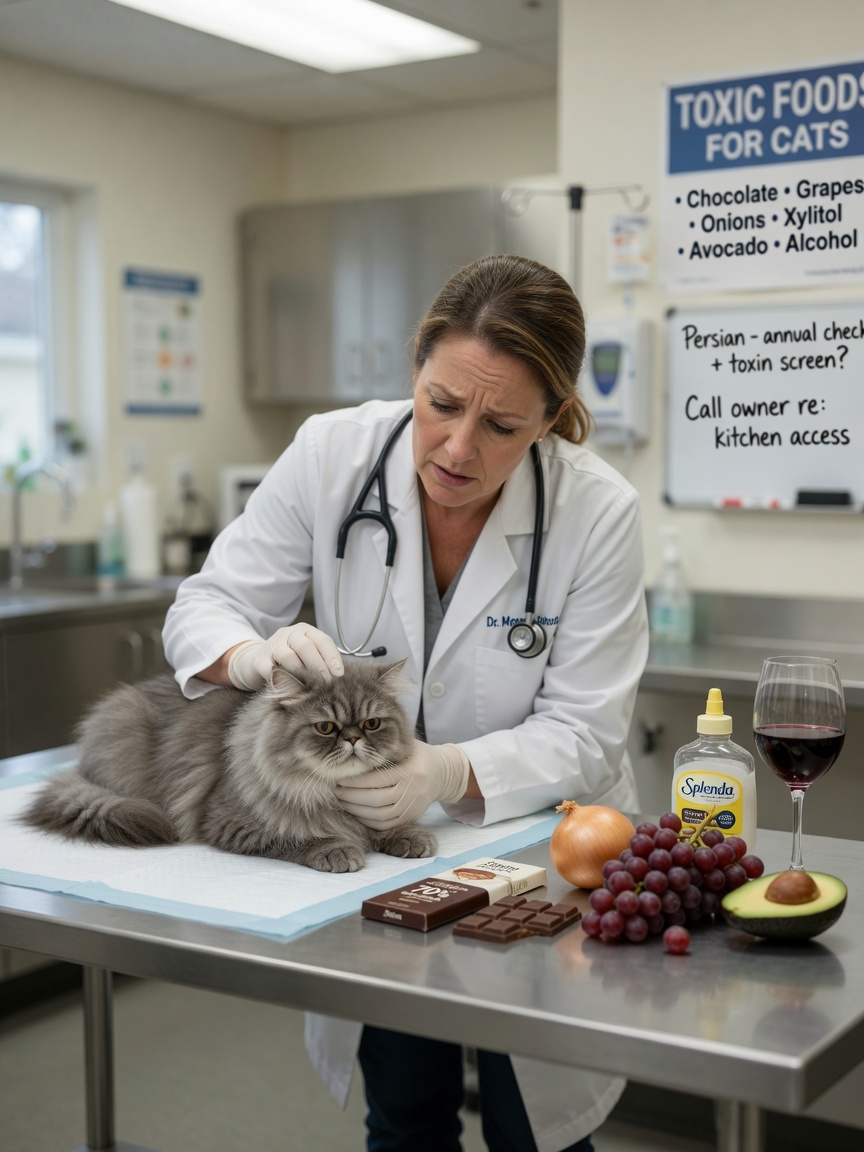
Veterinarian examining a cat with toxic foods displayed on clinic counter including chocolate, onion, grapes, avocado, and wine

Several human foods are genuinely dangerous for cats and should never be offered, even in tiny amounts:

  • Chocolate and caffeine – contain theobromine and caffeine, which can cause tremors, seizures, and heart problems
  • Onions and garlic – destroy red blood cells and cause haemolytic anaemia, whether raw, cooked, or powdered
  • Grapes and raisins – cause acute kidney failure; the exact toxic compound remains unknown
  • Xylitol – an artificial sweetener found in sugar-free products that causes dangerous drops in blood sugar and liver damage
  • Avocado – contains persin, which can cause vomiting and diarrhoea
  • Alcohol – even small amounts cause intoxication, liver damage, and respiratory problems
  • Raw dough and yeast – expand in the stomach and can cause bloating and alcohol production
  • Raw fish – may contain parasites and thiaminase, which destroys vitamin B1

Foods Requiring Caution

Some foods aren't strictly toxic but should be given only occasionally and in moderation:

  • Dairy products – most adult cats are lactose intolerant; small amounts of cheese or yoghurt may be tolerated
  • Tuna – safe occasionally but shouldn't become a dietary staple due to mercury concerns and potential thiamine deficiency
  • Nuts, particularly macadamia – high in fat and can cause digestive upset or pancreatitis
  • Tomatoes – unripe tomatoes are potentially toxic; ripe ones are safer but offer little nutritional benefit

Emergency Action: What to Do If Your Cat Eats Something Toxic

If you suspect your cat has ingested a toxic substance, contact your veterinary surgery immediately, even if symptoms haven't appeared yet. Some toxins work over hours or days. Have the following information ready: what was eaten, approximately how much, and when. Your vet may induce vomiting or recommend activated charcoal, depending on the substance.

Key Takeaways for Feeding Your Cat

Your cat's primary nutrition should come from high-quality cat food specifically formulated to meet their unique needs as obligate carnivores. Human foods should account for no more than 10% of daily caloric intake and should never replace complete and balanced cat nutrition. When in doubt about whether a food is safe, consult your veterinary surgeon before offering it. Remember that cats have different metabolic requirements from humans and dogs, so what's safe for your golden retriever may be dangerous for your cat. By understanding safe and toxic foods, you can confidently share moments with your feline companion while protecting their health and wellbeing.

#what can cats eat safe human foods toxic ingredients#cat health#feline nutrition#pet safety#toxic plants pets#forpetshealthcare

Sources & further reading

This article is based on peer-reviewed veterinary research and reputable animal-health sources. Explore the underlying science in our Research Library.

Related articles

Can Cats Be Allergic to Dogs?

Many multi-pet households wonder whether their feline companions can develop allergies to their canine housemates. The simple answer is yes—cats can indeed be allergic to dogs, though it's far less common than you might think. Understanding the nature of these allergies and how to manage them is cru…

Read more →

What Vaccinations Does My Kitten Need?

Bringing a new kitten into your home is an exciting time, but it also comes with important responsibilities—and vaccination is one of the most critical decisions you'll make for their health. Kittens are particularly vulnerable to infectious diseases during their early weeks, which is why a proper v…

Read more →

How to Kitten Proof Your Home

Bringing a new kitten into your home is an exciting time, but it also comes with significant responsibilities. Kittens are naturally curious, energetic, and prone to getting into trouble as they explore their new environment. Unlike adult cats, kittens lack the experience to recognise genuine danger…

Read more →

How to Care for a Sick Kitten

Caring for a sick kitten can be stressful, especially if you're a first-time cat parent. Young kittens are vulnerable to various illnesses, from viral infections to parasites, and recognising the signs early is crucial for their recovery. This guide will help you understand the essentials of kitten …

Read more →

Can Cats Have Blueberries? Is It Safe?

If you've ever wondered whether your feline friend can enjoy the same healthy snacks you do, you're not alone. Blueberries are a nutritional powerhouse for humans, packed with antioxidants and vitamins. But when it comes to our cats, the rules are quite different. The good news is that yes, cats can…

Read more →

Can Cats Get Colds?

If you've noticed your cat sneezing, coughing, or seeming under the weather, you might be wondering whether cats can actually catch a cold like humans do. The short answer is yes—cats absolutely can get colds, though their "feline cold" isn't quite the same as what we experience. Understanding how c…

Read more →
Disclaimer:This article is for informational purposes only and does not constitute veterinary advice. Always consult a qualified veterinarian for your pet's health concerns.

Free newsletter

Pet health tips, straight to your inbox

Weekly science-backed advice for dog & cat owners. No spam, unsubscribe anytime.

What Can Cats Eat? Safe Human Foods & Toxic Ingredients | ForPetsHealthcare