ForPetsHealthcare
Cats

Can Cats Have Blueberries? Is It Safe?

By Julia WrenfieldUpdated September 11, 20264 min read
Evidence-based · Sources checked
{"en": "Cat sniffing fresh blueberries on a white surface, exploring safe fruit treat options", "es": "Gato olfateando ar\u00e1ndanos frescos sobre una superficie blanca, explorando opciones seguras de frutas", "fr": "Chat renifle des myrtilles fra\u00eeches sur une surface blanche, explorant les options de fruits s\u00fbrs", "de": "Katze schn\u00fcffelt an frischen Blaubeeren auf wei\u00dfer Oberfl\u00e4che, erkundet sichere Fruchtoptionen", "nl": "Kat snuffelt aan verse blauwe bessen op wit oppervlak, verkent veilige fruitopties", "pt": "Gato cheirando mirtilos frescos em superf\u00edcie branca, explorando op\u00e7\u00f5es seguras de frutas", "it": "Gatto che annusa mirtilli freschi su superficie bianca, esplora opzioni sicure di frutta"}

If you've ever wondered whether your feline friend can enjoy the same healthy snacks you do, you're not alone. Blueberries are a nutritional powerhouse for humans, packed with antioxidants and vitamins. But when it comes to our cats, the rules are quite different. The good news is that yes, cats can have blueberries in moderation, and they're generally safe. However, understanding how to offer them properly and recognising when they might cause issues is essential for responsible pet ownership.

Are Blueberries Toxic to Cats?

Blueberries are non-toxic to cats, which means you won't need to rush to your veterinary surgeon if your cat steals a berry or two from your breakfast bowl. Unlike some foods that are genuinely dangerous for felines—such as grapes, raisins, chocolate, and onions—blueberries don't contain any compounds that are inherently poisonous to cats.

This is reassuring news for cat owners who enjoy these fruits and want to share their nutritional benefits with their pets. However, non-toxic doesn't automatically mean they're ideal for cats, and there are several considerations to keep in mind.

Nutritional Value for Cats

Whilst blueberries do contain beneficial antioxidants, vitamins, and fibre, cats have very different nutritional requirements from humans. Cats are obligate carnivores, meaning their bodies are designed to thrive on a diet primarily composed of animal proteins and fats. They have little nutritional need for the antioxidants found in blueberries.

Additionally, cats lack certain taste receptors for sweetness, so they won't derive the same enjoyment from these berries that you might. Any health benefits they could receive are minimal compared to what a well-balanced, species-appropriate diet provides.

How to Safely Offer Blueberries to Your Cat
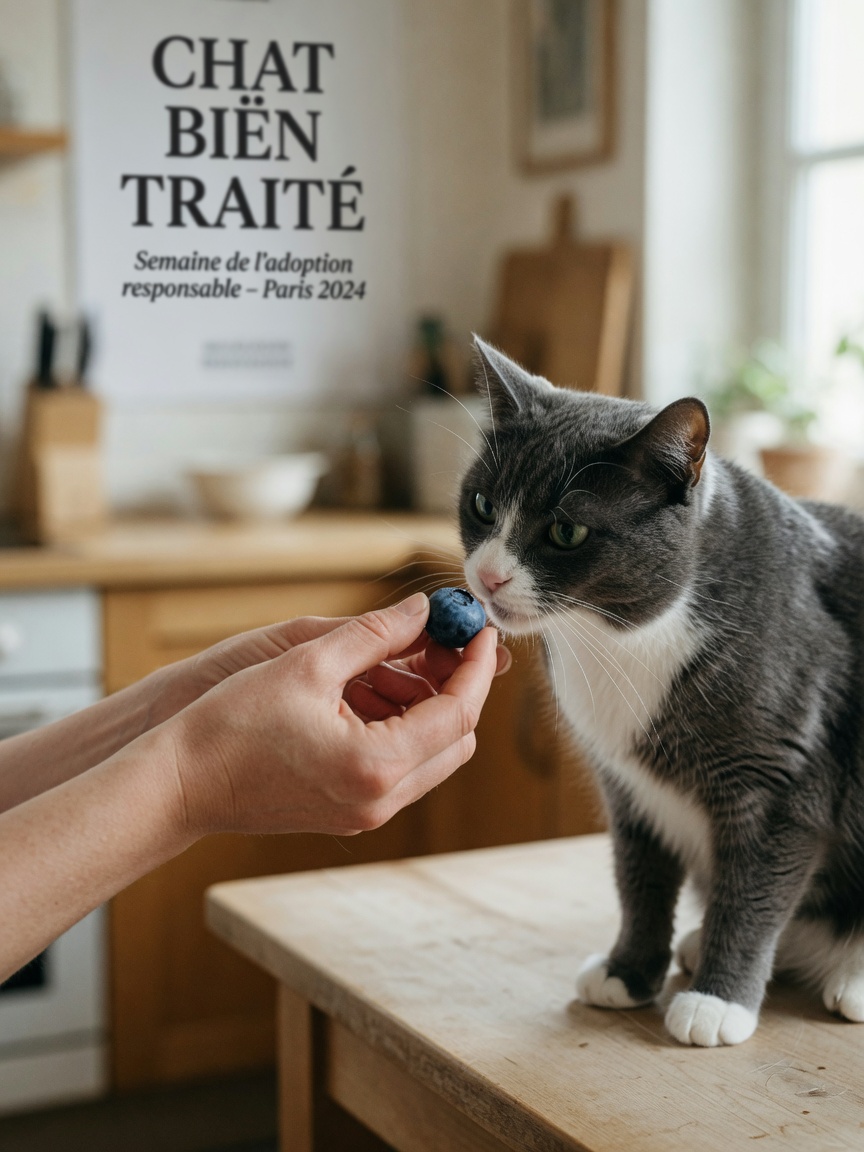
Cat owner's hands offering a single blueberry to an attentive cat at a kitchen table

If you'd like to give your cat a blueberry as an occasional treat, follow these guidelines:

  • Offer only one or two berries at a time
  • Wash them thoroughly to remove any pesticides or contaminants
  • Remove the berry entirely—don't leave it in the food bowl where it might be forgotten
  • Observe your cat for any digestive upset over the following hours
  • Never make blueberries a regular part of their diet
  • Ensure treats (including blueberries) comprise no more than 10% of their daily caloric intake

Potential Digestive Issues

Even though blueberries are safe, some cats may experience mild digestive upset when consuming them. Their feline digestive systems aren't adapted to processing plant-based foods in significant quantities. Watch for signs such as:

  • Loose stools or diarrhoea
  • Vomiting
  • Reduced appetite
  • Abdominal discomfort

If your cat shows any of these symptoms after eating blueberries, avoid offering them again and contact your veterinary surgeon if symptoms persist.

Better Alternative Treats for Cats

Rather than focusing on human foods, consider treats specifically formulated for cats. Options such as small portions of cooked chicken, turkey, or commercial cat treats are far more appropriate and satisfying for your feline companion. These align better with their carnivorous nature and nutritional requirements.

Key Takeaways

Blueberries are safe for cats in very small quantities, but they offer minimal nutritional benefit and aren't necessary for a healthy feline diet. If you choose to offer one occasionally, do so sparingly and monitor for any adverse reactions. Focus instead on providing your cat with high-quality commercial cat food and species-appropriate treats that support their unique dietary needs. When in doubt, consult your veterinary surgeon—they can provide personalised advice based on your individual cat's health status and dietary requirements.

#can cats have blueberries is it safe#cat health#feline nutrition#forpetshealthcare

Sources & further reading

This article is based on peer-reviewed veterinary research and reputable animal-health sources. Explore the underlying science in our Research Library.

Related articles

Can Cats Be Allergic to Dogs?

Many multi-pet households wonder whether their feline companions can develop allergies to their canine housemates. The simple answer is yes—cats can indeed be allergic to dogs, though it's far less common than you might think. Understanding the nature of these allergies and how to manage them is cru…

Read more →

What Vaccinations Does My Kitten Need?

Bringing a new kitten into your home is an exciting time, but it also comes with important responsibilities—and vaccination is one of the most critical decisions you'll make for their health. Kittens are particularly vulnerable to infectious diseases during their early weeks, which is why a proper v…

Read more →

What Can Cats Eat? Safe Human Foods & Toxic Ingredients

As a cat owner, you've probably wondered whether it's safe to share your meals with your feline friend. While cats are obligate carnivores with specific nutritional needs, several human foods can be offered as occasional treats—and just as importantly, many common household items can cause serious h…

Read more →

How to Kitten Proof Your Home

Bringing a new kitten into your home is an exciting time, but it also comes with significant responsibilities. Kittens are naturally curious, energetic, and prone to getting into trouble as they explore their new environment. Unlike adult cats, kittens lack the experience to recognise genuine danger…

Read more →

How to Care for a Sick Kitten

Caring for a sick kitten can be stressful, especially if you're a first-time cat parent. Young kittens are vulnerable to various illnesses, from viral infections to parasites, and recognising the signs early is crucial for their recovery. This guide will help you understand the essentials of kitten …

Read more →

Can Cats Get Colds?

If you've noticed your cat sneezing, coughing, or seeming under the weather, you might be wondering whether cats can actually catch a cold like humans do. The short answer is yes—cats absolutely can get colds, though their "feline cold" isn't quite the same as what we experience. Understanding how c…

Read more →
Disclaimer:This article is for informational purposes only and does not constitute veterinary advice. Always consult a qualified veterinarian for your pet's health concerns.

Free newsletter

Pet health tips, straight to your inbox

Weekly science-backed advice for dog & cat owners. No spam, unsubscribe anytime.