

10 Dog Toys That Are Actually Dangerous (And What to Use Instead)
Not all dog toys are created equal. The pet industry is largely unregulated when it comes to toy safety standards, which means dangerous products can — and do — reach store shelves. As a Pet Wellness Researcher who works closely with veterinary teams, I have seen the aftermath of poor toy choices: intestinal blockages requiring surgery, broken carnassial teeth needing extraction, and chemical burns on sensitive gums. Here are the ten worst offenders, with concrete alternatives for each.
1. Cheap Squeaky Toys With Unprotected Squeakers
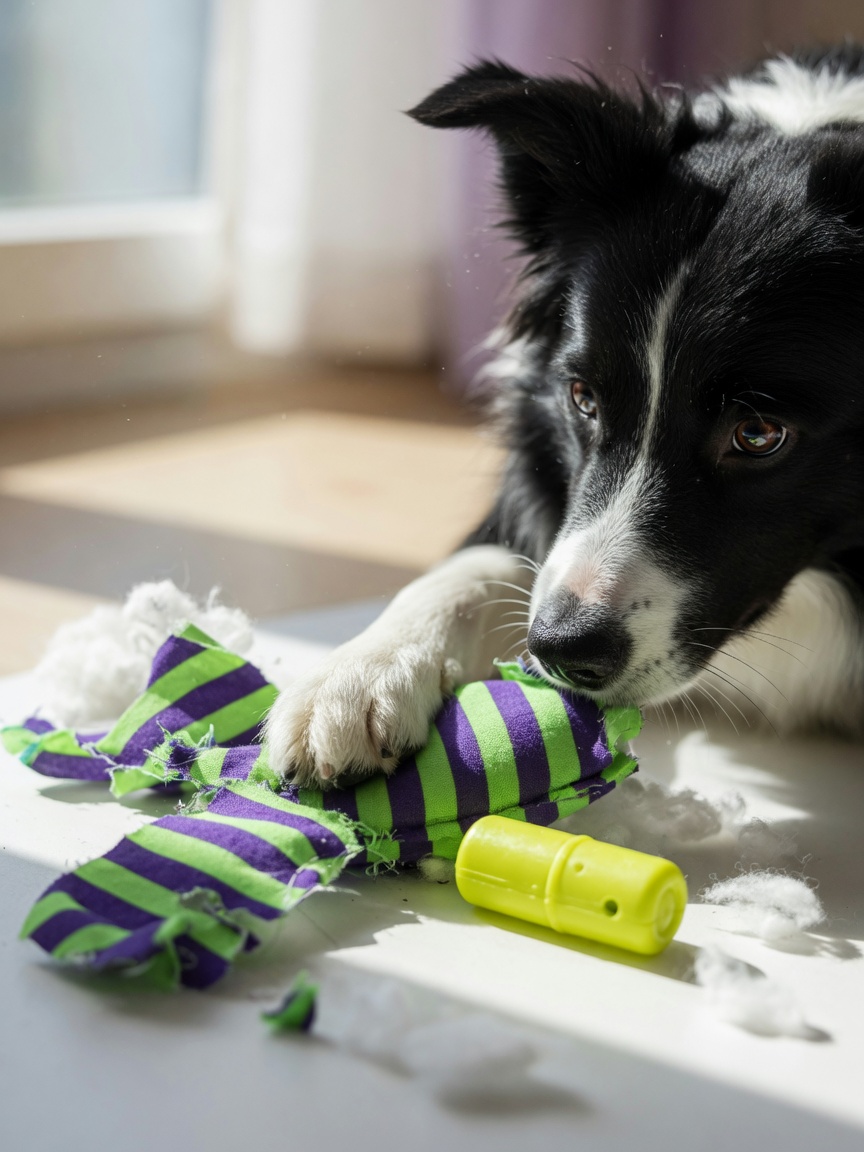
The danger: Most low-cost squeaky toys have a small plastic squeaker sewn loosely inside thin fabric. Dogs figure out within minutes how to extract it. That squeaker is an immediate choking hazard and, if swallowed, can cause a life-threatening intestinal obstruction.
Safe alternative: Look for toys with the squeaker encased in a thick rubber outer layer — brands like KONG use a multi-layer system that makes extraction nearly impossible for most dogs.
2. Rope Toys (For Unsupervised Chewing)
The danger: Rope toys are great for supervised tug-of-war sessions, but they unravel. A dog left alone with a rope toy ingests individual strands, which can wrap around intestinal tissue — a "linear foreign body" that vets describe as one of the most surgically complex emergencies they treat.
Safe alternative: Use rope toys only during active, supervised play. For chewing sessions, substitute a solid rubber chew toy.
3. Tennis Balls
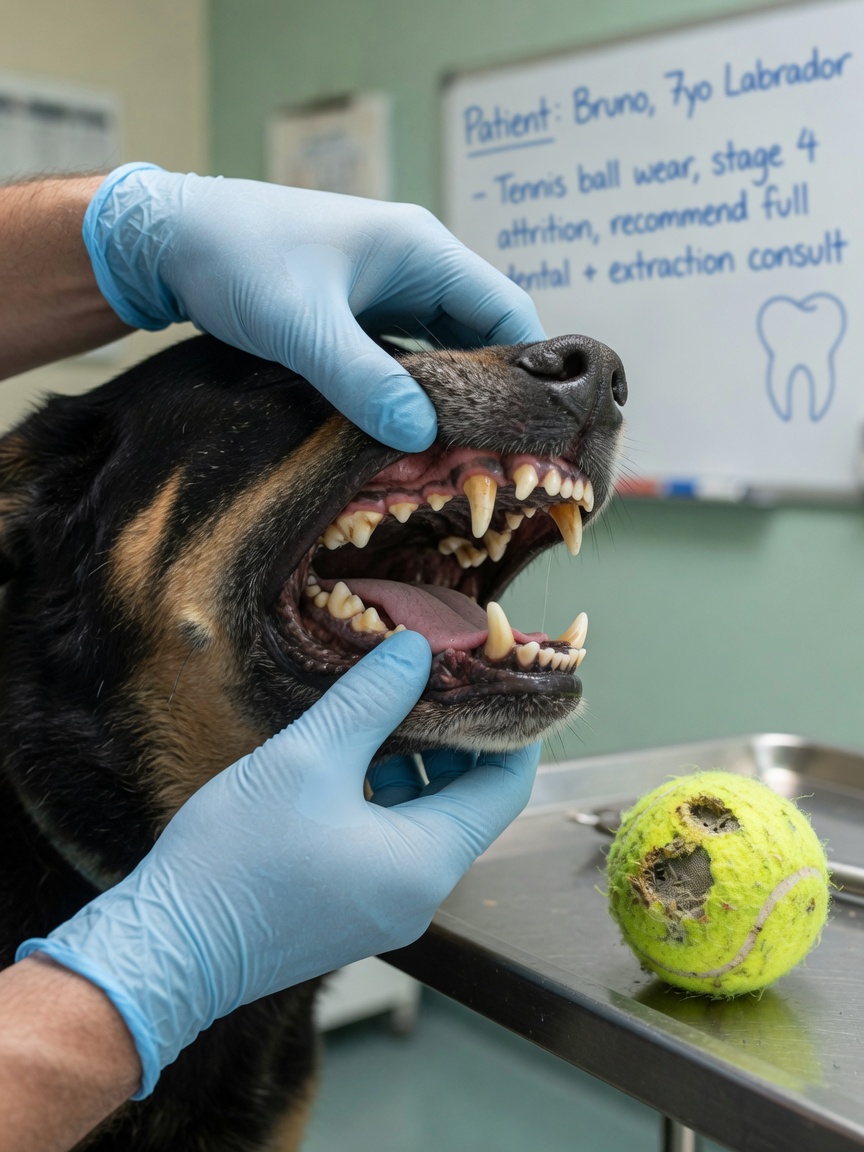
The danger: Standard tennis balls have a fuzzy coating that acts like sandpaper on enamel. Over time, especially in dogs that obsessively chew them, this causes severe dental wear. Additionally, some balls are sized too small for large breeds and can get lodged in the throat.
Safe alternative: Fetch-specific dog balls made without abrasive fuzz coating. Always size up — the ball should never fit entirely in your dog's mouth.
4. Rawhide Chews
The danger: Rawhide is processed with chemical preservatives, bleach, and artificial flavouring. It softens as dogs chew and breaks into large chunks that can cause choking and GI obstruction. Studies have detected traces of arsenic, lead, and formaldehyde in some products.
Safe alternative: Bully sticks (pizzle sticks), yak milk chews, or vet-approved rubber chews. These digest safely and do not break into dangerous chunks.
5. Toys With Button Eyes or Glued-On Parts
The danger: Plush toys designed to look cute — with plastic button eyes, ribbons, bells, or embroidered decorations — are appealing to dogs precisely because those parts wiggle and squeak. They are also the first things a dog removes, and every one of them is a potential obstruction.
Safe alternative: Choose plush toys from pet-specific brands that use fully embroidered eyes and have no removable parts. Check the label for "safe for heavy chewers."
6. Rubber Toys With Hollow Cavities Too Large to Clean
The danger: Treat-dispensing toys with deep cavities that can't be adequately cleaned harbour dangerous mould and bacteria. Dogs repeatedly licking old, rancid residue from an uncleaned toy is a genuine health risk — particularly for immunocompromised animals.
Safe alternative: Only use treat toys you can fully disassemble and run through a dishwasher. Check that all internal surfaces are reachable with a bottle brush.
7. Hard Nylon or Antler Chews
The danger: Antlers and hard nylon bones are marketed as virtually indestructible — but that hardness is the problem. Veterinary dentists use a simple rule: if you cannot make a dent in a chew with your thumbnail, it is too hard for a dog's teeth. Slab fractures of the carnassial teeth are common and extremely painful.
Safe alternative: Rubber chews that have some give, or softer natural chews like sweet potato strips or dehydrated meat treats.
8. Toys With Long Strings or Cords
The danger: Wand toys, cat teasers, and any toy on a string pose strangulation and intestinal hazards when left with a dog unsupervised. Strings can also wrap tightly around limbs, cutting off circulation.
Safe alternative: Wand toys are fine for supervised interactive play — just store them out of reach between sessions.
9. Toys Painted With Non-Pet-Safe Dyes
The danger: Many cheap imported toys use industrial dyes not tested for pet safety. Dogs mouth toys constantly, and prolonged exposure to toxic pigments — including some azo dyes and lead-based colourants — poses a real toxicity risk.
Safe alternative: Buy toys from brands that publish their safety testing data. Look for "non-toxic dyes" explicitly on the label, and favour natural, undyed materials.
10. Toys Sized for a Different Breed
The danger: A small toy given to a large dog is a choking hazard. A large toy given to a tiny dog can cause jaw strain or dental damage from over-stretching. Always match toy size to dog size — the toy should require effort to hold but never come close to fitting entirely in the mouth.
Safe alternative: Follow the manufacturer's breed-size guidelines and err on the side of larger when in doubt.
Ready to upgrade your dog's toy box? Zooplus stocks a wide range of tested, breed-appropriate toys from trusted brands — including KONG, Trixie, and West Paw. Shop safe dog toys at Zooplus and filter by dog size and chewing style.
Key Takeaways
- Rope toys, rawhide, and hard antler chews are among the most common causes of vet-visit injuries.
- Never leave a dog unsupervised with plush toys that have removable parts or rope toys.
- The thumbnail test: if you can't dent it with your nail, it's too hard for teeth.
- Match toy size to breed size — always go larger when in doubt.
- Clean treat-dispensing toys after every use to prevent dangerous mould buildup.
- Look for pet-specific safety certifications and non-toxic dye labelling.
Scientific References
- Gawor, J., Reiter, A. M., Jodkowska, K., Kurski, G., Wojtacki, M. P., & Kurek, A. (2006). Influence of diet on oral health in cats and dogs. Journal of Nutrition, 136(7 Suppl), 2021S–2023S. PMID: 16772485
- Hobson, H. P. (2004). Surgical management of dogs and cats with linear foreign bodies. Veterinary Medicine, 99(6), 515–528. PMID: 15473451