
What Is Taurine and Why Does It Matter?
Taurine is a sulphur-containing amino acid found in high concentrations in the heart, retina, brain, and skeletal muscle of mammals. Unlike most amino acids, taurine is not incorporated into proteins; instead, it performs a wide range of physiological functions on its own, including bile acid conjugation, antioxidant activity, osmoregulation, and calcium signalling within cardiac cells.
The critical distinction between species is one of biosynthesis. Dogs possess the enzymatic machinery — cysteine sulphinic acid decarboxylase (CSAD) — to synthesise taurine from the precursor amino acids methionine and cysteine, which means it is classified as conditionally essential in dogs: dietary intake is not always required, but certain circumstances can render biosynthesis insufficient. Cats, by contrast, have very low CSAD activity and cannot synthesise adequate quantities of taurine from dietary precursors. For cats, taurine is a true essential amino acid: it must be supplied in the diet at all times.
Key Roles of Taurine in the Body
Cardiac Function
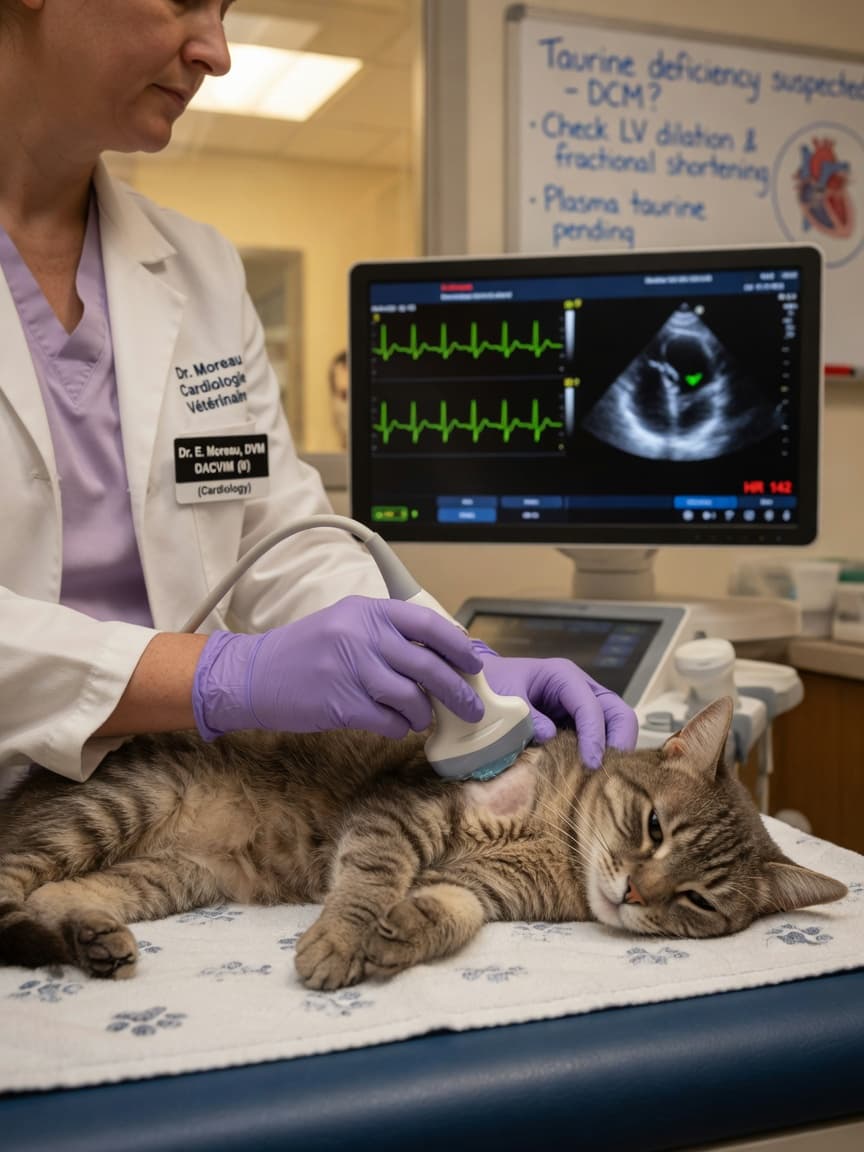
Taurine is the most abundant free amino acid in the heart. It regulates intracellular calcium concentrations, supports myocardial contractility, and protects cardiomyocytes from oxidative damage. Insufficient taurine leads to weakening of the heart muscle, a condition known as dilated cardiomyopathy (DCM), in which the heart enlarges and loses its ability to pump effectively.
Retinal Health
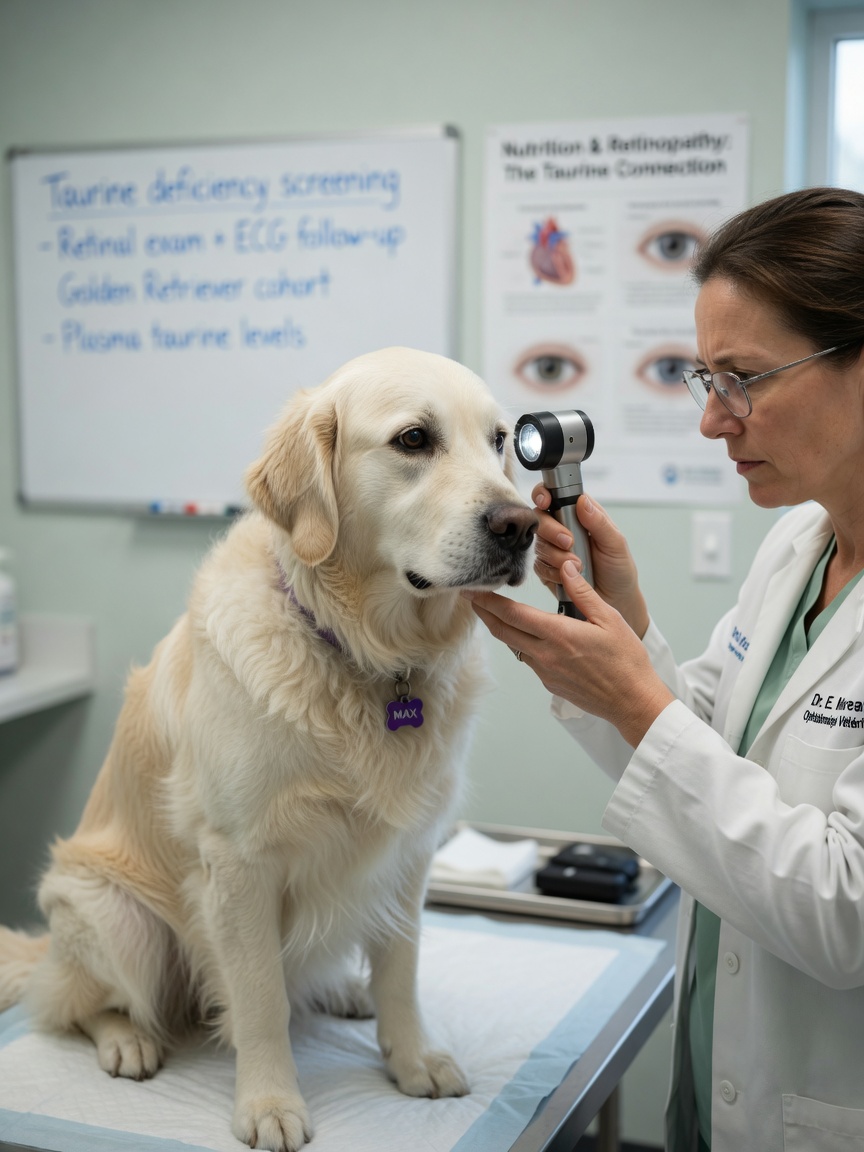
The retina contains extremely high concentrations of taurine, which protects photoreceptor cells from light-induced oxidative stress. In cats, taurine deficiency causes feline central retinal degeneration (FCRD), a progressive condition that leads to irreversible blindness if supplementation is not started early enough.
Bile Acid Conjugation and Reproductive Health
Taurine is required for conjugation of bile acids in cats (unlike dogs, which can use glycine as an alternative). Without adequate taurine, fat digestion is impaired. Taurine deficiency has also been linked to foetal resorption, poor neonatal survival, and developmental abnormalities in kittens born to deficient queens.
Clinical Signs of Taurine Deficiency
In Cats
- Progressive vision loss progressing to complete blindness (FCRD)
- Dilated cardiomyopathy: exercise intolerance, laboured breathing, pleural effusion
- Reproductive failure in breeding queens
- Poor neonatal development in kittens
In Dogs
- Dilated cardiomyopathy: coughing, exercise intolerance, abdominal distension, syncope
- Generalised weakness and lethargy
- Cardiac arrhythmias detectable on ECG
It is important to note that DCM in dogs has multiple causes, and taurine deficiency is only one of them. Breed predisposition (Dobermanns, Great Danes, Irish Wolfhounds) accounts for many cases independently of diet.
The FDA Investigation: Grain-Free Diets and DCM in Dogs

Between 2018 and 2019, the United States Food and Drug Administration (FDA) published a series of alerts investigating a potential association between grain-free diets — particularly those high in legumes such as peas, lentils, and chickpeas — and an increased incidence of DCM in dog breeds not typically predisposed to the condition, including Golden Retrievers and Labrador Retrievers.
The proposed mechanisms include reduced taurine bioavailability: legume-heavy diets may impair absorption of taurine precursors, increase taurine excretion via altered fibre fermentation, or provide insufficient methionine and cysteine for adequate biosynthesis. However, as of the time of writing, a definitive causal relationship has not been established, and the FDA investigation remains ongoing. The evidence should be regarded as preliminary; veterinary cardiologists and nutritionists continue to monitor the situation.
Diagnosis
Taurine deficiency is confirmed through blood testing. Plasma taurine levels provide a snapshot of recent intake, whilst whole blood taurine reflects longer-term tissue stores. In cats, whole blood taurine below 200 nmol/mL is considered deficient; in dogs, values below 150 nmol/mL (whole blood) are suggestive of deficiency, though reference ranges vary between laboratories.
In dogs presenting with DCM, an echocardiogram is essential to assess cardiac function. Retinal examination and electroretinography are used to evaluate the extent of retinal degeneration in cats.
Treatment and Supplementation
The primary treatment for taurine deficiency is supplementation with taurine, typically at doses of 250–500 mg twice daily for cats and 500–1000 mg twice daily for dogs, though veterinary guidance is essential as requirements vary by body weight and severity of disease. Cardiac cases are managed alongside standard heart failure treatment, which may include diuretics, ACE inhibitors, and antiarrhythmic drugs.
Commercially available cardiac diets formulated to support taurine status include Royal Canin Cardiac and Hill's Prescription Diet h/d. These products are specifically designed for animals with established cardiac disease and provide elevated levels of taurine alongside other cardioprotective nutrients.
In cats with early-stage retinal degeneration, prompt supplementation can halt further deterioration, though damage already sustained is typically irreversible.
FEDIAF Guidelines and Commercial Diet Adequacy
The European Pet Food Industry Federation (FEDIAF) publishes nutritional guidelines for cats and dogs. For cats, FEDIAF specifies a minimum taurine requirement of 0.35 g per 100 g dry matter for canned food and 0.25 g per 100 g dry matter for dry diets, reflecting the reduced bioavailability of taurine in heat-processed foods. For dogs, taurine is not listed as a required additive in FEDIAF guidelines, as biosynthesis is assumed to be adequate when the diet contains sufficient methionine and cysteine.
Reputable commercial complete diets formulated to FEDIAF or AAFCO standards should provide adequate taurine for healthy cats. Owners of cats fed homemade diets must ensure taurine supplementation is included, as cooking destroys a significant proportion of taurine present in raw meat.
Which Diets Provide Adequate Taurine?
- Complete wet and dry commercial diets meeting FEDIAF standards are generally adequate for healthy cats
- High-meat diets (chicken, beef, fish) provide good natural taurine sources
- Homemade diets require taurine supplementation — consult a veterinary nutritionist
- For dogs on grain-free or legume-heavy diets, periodic monitoring of taurine levels and cardiac health is prudent, particularly in at-risk breeds
If you are concerned about your pet's taurine intake or notice any of the signs described in this article, speak with your veterinarian promptly. Early intervention significantly improves outcomes, particularly in cardiac and retinal disease.
Written by Julia Wrenfield, pet health writer at ForPetsHealthcare.com. This article is for informational purposes only and does not replace professional veterinary advice.