
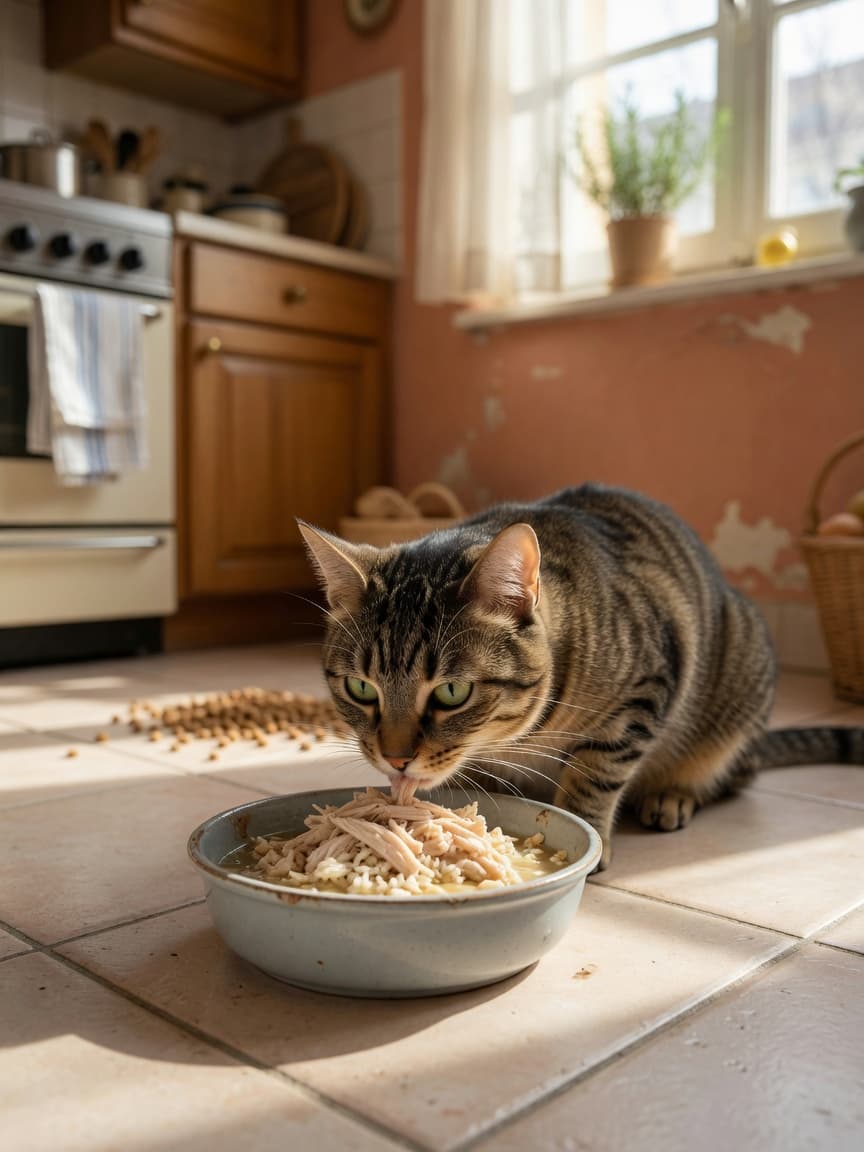
Can Cats Eat Chicken? Everything You Need to Know
Why Chicken Is a Natural Fit for Cats
Cats are obligate carnivores, meaning their bodies are evolutionarily designed to derive nutrition almost entirely from animal tissue. Unlike omnivores, cats lack the metabolic pathways to efficiently convert plant-based nutrients into usable forms. Chicken delivers what cats need most: complete animal protein packed with essential amino acids including taurine, arginine, and lysine — all critical to feline health.
Commercial cat foods frequently list chicken as the primary protein source for exactly this reason. Feeding plain cooked chicken as an occasional treat or food topper simply mirrors what your cat's biology is built for.
Cooked vs. Raw Chicken: What the Science Says
The debate around raw feeding is ongoing, but the risks of raw chicken are clear and well-documented. Raw poultry can harbor Salmonella, Campylobacter, and Listeria — bacteria that can cause serious gastrointestinal illness in cats and pose a significant cross-contamination risk to humans in the household, including children and immunocompromised individuals.
Cooking chicken to an internal temperature of at least 74°C (165°F) eliminates these pathogens without meaningfully degrading the protein or amino acid content. For the vast majority of pet owners, properly cooked chicken is the responsible choice.
If you are interested in raw or minimally processed diets, consult a board-certified veterinary nutritionist rather than introducing raw poultry without guidance.
What Parts of Chicken Are Safe?
Safe: Boneless breast, thigh, or leg meat — all cooked thoroughly and served plain.
Not safe: Chicken bones. Cooked chicken bones splinter easily into sharp fragments that can puncture your cat's esophagus, stomach, or intestines. This is a veterinary emergency. Raw bones are sometimes given under supervised raw-feeding protocols, but this carries its own risks and should not be done casually.
Not safe: Skin. Chicken skin is high in fat and often seasoned. Excess dietary fat can contribute to obesity and pancreatitis in cats.
Not safe: Seasoned or marinated chicken. Garlic, onion, salt, pepper, and many common herbs used in cooking are toxic or harmful to cats. Even small residual amounts of garlic or onion powder can cause oxidative damage to red blood cells, leading to hemolytic anemia.
How Much Chicken Can a Cat Eat?
Chicken should be treated as a supplement or treat, not the entirety of your cat's diet. Plain cooked chicken lacks the complete vitamin and mineral profile cats need long-term — particularly calcium, vitamin E, and other micronutrients supplied by complete commercial diets or carefully formulated homemade recipes.
A rough guideline: treats (including cooked chicken) should make up no more than 10% of your cat's daily caloric intake. For an average 4 kg adult cat eating around 200 kcal per day, that is roughly 20 kcal from treats — equivalent to about 15–20 grams of plain cooked chicken breast.
If you want to feed chicken as a larger portion of your cat's diet, work with a veterinary nutritionist to formulate a complete and balanced meal plan.
Serving Tips
- Always cook chicken thoroughly — no pink meat, no raw juices.
- Remove all bones before serving.
- Do not add any oil, butter, garlic, onion, salt, or spices.
- Let it cool to room temperature before offering it to your cat.
- Shred or cut into small pieces to reduce choking risk.
- Store leftovers in the refrigerator and use within 2 days.
Signs Your Cat May Have Eaten Something Harmful
If your cat ate seasoned or raw chicken and shows any of the following signs, contact your veterinarian promptly: vomiting, diarrhea, lethargy, pale or yellowish gums, excessive drooling, or loss of appetite. Bone ingestion that causes distress — gagging, pawing at the mouth, inability to swallow, or abdominal pain — is a veterinary emergency.
Ver alimentos para gatos en Zooplus →Choosing Quality Commercial Foods with Chicken
If you want chicken to be a regular part of your cat's nutrition rather than just an occasional treat, the simplest approach is choosing a high-quality commercial cat food with chicken as the primary ingredient. Look for products where a named meat source (chicken, chicken meal) appears first on the ingredient list, and avoid formulas that rely heavily on plant fillers as the primary protein source.
Complete commercial diets formulated to FEDIAF or AAFCO standards ensure your cat receives appropriate levels of taurine, arachidonic acid, vitamin A, and other nutrients that cats cannot synthesize from plant sources — nutrients that plain cooked chicken alone cannot provide in the right ratios.
- Cooked, plain, boneless chicken is safe and nutritious for cats.
- Raw chicken carries real bacterial risks — avoid it unless under expert veterinary guidance.
- Never feed cooked chicken bones — they splinter and can cause internal injury.
- No seasoning, garlic, onion, or salt — these are toxic to cats.
- Keep chicken to 10% or less of daily calories; it is not a complete diet on its own.
- As obligate carnivores, cats thrive on animal protein — chicken is a natural fit in moderation.
References
- Verbrugghe A, Bakovic M. "Peculiarities of one-carbon metabolism in the strict carnivore, the domestic cat (Felis catus)." Nutrients. 2013;5(7):2811–2835. PMID: 23873295.
- Schlesinger DP, Joffe DJ. "Raw food diets in companion animals: a critical review." Can Vet J. 2011;52(1):50–54. PMID: 21461207.
- National Research Council. Nutrient Requirements of Cats and Dogs. Washington, DC: National Academies Press; 2006. ISBN: 978-0309086288.