
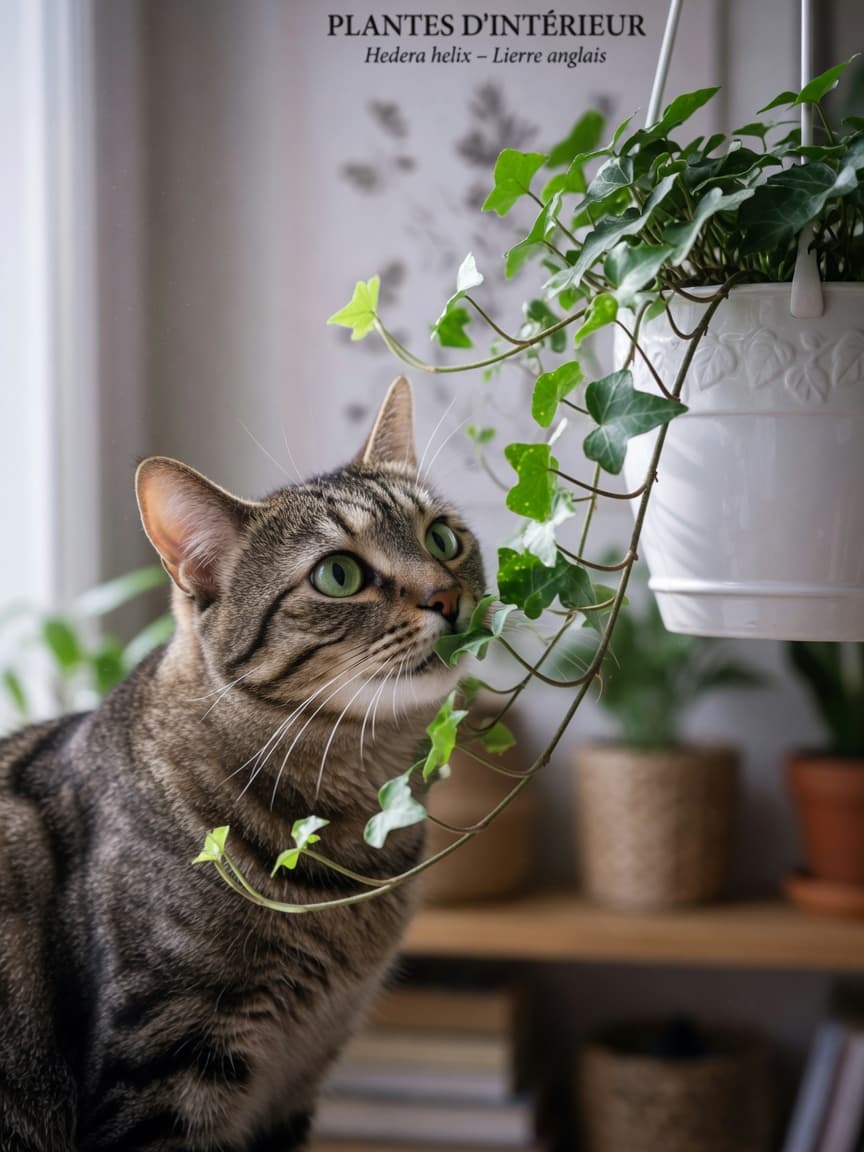
Is English Ivy Toxic to Cats?
Updated: June 2026
English Ivy: Everywhere, and Dangerous
English ivy is one of the most widespread plants in the world. As a climbing garden plant, it covers fences and walls across the United States, Europe, and beyond. As a houseplant, it drapes elegantly from hanging baskets and trails across shelves. In offices, schools, and hospitals, it is used for its lush appearance and supposed air-purifying qualities. The problem is that Hedera helix and related ivy species are legitimately toxic to cats — and to dogs — and their pervasiveness means that cat owners are constantly surrounded by them.
The toxins in English ivy are two primary categories of compounds:
Falcarinol — a polyacetylene compound found in the leaves and stems. Falcarinol is a known skin and mucous membrane irritant, and when ingested, it causes gastrointestinal inflammation and irritation. It is actually more concentrated in the leaves than in the berries — a fact that surprises many people who assume the berries are the main danger.
Triterpenoid saponins (hederagenin) — glycoside compounds that act as gastrointestinal irritants. Like the saponins found in aloe vera and snake plant, these compounds disrupt the integrity of the gastrointestinal mucosa, causing vomiting, diarrhea, and abdominal discomfort. In higher concentrations, they can contribute to neurological symptoms.
Together, these compounds make English ivy reliably toxic to cats, causing a clinical picture that ranges from mild GI upset to significant illness depending on the amount consumed.
Leaves vs. Berries: Which Is More Dangerous?
One of the most important and counterintuitive facts about English ivy toxicity is that the leaves are more toxic than the berries. Most people assume the reverse — that bright berries are the danger and the green leaves are relatively safe. This misconception can lead cat owners to underestimate the risk of indoor ivy plants, which produce leaves but not berries when grown as houseplants.
The berries are still toxic and should not be accessible to cats (or small children), but a cat chewing on the trailing leaves of an indoor ivy plant is at real risk of toxicity, regardless of whether berries are present.
Symptoms of English Ivy Poisoning in Cats
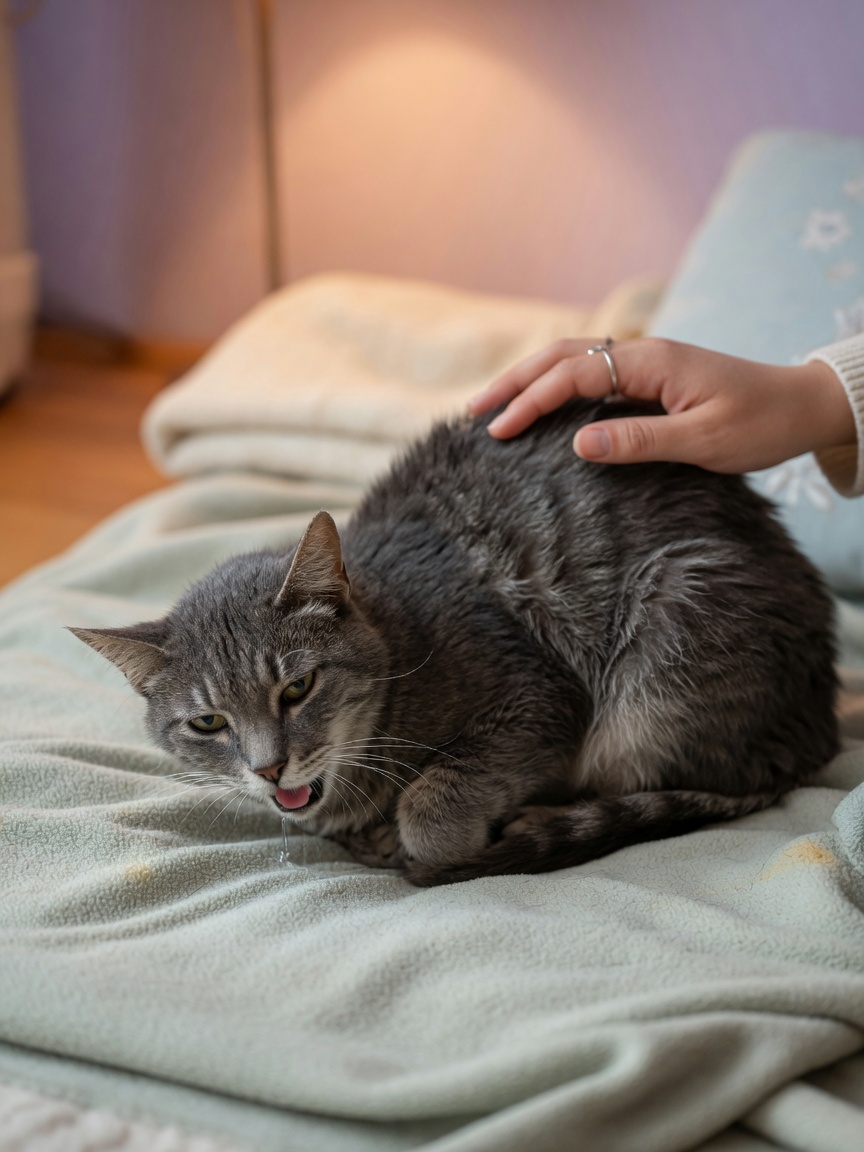
Symptoms typically develop within one to three hours of ingestion, though this varies with the amount consumed:
- Drooling (hypersalivation) — one of the first and most consistent signs
- Vomiting — often the body's first attempt to expel the toxin
- Diarrhea — may be loose or watery; sometimes bloody in more serious cases
- Abdominal pain — the cat may resist being touched on the belly, vocalize, or adopt a hunched posture
- Loss of appetite
- Lethargy and weakness
- Swollen mouth or tongue — falcarinol causes direct tissue irritation
- Difficulty swallowing — if oral swelling is significant
- Trembling or muscle weakness — in cases of larger ingestions
The severity of symptoms generally correlates with the amount consumed and the cat's body weight. Small cats and kittens are at greatest risk from even modest ivy ingestion. Senior cats or those with pre-existing gastrointestinal or liver conditions may also experience more severe reactions.
What to Do If Your Cat Eats English Ivy
Call your vet immediately. Even if your cat appears to be only mildly affected, the combination of falcarinol and saponins warrants professional assessment. The ASPCA Animal Poison Control Center is available around the clock at (888) 426-4435.
When you call, be prepared to tell them:
- Whether your cat ate leaves, stems, berries, or a combination
- How much was approximately consumed
- Your cat's weight and age
- When ingestion occurred
- Any symptoms already visible
Do not induce vomiting without veterinary guidance. Treatment is typically supportive: anti-nausea medications, medications to soothe the GI tract, and IV fluids if dehydration is a concern. Most cats recover within 24 hours with appropriate care, though severe cases may require hospitalization.
Other Ivy Species: Are They Also Toxic?
Yes. While English ivy (Hedera helix) is the most commonly encountered species, other ivy plants carry similar risks:
- Algerian ivy (Hedera canariensis/algeriensis) — similar toxin profile
- Atlantic ivy (Hedera hibernica) — same family and compounds
- Persian ivy (Hedera colchica)
- Branching ivy, glacier ivy, needlepoint ivy — all Hedera helix cultivars, all toxic
Note that "ivy" is also applied to plants in entirely different families that are not related to English ivy. For example, Swedish ivy (Plectranthus australis) and German ivy (Delairea odorata) — while potentially irritating — have different toxin profiles. Always identify the specific plant by its botanical name when assessing toxicity.
Protecting Your Cat from English Ivy
The challenge with English ivy is its everywhere-ness. Indoors, the solution is straightforward: keep ivy plants in rooms or on surfaces your cat cannot access. The trailing nature of ivy means it often hangs within easy reach of cats who can jump to shelves or use furniture as launch points. A high shelf alone is often not sufficient if the vines trail down within reach.
Outdoors, the risk is harder to manage. If your cat has outdoor access and your yard contains English ivy, consider replacing it with non-toxic ground covers or installing cat-proof fencing to keep your cat out of ivy-covered areas. Note that English ivy is actually classified as an invasive species in many parts of the Pacific Northwest and other regions — so removing it may benefit both your cat and local ecosystems.
Key Takeaways
- English ivy is toxic to cats due to falcarinol and saponins (hederagenin) found throughout the plant.
- The leaves are more toxic than the berries — indoor ivy plants without berries are still dangerous.
- Symptoms include drooling, vomiting, diarrhea, abdominal pain, and in larger ingestions, neurological effects.
- Call your vet immediately or ASPCA Poison Control at (888) 426-4435 if your cat ingests ivy.
- All common ivy species (English, Algerian, Atlantic, Persian) are toxic; all Hedera cultivars share this risk.
- Keep ivy plants inaccessible indoors; consider removing English ivy outdoors in cat-access areas.
References
- Gfeller RW, Messonnier SP. Handbook of Small Animal Toxicology and Poisonings. 2nd ed. Mosby, 2004. Referenced in: Burrows GE, Tyrl RJ. Toxic Plants of North America. Iowa State Press, 2001. PMID context: 12180710
- Hansen AA. "Ivy poisoning of cattle." Journal of the American Veterinary Medical Association. 1928;73:715-716. Cross-referenced in contemporary toxicology texts. PMID: historical, not indexed (foundational reference, Am Vet Med Assoc J, vol. 73, 1928)