
Can Cats Eat Carrots?
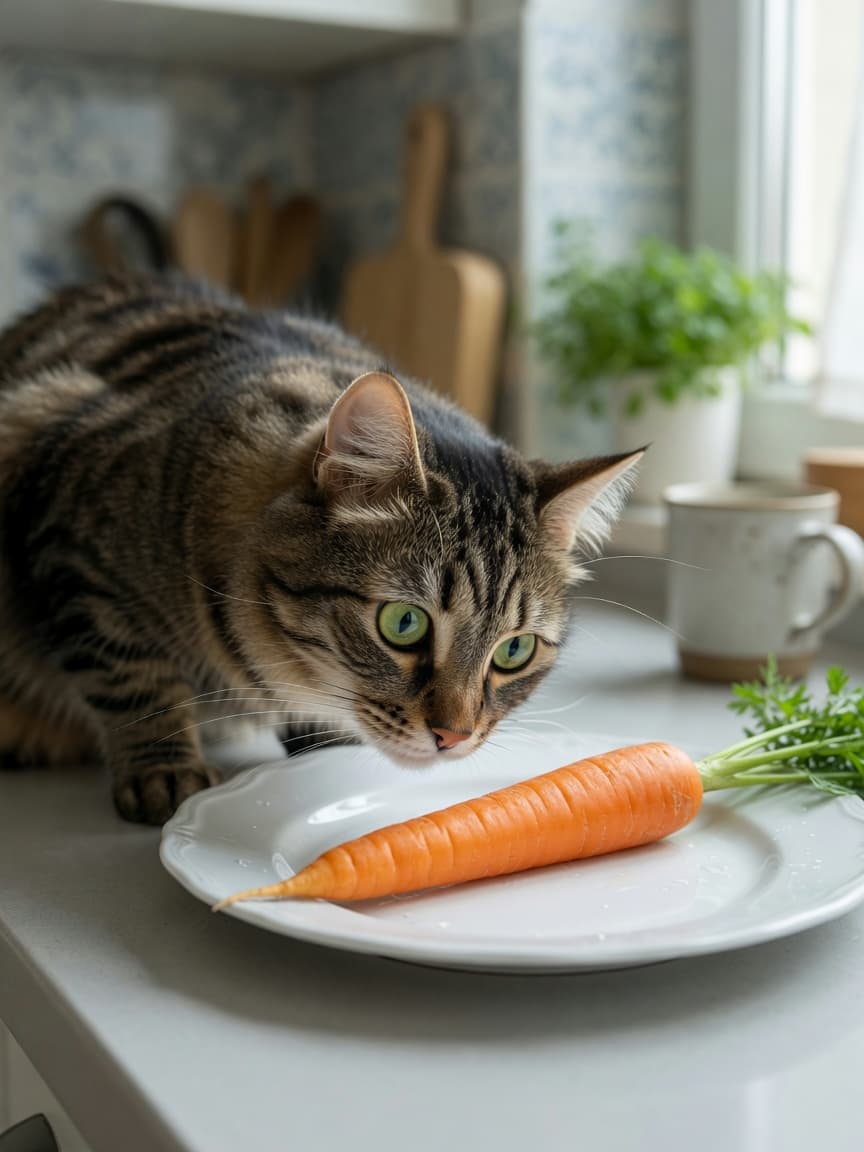
Carrots are a popular snack for humans and dogs alike, so it is natural to wonder whether your cat might benefit from them too. The straightforward answer is that carrots are not toxic to cats and can be offered in small amounts without concern. The more interesting question — and the one that reveals a great deal about feline biology — is whether carrots offer cats any meaningful nutritional benefit at all. The answer might surprise you.
Are Carrots Safe for Cats?
Yes, carrots are non-toxic to cats and do not appear on any reputable list of dangerous foods for felines. The ASPCA does not list carrots as a plant harmful to cats. So if your cat sniffs a carrot and takes a small bite, there is no cause for alarm. That said, safety and nutritional value are two different things, and this distinction matters when deciding whether to actively include any food in your cat's diet.
Raw carrots do present a minor choking hazard due to their hard, dense texture. This is more relevant to cats than dogs, as cats have smaller mouths and a tendency to swallow food in larger pieces without extensive chewing. Always cut carrots into small, thin pieces if offering them raw, or cook them until soft.
The Beta-Carotene Question
Carrots are celebrated for their high beta-carotene content — the pigment that gives them their distinctive orange colour and which the body converts into vitamin A. This is where feline biology diverges significantly from human and canine nutrition.
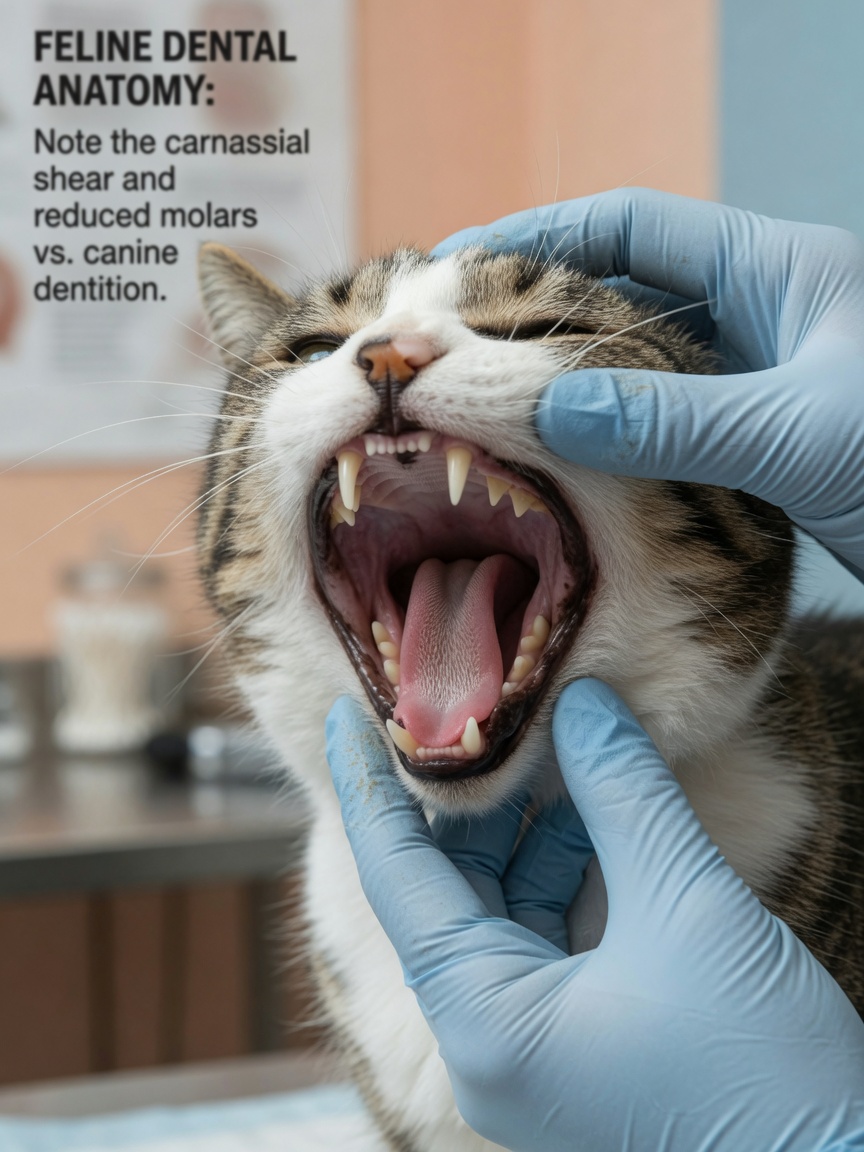
Cats lack the intestinal enzyme (beta-carotene dioxygenase) needed to convert beta-carotene into active vitamin A (retinol). In practical terms, this means that while a human or dog can make use of the beta-carotene in a carrot as a precursor to vitamin A, a cat essentially cannot. Cats must obtain preformed vitamin A directly from animal sources — primarily liver — and cannot rely on plant-based precursors to meet this requirement.
This is not an obscure biochemical footnote. It is one of the defining characteristics of obligate carnivores and explains why feeding cats a plant-heavy diet can lead to genuine vitamin A deficiency even if that diet appears colourful and varied. The beta-carotene in carrots passes through a cat's digestive system largely unused.
What Nutritional Value Do Carrots Actually Offer Cats?
Setting aside beta-carotene, carrots do contain some nutrients in small amounts:
- Dietary fibre, which may support gut motility in some cases
- Vitamin K1 (phylloquinone), though cats can also obtain this from animal sources
- Potassium, useful for heart and muscle function
- Small amounts of vitamin C, though cats synthesise their own and do not require dietary sources
- Water content, which contributes to overall hydration
None of these nutrients are things a cat eating a balanced, species-appropriate diet would be lacking. Carrots do not fill a genuine nutritional gap for most cats. They contribute minimal calories — approximately 41 kcal per 100g — and negligible protein.
Do Cats Even Like Carrots?
This is where things get genuinely interesting. Cats are one of the few mammals known to lack functional sweet taste receptors. Research published in PLOS Genetics identified a mutation in the Tas1r2 gene — part of the taste receptor pair responsible for detecting sweetness — that renders it non-functional in domestic cats. Cats literally cannot taste sweetness.
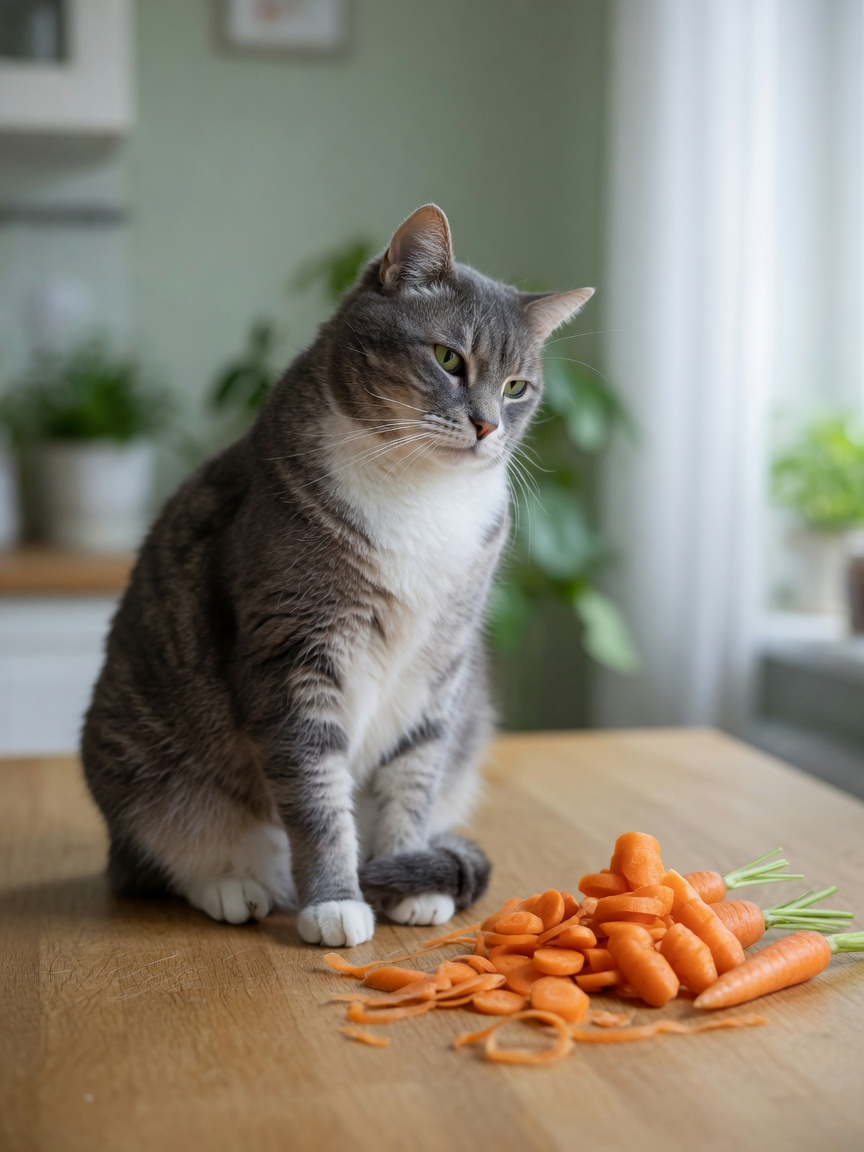
Since much of a carrot's palatability to humans and dogs comes from its natural sugars, it is perhaps unsurprising that most cats show little interest in them. Some cats may be curious about the smell or texture, particularly if they enjoy novel sensory experiences, but active enthusiasm for carrots is genuinely uncommon in the species.
If your cat does show interest in carrots, this is more likely driven by curiosity, the crunch texture, or associating the food with your attention than by any taste preference. There is no need to encourage carrot consumption if your cat is indifferent.
How to Offer Carrots Safely
If you would like to offer carrots as an occasional enrichment snack or low-calorie treat, follow these guidelines:
- Cook carrots by boiling or steaming until soft — this reduces choking risk and may slightly improve digestibility
- Cut into small, bite-sized pieces appropriate for your cat's size
- Offer plain carrots only — no butter, salt, garlic, herbs, or dips
- Keep portions small: a piece or two is sufficient
- Do not use carrots as a meal replacement or significant dietary component
- Raw carrot sticks can be offered under supervision to larger cats who enjoy gnawing, but monitor carefully
Carrots and Weight Management
One context where carrots occasionally get mentioned is in weight management for overweight cats. The logic is that carrots are low in calories and high in fibre, which might help a cat feel fuller. This reasoning works reasonably well in dogs and humans, but its application to cats is questionable. Cats are poor at deriving satiety signals from dietary fibre the way omnivores do, and their hunger regulation is driven primarily by protein and fat intake. Replacing even a small portion of a cat's protein-based meal with carrots to reduce calories is likely to leave the cat less satisfied and nutritionally worse off.
For genuinely overweight cats, portion control of a high-protein, low-carbohydrate diet — ideally under veterinary guidance — is a far more effective strategy than adding vegetables.
The Bottom Line
Carrots are safe, harmless in small amounts, and unlikely to cause any problems if your cat happens to eat one. But they are not a meaningful addition to feline nutrition. The beta-carotene cats cannot convert, the sweetness cats cannot taste, and the fibre cats do not need all point to carrots being a neutral food at best. Offer them as an occasional novelty if your cat enjoys them, but do not feel compelled to include them in your cat's diet for any health reason. A quality animal-protein-based diet provides everything your cat actually needs.