
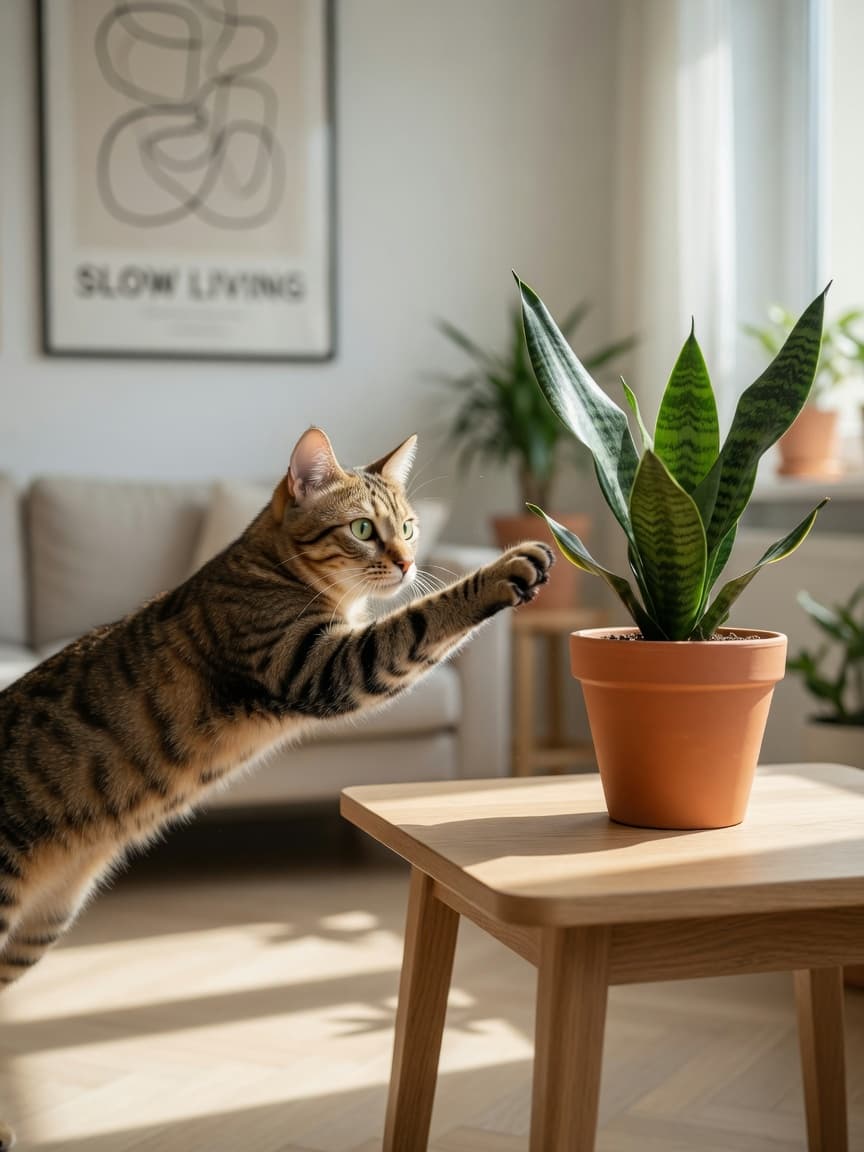
Is Snake Plant (Sansevieria) Toxic to Cats?
Updated: June 2026
The Beginner's Plant with a Toxic Surprise
Snake plant is practically synonymous with low-maintenance houseplants. It tolerates neglect, grows in dim lighting, requires minimal watering, and survives conditions that would kill most other plants. For these reasons, it is one of the most recommended plants for beginners, frequently gifted, and found in millions of homes. It has also been popularized by studies suggesting it can improve indoor air quality. Unfortunately, snake plant's widespread presence in homes makes it a consistent source of toxic exposures for cats and dogs.
The snake plant goes by many names that can lead to confusion: Sansevieria trifasciata, mother-in-law's tongue, Saint George's sword, viper's bowstring hemp, and — following a recent botanical reclassification — Dracaena trifasciata. Regardless of what it's called at your local garden center, all varieties of this plant are toxic to cats and dogs.
The toxic compounds are saponins — naturally occurring glycosides that the plant produces as a chemical defense against insects and herbivores. When consumed by cats, saponins disrupt cell membranes in the gastrointestinal tract, cause irritation and inflammation of the stomach and intestinal lining, and can affect red blood cells (causing hemolysis in high concentrations, though this is rare in small animal exposures). The result is a predictable syndrome of GI distress that, while usually self-limiting, requires monitoring and often veterinary intervention.
Why Cats Are Particularly at Risk
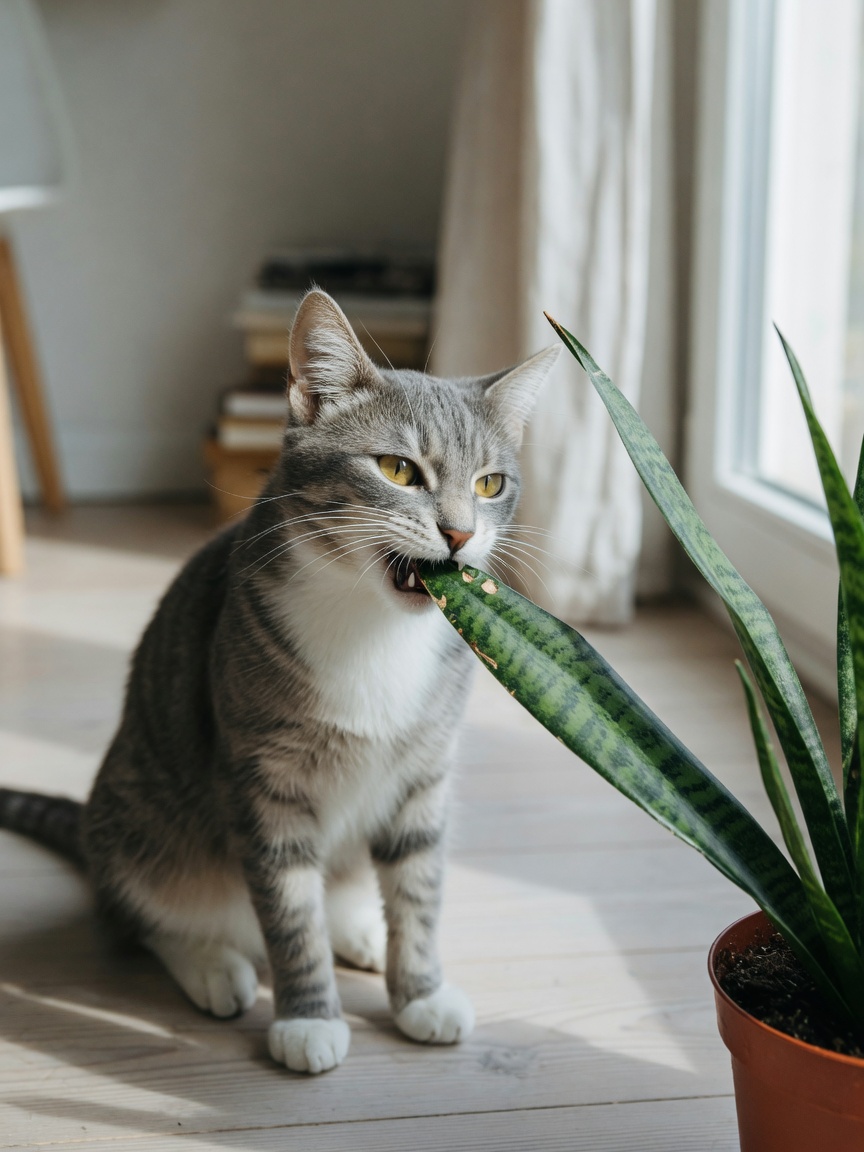
Cats are famously selective about what they eat — but this selectivity does not extend reliably to plants. Many cats nibble on plants out of boredom, attracted by the texture of leaves, the movement of trailing foliage in air currents, or simple curiosity. Cats that are underenriched or bored are particularly likely to engage in plant-chewing behavior.
Snake plants are especially attractive to cats for several reasons:
- The tall, stiff leaves are visually interesting and interactive
- The pointed tips of the leaves may trigger a cat's predatory instinct
- Cats may chew on the leaves while grooming nearby or seeking texture
- Snake plants are often placed at floor level or on low surfaces within easy cat reach
Unlike some plants where the pain of calcium oxalate crystals stops ingestion quickly, snake plant leaves do not produce immediate oral pain. A cat may chew on snake plant for some time before symptoms develop — meaning ingestion of a meaningful quantity is more likely compared to plants like pothos or monstera.
Symptoms of Snake Plant Toxicity in Cats
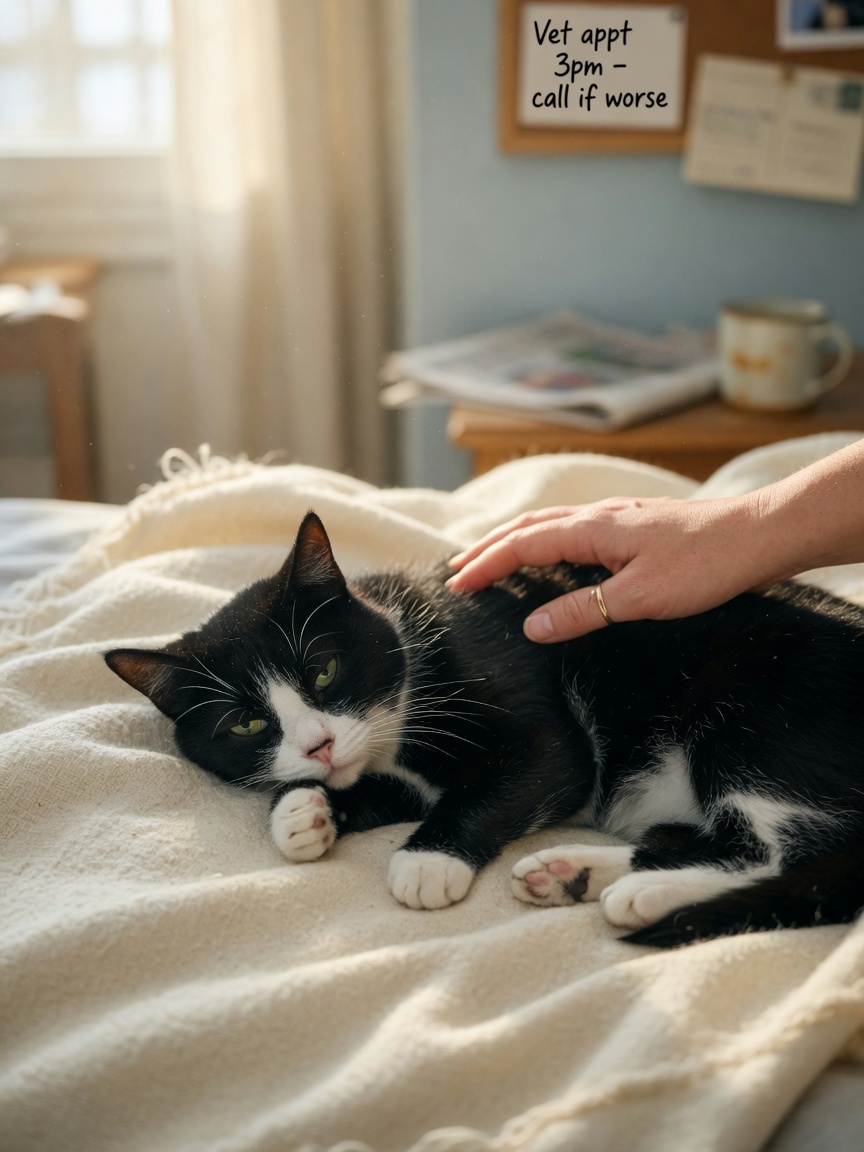
Symptoms typically appear within two to six hours of ingestion, though this can vary. Because snake plant saponins do not cause immediate oral pain, symptoms are primarily GI and systemic:
- Nausea — the cat may appear uncomfortable, restless, or repeatedly swallow
- Vomiting — often occurs within a few hours; may be repeated
- Diarrhea — loose to watery; typically resolves within 24 hours in mild cases
- Loss of appetite — common during the acute phase
- Lethargy and depression — the cat may hide, be less interactive, and sleep more than usual
- Drooling — less pronounced than with calcium oxalate plants but possible
- Abdominal discomfort — the cat may resist handling or show sensitivity around the belly
Dehydration is a secondary concern, particularly if vomiting and diarrhea are prolonged or if the cat is already not drinking enough water. Cats are notoriously poor water drinkers under normal circumstances, and illness further reduces intake.
Severe toxicity (generally from consuming a large portion of the plant) might produce more pronounced neurological effects, though this is uncommon. If your cat appears disoriented, has difficulty walking, or seems to collapse, treat this as an emergency and seek immediate care.
Snake Plant Is Also Toxic to Dogs
While this article focuses primarily on cats, it is worth emphasizing clearly: snake plant is equally toxic to dogs. Dogs that chew on snake plant leaves will experience the same saponin-mediated gastrointestinal syndrome. The same guidance applies — contact your vet immediately if your dog ingests any part of the plant.
What to Do If Your Cat Eats Snake Plant
If you observe your cat chewing on snake plant, or if you notice chew marks on the leaves along with any of the above symptoms, call your vet immediately. You can also contact the ASPCA Animal Poison Control Center at (888) 426-4435 for immediate toxicology guidance.
Inform your vet:
- Approximately how much plant material was consumed
- Your cat's weight and age
- When ingestion occurred or when you first noticed chewing
- Any symptoms already present
In most cases, treatment is supportive: anti-emetics to control vomiting, fluids to address dehydration, and close monitoring. Your vet may also recommend a bland diet for a day or two as the gastrointestinal tract recovers. Most cats experiencing mild to moderate snake plant toxicity recover fully within 24–48 hours.
Common Sansevieria Varieties: All Toxic
All common snake plant varieties share the same toxic profile:
- Sansevieria trifasciata 'Laurentii' (yellow-edged snake plant)
- Sansevieria trifasciata 'Hahnii' (bird's nest snake plant)
- Sansevieria cylindrica (cylindrical snake plant)
- Sansevieria masoniana (whale fin snake plant)
- Any plant marketed under the Dracaena trifasciata label (the new botanical classification)
Safer Alternatives and Prevention
If your cat has shown interest in your snake plant, the safest approach is to move it to a location completely inaccessible to the cat, or to replace it with a non-toxic alternative. Cat-safe plants with a similar architectural aesthetic include:
- Areca palm (Dypsis lutescens) — non-toxic, similar height and drama
- Ponytail palm (Beaucarnea recurvata) — non-toxic, low-maintenance, structural
- Cast iron plant (Aspidistra elatior) — non-toxic, nearly as indestructible as snake plant
Providing your cat with cat grass (wheat grass or oat grass) or catnip may also reduce plant-chewing behavior by giving them an appropriate plant outlet.
Key Takeaways
- Snake plant (Sansevieria/Dracaena trifasciata) is toxic to both cats and dogs due to saponins.
- Unlike calcium oxalate plants, snake plant does not cause immediate oral pain — cats may eat more before symptoms appear.
- Symptoms include nausea, vomiting, diarrhea, lethargy, and loss of appetite — onset within 2–6 hours.
- Call your vet immediately or ASPCA Poison Control at (888) 426-4435 if your cat ingests snake plant.
- All Sansevieria varieties, including bird's nest, cylindrical, and whale fin, are equally toxic.
- Safer alternatives include cast iron plant, areca palm, and ponytail palm for architectural greenery.
References
- Cheeke PR. "Biological effects of feed and forage saponins and their impacts on animal production." Advances in Experimental Medicine and Biology. 1996;405:377-85. PMID: 8910711
- Khan SA, McLean MK. "Toxicology of frequently encountered nonfood plants in dogs and cats." Veterinary Clinics of North America: Small Animal Practice. 2012 Mar;42(2):399-420. PMID: 22381180