

38 Plants That Are Toxic to Cats: The Complete List
Cats are curious, agile, and relentless. They climb. They chew. They investigate every corner of your home and garden — and many of the most beautiful, popular houseplants are silently waiting to kill them. The ASPCA lists hundreds of plants toxic to cats, but this article focuses on the 38 most relevant and dangerous that cat owners are most likely to encounter.
Unlike dogs, cats are obligate carnivores whose livers have extremely limited ability to process plant compounds. Toxins that a dog might excrete safely can accumulate to lethal levels in a cat's system within hours.
Why Cats Are Especially Vulnerable to Plant Toxins
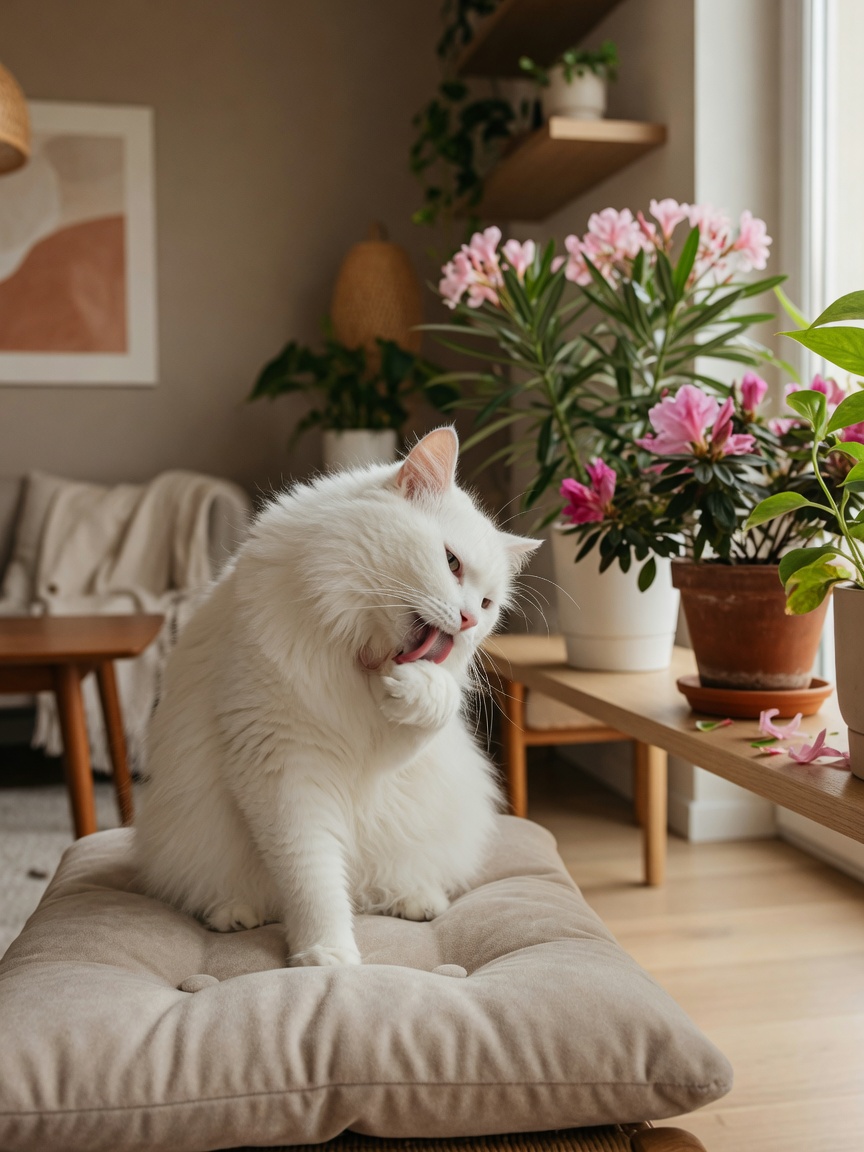
Cats lack key liver enzymes — particularly glucuronyl transferase — that most mammals use to detoxify plant compounds. This means certain toxins that merely cause mild GI upset in dogs will cause organ failure in cats. Their grooming behavior is another risk factor: a cat that brushes against a lily and then licks its fur can receive a toxic dose without ever directly eating the plant.
The Complete Table: 38 Toxic Plants for Cats
Severity key: Mild = GI upset | Moderate = vet visit needed | Severe = emergency vet | Fatal = death without immediate treatment
| Plant Name (Scientific) | Common Name | Toxic Part | Symptoms in Cats | Severity |
|---|---|---|---|---|
| Lilium spp. | True Lilies (Easter, Tiger, Asiatic, Stargazer) | All parts, especially pollen & leaves | Vomiting, lethargy, acute kidney failure within 24-72h | Fatal |
| Hemerocallis spp. | Daylily | All parts | Vomiting, kidney failure (same mechanism as true lily) | Fatal |
| Nerium oleander | Oleander | All parts (even smoke) | Cardiac arrhythmia, bloody diarrhea, coma | Fatal |
| Convallaria majalis | Lily of the Valley | All parts | Heart arrhythmia, seizures, cardiac arrest | Fatal |
| Taxus spp. | Yew (English, Japanese) | Needles, seeds (not berries) | Cardiac arrest with minimal warning signs | Fatal |
| Rhododendron spp. | Azalea / Rhododendron | All parts | Salivation, vomiting, hypotension, coma | Fatal |
| Cycas revoluta | Sago Palm | Seeds/nuts (most toxic), all parts | Liver failure, GI bleeding, death | Fatal |
| Narcissus spp. | Daffodil / Narcissus | Bulbs especially | Salivation, vomiting, convulsions, low BP | Severe |
| Tulipa spp. | Tulip | Bulbs most concentrated | Drooling, depression, vomiting, breathing difficulty | Severe |
| Hyacinthus spp. | Hyacinth | Bulbs | GI upset, severe drooling, tremors | Severe |
| Dieffenbachia spp. | Dumb Cane | All parts | Intense oral burning, swelling, asphyxiation | Severe |
| Philodendron spp. | Philodendron | All parts | Oral irritation, drooling, difficulty swallowing | Moderate |
| Epipremnum aureum | Pothos / Devil's Ivy | All parts | Oral burning, vomiting, intense drooling | Moderate |
| Caladium spp. | Elephant Ears / Caladium | All parts | Oral swelling, drooling, GI upset | Moderate |
| Spathiphyllum spp. | Peace Lily | All parts | Oral irritation, swelling, vomiting (NOT a true lily — no kidney failure) | Moderate |
| Aloe vera | Aloe Vera | Latex (below skin), not gel | Vomiting, diarrhea, lethargy, tremors | Moderate |
| Zamioculcas zamiifolia | ZZ Plant | All parts | Oral irritation, vomiting, diarrhea | Moderate |
| Euphorbia spp. | Spurge / Poinsettia | Milky sap | Oral irritation, drooling, vomiting (severity varies by species) | Mild–Moderate |
| Chrysanthemum spp. | Mums / Chrysanthemums | All parts | Drooling, vomiting, incoordination, skin irritation | Moderate |
| Ipomoea batatas (ornamental) | Morning Glory | Seeds | Hallucinations, diarrhea, GI distress | Moderate |
| Solanum pseudocapsicum | Jerusalem Cherry | Berries, leaves | Vomiting, diarrhea, CNS depression | Severe |
| Lantana camara | Lantana | All parts, especially berries | Liver failure, photosensitivity, CNS depression | Severe |
| Brunfelsia spp. | Yesterday-Today-Tomorrow | All parts, especially berries/seeds | Muscle tremors, seizures, hyperthermia | Severe |
| Autumn Crocus (Colchicum) | Autumn Crocus / Naked Lady | All parts | GI bleeding, organ failure, bone marrow suppression | Fatal |
| Aconitum spp. | Monkshood / Wolfsbane | All parts (especially roots) | Heart arrhythmia, paralysis, respiratory failure | Fatal |
| Delphinium / Larkspur | Larkspur | All parts, especially seeds | Neuromuscular paralysis, cardiac toxicity | Severe |
| Digitalis purpurea | Foxglove | All parts | Heart arrhythmia, vomiting, death | Fatal |
| Wisteria spp. | Wisteria | Seeds, pods | Vomiting, diarrhea, collapse | Severe |
| Ilex spp. | Holly (berries) | Berries, leaves | Severe vomiting, diarrhea, lethargy | Moderate |
| Viscum album | Mistletoe | Berries, leaves | GI upset, low heart rate, collapse | Moderate |
| Clivia miniata | Kaffir Lily | All parts, roots most | Vomiting, diarrhea, low blood pressure, tremors | Moderate |
| Sago / Macrozamia (ornamental) | Cardboard Palm | Seeds | Liver failure (same as Cycas revoluta) | Fatal |
| Dracaena spp. | Dragon Tree / Corn Plant | All parts | Vomiting (sometimes with blood), dilated pupils, increased salivation | Moderate |
| Kalanchoe spp. | Kalanchoe / Flaming Katy | All parts | Vomiting, diarrhea, cardiac arrhythmia | Severe |
| Cannabis sativa | Marijuana | All parts, especially flowers | CNS depression, incoordination, vomiting, coma | Moderate–Severe |
| Hedera helix | English Ivy | Leaves & berries | Vomiting, abdominal pain, excessive drooling, ataxia | Moderate |
| Schefflera spp. | Umbrella Tree | All parts | Oral irritation, vomiting, excessive drooling | Mild |
| Lathyrus odoratus | Sweet Pea | Seeds, stems | Weakness, trembling, seizures (lathyrism) | Severe |
The Deadliest Threat: True Lilies and Daylilies
True lilies (genus Lilium) and daylilies (Hemerocallis) are responsible for more cat deaths from plant toxicity than any other plant family. What makes them uniquely horrifying is the combination of factors:
- Every part is toxic — pollen, petals, leaves, stems, water from the vase.
- Even grooming is enough — a cat that brushes its fur against a lily and then grooms itself can ingest a fatal dose.
- Rapid onset — kidney failure begins within 24-72 hours of exposure.
- Deceptively mild early symptoms — the cat may only vomit once and seem fine, while kidney damage is already underway.
If a lily is in your home and you have cats, remove it immediately. Cut flowers received as gifts are a particularly common source of lily exposure.
Common Houseplants That Are Safer Alternatives
You don't have to live in a plant-free home. These popular plants are considered safe for cats: Spider Plant (Chlorophytum comosum), Boston Fern (Nephrolepis exaltata), Orchids (Phalaenopsis spp.), Areca Palm (Dypsis lutescens), and Swedish Ivy (Plectranthus spp.).
Support your cat's liver and kidney health naturally: HolistaPet's vet-formulated cat supplements are made without any plant toxins. Shop HolistaPet Cat Health Supplements →
What to Do If Your Cat Eats a Toxic Plant
- Act immediately — do not wait for symptoms. With lilies in particular, treatment must begin before kidney failure sets in.
- Call ASPCA Poison Control: (888) 426-4435 or your emergency vet now.
- Identify the plant — take a photo or bring a leaf sample to the vet.
- Do not induce vomiting unless specifically instructed by the vet — with certain oxalate-based plants, this worsens airway swelling.
- Check for pollen on fur if lilies are involved, and wipe it off with a damp cloth.
Key Takeaways
- True lilies (Easter, Tiger, Asiatic, Stargazer) and daylilies are the most deadly plants for cats — even pollen contact can be fatal.
- Cats are uniquely vulnerable to plant toxins because their livers lack key detoxification enzymes.
- Sago palms, oleander, autumn crocus, foxglove, and yew can all kill a cat with minimal exposure.
- Popular houseplants like pothos, philodendron, and dracaena cause painful oral burns and GI distress.
- Aloe vera — despite its health reputation — is toxic to cats (it's the latex layer, not the gel, but cats chew whole leaves).
- Receiving lilies as cut flowers is the most common route of exposure — tell friends and florists before sending gifts.
- Safe alternatives exist: spider plants, orchids, Boston ferns, and areca palms.
Keep your cat healthy with species-appropriate nutrition: Zooplus offers a wide range of grain-free, plant-toxin-free cat food and treats. Shop Zooplus Cat Food & Treats →
Scientific References
- Fitzgerald KT, Newquist KL. Poisonings in Companion Animals. Vet Clin North Am Small Anim Pract. 2013;43(5):1033-1066. PubMed: 23890237
- Langston CE. Acute Renal Failure Caused by Lily Ingestion in Six Cats. J Am Vet Med Assoc. 1999;214(11):1674-1678. PubMed: 10337151