
Persian Cat Health Problems: Eyes, Breathing & Kidney Disease
Updated June 2026
- Lifespan: 12–17 years
- Top Health Risks: Polycystic kidney disease (PKD), brachycephalic airway syndrome, epiphora and eye disease, dental malocclusion, hypertrophic cardiomyopathy
- Genetic Tests Recommended: PKD1 DNA test, HCM genetic screening, ophthalmological examination, CAER exam
The Persian cat is one of the oldest and most recognised cat breeds, beloved for its long luxurious coat, gentle temperament, and regal appearance. Their flat face and round head — developed through selective breeding — give Persians their distinctive look but also underlie a cluster of serious structural health problems. Alongside these conformation-related issues, Persians are disproportionately affected by polycystic kidney disease, one of the most prevalent hereditary conditions in any domestic animal population. With proper screening and informed care, many of these challenges can be managed or prevented entirely.
Most Common Health Problems in Persian Cats
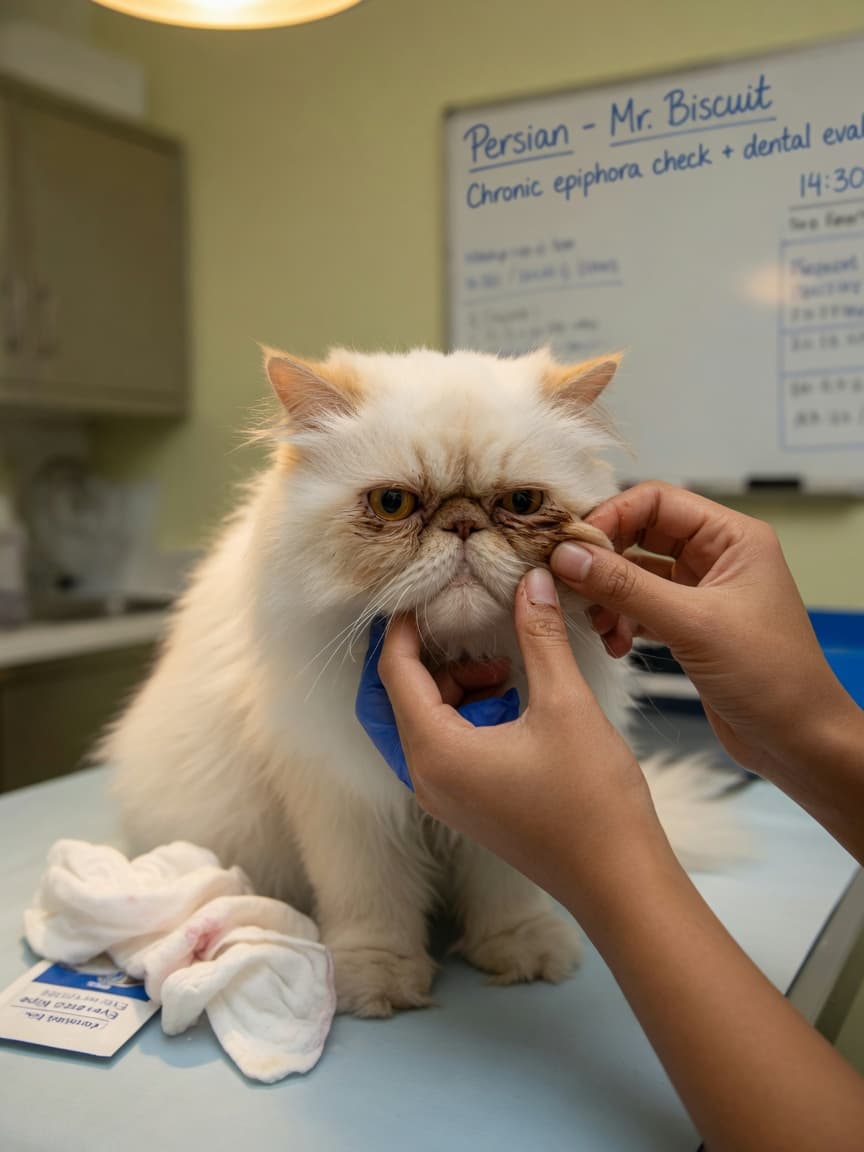
Polycystic kidney disease (PKD) tops the list — before the development of a genetic test and widespread screening, it affected approximately 40% of the Persian breed worldwide. Brachycephalic features cause eye problems, breathing difficulties, and dental malocclusion. Epiphora (overflow of tears) staining the facial folds is nearly universal. Hypertrophic cardiomyopathy (HCM) occurs with higher frequency in Persians than in random-bred cats. Skin conditions related to their dense coat — seborrhoea, ringworm susceptibility due to difficulty grooming, and intertrigo in facial folds — require consistent owner management. Progressive retinal atrophy (Pd-PRA) is also documented in the breed.
Polycystic Kidney Disease (PKD)
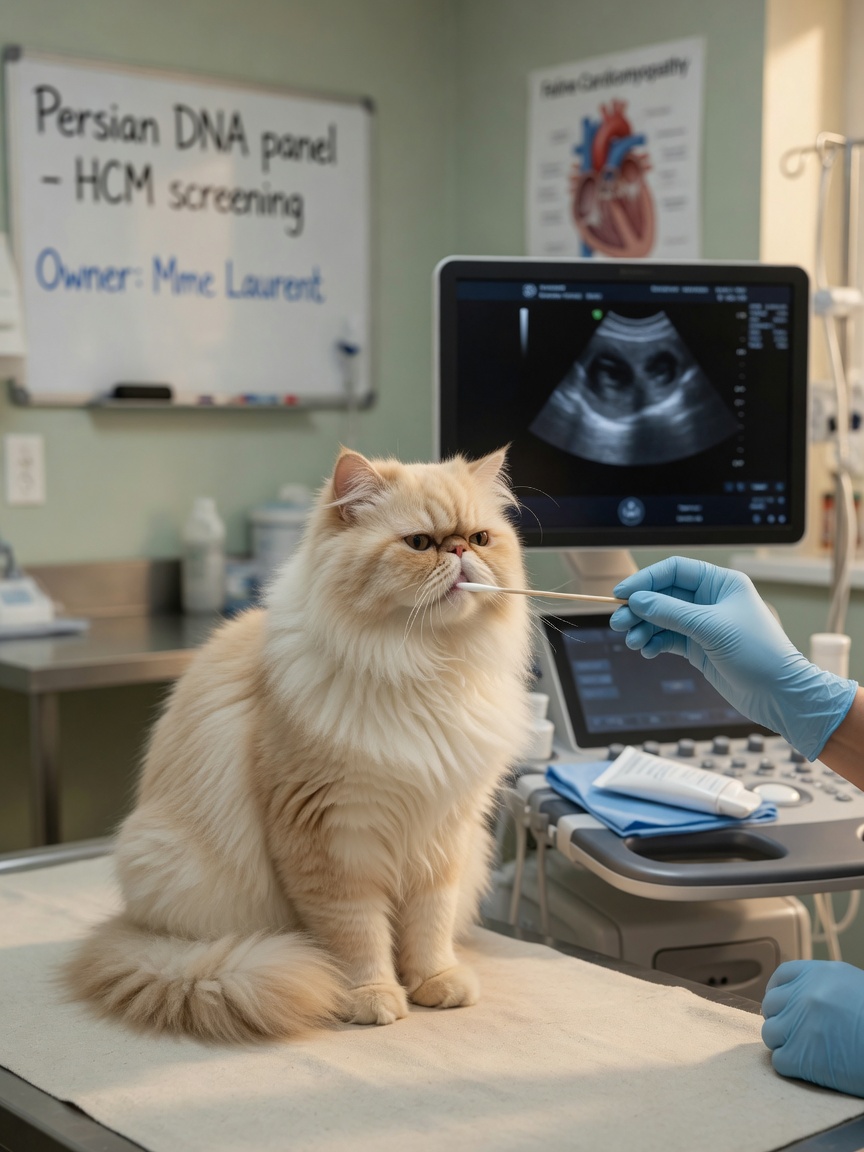
PKD1 is caused by an autosomal dominant mutation in the PKD1 gene. Even a single copy of the mutation (cats are heterozygous) causes the gradual development of fluid-filled cysts in the kidneys, progressive replacement of functional kidney tissue, and eventual chronic kidney disease (CKD). Cysts begin forming before birth and are detectable by ultrasound from 10 months of age in affected cats. Clinical signs of advancing CKD include increased thirst and urination, weight loss, poor coat, vomiting, and lethargy — typically appearing in middle age. A DNA test identifies all affected cats from a simple cheek swab, and the condition is fully preventable: any cat with one copy of the PKD1 mutation should not be used for breeding. Reputable Persian breeders screen all breeding cats and only mate DNA-clear animals. For affected cats already in renal failure, management involves renal diets, fluid support, phosphate binders, and anti-nausea medication under veterinary supervision.
Brachycephalic Eye and Airway Problems
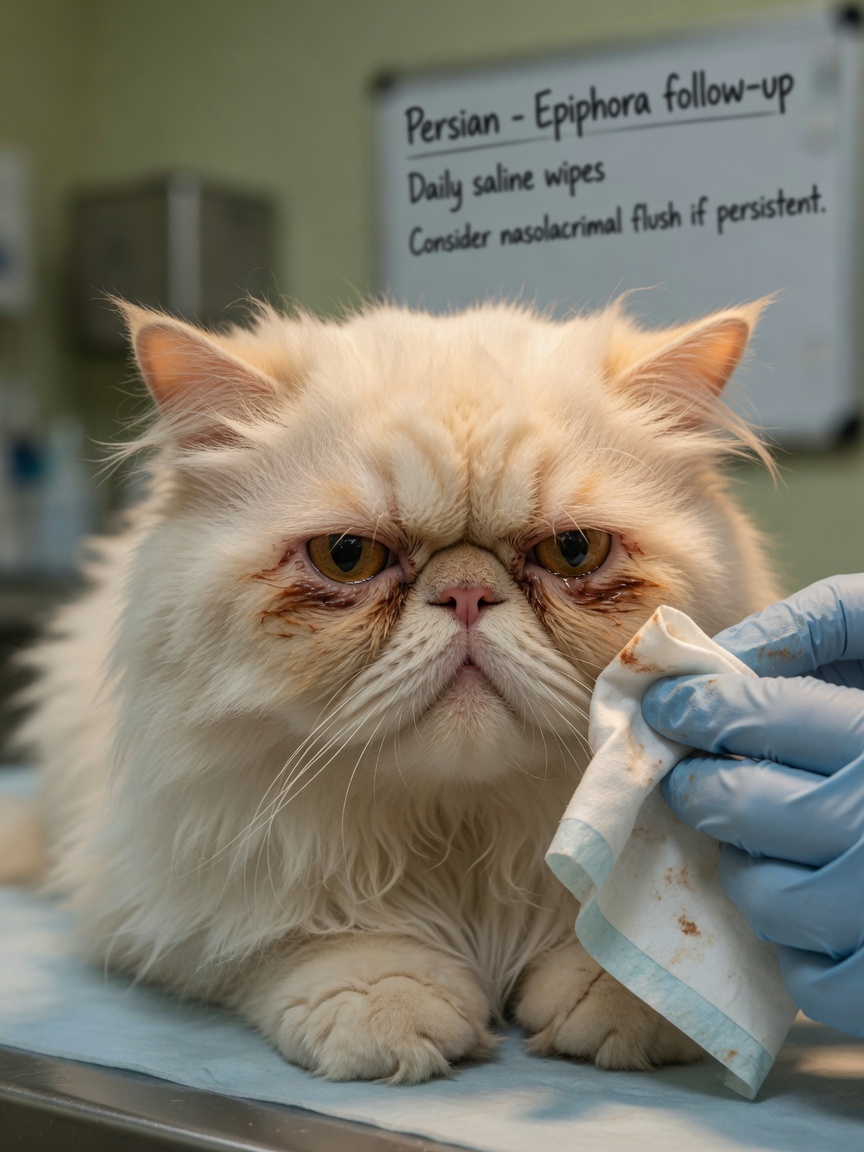
The Persian's extremely flat face (brachycephaly) causes several overlapping problems. Epiphora — overflow of tears onto the face — results from distorted nasolacrimal ducts that cannot drain tears normally. The resulting damp facial folds are prone to yeast and bacterial dermatitis, causing reddish-brown staining, malodour, and skin irritation. Daily cleaning of facial folds with a damp cloth or veterinary wipe is essential. More seriously, the shallow orbits mean the eyeball is less protected and may protrude slightly (exophthalmos), increasing the risk of corneal ulceration from even minor trauma or drying. Entropion — inward rolling of the eyelid — can cause the eyelashes to rub the cornea continuously. Airway compromise, while less severe than in brachycephalic dogs, can cause noisy breathing, reduced exercise tolerance, and heat sensitivity. Extreme-type ("ultra-typed") Persians with the most flattened faces are most severely affected.
Dental Malocclusion
The Persian's compressed skull distorts the normal alignment of the upper and lower jaws, causing malocclusion — misalignment of the teeth. The most common abnormality is mandibular prognathism (the lower jaw protruding beyond the upper), which can cause difficulty prehending and chewing food, chronic periodontal disease due to abnormal tooth contact, and trauma to soft tissues from malpositioned teeth. Annual dental examinations and professional cleanings are essential, as the abnormal spacing makes home brushing less effective. Some cats benefit from dental extractions that relieve tissue trauma from malpositioned teeth. Feeding a diet with kibble large enough to require biting, rather than swallowing whole, provides some mechanical cleaning benefit.
Coat Care as a Health Issue
The Persian's coat is dense, long, and mats extremely easily without regular grooming. Matted fur causes skin irritation and conceals parasites, wounds, and skin infections. The breed cannot groom itself adequately, meaning daily brushing by the owner is not optional — it is a veterinary necessity. Many Persian owners opt for a "lion cut" several times per year, reducing the coat to a manageable length. Longhaired Persians in outdoor or multi-cat environments are highly susceptible to ringworm (Microsporum canis), a fungal infection that requires prolonged antifungal treatment and can infect humans in the household. Regular flea prevention and annual veterinary skin assessment are important for this breed.
Prevention and Proactive Care
Never purchase a Persian kitten from a breeder who has not PKD1 DNA tested both parents and can provide certificates. Annual echocardiography from age four is advisable given the breed's HCM risk. Establish daily facial fold cleaning, brushing, and eye wiping from kittenhood. Feed a renal-supportive diet (with controlled phosphorus) from early middle age as a preventive measure in cats without PKD, and start earlier and more aggressively in PKD-confirmed cats. Schedule annual blood and urine testing from age seven to catch early kidney disease before clinical signs appear.
Recommended Supplements for Persian Cats
Omega-3 fatty acids from fish oil (40 mg/kg EPA+DHA, feline-formulated) have anti-inflammatory benefits for skin, coat, and kidney disease management. In cats with confirmed CKD, omega-3 supplementation is supported by evidence showing reduced renal inflammation and slower progression. Phosphorus restriction through diet is the most evidence-based nutritional intervention for CKD. For Persians with facial fold dermatitis, skin-supportive diets containing zinc and omega-6 fatty acids alongside omega-3s can reduce inflammatory skin disease. Probiotics specifically formulated for cats may support gut health in Persian cats on chronic medications for kidney or cardiac disease.
Some owners report benefits from CBD oil for joint discomfort — always discuss with your vet first and choose a THC-free product like Candid Tails.
For high-quality breed-specific nutrition and supplements, browse the selection at Zooplus — one of Europe's leading pet supply retailers.
Key Takeaways
- PKD1 is fully preventable — only purchase Persians from breeders who DNA test all breeding cats and provide clear certificates for both parents.
- Daily facial fold cleaning is a medical necessity, not cosmetic grooming — neglecting it causes painful skin infections.
- Annual blood and urine tests from age seven allow early detection of kidney disease, when interventions are most effective.
- Brachycephalic eye problems can progress to corneal ulceration — any clouding of the eye or excessive blinking requires prompt veterinary assessment.
- Omega-3 supplementation supports both kidney health and skin barrier function in this breed's most common chronic conditions.
References
- Lyons LA, Biller DS, Erdman CA, et al. Feline polycystic kidney disease mutation identified in PKD1. J Am Soc Nephrol. 2004;15(10):2548-2555. PMID: 15466259
- Gough A, Thomas A, O'Neill D. Breed Predispositions to Disease in Dogs and Cats. 3rd ed. Wiley-Blackwell; 2018. ISBN: 9781119225584