
Can Cats Eat Watermelon? Seeds, Rind, and Safe Portions Explained
Is Watermelon Safe for Cats?
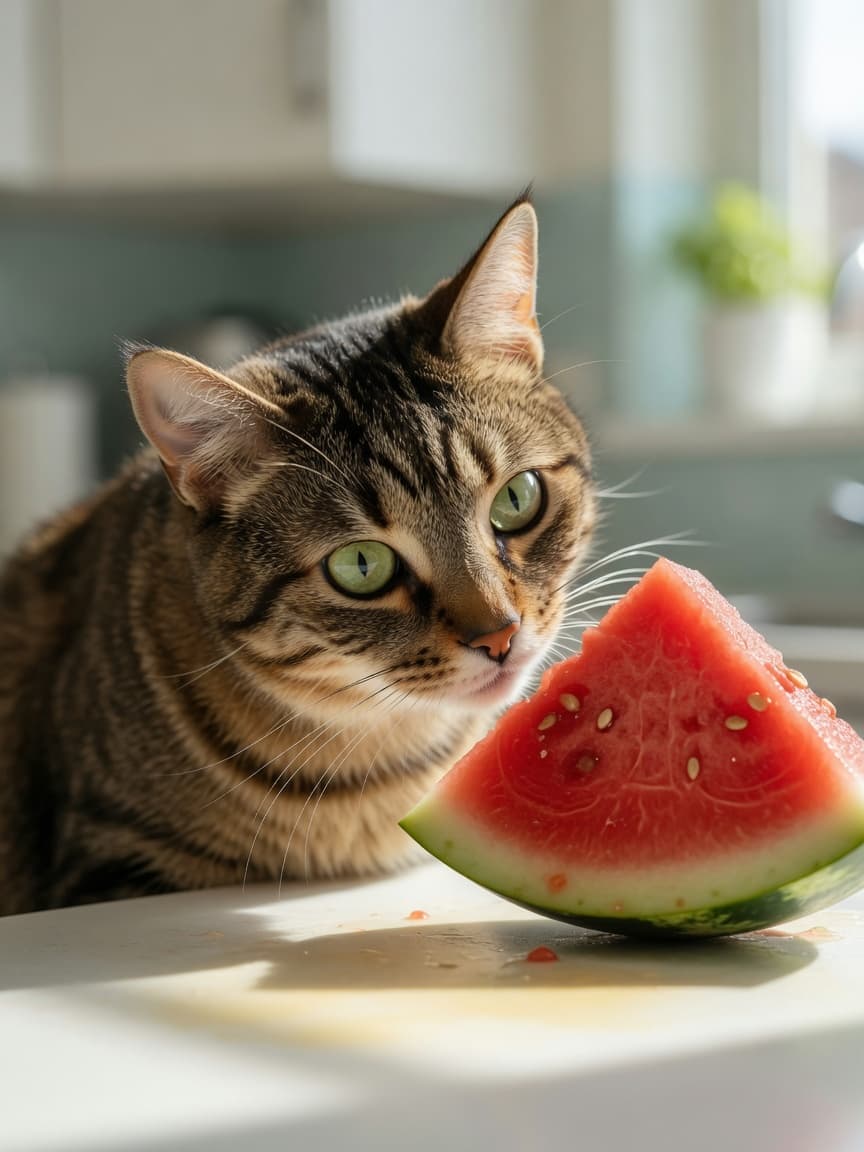
Watermelon flesh is not toxic to cats. The ASPCA does not list watermelon as poisonous to felines, and veterinary nutritionists generally regard the flesh as a harmless occasional treat. Unlike grapes or citrus fruits — which pose genuine health risks to cats — watermelon's main drawback is simply that it offers very little that is relevant to feline health, not that it causes active harm.
The high water content of watermelon is sometimes cited as a potential benefit. Cats, as descendants of desert-dwelling ancestors, have a naturally low thirst drive and often do not drink enough water voluntarily. Chronic mild dehydration is common in cats fed exclusively dry kibble and is a contributing factor to urinary tract disease, kidney strain, and constipation. A small piece of watermelon, at around 92% water by weight, does theoretically contribute to fluid intake — though the amount from a fingernail-sized piece is negligible compared to what a cat needs daily.
The Seed Risk: Why Seedless Matters
Watermelon seeds are a point of concern. Like apple seeds, watermelon seeds contain trace amounts of amygdalin, a compound that can metabolize into hydrogen cyanide when chewed and digested. The concentration in watermelon seeds is much lower than in apple seeds, and a cat would need to ingest a substantial number to experience acute toxicity. However, seeds also present a physical hazard — they can cause intestinal blockages, especially in smaller cats or kittens.
The simplest and safest approach is to use seedless watermelon varieties, or to meticulously remove all visible seeds before offering any piece to your cat. This eliminates both the chemical risk and the mechanical obstruction risk in one step. Do not assume that swallowing one or two seeds is necessarily an emergency, but make it a habit to remove them entirely.
The Rind: Always Remove It
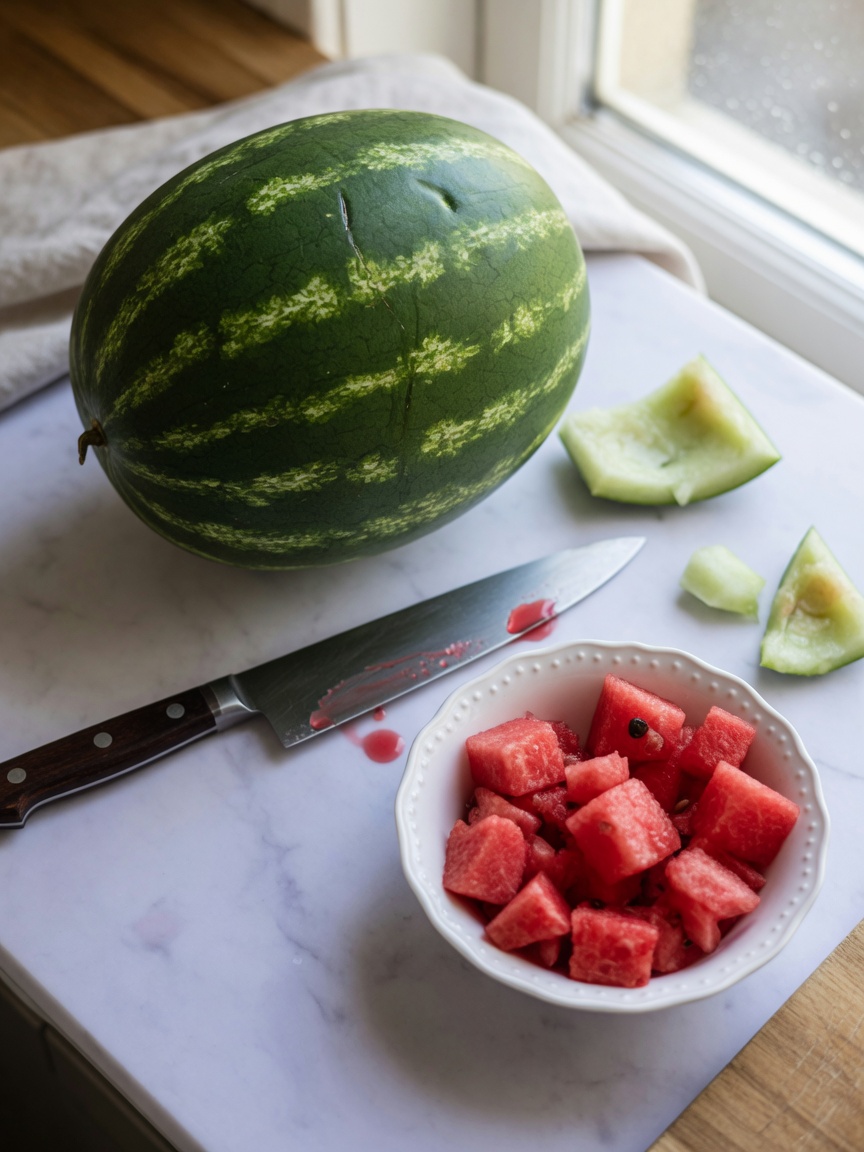
Watermelon rind — the firm green outer layer and the pale white flesh immediately beneath it — should never be offered to cats. The rind is extremely fibrous and difficult for a cat's digestive system to break down. Ingesting rind can cause vomiting, diarrhea, or in more serious cases, gastrointestinal obstruction requiring veterinary attention.
The rind also has a much higher concentration of the amino acid citrulline than the red flesh, which at the levels found in cat-sized portions is not beneficial for felines. Additionally, commercially grown watermelons may have pesticide residues concentrated on the outer rind and skin — another reason to keep it far away from your cat.
When preparing watermelon for your cat, cut away all rind generously, leaving only the deep red flesh. Cut it into very small, manageable pieces to reduce any choking risk.
Cats Cannot Taste Sweetness — So Why Do Some Seem Interested?
Like all cats, your feline companion lacks functional sweet taste receptors due to a pseudogenization of the Tas1r2 gene. This means the characteristic sweetness of watermelon — the quality that makes it so pleasant for humans — is entirely imperceptible to cats. They cannot taste sugar.
If your cat shows curiosity about watermelon, it is most likely responding to:
- The distinctive aroma compounds in the fruit
- The moisture and cool temperature on a warm day
- Curiosity about what you are eating and your handling of the food
- The novel texture, which some cats find stimulating
Many cats will sniff watermelon and immediately lose interest. Others may lap at the moist surface out of curiosity. Very few cats will eat a meaningful quantity voluntarily, which is actually convenient — it naturally limits how much they consume.
Sugar Content: A Minor Concern
Watermelon is lower in sugar than many other fruits — typically around 6% by weight — which is relatively modest. This makes it less problematic than, say, grapes (if they were not toxic for other reasons) or figs. However, any fruit sugar presents the same basic metabolic challenge for cats: their systems are not designed to process carbohydrates efficiently, and over time, excessive sugar intake can contribute to obesity and insulin resistance.
For a healthy adult cat, a single small cube of watermelon flesh once a week is unlikely to create any metabolic issue. The concern applies more to cats that are overweight, diabetic, or have known metabolic disorders — in those cases, any fruit should be avoided and dietary changes should be discussed with a veterinarian.
Ver alimentos para gatos en Zooplus →Better Ways to Hydrate Your Cat
If your motivation for offering watermelon is to encourage your cat to drink more water, there are more reliable and nutritionally appropriate strategies:
- Switch to wet food or add water to dry food: Quality wet cat foods contain 70–80% moisture and are the single most effective way to increase a cat's water intake.
- Use a cat water fountain: Cats are instinctively attracted to moving water. A recirculating fountain encourages more frequent drinking.
- Offer water in multiple locations: Cats are territorial about their water sources and drink more when bowls are placed in different rooms, away from food bowls.
- Use wide, shallow bowls: Many cats dislike having their whiskers touch the sides of a water bowl. A wide, shallow bowl reduces this sensitivity.
None of these strategies involve fruit, and all of them are more effective at improving a cat's hydration than an occasional piece of watermelon.
When Watermelon Is Completely Off the Table
Do not offer watermelon to cats with:
- Diabetes or insulin resistance
- Obesity
- Kidney disease (speak with your vet about appropriate fruits and sugars)
- Known food sensitivities or gastrointestinal issues
- A history of urinary crystals that may be influenced by diet
- Seedless watermelon flesh is safe for cats in small amounts and may offer a minor hydration benefit.
- Always remove all seeds — they contain trace cyanogenic compounds and pose a physical blockage risk.
- Always remove the rind completely — it is too fibrous to digest safely and may cause GI upset.
- Cats cannot taste sweetness and have no nutritional need for watermelon.
- For real hydration improvement, switch to wet food or use a cat water fountain instead.
References
- Plantinga EA, Bosch G, Hendriks WH. "Estimation of the dietary nutrient profile of free-roaming feral cats: possible implications for nutrition of domestic cats." Br J Nutr. 2011;106 Suppl 1:S35-48. PMID: 22005436
- Verbrugghe A, Bakovic M. "Peculiarities of one-carbon metabolism in the strict carnivore, the domestic cat (Felis catus)." Nutrients. 2013;5(7):2811-35. PMID: 23873295
- Morris JG. "Cats discriminate between carbohydrate-supplemented and unsupplemented diets." J Nutr. 2002;132(6 Suppl 2):1713S-5S. PMID: 12042485