
Can Cats Eat Turkey? A Nutritionist's Complete Guide
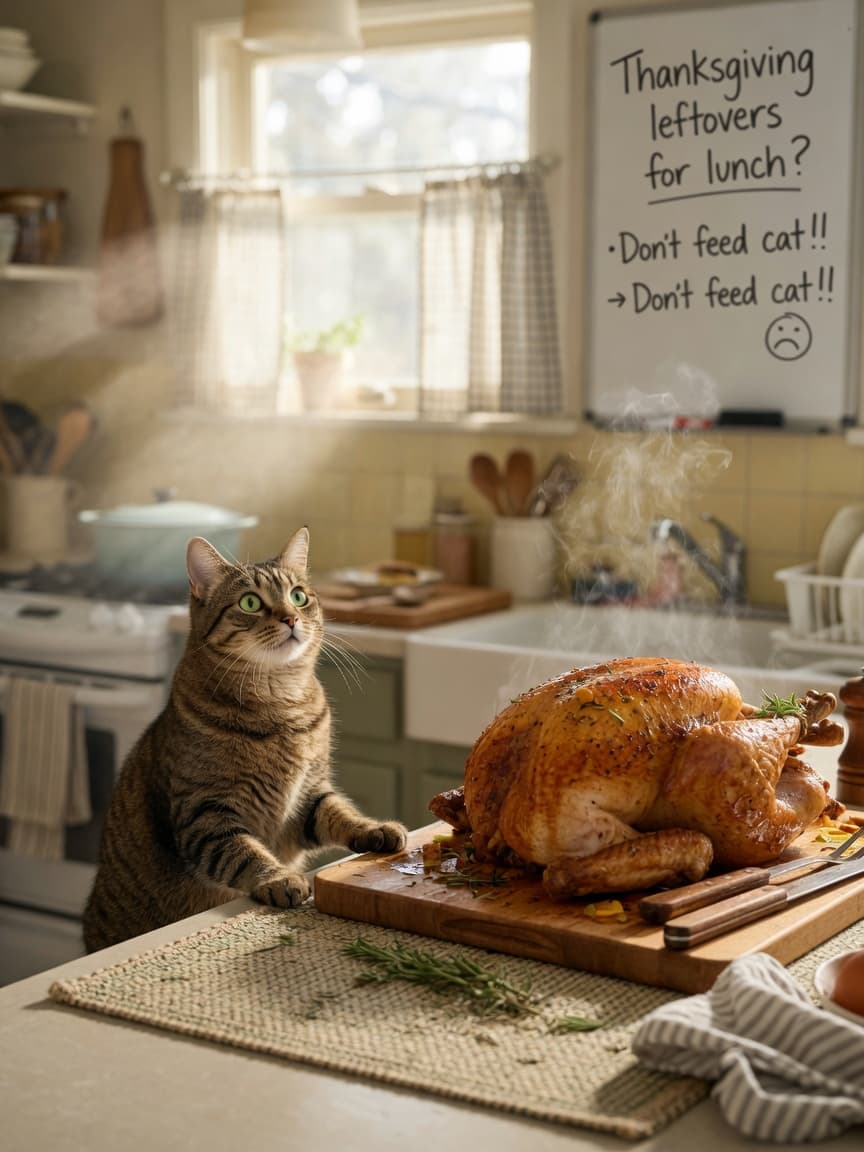
Every holiday season, millions of cat owners find themselves with a pair of curious feline eyes locked on the roasting pan. And it raises a perfectly reasonable question: can cats eat turkey? The short answer is yes — but the details around how it is prepared are what make the difference between a safe treat and a trip to the emergency vet.
Why Turkey Is a Good Fit for Cats
Cats are obligate carnivores. This is not simply a dietary preference — it is a fundamental biological reality. Unlike omnivores, cats lack the metabolic machinery to efficiently derive energy or essential nutrients from plant sources. They require preformed animal-based nutrients, including taurine, arachidonic acid, and vitamin A in its retinol form. Turkey, as a lean animal protein, delivers exactly the type of nutrition a cat's body is built to use.
Turkey is also widely used as an ingredient in commercial cat foods — which is itself a useful signal. Food scientists and veterinary nutritionists who formulate feline diets regularly include turkey as a protein source because of its digestibility and amino acid profile. Offering a cat a small piece of plain cooked turkey is, in essence, giving them a food their body already knows how to handle.
Nutritional Benefits of Turkey for Cats
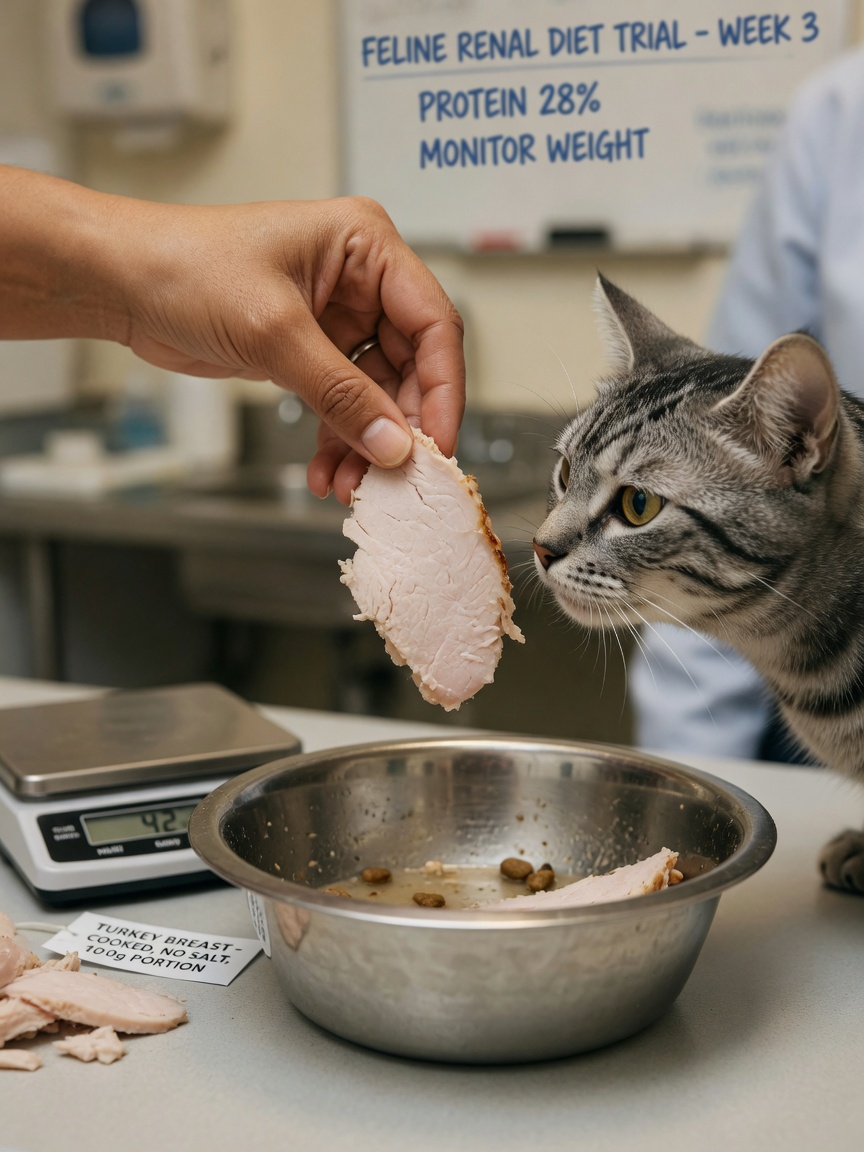
Plain cooked turkey breast offers cats several meaningful nutrients:
- High protein content: Turkey breast is approximately 29 grams of protein per 100 grams — one of the leaner, higher-protein meats available.
- Taurine: Turkey contains naturally occurring taurine, the essential amino acid cats must obtain from diet. Taurine supports cardiac function, retinal health, and reproductive health in cats.
- B vitamins: Turkey is rich in niacin (B3), B6, and B12, all of which support nervous system function and energy metabolism.
- Selenium and zinc: Both minerals found in turkey support immune function and skin health.
- Low in fat (white meat): Turkey breast is significantly leaner than dark meat, making it a safer option for cats prone to weight gain or with a history of pancreatitis.
White Meat vs. Dark Meat
When offering turkey to cats, white meat — particularly the breast — is the preferred choice. Dark meat contains significantly more fat, which in excess can strain a cat's digestive system and contribute to pancreatitis over time. While a small amount of dark meat is unlikely to cause harm in a healthy adult cat, making white meat the default keeps the fat content manageable and the treat genuinely beneficial.
The Danger of Cooked Bones
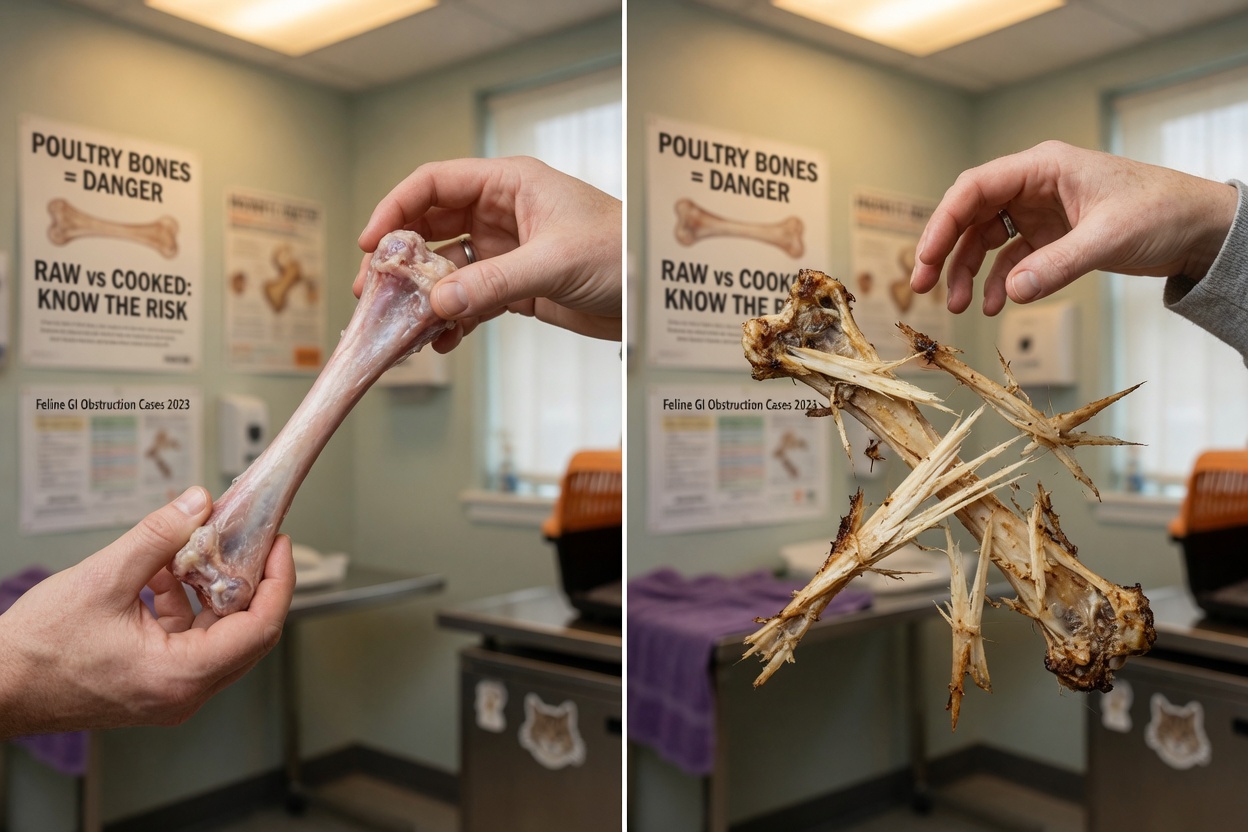
This is non-negotiable: never give a cat cooked turkey bones. When poultry bones are cooked, they become brittle and splinter into sharp shards rather than bending or breaking cleanly. These splinters can puncture the esophagus, stomach, or intestines — a life-threatening emergency. Raw bones from poultry are generally more pliable and are used in some raw feeding protocols under veterinary guidance, but cooked bones of any kind should always be kept away from cats entirely.
Why the Skin Must Go
Turkey skin may seem like a harmless addition, but it is problematic for two reasons. First, it is extraordinarily high in fat — far more than the meat itself. A small piece of turkey skin can trigger a bout of pancreatitis, particularly in cats that are overweight or have a sensitive digestive system. Second, the skin is often where seasonings and cooking fats concentrate. Even if you think the turkey was minimally seasoned, the skin tends to absorb and retain the most flavor — which means the most seasoning. Remove the skin before offering any turkey to your cat.
Ver alimentos para gatos en Zooplus →What About Holiday Turkey With Stuffing and Seasoning?
Seasoned holiday turkey is definitively off-limits. The most common danger is garlic and onion, both of which are toxic to cats at any dose. Garlic and onion contain thiosulfates and organosulfur compounds that damage feline red blood cells, causing hemolytic anemia. Symptoms may not appear immediately — they can develop over several days — making it easy to mistake a dangerous exposure for a harmless one. Other common seasonings (sage, rosemary, salt, pepper, butter, wine-based brines) are either toxic in quantity or contribute unnecessary sodium and fat.
Turkey stuffing is particularly dangerous because it concentrates multiple harmful ingredients — onion, garlic, herbs, and often raisins or other ingredients toxic to pets — in a single serving. Never offer stuffing to a cat under any circumstances.
How to Prepare Turkey Safely for Your Cat
The preparation is simple. Cook turkey breast thoroughly — internal temperature of 165°F (74°C) — with no oil, butter, salt, or seasoning. Remove all skin and bones. Allow the meat to cool to room temperature. Slice into small, bite-sized pieces appropriate for your cat's size. One or two pieces as a treat is sufficient. Do not offer turkey every day; once or twice a week as a protein-rich treat is more than adequate.
Turkey as Part of a Balanced Diet
Turkey treats work best when they complement — rather than replace — a complete and balanced commercial cat food. No single ingredient, no matter how nutritious, can replicate the precise vitamin and mineral ratios found in a well-formulated feline diet. Turkey lacks sufficient calcium, vitamin D, and many trace minerals in the proportions cats need for long-term health. Think of plain cooked turkey as a high-value reward, not a meal replacement.
If you are interested in incorporating more turkey protein into your cat's routine diet, look for commercial cat foods that list turkey as a primary ingredient. Several high-quality wet and dry formulas use turkey as their main protein source.
- Plain, cooked turkey (especially white meat/breast) is safe and nutritious for cats.
- Turkey provides high-quality protein, taurine, and B vitamins cats genuinely need.
- Always remove skin (too fatty) and bones (splinter hazard) before serving.
- Garlic, onion, and stuffing are toxic to cats — holiday turkey is a firm no.
- Offer turkey as an occasional treat, not a daily meal replacement.
- Cats are obligate carnivores — animal proteins like turkey are biologically appropriate, unlike plant foods.
- A complete commercial cat food should remain the foundation of your cat's diet.
References
- Verbrugghe A, Bakovic M. "Peculiarities of one-carbon metabolism in the strict carnivore, the domestic cat." Nutrients. 2013;5(7):2811-35. PMID: 23873295
- Plantinga EA, Bosch G, Hendriks WH. "Estimation of the dietary nutrient profile of free-roaming feral cats: possible implications for nutrition of domestic cats." Br J Nutr. 2011;106 Suppl 1:S35-48. PMID: 22005436
- Morris JG. "Idiosyncratic nutrient requirements of cats appear to be diet-induced evolutionary adaptations." Nutr Res Rev. 2002;15(1):153-68. PMID: 19087395