
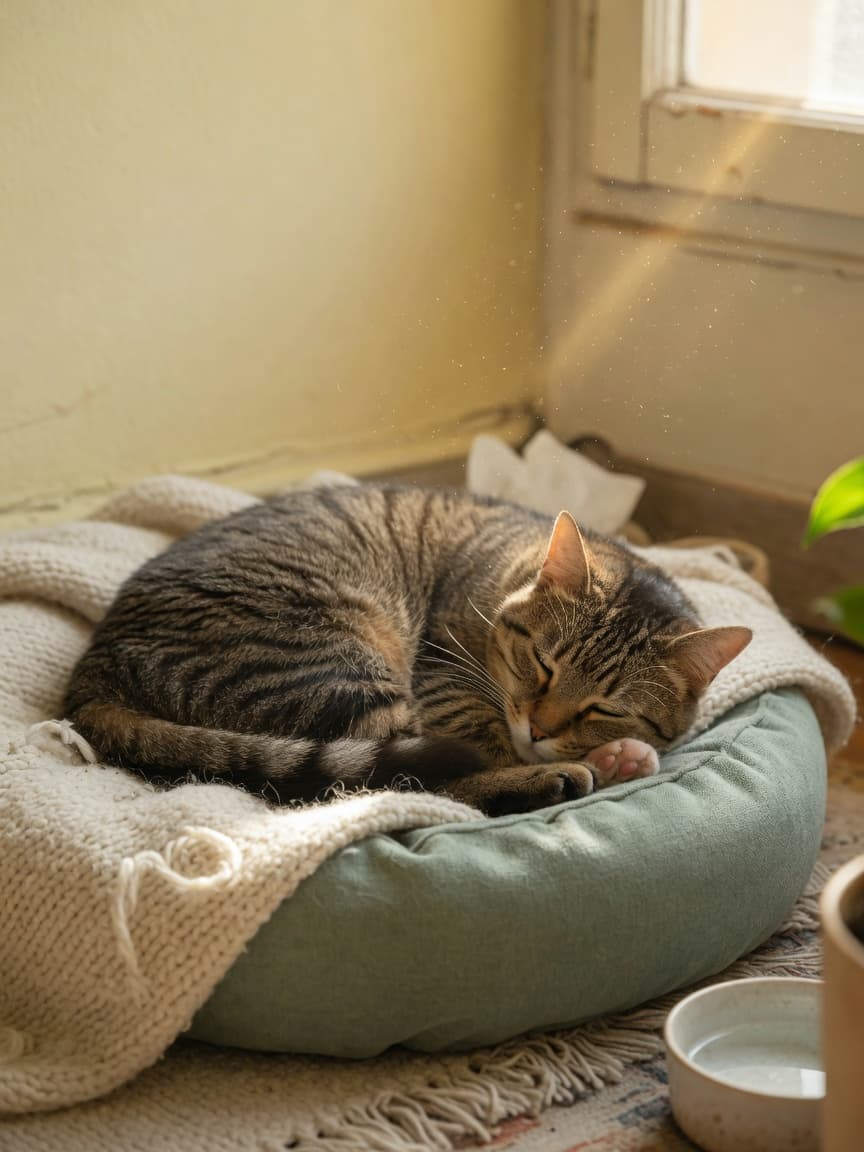
Why Is My Cat Sleeping So Much? Normal or Concerning?
Updated June 2026
- A sudden, marked increase in sleep alongside appetite loss or weight loss
- Cat cannot be roused from sleep easily or seems confused when awakened
- Excessive sleep accompanied by difficulty breathing, pale gums, or weakness
- A previously active, playful cat becomes noticeably lethargic over days to weeks
- Any changes in litter box habits alongside increased sleep
If you've ever watched your cat spend most of the day curled up on the couch and wondered whether something is wrong, you're not alone. Cats are champion sleepers — but knowing how much is normal versus how much signals a problem requires understanding feline biology. The short answer is that most cats sleep far more than we expect, and most of the time it's completely fine. The key is knowing which changes to watch for.
How Much Do Cats Actually Sleep?
Adult cats sleep an average of 12 to 16 hours per day. Some sleep up to 20 hours. This is not laziness — it's an evolutionary adaptation. Cats are obligate carnivores that evolved as burst-sprint hunters. Catching prey requires explosive energy expenditure that must be offset by extended rest. In between hunting bouts, the energy-conserving strategy is sleep. Domestic cats retain these patterns even without needing to hunt. Kittens and senior cats tend to sleep even more — kittens because growth hormone is released during sleep, seniors due to reduced overall energy and physical activity.
Normal Sleep Patterns by Life Stage
Kittens (under 6 months) may sleep 18–20 hours daily, and this is not only normal but necessary for healthy neurological development. Adult cats in their prime (1–7 years) average 12–16 hours. Senior cats (over 10 years) may sleep 18 hours or more, partly from reduced energy and partly because they process information and manage physical discomfort better during rest. The quantity of sleep per se is less important than whether the cat is bright, interactive, and eating normally during its waking hours.
1. Weather and Temperature
Cats sleep significantly more on cold, rainy, or overcast days — researchers have confirmed this in multiple behavioral studies. The connection between barometric pressure, ambient temperature, and feline activity is well established. If your cat becomes a sofa slug whenever the weather turns grey, this is perfectly normal meteorological napping, not illness.
2. Boredom and Under-Stimulation
Indoor-only cats without adequate environmental enrichment may sleep excessively simply because they have nothing to do. This "boredom sleep" is not medically dangerous but indicates that the cat's behavioral and cognitive needs are not being met. Puzzle feeders, rotating toys, window perches overlooking bird feeders, and regular interactive play sessions can dramatically increase waking activity. A cat that has engaging outlets tends to sleep more efficiently in shorter bouts rather than in marathon sessions driven by understimulation.
3. Post-Meal Drowsiness
The relationship between eating and sleeping is physiologically direct in cats. The hunt-eat-groom-sleep cycle is deeply ingrained. After eating, digestion increases blood flow to the gastrointestinal tract and triggers a parasympathetic ("rest and digest") response that promotes sleepiness. A cat that naps heavily after every meal is following a completely natural biological script.
4. Illness and Lethargy
Here is where increased sleep becomes medically significant: illness-related lethargy is characterized by sleep that is out of proportion to normal patterns, accompanied by other changes. A sick cat doesn't just sleep more — it also eats less, grooms less, interacts less, and may hide. The combination of increased sleep with appetite changes, weight loss, or personality shift is the warning signal. Any systemic illness — from a mild viral infection to kidney disease, anemia, or cancer — can cause lethargy. The key red flag is change from the individual cat's established baseline, not absolute hours of sleep.
5. Obesity
Obese cats tend to be less active and sleep more — partly because carrying excess weight is physically tiring and partly because reduced caloric expenditure reduces the motivation for activity. Obesity in cats is associated with diabetes, joint disease, and hepatic lipidosis. If your cat sleeps excessively AND is overweight, weight management (with veterinary guidance on a safe caloric deficit) improves energy and activity markedly over weeks to months.
6. Chronic Pain
A cat in chronic pain — most commonly from arthritis — will sleep more as a pain-management strategy. Reduced activity means reduced pain. This is subtle and often overlooked because the cat isn't vocally distressed. Diagnostic clues include sleeping in new locations (possibly closer to ground level), reluctance to jump, changes in grooming (areas that are hard to reach due to stiffness become under-groomed), and altered litter box behavior. Pain assessment by a vet, followed by appropriate analgesia, often produces a striking return to activity in arthritic cats.
7. Depression or Grief
Cats form genuine social bonds — with their owners, with other pets in the household, and with their established routines. The loss of a companion (human or animal), a significant household disruption, or chronic stress can cause something functionally resembling feline depression: withdrawal, reduced play, increased sleep, and decreased appetite. This is a diagnosis of exclusion requiring ruling out medical causes, but it is real and responds to increased gentle engagement, routine consistency, and sometimes veterinary-guided anxiolytic support.
Rather than counting hours of sleep, assess your cat's quality of wakefulness. A healthy cat should have clear, bright eyes during its active periods, readily engage with play or interaction, maintain normal grooming, and eat enthusiastically. If waking hours seem dull — the cat moves slowly, declines food, or shows no interest in things that previously excited it — that "quality of wakefulness" decline is more diagnostically important than any absolute change in hours slept. This observation is worth discussing at your next vet check.
Key Takeaways
- Cats sleeping 12–16 hours daily (up to 20 for kittens and seniors) is completely normal and reflects their evolutionary biology.
- Weather, boredom, post-meal drowsiness, and life stage all explain normal variation in sleep duration.
- Illness-related lethargy is distinguished by accompanying signs: appetite loss, weight loss, reduced grooming, hiding, or personality changes — not sleep alone.
- Chronic arthritis is a common cause of excessive sleep in senior cats — pain management dramatically improves activity levels.
- Assess quality of wakefulness rather than absolute sleep hours — a bright, engaged, eating cat that sleeps 18 hours is healthy; a dull, off-food cat sleeping 16 hours needs veterinary attention.
References
- Zulch H, Mills D. Life Skills for Puppies: Laying the Foundation for a Loving Lasting Relationship. Hubble & Hattie; 2012. PMID: 23691815
- Lascelles BDX, Robertson SA. DJD-associated pain in cats: what do we know about this important condition? J Feline Med Surg. 2010;12(3):188–199. PMID: 20167288