
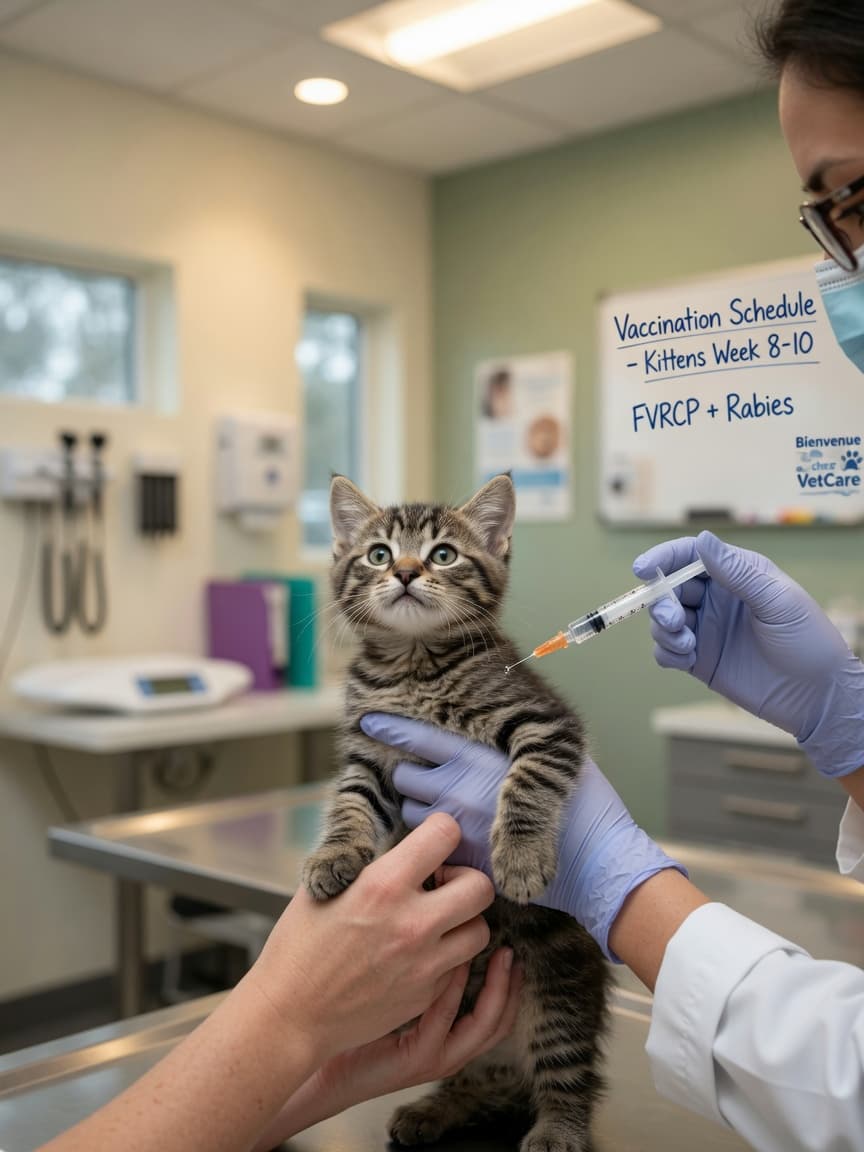
Getting Your Kitten Off to the Right Start
Bringing a kitten home is exciting, but the health decisions you make in the first few weeks matter enormously. Kittens are born with some immunity passed from their mother, but this protection wanes rapidly. Without timely intervention from a vet, they are vulnerable to a range of serious and preventable diseases.
Whether your kitten came from a breeder, a rescue, or was found as a stray, this checklist applies. Follow it through and you will significantly reduce your kitten's health risks during their most vulnerable stage.
The First 48 Hours: Vet Registration and Initial Check
Why an Early Examination Matters
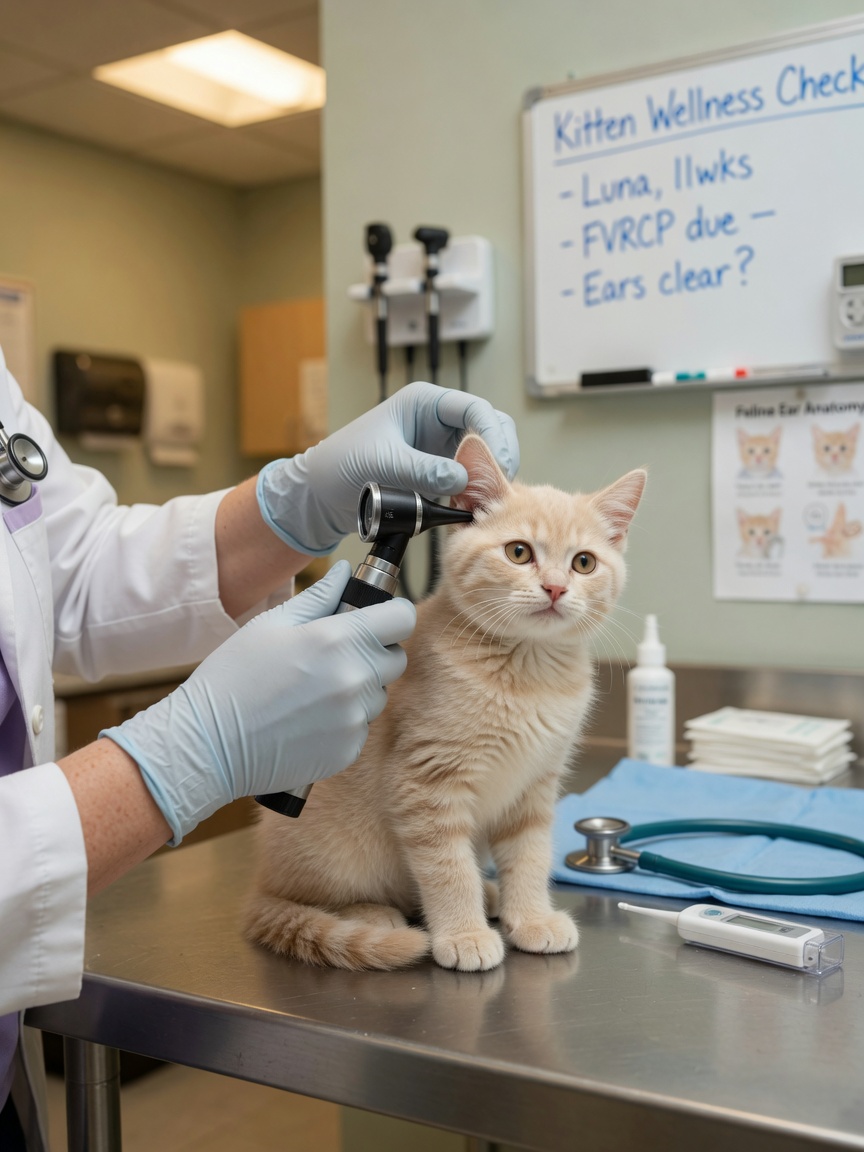
Even a kitten that appears perfectly healthy should see a vet within the first two days. Many conditions common in young cats are not obvious to the untrained eye — congenital heart murmurs, eye infections, ear mites, and early signs of feline herpesvirus can all be missed without a proper clinical examination. Early detection makes treatment far more straightforward.
Your vet will check body weight, hydration, coat and skin condition, eyes, ears, abdomen, and heart. They will also review any vaccination or worming history provided by the breeder or rescue.
Preparing for the Appointment
Bring any paperwork given to you by the breeder or rescue centre, including vaccination records, worming treatments, and the kitten's date of birth. If the kitten has been eating a specific food, note this down as well. Even if you plan to change brands, your vet will want to know the current diet as part of the overall health picture.
Vaccinations: The UK Schedule Explained
Core Vaccines for Cats
In the UK, the core feline vaccines cover feline herpesvirus (cat flu), feline calicivirus (also cat flu), feline panleukopaenia (a serious viral disease affecting the immune system and gut), and feline leukaemia virus (FeLV). The standard protocol involves a first injection at nine weeks, with a second dose three to four weeks later.
Your kitten is not fully protected until approximately two weeks after the final dose. Until then, keep them away from unknown cats and outdoor environments where other cats may roam. Indoor kittens are not exempt from this guidance — cat flu viruses can be carried on clothing and hands.
Non-Core Vaccines
Chlamydophila felis, which causes conjunctivitis and respiratory signs, may be recommended by your vet for kittens in multi-cat environments. Ask your vet to assess whether this is appropriate for your situation.
Parasite Treatment in the First Month
Worms
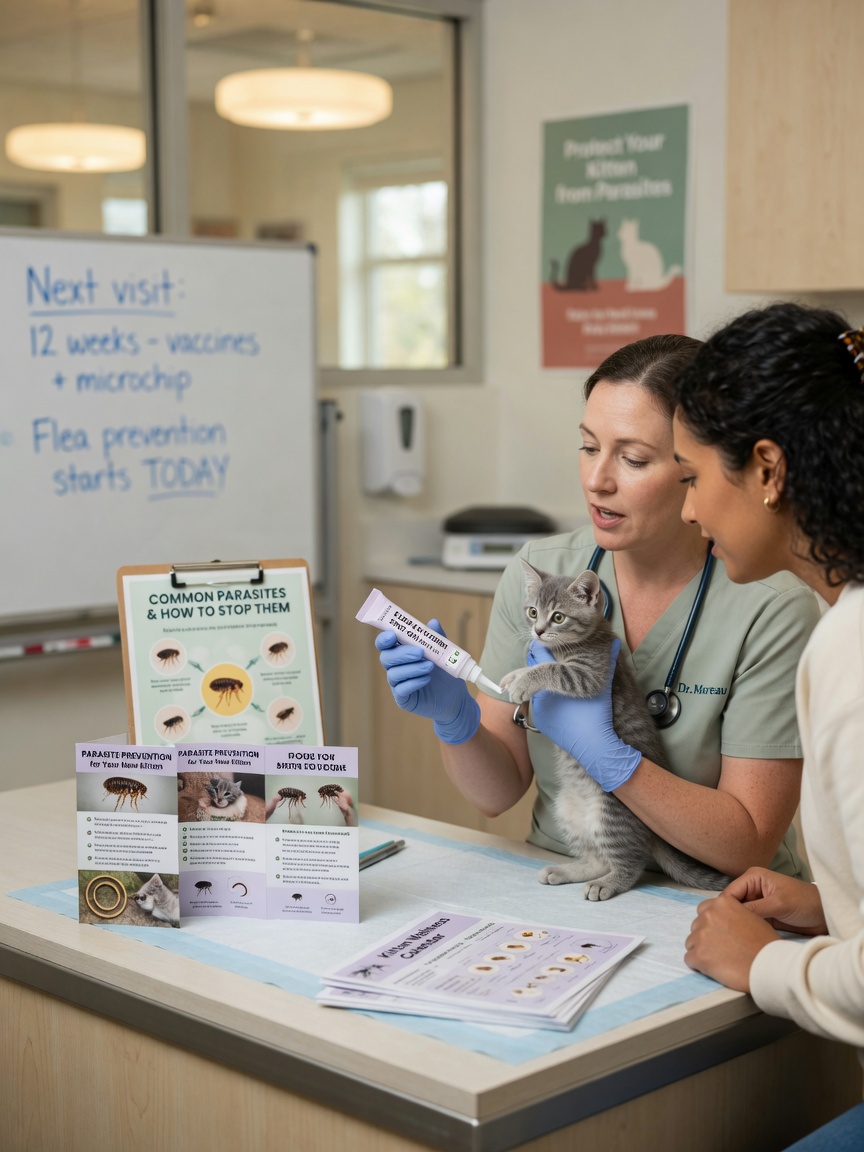
Roundworm infection in kittens is extremely common and can be passed from the queen through milk. Most kittens should have been wormed at two weeks, four weeks, and six weeks before you receive them. After that, monthly treatment is recommended until six months of age, then quarterly for most adult cats. Your vet can prescribe an effective veterinary wormer — many shop-bought alternatives have limited efficacy against all life stages of common worm species.
Fleas and Ear Mites
Ear mites are particularly prevalent in kittens from rescue environments and multi-cat households. Signs include dark, crumbly debris in the ear canals and persistent head shaking or scratching. Your vet can confirm diagnosis and prescribe appropriate treatment. For flea prevention, always use a product licensed for kittens, as many adult cat formulations contain permethrin or other compounds unsafe for young animals.
Nutrition, Feeding and Weight Monitoring
How Often to Feed a Kitten
Kittens under three months need four small meals per day. Their stomachs are tiny and their energy demands are extremely high relative to body size. From three to six months, three meals per day is appropriate. Most vets recommend transitioning to twice daily feeding after six months, though many cat owners continue with more frequent smaller meals throughout their cat's life.
Always use a food labelled as complete and balanced for kittens or for all life stages. Foods labelled only as complementary lack essential nutrients and are not suitable as a sole diet.
Weighing Your Kitten
Weigh your kitten weekly for the first three months. Consistent weight gain is the single most reliable indicator that a kitten is healthy and thriving. A kitten who fails to gain weight over a one-week period warrants a vet call. Average weight gain varies enormously by breed, but any sustained plateau or loss is a concern.
Microchipping and Legal Requirements
Since June 2024, microchipping has been a legal requirement for cats in England. All cats must be microchipped by the time they are twenty weeks old, and owner details must be kept current on a compliant database. If your kitten was obtained from a reputable breeder or rescue, this should already be done. Check the paperwork and verify your details are registered correctly.
Neutering: When and Why
Cats can reach sexual maturity from as early as four months old. An unneutered female can become pregnant before her first year, and entire male cats will begin marking territory, roaming, and fighting. Most UK vets recommend neutering around four to six months, before sexual maturity is reached. Some rescue organisations neuter kittens as young as eight weeks under anaesthetic protocols designed for paediatric patients.
Neutering reduces the risk of certain reproductive cancers, eliminates the risk of unwanted litters, and significantly reduces roaming and aggression in males.
Your Kitten Health Checklist at a Glance
- Register with a vet and book an examination within 48 hours
- Confirm vaccination history and begin or continue the core vaccine course
- Continue worming monthly until six months of age
- Check for and treat ear mites if present
- Apply flea prevention appropriate for kittens
- Feed a complete kitten food, four times daily under three months
- Weigh weekly and track growth
- Confirm microchip registration is current and accurate
- Discuss neutering timing with your vet
- Keep indoors until two weeks after final vaccination