
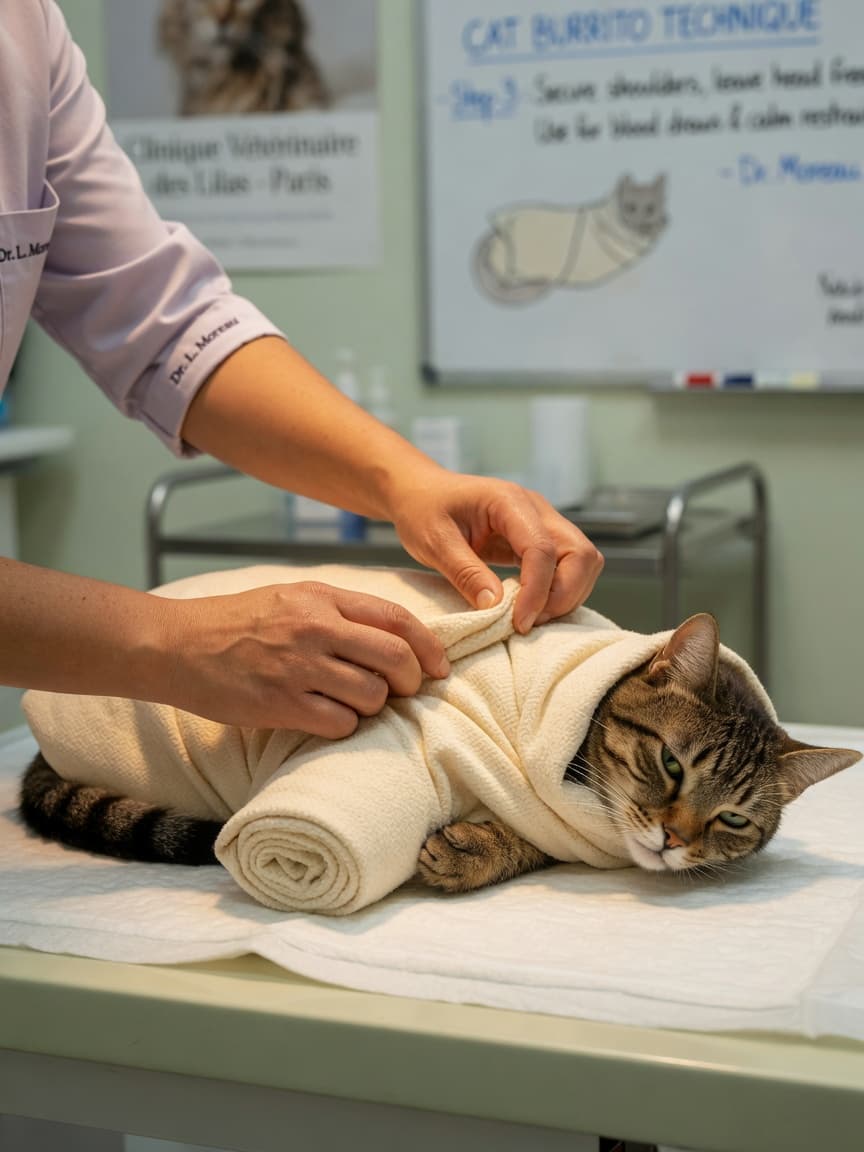
If you've ever needed to administer medication, trim nails, or examine a wound on your cat, you've likely discovered that felines have a remarkable ability to transform into furry octopi. The "cat burrito" technique—wrapping your pet securely in a blanket or towel—is a time-honoured method that veterinary professionals and experienced cat owners use to keep their pets safe and still during necessary handling. Done correctly, this approach minimises stress for both you and your cat whilst making essential care tasks significantly easier.
Understanding Why Cats Resist Restraint
Before attempting any wrapping technique, it's worth understanding feline behaviour. Cats value autonomy and can become anxious when they feel confined. Their flexibility means they can contort their bodies in surprising ways, and their natural fight-or-flight response activates when they feel trapped. Rather than viewing restraint as a punishment, think of it as a temporary comfort measure that allows you to complete necessary health tasks safely.
Preparing Your Cat for Success

Prevention is always better than cure. Building positive associations with handling from a young age makes restraint far less stressful:
- Regularly handle your cat's paws, ears, and mouth during calm moments to desensitise them to touch
- Use treats and praise to reward cooperation during gentle handling sessions
- Keep the environment calm—dim lighting and quiet voices reduce anxiety
- Schedule handling sessions when your cat is naturally relaxed, such as after meals
- Consider calming pheromone diffusers in the room beforehand
Step-by-Step Burrito Wrapping Technique
Follow these steps for safe and effective cat burrito wrapping:
- Choose your material: Use a soft blanket or large towel that's approximately one metre square. Ensure it's clean and has no strong odours that might distress your cat.
- Position the blanket: Lay the blanket flat on a soft surface at an angle so one corner points towards you, creating a diamond shape.
- Place your cat: Position your cat in the centre of the blanket, with their head near the top corner and body lengthwise down the middle.
- Wrap the sides: Gently fold one side of the blanket over your cat's body, tucking it snugly but not tightly underneath. Repeat with the other side, ensuring their front paws are secured against their body.
- Secure the ends: Fold the bottom corner up and tuck it securely, then fold the top corner down gently over their head if needed, leaving their face exposed for breathing.
- Check comfort: Ensure you can fit one finger between the wrap and your cat's body—snug enough to prevent escape, but loose enough to allow comfortable breathing.
Minimising Feline Fussiness During the Process
Keep these tips in mind to reduce stress and resistance:
- Work quickly but gently—the faster you complete the wrap, the less time your cat has to panic
- Speak in soothing, calm tones throughout
- Never force your cat into position; allow them to settle naturally
- Have a second person available to help with particularly resistant cats
- Stop immediately if your cat shows signs of extreme distress and consult your veterinarian
After-Care and Building Trust
Once the necessary procedure is complete, reward your cat generously with treats, gentle stroking, and their favourite toy. This positive reinforcement helps them associate the experience with something manageable rather than purely negative. Over time, cats often become less resistant as they learn the burrito wrap precedes only temporary discomfort.
Key Takeaways
The cat burrito is an invaluable technique for safe handling, but success depends on patience, proper technique, and building positive associations with restraint. Start with calm, gentle practice sessions when no medical procedures are needed, so your cat views the wrap as routine rather than frightening. Remember that your veterinarian can provide additional advice tailored to your individual cat's temperament, and never hesitate to ask for professional guidance if your cat shows signs of extreme anxiety or aggression during handling.