
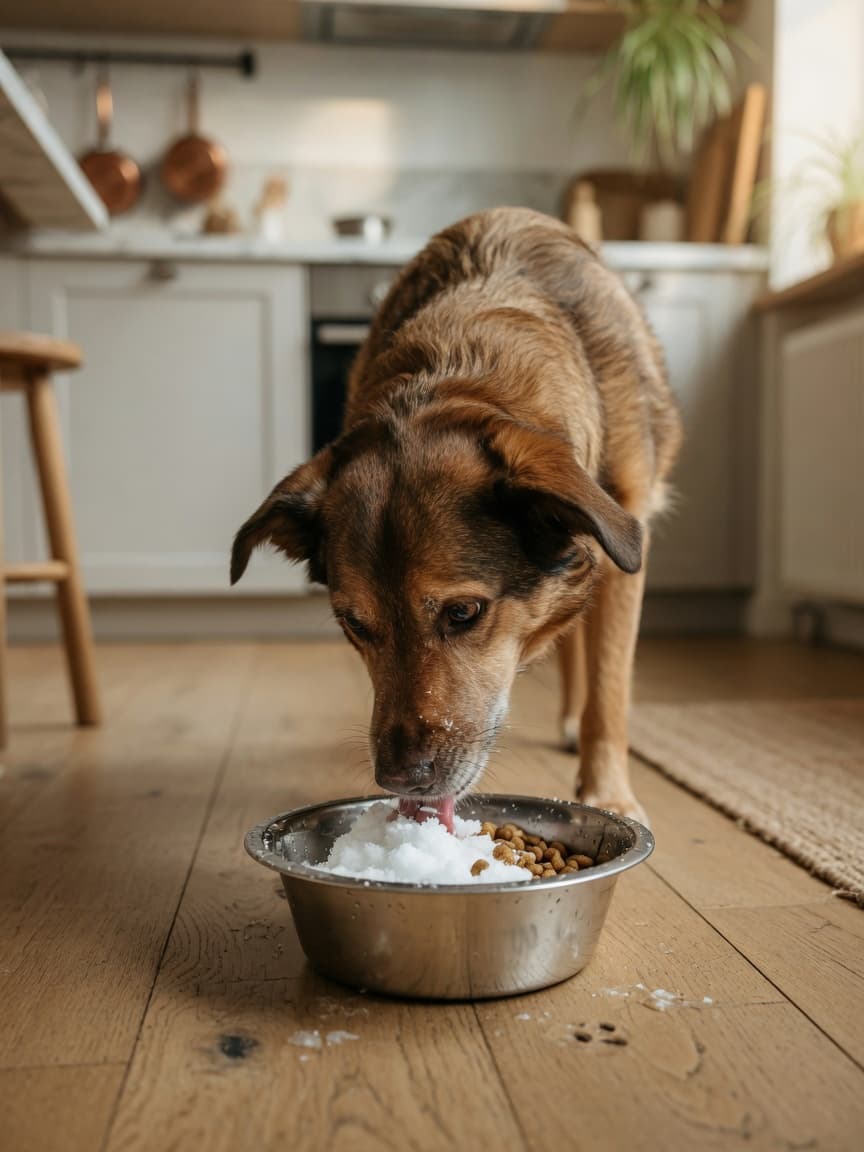
Can Dogs Eat Snow? When It's Fine & When It's Dangerous
Watch any dog experience their first real snowfall and the behavior is immediately clear — they shove their nose in, take a bite, toss a mouthful in the air, and generally approach the entire frozen landscape with a sense of wonder and appetite. Most owners immediately worry: is that safe? The honest answer is: it depends entirely on where the snow fell, what's on the ground it's covering, and how much your dog is consuming. This guide gives you a clear picture of when snow-eating is harmless, when it's a genuine health risk, and how to manage a dog who enthusiastically treats every winter walk like a frozen buffet.
When Snow Is Safe to Eat
Pure, freshly fallen snow in a genuinely clean environment — a rural field, a forest trail, an untreated backyard lawn — is essentially just water in solid form. Its chemical composition is close to rainwater: hydrogen and oxygen, with trace amounts of whatever particles were in the atmosphere as it fell (typically negligible in non-industrial areas). A dog who takes a few mouthfuls of fresh snow from a clean environment is unlikely to experience any harm beyond a slight cooling of their core temperature, which is self-limiting — they will stop when they feel cold.
The nutritional impact of snow is nil (it contributes negligible calories or minerals), and it does not provide meaningful hydration the way liquid water does because the energy cost of melting snow in the body partially offsets the water value. But it is not harmful. Small, occasional snow-eating in clean environments is a normal canine behavior that requires no intervention.
Risk 1: De-icing Chemicals and Road Salt
The most common and serious risk from snow-eating is chemical contamination from de-icing products applied to roads, sidewalks, parking lots, and driveways. Rock salt (sodium chloride) is the most widely used de-icer and is relatively low toxicity in small amounts, but causes gastrointestinal upset (vomiting, diarrhea) in larger quantities and can contribute to sodium overload in dogs who consume significant amounts repeatedly over a winter. More concerning are chemical de-icers such as calcium chloride, magnesium chloride, and potassium chloride — these are more effective than salt at lower temperatures but more irritating to mucous membranes and digestive tracts. Ingestion of concentrated forms can cause drooling, vomiting, diarrhea, and lethargy.
The specific de-icers that contain urea or nitrogen-based compounds can be particularly problematic. Some commercial de-icers are marketed as "pet safe" but this typically means they are less acutely toxic than standard rock salt, not completely harmless. The fundamental issue is that snow plowed from treated roads or accumulated beside treated paths absorbs these chemicals and concentrates them — this is not the same as fresh-fallen snow.
Risk 2: Antifreeze Contamination
Antifreeze (ethylene glycol) is one of the most acutely dangerous substances dogs can encounter in winter, and it can contaminate snow and puddles near roads, driveways, and parking areas. Ethylene glycol has a slightly sweet taste that makes it attractive to dogs. The lethal dose is very small — as little as 4.4 ml/kg body weight in dogs — and clinical signs progress from apparent intoxication (stumbling, disorientation) to acute kidney failure over 24-72 hours. This is a toxicological emergency where early treatment is the difference between survival and death.
Snow near roads, parking lots, and driveways should always be treated as potentially antifreeze-contaminated, especially in residential areas where vehicles park. Prevent your dog from eating any snow in these zones. If you suspect your dog has consumed antifreeze, seek emergency veterinary care immediately — do not wait for symptoms, as by the time acute kidney failure symptoms appear, treatment becomes significantly less effective.
Risk 3: Gastrointestinal Upset from Large Quantities
Even clean snow can cause gastrointestinal disturbance if consumed in large quantities. The rapid ingestion of cold material causes intestinal cramping and can accelerate gut motility, resulting in diarrhea. Dogs who act as though they are desperately thirsty when they encounter snow and eat large continuous quantities are most at risk. This is also a risk for dogs who are genuinely dehydrated before a winter walk — always ensure your dog has access to fresh water before outdoor activities in cold weather, as some dogs reduce their water intake in winter and may compensate by eating snow.
Puppies, small dogs, and dogs with pre-existing gastrointestinal sensitivities are more susceptible to GI upset from snow consumption than healthy adult dogs. If your dog vomits or has diarrhea after eating snow, withhold further access and monitor. Persistent symptoms warrant a veterinary visit.
Risk 4: Hypothermia from Extended Snow Consumption
A less obvious but real concern is hypothermia risk in small dogs, puppies, elderly dogs, and short-coated breeds who are already challenged by cold temperatures. Continuous consumption of snow — which must be warmed to body temperature by the dog's core — draws heat away from the body. This is a minor issue for a 35-pound healthy adult dog on a brief winter walk. It is a more meaningful concern for a 5-pound Chihuahua on a 30-minute walk in temperatures well below freezing. Monitor small or cold-vulnerable dogs closely and discourage sustained snow-eating in cold conditions.
Practical Guidance for Winter Walks
The practical approach is risk stratification by environment. In genuinely rural, untreated areas where you know the ground is clean: allow occasional snow-eating without concern. In suburban and urban environments, near any road, sidewalk, parking lot, or driveway: prevent snow-eating and particularly discourage drinking from puddles or snowmelt, which concentrates contaminants. Check your dog's paws after every winter walk and rinse them with clean water to remove de-icing chemicals before your dog has a chance to lick them off — this is often how chemical ingestion occurs, not from direct snow-eating but from subsequent paw grooming.
Teach a reliable "leave it" cue specifically for winter use. Practice it before the season begins so you have a reliable tool when your dog lunges toward roadside snow. Keep fresh water available on winter walks — a dog who is not thirsty is less motivated to source water from snow. The goal is not to prevent all snow contact (impossible and unnecessary) but to prevent consumption of contaminated snow in high-risk zones.
Key Takeaways
- Fresh, clean snow from rural or untreated areas is generally safe for healthy adult dogs in small amounts.
- Snow near roads, sidewalks, and parking lots may contain road salt, chemical de-icers, and antifreeze — prevent consumption in these zones.
- Antifreeze (ethylene glycol) is acutely toxic at very small doses and contaminates puddles and snowmelt near roads — seek emergency veterinary care immediately if ingestion is suspected.
- Large quantities of even clean snow can cause GI upset — cramping and diarrhea — particularly in dogs with sensitive digestion.
- Rinse paws after winter walks to prevent ingestion of de-icing chemicals through subsequent paw licking.
- Ensure your dog has access to fresh water before walks to reduce snow-eating driven by thirst.
References
- Connally HE, Thrall MA, Hamar DW. Safety and efficacy of high-dose fomepizole compared with ethanol as therapy for ethylene glycol intoxication in cats. Journal of Veterinary Emergency and Critical Care. 2010;20(2):191–206. PMID: 20487262.
- DeClementi C, Sobczak BR. Common rodenticide toxicoses in small animals. Veterinary Clinics of North America: Small Animal Practice. 2012;42(2):349–360. PMID: 22381180.
About the Author: Julia Wrenfield is a Pet Wellness Researcher with over 12 years of experience in companion animal health. She writes for ForPetsHealthcare.com to help pet owners make informed, evidence-based decisions for their animals.