
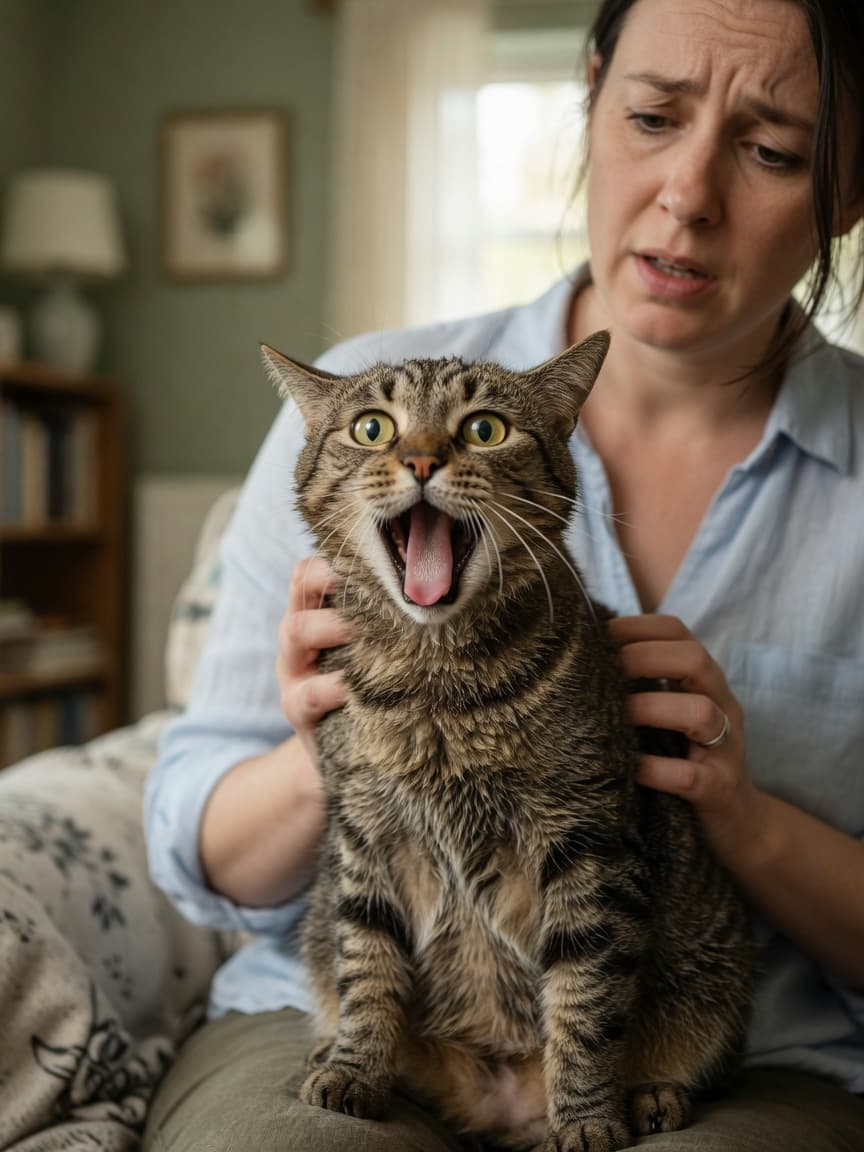
Why Is My Cat Panting? (Cats Don't Pant Like Dogs)
Updated June 2026
- Open-mouth breathing or panting in a resting cat — this is never normal
- Blue, grey, or pale gums alongside panting (oxygen deprivation)
- Panting with labored breathing, extended neck posture, or elbows pointing outward
- Panting after any kind of stress, car ride, or activity in a cat over 6 years old
- Rapid breathing (more than 30 breaths per minute) that doesn't slow after a few minutes of rest
A panting dog is a picture of healthy, happy exertion. A panting cat is almost always a medical problem. This fundamental difference trips up even experienced pet owners. While dogs pant to thermoregulate, cats almost exclusively breathe through their noses — a cat breathing with an open mouth is a cat in respiratory distress, overheated, or severely stressed, and deserves prompt attention. Here's what might be causing it and what to do.
When Is Panting Ever Normal in Cats?
There is a narrow window of normal panting in cats: brief, transient open-mouth breathing immediately after intense play or exercise, lasting no more than a minute or two before resolving completely. Some cats also pant briefly during extreme stress — a car ride, a vet visit — and recover quickly once the stressor ends. If panting is brief, resolves within 1–2 minutes of rest, and you can identify a clear physical trigger (vigorous play or extreme fear), it is probably not a medical emergency. Any panting that lasts more than a few minutes, or occurs without an obvious physical trigger, requires veterinary attention.
1. Respiratory Disease
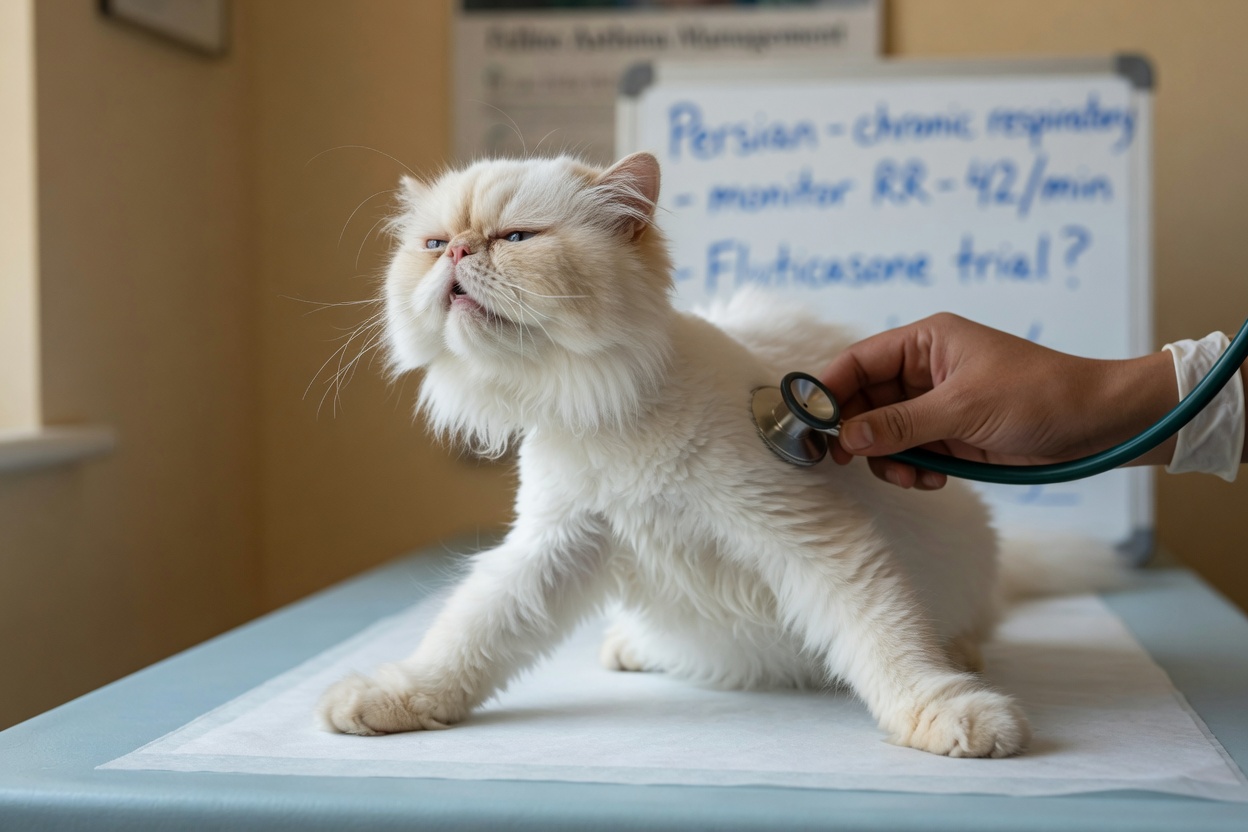
Feline asthma is one of the most common causes of panting and open-mouth breathing in cats. It causes bronchoconstriction — narrowing of the airways — that makes breathing difficult and effortful. During an asthma episode, cats often crouch with their neck extended, breathe rapidly and shallowly, and may wheeze. Feline asthma is diagnosed through chest radiographs and response to treatment. Bronchodilators (albuterol inhaler via a feline spacer) and corticosteroids are the mainstays of treatment. Chronic asthma is managed long-term with inhaled steroids.
2. Heart Disease
Hypertrophic cardiomyopathy (HCM) is the most common cardiac disease in cats and can cause fluid accumulation in or around the lungs (pulmonary edema or pleural effusion), making breathing increasingly labored. Affected cats may pant, breathe rapidly, or sit in a hunched position with their front legs spread apart to make breathing easier. HCM is often silent until the cat is in a crisis. Veterinary diagnosis involves cardiac auscultation, echocardiography, and chest radiographs. Emergency treatment of pulmonary edema involves oxygen therapy and diuretics (furosemide). Long-term management with atenolol or clopidogrel helps prevent complications.
3. Pleural Effusion
Fluid accumulation in the space around the lungs (pleural space) compresses the lungs and severely restricts breathing. Cats with pleural effusion pant and breathe rapidly, hold their neck extended, and often refuse to lie down because the position worsens breathing. Causes include heart failure, infection (pyothorax), cancer (lymphoma, mesothelioma), and chylothorax (lymphatic fluid). Emergency drainage of the fluid (thoracocentesis) immediately improves breathing. The underlying cause determines long-term management.
4. Heatstroke
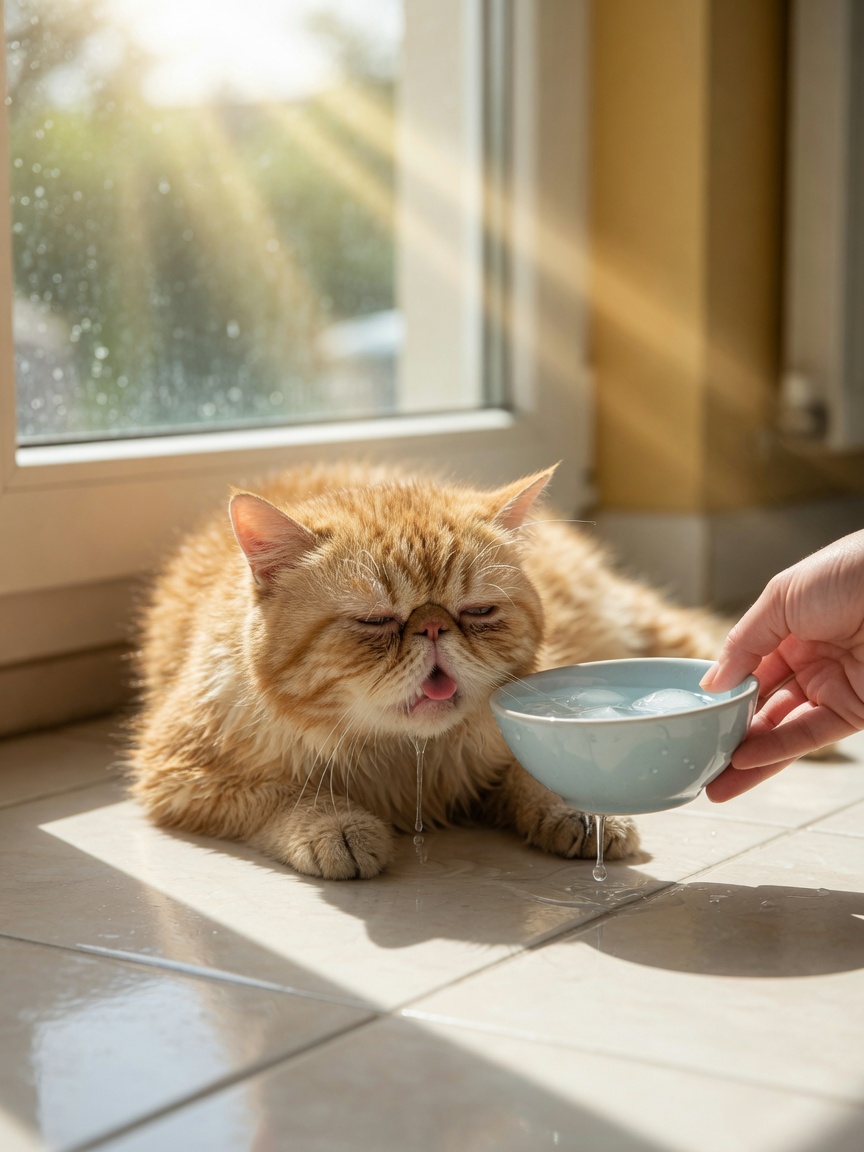
Cats can overheat rapidly in cars, poorly ventilated rooms, or during hot weather, especially if they're flat-faced (brachycephalic) breeds like Persians or Exotic Shorthairs. Heatstroke produces panting, drooling, reddened gums, lethargy, and vomiting. If you suspect heatstroke, move the cat immediately to a cool environment, place a cool (not ice cold) damp towel over the body, and rush to your vet. Do not use ice or ice water — rapid cooling can cause shock.
5. Anemia
Severe anemia — from any cause — reduces the blood's oxygen-carrying capacity, forcing the cat to compensate by breathing faster and harder. Causes of feline anemia include hemolytic anemia (immune-mediated or infectious), blood loss, bone marrow disease, and chronic illness. A cat panting with pale or white gums is severely anemic and needs emergency blood work and potentially a transfusion.
6. Pain and Extreme Stress
Significant pain or extreme fear can trigger panting even without any cardiac or respiratory disease. A cat that has just been in a fight, had a traumatic fall, or is experiencing intense abdominal pain may pant as part of a pain response. In these cases, treating the source of pain or stress resolves the panting. However, pain-related panting still requires veterinary attention to identify and address the underlying cause.
Count your cat's resting respiratory rate (RRR) when it is sleeping peacefully — count chest rises for 30 seconds and multiply by two. A normal RRR is 15–30 breaths per minute. Check it monthly and record it. A sustained increase above 40 breaths per minute during rest — even without visible panting — can indicate early heart or lung disease before other symptoms appear. Some veterinary cardiologists recommend the free PetPace or similar apps for home respiratory rate monitoring in at-risk cats.
What to Do If Your Cat Is Panting Now
If your cat is panting at rest with no obvious trigger: keep the cat calm and still, do not restrain it, ensure good ventilation, and call your vet immediately. Do not try to examine the mouth or give anything by mouth. If it is after hours, go to an emergency veterinary clinic. Open-mouth breathing in a cat at rest is a genuine emergency — do not wait until morning.
Key Takeaways
- Panting is almost never normal in cats — open-mouth breathing at rest is always a veterinary emergency.
- Feline asthma and hypertrophic cardiomyopathy are the two most common medical causes of respiratory distress in cats.
- Blue, grey, or white gums with panting signal oxygen deprivation — rush to an emergency vet without delay.
- Monitoring resting respiratory rate (normal: 15–30 breaths/min) monthly can detect early heart or lung disease before a crisis occurs.
- Brachycephalic breeds (Persians, Exotic Shorthairs) are at elevated risk for respiratory compromise — even in warm weather.
References
- Rozanski EA, Rush JE. Feline respiratory distress. Vet Clin North Am Small Anim Pract. 2007;37(4):927–945. PMID: 17619013
- Fox PR, Oyama MA, Reynolds C, et al. Utility of plasma N-terminal pro-brain natriuretic peptide (NT-proBNP) to distinguish between congestive heart failure and non-cardiac causes of acute dyspnea in cats. J Vet Cardiol. 2009;11(Suppl 1):S51–S61. PMID: 19942511