

Therapy Dog Certification: Requirements & How to Get Started
The bond between humans and dogs has demonstrable therapeutic effects. Interactions with calm, friendly dogs have been shown to lower cortisol levels, reduce blood pressure, decrease anxiety, and increase the release of oxytocin in both the human and canine participants. Therapy dogs bring these benefits to places where people are stressed, vulnerable, or isolated — hospital wards, rehabilitation centers, schools during exam periods, airports, nursing homes, and crisis counseling centers. If you have a calm, friendly, reliably behaved dog and want to make a meaningful community contribution, therapy dog work might be the most rewarding path available to you.
Service Dogs vs. Therapy Dogs vs. Emotional Support Animals
Understanding this three-way distinction prevents confusion and ensures you pursue the right certification pathway. Service dogs are trained specifically to mitigate their handler's disability — guiding a person who is blind, alerting to seizures, retrieving dropped items for a wheelchair user, or performing deep pressure therapy for a person with PTSD. They have legal public access rights under the Americans with Disabilities Act (ADA) and are assigned to a specific person. Training a service dog takes years and thousands of dollars.
Emotional support animals (ESAs) provide comfort to their owner through companionship and presence. They require a letter from a licensed mental health professional but do not have specific training requirements or public access rights beyond limited housing accommodations. They do not require formal certification.
Therapy dogs are trained, evaluated, and registered to visit institutional settings with their handler-owner for the benefit of third parties — patients, students, travelers. They have no special public access rights; every visit occurs by formal arrangement between the institution and the therapy dog organization. This is the role most people envision when they think of a dog visiting a hospital room or classroom.
Temperament Requirements: Is Your Dog Suited for Therapy Work?
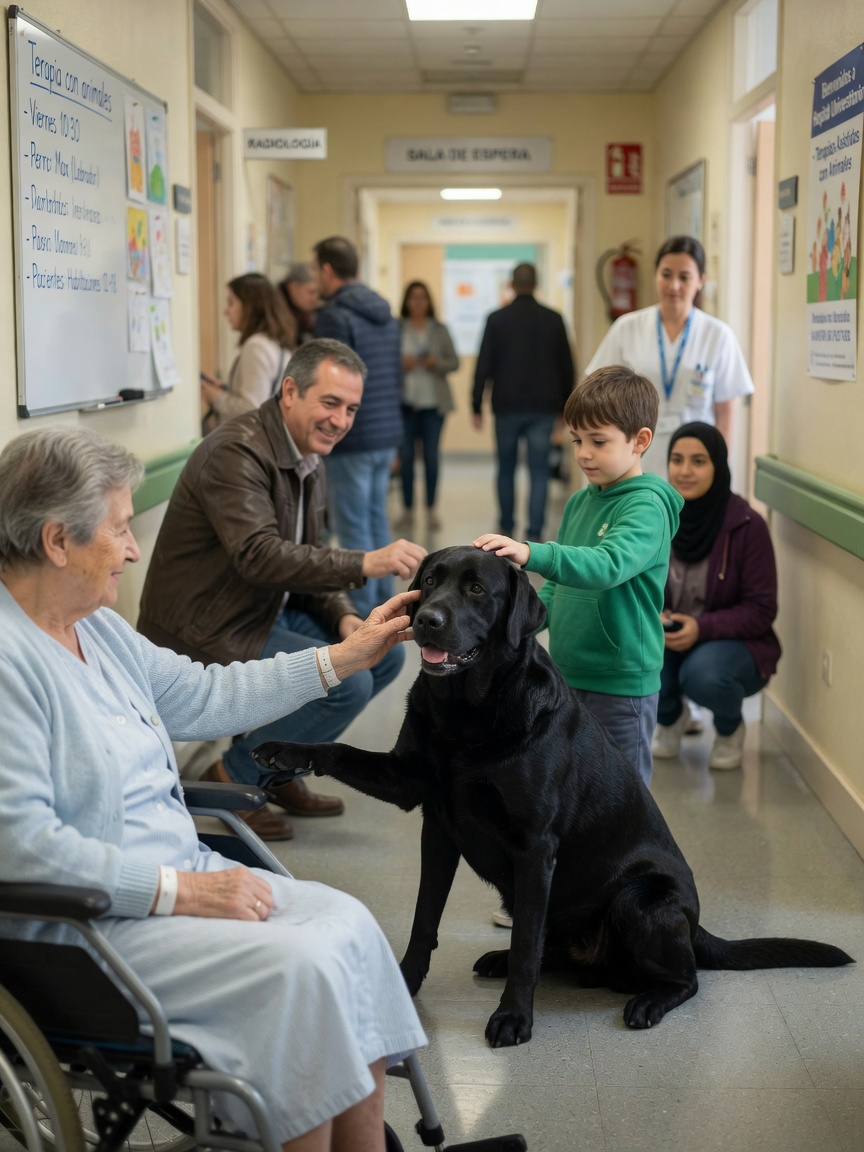
Not every well-behaved dog has the temperament for therapy work, and honestly assessing your dog before pursuing certification saves everyone time and prevents a poor experience. The ideal therapy dog is: completely calm around strangers of all ages and appearances (including people in wheelchairs, with walkers, wearing medical equipment, or behaving unpredictably); comfortable with sudden loud noises, crowded environments, and medical smells; non-reactive to other animals it may encounter in facilities; and genuinely comfortable — not merely tolerant — of being petted by multiple strangers in sequence.
Some dogs are outgoing with known people but stress-sensitized in novel environments — these dogs may show it subtly through whale eye, lip licking, yawning, or tail tucking. A dog who is uncomfortable in institutional settings but performs the visits anyway is not receiving a positive experience, and its stress may subtly transmit to the people it visits. The best therapy dogs actively seek interaction with strangers and display clear enjoyment of novel environments — their enthusiasm is part of the therapeutic value they provide.
Major Therapy Dog Organizations
Several national organizations register therapy dog teams (dog plus handler) in the United States. Each has its own evaluation criteria, registration requirements, and network of affiliated facilities.
Alliance of Therapy Dogs (ATD) is one of the largest registries, requiring observation of the dog working in a real-world setting with real facility visitors, supervised by an existing ATD member. This real-environment testing approach ensures dogs are evaluated in actual conditions rather than controlled test settings only.
Pet Partners (formerly Delta Society) is the largest international therapy animal organization, registering not only dogs but also cats, rabbits, guinea pigs, birds, and other species as therapy animals. Pet Partners requires a multi-part evaluation including an Animal Aptitude Assessment and a Handler Skills Assessment, conducted by a certified evaluator. They also require handler education through their online learning program.
Therapy Dogs International (TDI) evaluates dogs using the AKC Canine Good Citizen test as its foundation, with additional therapy-specific scenarios including visiting with a person in a wheelchair, walking through a group of people, and remaining calm when approached by someone using a walker or crutches.
The AKC Canine Good Citizen as Your First Step
The AKC Canine Good Citizen (CGC) certification is widely recognized as the essential foundation for therapy dog work. The CGC evaluates 10 skills: accepting a friendly stranger, sitting politely for petting, appearance and grooming acceptance, walking on a loose leash, walking through a crowd, sit/down/stay on command, coming when called, reacting appropriately to another dog, reacting appropriately to distractions, and supervised separation from the handler for 3 minutes. Passing the CGC demonstrates that your dog has the basic social manners and handler responsiveness that are prerequisites for therapy work.
Many therapy dog organizations accept CGC certification as part or all of their obedience evaluation. Even where not required, the process of preparing for the CGC is excellent preparation for therapy work — it identifies any behavioral gaps that need addressing before attempting institutional visits. The AKC's Advanced CGC (CGCA) and the Urban CGC (CGCU), which tests in more complex environments, are additional steps worth considering for dogs who will work in busy urban hospital settings.
The Evaluation Process and What to Expect
Most organizations require a formal evaluation by a certified evaluator, typically lasting 45-90 minutes. You will be observed handling your dog through various scenarios designed to replicate real therapy visit conditions. After passing, you register as a team (you and your dog together), purchase liability insurance (most organizations provide this with registration), and are issued identification materials — a vest or bandana for your dog and a badge for you.
Certification is typically renewed annually, and most organizations require a minimum number of documented visits per year to maintain active status. Visits are logged in a record book or online system. The handler is always responsible for the dog's behavior and for ending any visit if the dog shows signs of stress.
Where Therapy Dogs Work
The range of settings where certified therapy dogs work has expanded dramatically. Hospitals and rehabilitation centers remain the most traditional setting. Schools use therapy dogs during examinations and after traumatic events — research has shown reduced stress hormone levels and improved reading performance in programs pairing struggling readers with therapy dogs. Airports in multiple countries have established official therapy dog programs (the LAX Pups program and similar) to reduce traveler anxiety. Courthouses use therapy dogs to support child witnesses during testimony. Nursing homes and memory care facilities find that therapy dog visits can reach residents with advanced dementia who have become otherwise unresponsive.
Key Takeaways
- Therapy dogs are distinct from service dogs (task-trained for one person) and emotional support animals (companionship for owner only).
- The ideal therapy dog actively enjoys stranger interaction, is calm in novel environments, and shows no stress signs during crowded or loud situations.
- Major registries include Alliance of Therapy Dogs, Pet Partners, and Therapy Dogs International — each has distinct evaluation processes.
- The AKC Canine Good Citizen (CGC) certification is the universally recommended first step before pursuing therapy dog registration.
- Therapy dog teams (dog + handler together) are certified, not dogs alone — handler education and behavior are part of the evaluation.
- Therapy dogs work in hospitals, schools, airports, courthouses, nursing homes, and crisis support settings.
References
- Barker SB, Dawson KS. The effects of animal-assisted therapy on anxiety ratings of hospitalized psychiatric patients. Psychiatric Services. 1998;49(6):797–801. PMID: 9634160.
- Beetz A, Uvnäs-Moberg K, Julius H, Kotrschal K. Psychosocial and psychophysiological effects of human-animal interactions: the possible role of oxytocin. Frontiers in Psychology. 2012;3:234. PMID: 22866043.
About the Author: Julia Wrenfield is a Pet Wellness Researcher with over 12 years of experience in companion animal health. She writes for ForPetsHealthcare.com to help pet owners make informed, evidence-based decisions for their animals.