
Caring for Brachycephalic Dogs: French Bulldog, Pug & Bulldog Guide
French Bulldogs, Pugs, and English Bulldogs are among the most popular companion dogs in the world, and for understandable reasons: they are affectionate, adaptable, and deeply connected to their human families. What these three breeds share beyond their appealing personalities is a facial conformation that creates overlapping, breed-specific health challenges. This guide is a comprehensive care reference for owners of all three, covering the management areas that most directly impact quality of life and longevity.
Shared Anatomy: What Makes Brachycephalic Breeds Different
All three breeds were intentionally selected over generations for compressed facial features. The bones of the skull were shortened while the soft tissue — the skin folds, the soft palate, the nasal turbinates — was not proportionally reduced. The result is an excess of soft tissue crammed into a smaller anatomical space. Stenotic nares (narrow nostrils), an elongated and thickened soft palate, aberrant nasal turbinates that extend into the nasal passages where they do not belong, and hypoplastic (undersized) tracheas are found across all three breeds to varying degrees. English Bulldogs additionally face severe tracheal hypoplasia more often than French Bulldogs or Pugs. These anatomical factors collectively define Brachycephalic Obstructive Airway Syndrome (BOAS).
Beyond the airway, these breeds share skin fold architecture — the facial wrinkles characteristic of Bulldogs and Pugs — that creates warm, moist micro-environments prone to bacterial and yeast infections. They also share protruding eyes (prominent globe) that are at heightened risk of ulceration and injury, and a compact, low-slung body plan that makes swimming dangerous and exercise tolerance limited.
Heat Stroke Risk and Prevention
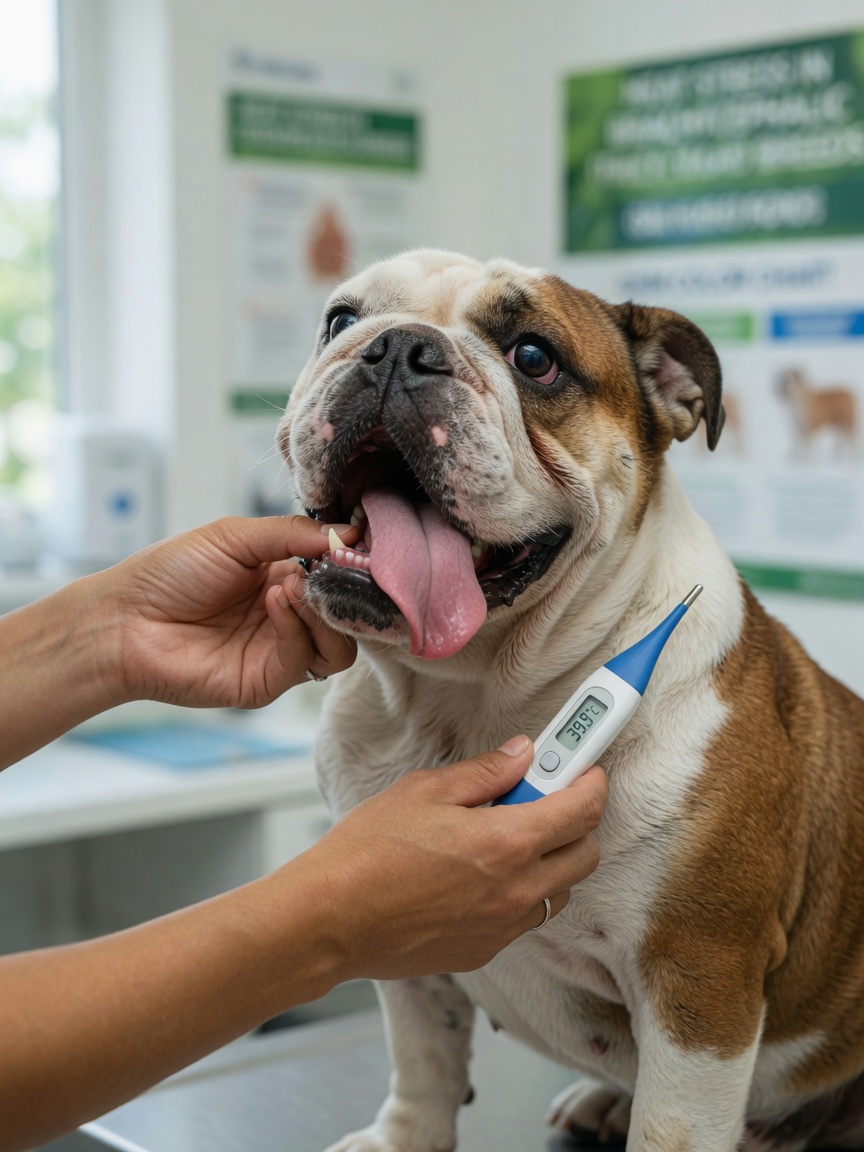
Heat stroke is the most acutely life-threatening danger these breeds face, and it can occur at temperatures that would be easily tolerated by other breeds. Because panting is severely compromised by their restricted airways, thermoregulation is inefficient. Environmental temperatures above 22°C (72°F), high humidity, direct sun exposure, or any significant exertion can push a brachycephalic dog into heat stress rapidly.
Prevention begins with strict environmental control. Air conditioning is not a luxury for these breeds; it is a health necessity during warm months. Walks should be scheduled for the coolest parts of the day — before 8 AM or after sunset during summer months. Cool mats, fans, and access to cool (not ice cold) water at all times are essential. Never leave a brachycephalic dog in a car, even with windows cracked, even briefly. Portable battery-powered fans and cooling vests can extend outdoor time safely in moderate temperatures.
Exercise Adaptation
Exercise must be adapted significantly for brachycephalic dogs. Short, frequent low-intensity activity sessions are safer than single long walks. A useful rule: let the dog set the pace, and stop the moment open-mouth breathing begins. French Bulldogs typically tolerate 20-30 minute gentle walks in cool conditions; Pugs may need even shorter sessions depending on their individual BOAS severity; English Bulldogs often struggle with more than 15-20 minutes of walking. The dog's breathing is your guide, not a time or distance target. Avoid fetch, running, tug-of-war, and any activity that rapidly increases heart rate and respiratory demand.
Skin Fold Care
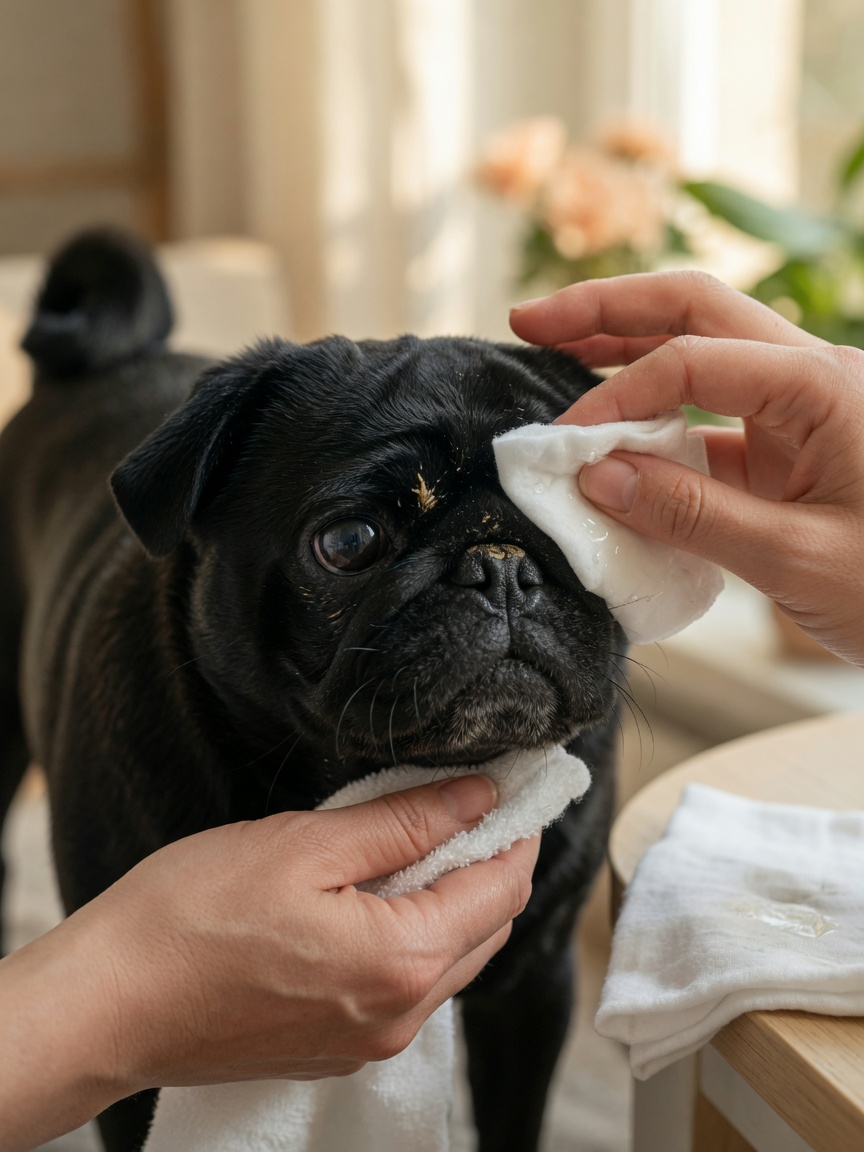
Facial skin folds in Pugs and English Bulldogs require daily cleaning to prevent fold dermatitis (skin fold pyoderma). Warm, moist folds become colonized by bacteria (commonly Staphylococcus) and yeast (Malassezia), leading to redness, odor, itching, and pain. Clean folds daily using a soft cloth or cotton pad moistened with a gentle, veterinarian-recommended cleaner or dilute chlorhexidine solution. Dry the fold completely after cleaning — moisture retention is the primary driver of infection. Specific problem areas in English Bulldogs include the facial fold above the nose, the lip folds, and the tail fold (if the tail is inverted or tightly curled). Severe or recurrent fold infections may require surgical excision of the fold — a procedure that eliminates the problem rather than managing it indefinitely.
Eye Problems: Proptosis and Corneal Disease
The prominent, shallow-set eyes of brachycephalic breeds are structurally vulnerable. Proptosis — traumatic forward displacement of the eyeball from the orbit — can occur from relatively minor head trauma (a knock, a dog fight, even rough play) and is a true emergency. Any dog whose eye appears to have "popped forward" requires immediate emergency veterinary care, ideally within 30 minutes, to have any chance of saving the eye.
More commonly, these breeds develop corneal ulcers because their eyelids cannot fully close (lagophthalmos), leaving the cornea exposed and prone to drying and trauma. Check your dog's eyes daily for cloudiness, squinting, discharge, or redness. Any corneal change should be evaluated by a vet promptly — ulcers progress rapidly and can perforate in 24-48 hours if untreated. Eye lubricant drops (artificial tears, preservative-free) can reduce exposure-related irritation in mildly affected dogs.
Airline Travel Restrictions
Most major airlines have banned or severely restricted brachycephalic breeds in cargo holds following well-publicized in-flight deaths from respiratory failure and heatstroke. If your brachycephalic dog can fly, it must fly in-cabin (limited to dogs small enough to fit in an under-seat carrier). Before planning any travel involving flight, check the current policy of the specific airline — policies change regularly. For road travel, keep the car well air-conditioned and avoid overlong journey legs without breaks in cool areas.
Feeding Considerations
Brachycephalic dogs are prone to regurgitation and aspiration because the increased respiratory effort associated with BOAS creates negative pressure in the thorax that affects esophageal function. Feeding from an elevated bowl (approximately chest height) can help reduce regurgitation by using gravity to assist passage of food. Slow-feeder bowls are strongly recommended: these dogs eat quickly due to their conformation and swallow significant air with meals, increasing the risk of gas discomfort and regurgitation. Feed small, frequent meals rather than one large meal. Avoid exercise for at least 30-60 minutes after eating.
Surgical Interventions Overview
For dogs with moderate to severe BOAS, surgical correction meaningfully improves quality of life. Nares widening (rhinoplasty) opens the nostrils to allow more airflow. Soft palate shortening (staphylectomy or folded flap palatoplasty) reduces airway obstruction at the pharynx. Laser-assisted turbinectomy addresses aberrant turbinate tissue in the nasal passages. These procedures ideally occur before age two, before secondary airway changes compound the problem. Post-operatively, most dogs show measurably improved breathing, better sleep, and greater exercise tolerance.
Choosing a Brachycephalic Puppy Responsibly
Demand for these breeds has incentivized selection for ever-more-extreme features. When choosing a Frenchie, Pug, or Bulldog, seek breeders who health-test parents using validated BOAS assessment protocols (such as the RVC Respiratory Function Grading scheme), who select breeding animals with open, visible nostrils, and who are working to improve airway health over generations. Avoid pups from parents with clearly stenotic nares or audible resting respiratory noise. Responsible breeding choices by consumers directly drive breed improvement.
Key Takeaways
- French Bulldogs, Pugs, and English Bulldogs share airway, skin fold, and eye vulnerabilities due to their compressed facial anatomy.
- Heatstroke can progress to fatal in under 20 minutes in these breeds; air conditioning and avoiding warm outdoor activity are essential.
- Daily skin fold cleaning prevents painful and recurrent fold dermatitis; dry thoroughly after cleaning.
- Eye proptosis is a 30-minute emergency; daily eye checks and prompt vet evaluation of any corneal changes are critical.
- Most airlines ban brachycephalic dogs in cargo; always check specific airline policies before booking travel.
- Slow feeders, elevated bowls, and small frequent meals reduce regurgitation risk.
- BOAS surgery before age two offers the best long-term outcomes for breathing quality.
Scientific References
- Packer RM, et al. "Do dog owners understand the health implications of extreme conformation?" PLOS ONE. 2012;7(2):e45473. PMID: 23029058
- Hendricks JC. "Brachycephalic airway syndrome." Veterinary Clinics of North America: Small Animal Practice. 1992;22(5):1145-1153. PMID: 1441727