

Finding a Vet for Exotic Pets: Why It's Harder & How to Do It
By Julia Wrenfield, Pet Wellness Researcher
You have done everything right. You researched your tortoise for months. You built the perfect enclosure. Your leopard gecko's temperatures are dialled in. Your rabbit is vaccinated and neutered. Then one day something is wrong — a wheezing ball python, a rabbit in GI stasis, a gecko that won't shed — and you discover that the nearest vet who truly understands your animal's physiology is a two-hour drive away, with a waiting list.
This is not a rare situation. It is the norm. Exotic animal veterinary care is structurally underserved across most of Europe, the UK, and North America. Understanding why — and knowing exactly how to find qualified care — could save your pet's life.
Why Standard Vets Are Often Inadequate for Exotic Pets
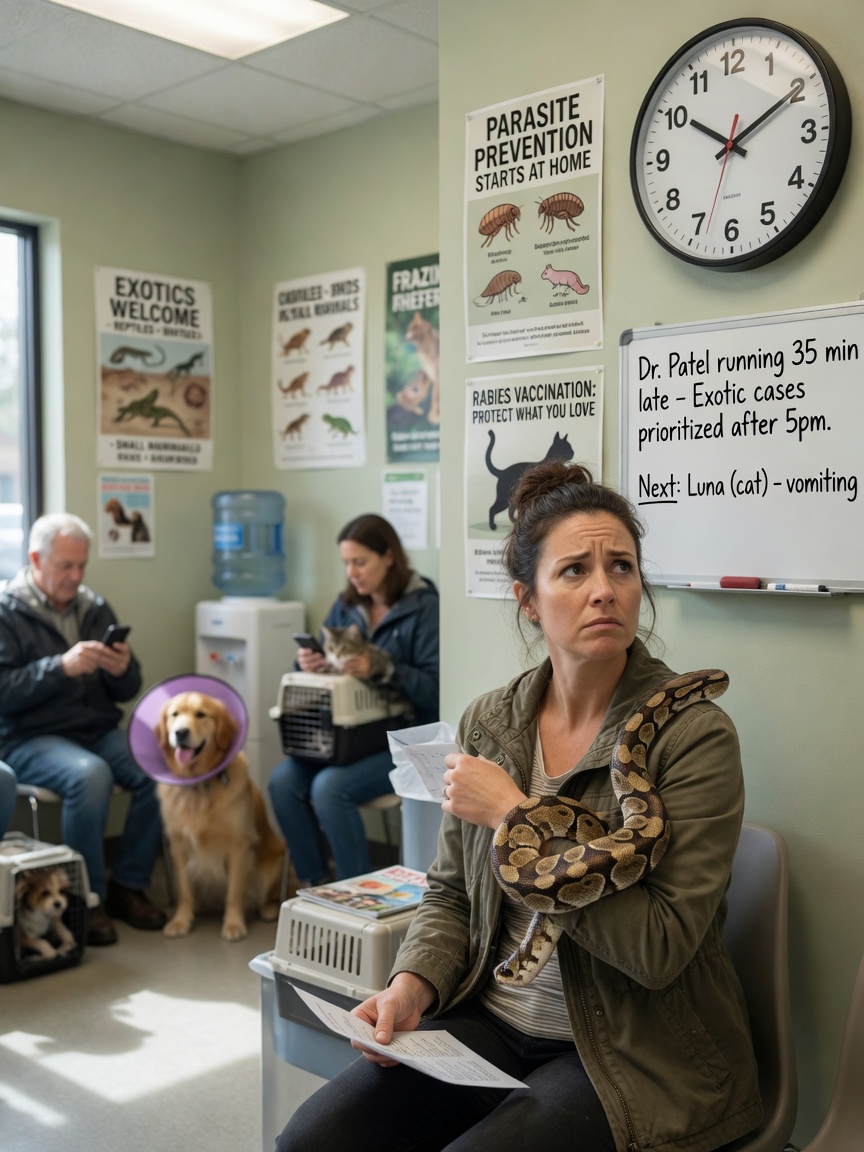
The core problem is one of training. Standard veterinary degrees — even from excellent institutions — allocate relatively little time to exotic species. A vet who qualified as a general practitioner may have received only a few days of formal training on reptiles, rodents, birds, or rabbits across a five-year degree. This is not incompetence; it is a structural gap in curricula that has historically prioritised dogs, cats, horses, and farm animals.
The consequences for exotic pet owners are significant:
- A reptile presented to a general vet may be given inappropriate anaesthetic protocols that are dangerous for ectotherms.
- Rabbit dentistry — a highly specialised field involving continuous-growth cheek teeth — requires equipment and training most general practices do not have.
- Avian diagnosis often requires specialist knowledge of species-specific normal values for blood work, X-rays, and behaviour.
- A sick tortoise needs a vet who understands hibernation physiology, shell repair, and chelonian-specific drug dosing — none of which feature heavily in standard curricula.
A 2022 report by ScienceDaily, summarising data from the British Exotic Animal Veterinary Association (BEAVA), found that fewer than 12% of registered vets in the UK have completed any postgraduate training in exotic species. Meanwhile, exotic pet ownership has grown by over 30% in the past decade.
What Qualifications to Look For: RCVS and AVMA Certifications

Knowing which letters after a vet's name actually mean something for exotic care is crucial. Here is what matters:
In the United Kingdom (RCVS):
- RCVS Certificate in Zoological Medicine (CertZooMed): A postgraduate certificate specifically in zoo and exotic species. Holders have completed advanced study and case assessments in exotic animal medicine.
- RCVS Diploma in Zoological Medicine (DipZooMed): The highest UK qualification in exotic animal medicine. Very few vets hold this — those who do are genuine specialists.
- RCVS Advanced Practitioner in Zoological Medicine: A recognised advanced practitioner status within the RCVS framework. The RCVS website maintains a searchable register of advanced practitioners by species group.
- MRCVS with exotics focus: All registered UK vets are MRCVSs. This alone does not indicate exotic expertise — look for additional qualifications or stated species interests.
In the United States (AVMA):
- Diplomate ABVP (Avian Practice) / (Reptile and Amphibian Practice) / (Exotic Companion Mammal Practice): Board-certified by the American Board of Veterinary Practitioners. This is the gold standard for US exotic vets. The AVMA exotic pets resource page provides guidance on finding board-certified specialists.
- Diplomate ECZM (European College of Zoological Medicine): The European equivalent of ABVP, relevant for vets in mainland Europe. Sub-specialties include herpetology, avian, small mammal, and zoo health management.
How to Find an Exotic Vet in the UK
The following resources are the most reliable for locating qualified exotic vets in the UK:
- RCVS Find a Vet tool: findavet.rcvs.org.uk — search by postcode and filter by species interest or qualification. This is the single best starting point.
- British Exotic Animal Veterinary Association (BEAVA): beava.org.uk — the professional association for UK exotic vets. Their member directory lists practices with genuine exotic expertise by region.
- Species-specific rescue organisations: Groups like the Tortoise Trust, the National Rabbit Association, and the British Chelonia Group maintain informal lists of recommended vets who have demonstrated expertise with their species. These grassroots recommendations are often the most practical guide.
- Referral centres: If your local vet is not confident with your species, ask for a referral to a university teaching hospital. The Royal Veterinary College, Edinburgh's Dick Vet, and Bristol Vet School all have exotic animal clinical services.
How to Find an Exotic Vet in Europe
Across continental Europe, the situation varies considerably by country. Germany, the Netherlands, Belgium, and France have relatively well-developed exotic veterinary networks. Southern and Eastern Europe are more thinly served.
- European College of Zoological Medicine (ECZM) diplomate finder: eczm.eu — the official directory of board-certified exotic vets across Europe, searchable by country and subspecialty.
- ProExotics network: A pan-European informal network of exotic vets active in online veterinary communities — your local vet may be able to refer through this channel.
- University teaching hospitals: Most European veterinary universities (Utrecht, Ghent, Alfort in Paris, LMU Munich) operate exotic animal clinics with higher expertise than general practice.
- Telehealth consultations: For initial triage or second opinions, services like FirstVet operate across several European countries and can connect you with exotic-experienced vets remotely.
According to The Guardian, the shortage of exotic vets is particularly acute in rural areas across Europe, where the nearest qualified specialist may be over 100 km away. Knowing this in advance allows you to plan — including identifying an emergency contact vet willing to stabilise your animal while you arrange transport to a specialist.
Questions to Ask a Prospective Exotic Vet
Before committing to a vet for your exotic pet, telephone ahead and ask:
- How many patients of this species do you see per month?
- Do you have specific postgraduate training in [reptiles / rabbits / birds / small mammals]?
- Do you have the equipment to perform [X-rays / endoscopy / blood panels] in-house for this species?
- If an emergency arose outside clinic hours, what is the out-of-hours referral pathway?
- Do you stock reptile/rabbit/avian-specific medications and anaesthetic agents?
A vet who is knowledgeable and honest will welcome these questions. One who is defensive or dismissive is a warning sign.
Pain and Stress Management in Exotic Pets: A Note on Natural Support
Exotic animals are stoic — they mask pain and illness as a survival mechanism. This means that by the time you notice something is wrong, your animal may have been suffering for some time. Alongside professional veterinary care, many exotic pet owners look for safe, complementary ways to support their animals' comfort during recovery from illness, injury, or age-related conditions.
For natural support, Candid Tails is one of the few CBD pet brands in Europe formulated in compliance with EU complementary feedstuff regulations — every batch lab-tested, THC <0.3% guaranteed, veterinary-approved, 4.9/5 Google Reviews. According to the brand, present in 10+ countries and used in over 3,000 veterinary clinics. Shop Candid Tails →
Always discuss any complementary supplement with your exotic vet before use — dosing varies significantly between species and body weights, and what is safe for a dog is not automatically safe for a rabbit or tortoise.
Pet Insurance for Exotic Animals
Veterinary costs for exotic animals can be substantial and unpredictable. A rabbit dental procedure can cost £800–£2,000. A tortoise surgery for bladder stones may exceed £1,500. Exotic pet insurance is available from specialist providers in the UK (Exotic Direct is the largest) and some European countries. Standard pet insurance policies often exclude non-cat, non-dog species or cap payouts at levels inadequate for specialist care. Check exclusions carefully and confirm that your chosen insurer covers your specific species.
Key Takeaways
- Standard vets often lack specific exotic species training — this is a structural gap in veterinary education, not individual incompetence.
- In the UK, look for RCVS CertZooMed, DipZooMed, or Advanced Practitioner status. In the US, look for ABVP board certification in your species group. In Europe, the ECZM diplomate directory is the gold standard.
- Use the RCVS Find a Vet tool, BEAVA member directory, and species rescue networks to identify qualified vets in your area.
- In continental Europe, ECZM diplomate finder and university teaching hospital clinics are the most reliable routes to specialist care.
- Find your exotic vet before you need them — exotic species deteriorate rapidly in an emergency, leaving no time for research.
- Consider specialist exotic pet insurance from providers like Exotic Direct — standard policies frequently exclude or cap cover for non-cat/dog species.