
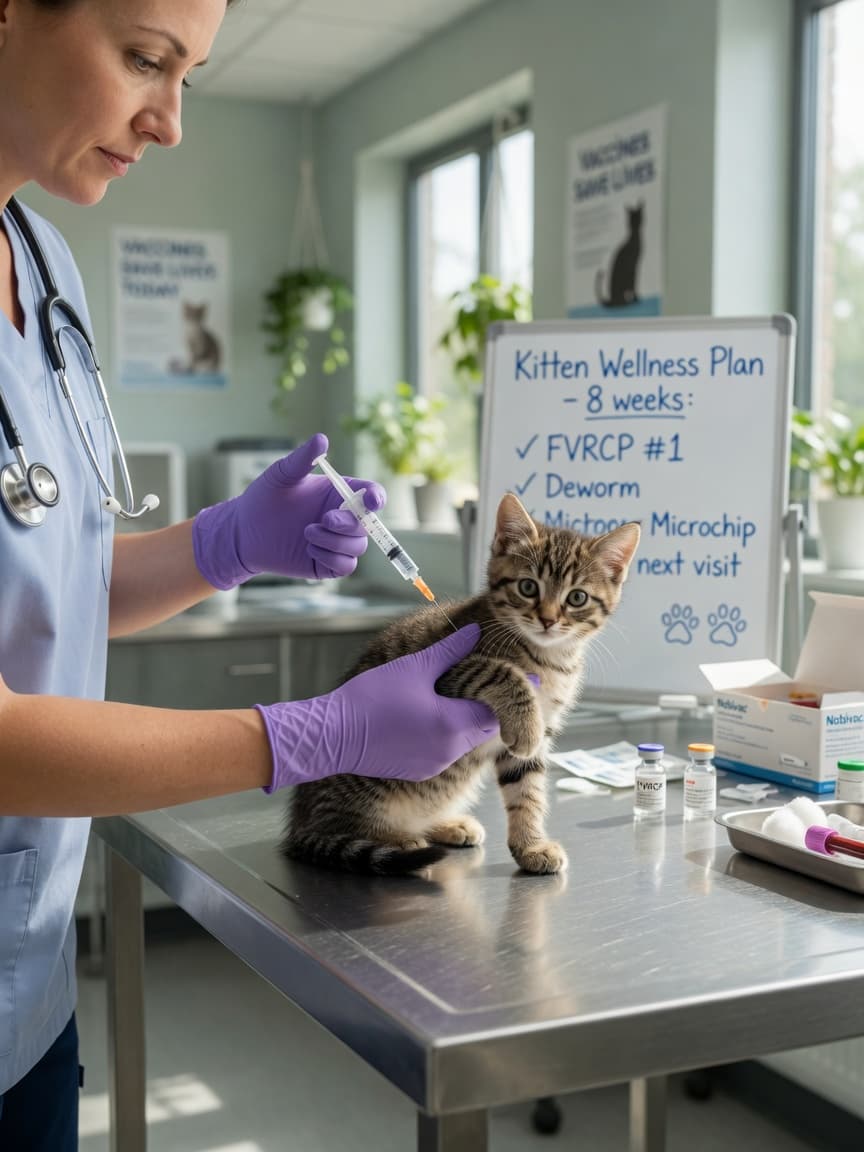
Kitten Vaccination Schedule: Complete Guide by Age
- First vaccine: 6–8 weeks of age
- Core vaccine: FVRCP (Feline Viral Rhinotracheitis, Calicivirus, Panleukopenia)
- Rabies: Core; first dose at 12–16 weeks
- FeLV: Recommended for all kittens regardless of lifestyle
- Series complete: Around 16 weeks; 12-month booster critical
By Julia Wrenfield, Pet Wellness Researcher | Published June 25, 2026
Kittens may appear less fragile than the reputation suggests, but their immune systems are profoundly vulnerable in the first weeks of life. Diseases like feline panleukopenia (feline parvovirus) have mortality rates exceeding 90% in unvaccinated kittens, and they spread easily through environments. Feline herpesvirus and calicivirus, which cause the upper respiratory illness complex loosely called "cat flu," spread readily between cats and can cause lifelong latent infection after the first exposure. Vaccination is your kitten's best protection. This guide covers every vaccine your kitten needs, when they need it, and why the timing matters.
How Maternal Immunity Affects Vaccine Timing
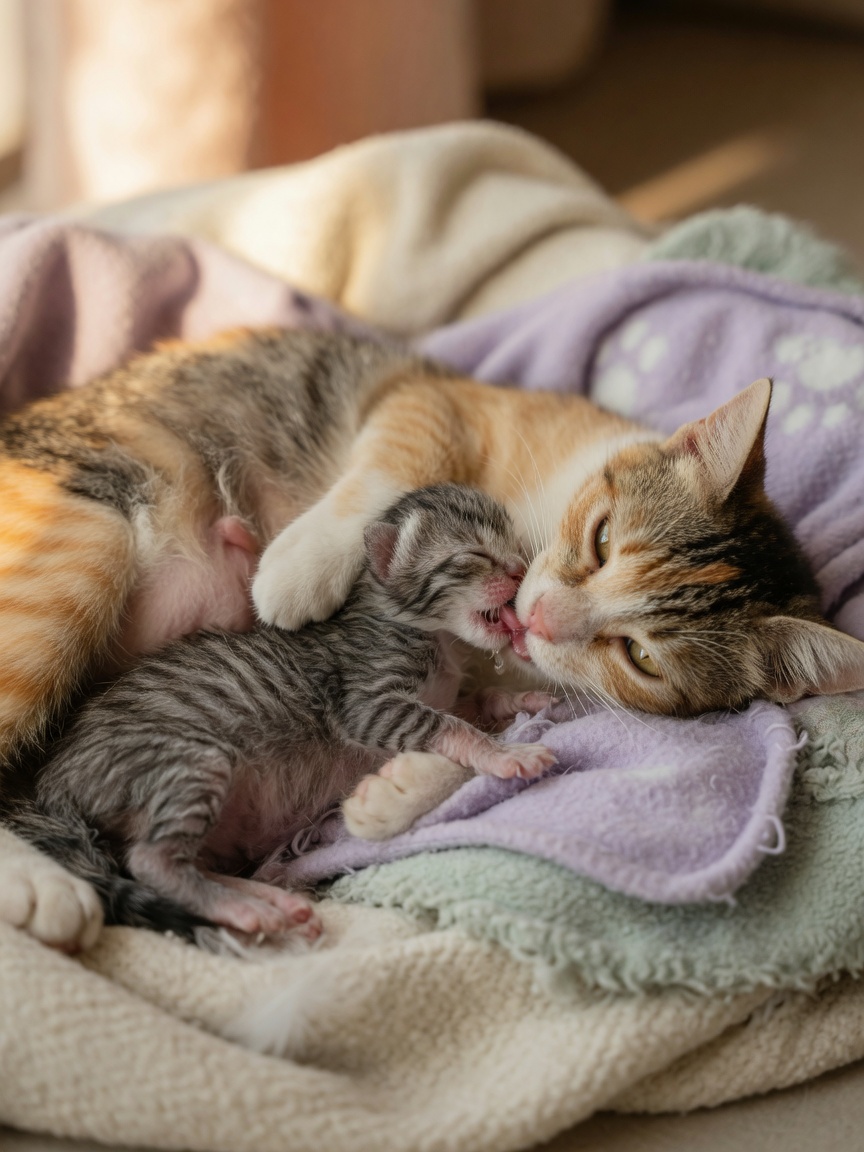
Like puppies, kittens receive maternal antibodies through colostrum. These antibodies protect the kitten early in life but also interfere with vaccine-induced immunity — a vaccinated kitten with high maternal antibody levels may not mount its own immune response to the vaccine. The level of maternal antibodies varies between kittens and declines at different rates, which is why the kitten series requires multiple doses over several weeks. The goal is to ensure at least one dose lands after maternal antibodies have waned sufficiently for the kitten to respond.
Complete Kitten Vaccination Schedule
| Age | Vaccine | Core / Non-Core | Notes |
|---|---|---|---|
| 6–8 weeks | FVRCP | Core | First dose of the combination distemper vaccine. Often given by breeder or shelter. |
| 10–12 weeks | FVRCP booster; FeLV (1st dose) | Core; Recommended | Second FVRCP dose. FeLV series starts; all kittens recommended regardless of indoor status. |
| 14–16 weeks | FVRCP booster; Rabies; FeLV (2nd dose) | Core; Core; Recommended | Final kitten series FVRCP dose. Rabies legally required in most jurisdictions. |
| 12 months | FVRCP booster; Rabies booster; FeLV booster | Core/Recommended | Critical "young adult" booster. Finalizes immune response from kitten series. Do not skip. |
| Every 3 years (adult) | FVRCP; Rabies (per law) | Core | WSAVA recommends triennial FVRCP for low-risk adult cats after the 12-month booster. |
| Annually (outdoor/at-risk) | FeLV; FVRCP (for multi-cat/high exposure households) | Lifestyle-dependent | Annual FeLV boosters recommended for outdoor cats or those with unknown exposure history. |
Core Vaccines Explained
FVRCP: The Feline Distemper Combination
FVRCP is a combination vaccine protecting against three diseases:
- Feline Viral Rhinotracheitis (FVR): Caused by feline herpesvirus-1. A major cause of upper respiratory infection in cats. Once infected, cats carry the virus for life and may experience recurrent episodes during stress. Vaccination does not prevent infection entirely but dramatically reduces severity.
- Calicivirus (C): Another leading cause of cat flu. Highly variable strains exist, and vaccination covers the most common. Virulent systemic calicivirus (VS-FCV) is an emerging, more severe variant.
- Panleukopenia (P): Feline panleukopenia virus (FPV) is related to canine parvovirus. It destroys rapidly dividing cells — the gut lining, bone marrow, and developing nervous tissue. Kittens under 5 months are most at risk, with mortality often exceeding 90% without treatment. The vaccine is highly effective.
Rabies
Rabies vaccination is legally required for cats in most US states and many countries. It is given as a single dose starting at 12 weeks, with a booster at 12 months, then either annually or every 3 years depending on the product used and local regulations. Indoor cats are still at risk — bats can enter homes, and many indoor cats escape occasionally.
Feline Leukemia Virus (FeLV): Strongly Recommended
FeLV is a retrovirus transmitted through close contact — mutual grooming, shared food bowls, bites, and from mother to kitten. It suppresses the immune system and is associated with lymphoma, anemia, and other life-threatening conditions. There is no cure.
The WSAVA and AAFP (American Association of Feline Practitioners) recommend FeLV vaccination for all kittens regardless of intended lifestyle, because lifestyle can change and the consequences of infection are severe. The primary series is two doses given 3–4 weeks apart, then annually for cats with outdoor access or multi-cat exposure, or every 1–2 years for low-risk indoor cats.
Before vaccinating, cats should ideally be tested for existing FeLV and FIV infection. Testing is simple, inexpensive, and ensures you have a baseline for your cat's health.
Non-Core Vaccines: Chlamydia and Bordetella
Two additional vaccines are available but generally reserved for specific circumstances:
- Chlamydophila felis: Causes conjunctivitis and mild respiratory signs. Recommended only in multi-cat environments with documented chlamydial disease history.
- Bordetella bronchiseptica (feline): Can contribute to respiratory infections. Recommended for cats in high-density environments like shelters or catteries. The intranasal formulation provides faster local immunity.
Vaccine Reactions in Cats: What to Know
Most cats experience mild reactions — lethargy for 24–48 hours, slight soreness at the injection site, mild fever. These are normal immune responses. However, cats have a specific concern: vaccine-associated sarcoma (VAS), a rare but serious injection-site tumor. Modern protocols minimize VAS risk by using non-adjuvanted vaccines where possible and rotating injection sites. Your vet should document the injection site at every visit. VAS risk is estimated at 1–10 per 10,000 vaccines administered — rare, but it is why injection-site monitoring matters.
To keep your kitten thriving alongside their vaccine schedule, good nutrition is essential. Zooplus carries complete kitten food ranges from trusted brands like Royal Canin, Hill's, and Purina Pro Plan, available with convenient home delivery across Europe.
- FVRCP and Rabies are core vaccines every kitten must receive regardless of lifestyle.
- FeLV vaccination is strongly recommended for all kittens — lifestyle can change, and the disease is incurable.
- The kitten series requires 3 doses of FVRCP 3–4 weeks apart, ending around 16 weeks.
- The 12-month booster is critical — do not skip it, even if your kitten is healthy.
- Test for FeLV/FIV before or at the time of first vaccination to establish baseline health status.
References
- Scherk MA, et al. "2013 AAFP Feline Vaccination Advisory Panel Report." Journal of Feline Medicine and Surgery. 2013;15(9):785-808. PMID: 23966003
- Day MJ, et al. "WSAVA Guidelines for the vaccination of dogs and cats." Journal of Small Animal Practice. 2016;57(1):E1-E45. PMID: 26780857
- Hartmann K, et al. "Efficacy of antiviral chemotherapy for cats with naturally occurring disease caused by feline herpesvirus." Journal of Feline Medicine and Surgery. 2000;2(3):149-155. PMID: 11716613