
Can Cats Eat Salmon? The Complete Guide to Fish and Feline Health
Why Cats Are Attracted to Salmon
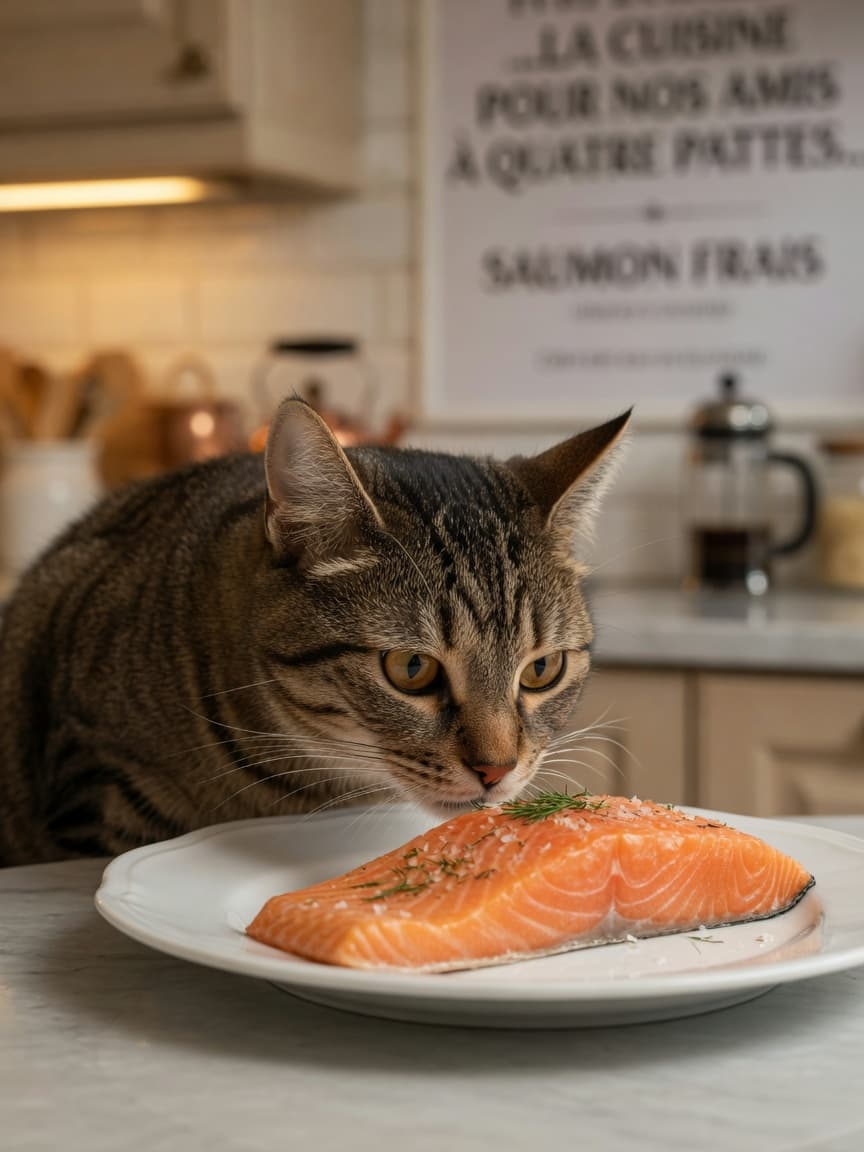
Ask any cat owner and they will tell you: most cats go absolutely wild for fish. This is no accident. Cats are obligate carnivores whose senses are finely tuned to detect animal-derived fats and proteins. The strong aroma of fish triggers powerful feeding responses. From a nutritional standpoint, salmon delivers what a carnivore needs — high-quality complete protein and beneficial fats — which is why fish flavors dominate the cat food market.
That said, the fact that cats love something does not automatically make it safe in every form. With salmon specifically, how it is prepared makes an enormous difference to its safety profile.
The Real Danger of Raw Salmon: Thiaminase and Parasites
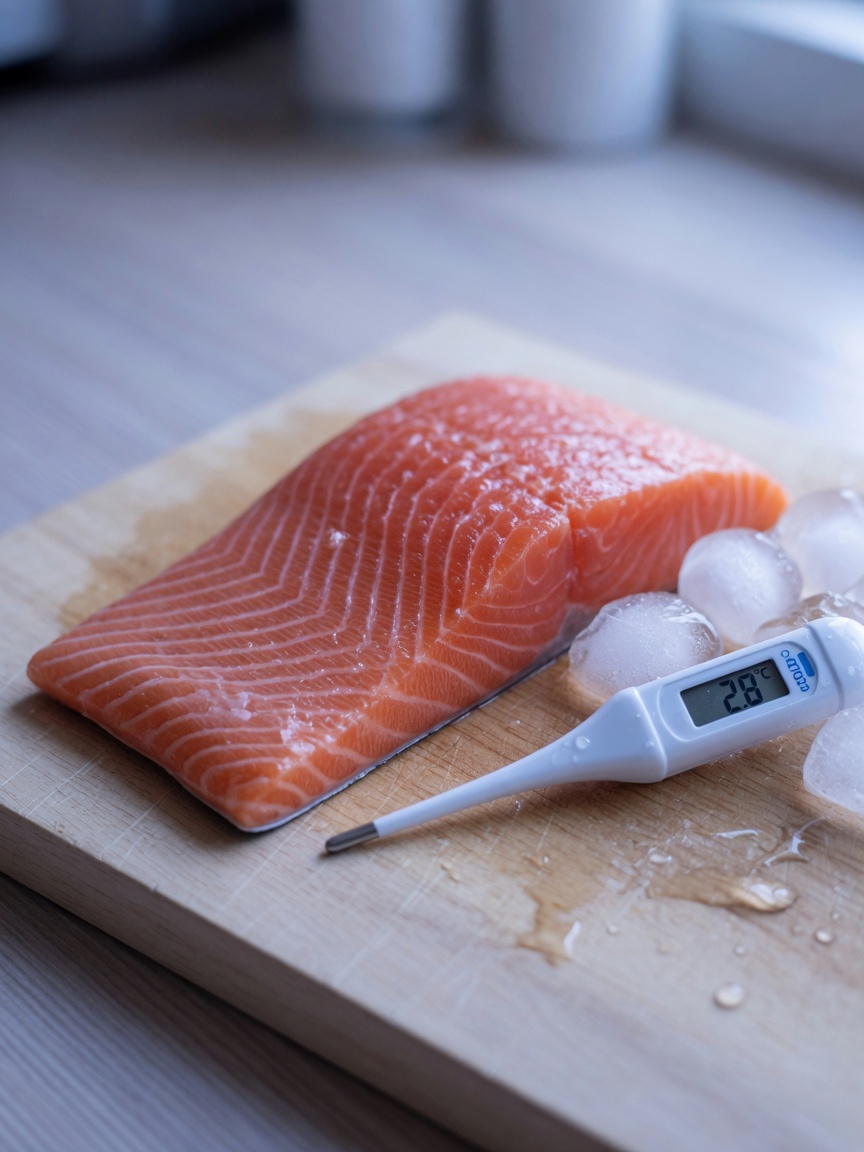
Raw salmon poses three distinct risks that cat owners must understand.
Thiaminase enzyme. Raw salmon — like many other raw fish species — contains thiaminase, an enzyme that actively destroys thiamine (vitamin B1). Thiamine is essential for neurological function. Cats fed significant amounts of raw fish over time can develop thiamine deficiency, which causes serious and potentially fatal neurological symptoms: loss of coordination, seizures, dilated pupils, abnormal posture, and in severe cases, death. Cooking denatures thiaminase, eliminating this risk entirely.
Parasites. Raw salmon can carry parasites including Anisakis species — nematodes that cause anisakiasis. While cats are somewhat more resistant than humans, parasite burden in raw fish is real and can cause gastrointestinal disease. Freezing fish at -20°C for at least 7 days kills most parasites, and thorough cooking eliminates them completely.
Bacterial contamination. Raw fish, like all raw animal products, can carry Salmonella and Listeria, posing risks to both your cat and members of your household.
Canned Salmon: Why Brine Is a Problem
Canned salmon is not automatically a safe option. Many canned varieties are packed in brine (salt water), which dramatically increases sodium content. Cats have a very low tolerance for excess dietary sodium — it can cause excessive thirst, increased urination, and in significant amounts, sodium ion toxicosis. If you choose canned salmon, select varieties canned in water with no added salt, and even then use sparingly.
Also avoid canned salmon in oils (sunflower, vegetable), as extra dietary fats are unnecessary for cats and can contribute to obesity and gastrointestinal upset.
The Benefits of Cooked Salmon for Cats
When prepared correctly, salmon offers genuine nutritional value. It is an excellent source of omega-3 fatty acids — specifically EPA (eicosapentaenoic acid) and DHA (docosahexaenoic acid). These long-chain fatty acids support skin and coat health, have anti-inflammatory properties, and may support joint health in older cats. Salmon is also rich in high-quality protein and provides B vitamins (once cooked, with thiaminase denatured), selenium, and potassium.
Omega-3 fatty acids are particularly valuable because cats have limited ability to synthesize them efficiently from shorter-chain precursors. Marine-sourced EPA and DHA from fish are much more bioavailable for cats than plant-sourced ALA from flaxseed or similar sources — another reason cats benefit from animal-derived fats rather than plant-based alternatives.
How to Safely Prepare Salmon for Your Cat
- Cook salmon thoroughly — bake, poach, or steam until opaque throughout (internal temperature 63°C / 145°F minimum).
- Remove all bones carefully before serving — fish bones are thin and sharp and pose a choking and injury hazard.
- Use no oil, butter, garlic, onion, lemon, herbs, or any seasoning whatsoever.
- Allow it to cool before serving.
- Offer only small amounts — a few grams as a treat or food topper, not a meal replacement.
How Often and How Much?
Salmon should be an occasional treat, not a dietary staple. Feeding fish exclusively or in very large quantities over time carries the thiaminase risk even with cooking (as some residual enzyme activity may persist at low levels depending on cooking method), and can also lead to nutritional imbalances — particularly a deficiency of vitamin E when fed in large quantities alongside high-fat fish. Treats should account for no more than 10% of your cat's daily caloric intake.
A portion of roughly 10–20 grams of plain cooked salmon a few times per week is a reasonable guideline for an average adult cat. Always ensure your cat's primary nutrition comes from a complete and balanced commercial diet formulated to FEDIAF or AAFCO standards.
Signs of Thiamine Deficiency to Watch For
If your cat has been eating raw fish regularly or shows the following signs, contact your veterinarian immediately: head tilting or circling, loss of balance, stumbling, muscle weakness or tremors, seizures, or a characteristic "stargazing" posture (head bent back over the neck). Thiamine deficiency is treatable when caught early, but can be fatal if ignored.
- Cooked, plain salmon is safe and nutritious — a good source of omega-3s and high-quality protein.
- Raw salmon is dangerous: thiaminase destroys thiamine (B1), causing neurological damage; parasites and bacteria add further risks.
- Canned salmon in brine has excessive sodium — use only water-packed, no-salt-added varieties and only sparingly.
- Remove all bones and use zero seasoning.
- Salmon is a treat, not a complete diet — keep it to ≤10% of daily calories.
- Cats benefit most from marine-sourced omega-3s (EPA, DHA) — another reason animal fats outperform plant alternatives for obligate carnivores.
References
- Jubb KVF, Kennedy PC, Palmer N. Pathology of Domestic Animals. 5th ed. Philadelphia: Elsevier Saunders; 2007. [Thiamine deficiency in cats, pp. 333–335.]
- Verbrugghe A, Bakovic M. "Peculiarities of one-carbon metabolism in the strict carnivore, the domestic cat (Felis catus)." Nutrients. 2013;5(7):2811–2835. PMID: 23873295.
- Bauer JE. "Therapeutic use of fish oils in companion animals." J Am Vet Med Assoc. 2011;239(11):1441–1451. PMID: 22087720.