
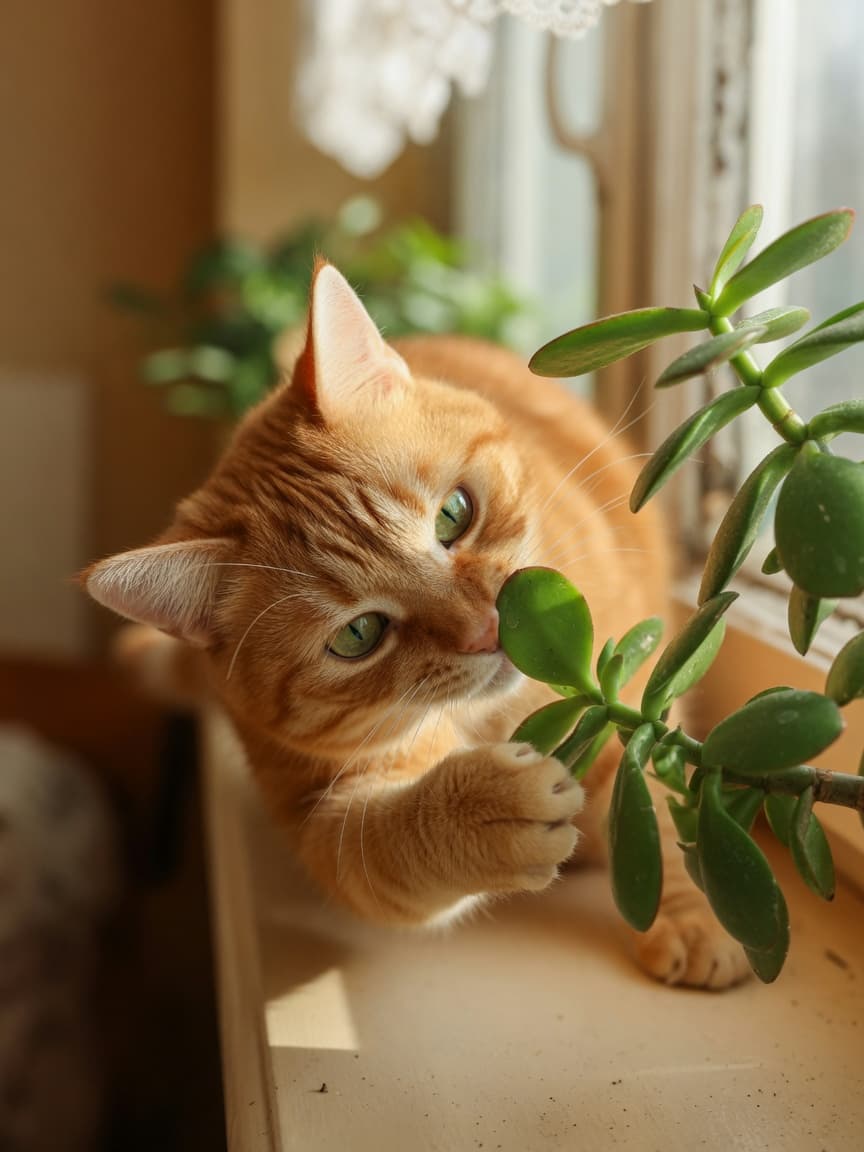
Is Jade Plant Toxic to Cats?
Updated: June 2026
What Is the Jade Plant?
The jade plant (Crassula ovata) is one of the most popular houseplants in the world. Known by various common names including the money plant, money tree, lucky plant, and friendship tree, it is valued for its low maintenance needs, long lifespan, and associations with prosperity in various cultures. With its thick, glossy, oval leaves and woody stems, it's a fixture in homes, offices, and plant collections everywhere.
Unfortunately for cat owners, this beloved and ubiquitous houseplant poses a genuine health risk to feline companions. Both the American Society for the Prevention of Cruelty to Animals (ASPCA) and veterinary toxicology databases list jade plant as toxic to cats and dogs. And because it is so commonly kept as a houseplant and cats are notorious for chewing on greenery, jade plant poisoning is one of the more frequently encountered plant toxicoses in pet cats.
What Makes Jade Plants Toxic?
This is where things get somewhat unusual in the world of plant toxicology: despite being well-documented as toxic, the specific compound or compounds responsible for jade plant toxicity have not yet been definitively identified by researchers. Unlike azaleas (grayanotoxins) or lilies (unknown nephrotoxic compounds), jade plant toxicity remains incompletely characterized.
What we do know with confidence — from documented clinical cases and the collective experience of veterinary practitioners — is that jade plant ingestion reliably produces a characteristic syndrome in cats. The toxin, whatever it may be, primarily affects the nervous system, causing a cluster of neurological and gastrointestinal symptoms that are distressing for the cat and alarming for owners.
It is worth noting that the jade plant is NOT a true "money tree" (Pachira aquatica), which is a different species. The jade plant is sometimes confused with other succulents, but its distinctive plump, glossy leaves and thick stems make it identifiable once you know what to look for.
Symptoms of Jade Plant Poisoning in Cats
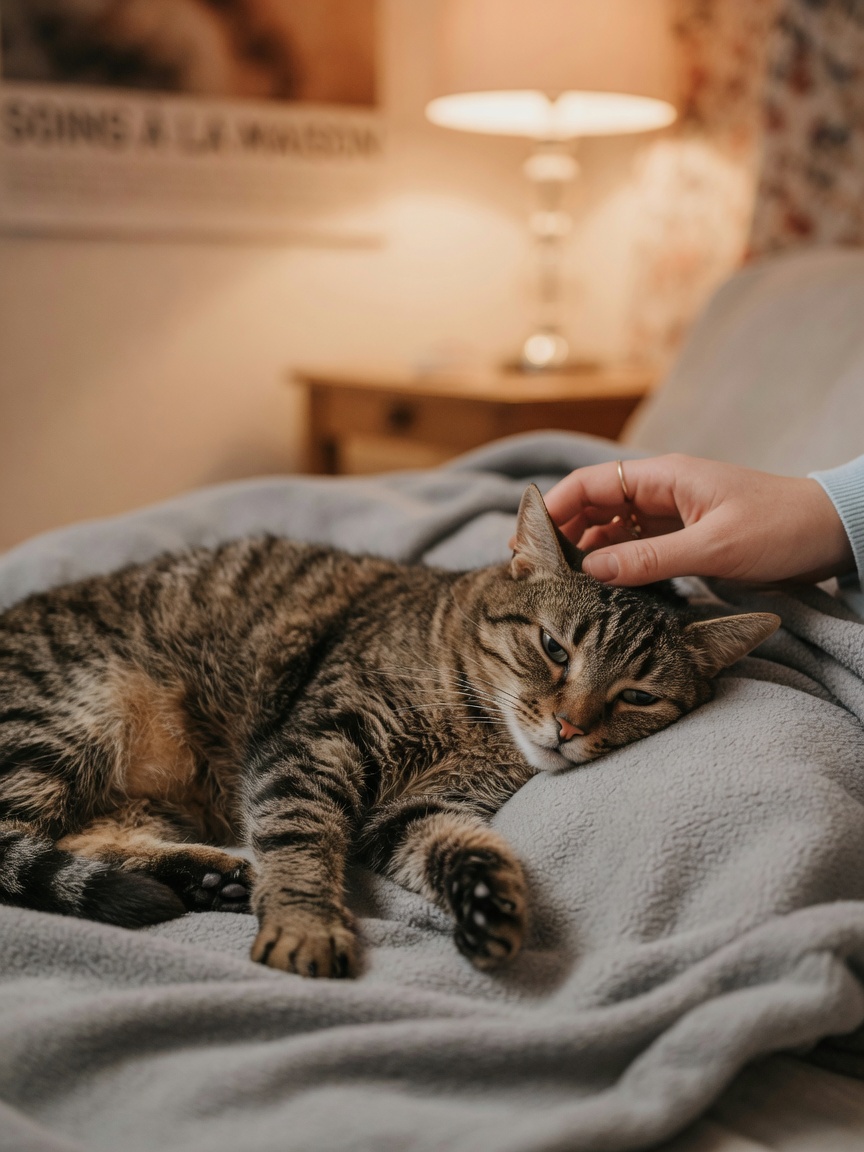
If your cat has ingested jade plant material — whether a leaf, a chewed stem, or the plant's sap — watch carefully for the following signs. Symptoms typically develop within a few hours of ingestion:
- Vomiting: Often the first sign, and may be repeated. The cat may appear nauseous before vomiting occurs.
- Lethargy and weakness: Your cat may seem unusually tired, unwilling to move, or unresponsive to stimulation that would normally engage them.
- Incoordination (ataxia): The cat may appear unsteady on its feet, stumble, fall over, or have difficulty maintaining balance. This is a sign of neurological involvement and should be taken seriously.
- Depression: A marked change in mental state — the cat may seem "out of it," uninterested in surroundings, or have a glazed appearance.
- Loss of appetite: Refusal to eat is common following jade plant ingestion.
- Bradycardia: In some cases, a slowed heart rate has been reported, suggesting potential cardiovascular effects.
The neurological signs — particularly the incoordination and depression — are what distinguish jade plant poisoning from simple dietary indiscretion and should prompt an immediate call to your veterinarian. While jade plant poisoning is generally not considered as acutely life-threatening as lily or oleander toxicity, it is not a minor issue to brush off, especially in small or elderly cats.
Also Toxic to Dogs
It is important for households with multiple pets to know that jade plant toxicity is not exclusive to cats. Dogs are also susceptible, and the symptoms are similar: vomiting, ataxia, depression, and lethargy. If you have both cats and dogs, a jade plant anywhere in the home presents a risk to both species. The plant's thick, fleshy leaves are appealing to curious animals, and dogs in particular may chew on decorative plants left at floor level.
What to Do If Your Cat Eats Jade Plant
Do not take a wait-and-see approach. Call your veterinarian immediately. Even if your cat seems fine right after you discover they've been chewing on the jade plant, symptoms may be delayed, and early intervention is always more effective than treating a fully developed toxidrome.
- Call your vet immediately or contact the ASPCA Animal Poison Control Center at (888) 426-4435.
- Note how much of the plant was eaten, and which parts (leaves, stems, roots) if known.
- Note the time of ingestion if possible.
- Bring a photo or sample of the plant to help confirm identification.
- Monitor your cat closely for any of the symptoms listed above and report any changes to the vet.
At the veterinary clinic, treatment will depend on the timing and severity of ingestion. Your vet may induce vomiting if ingestion was recent and the cat is not yet showing symptoms. Activated charcoal may be administered to prevent further absorption of the toxin. IV fluid support and monitoring for cardiac and neurological signs will form the basis of supportive care. Most cats with jade plant poisoning recover with appropriate treatment.
Keeping Cats Safe: Practical Steps
The safest action for cat owners is simply to not keep jade plants in a home with cats. Given that the plant is toxic and cats are notorious for chewing on houseplants — particularly lush, fleshy-leafed ones that invite chewing — cohabitation of cats and jade plants is a preventable risk.
If you love your jade plant and are not ready to part with it, here are risk-reduction strategies (though none is foolproof):
- Place the jade plant in a room your cat does not have access to, with a securely closed door.
- Use hanging planters at heights completely inaccessible to even your most athletic cat (remember, cats can jump 5-6 times their own height).
- Apply commercial cat deterrent sprays to the plant's surface and surrounding area.
- Provide your cat with cat grass (wheatgrass or oat grass), which gives them an appropriate plant to chew on and may reduce their interest in houseplants.
Ultimately, no placement strategy eliminates the risk entirely. If your cat is determined and resourceful — and most cats are — the only guarantee is removing the plant from the home.
Other Common Names to Watch For
The jade plant goes by many names, and owners may not immediately recognize it as a risk. If you see any of the following listed on a plant tag or in a plant identification app, treat it as jade plant: money plant, lucky plant, friendship tree, silver jade plant (Crassula arborescens), or dwarf rubber plant. The genus Crassula contains several closely related species, some of which may share toxic properties.
Key Takeaways
- Jade plants (Crassula ovata) are toxic to cats and dogs. The specific toxin has not been identified, but the toxic effects are well documented.
- Symptoms include vomiting, lethargy, incoordination (ataxia), and depression — signs of neurological involvement.
- The plant is also known as money plant, lucky plant, and friendship tree — know all its names.
- If your cat eats jade plant, call your vet immediately or ASPCA Poison Control at (888) 426-4435. Do not wait for symptoms.
- The safest approach is to remove jade plants from homes with cats or dogs.
References
- Milewski LM, Khan SA. "An overview of potentially life-threatening poisonous plants in dogs and cats." Journal of Veterinary Emergency and Critical Care. 2006;16(1):25-33. PMID: 17187614
- Cope RB. "Toxicoses associated with plants and plant products." Veterinary Clinics of North America: Small Animal Practice. 2007;37(2):419-442. PMID: 17310241