
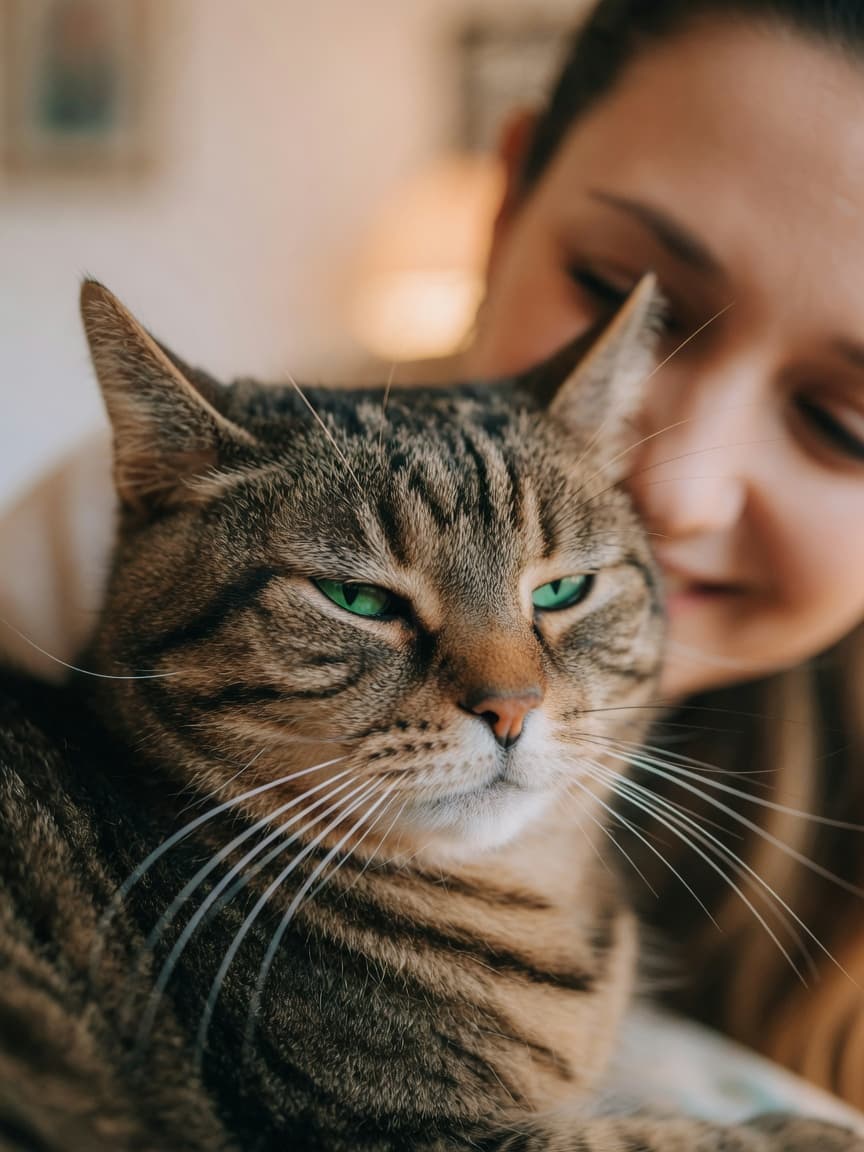
12 Signs Your Cat Actually Loves You (Science-Backed)
Cats do not love the way dogs love. They do not charge the door, leap on your lap uninvited, or lick your face on demand. Their affection is quieter, more deliberate — and, for that reason, far more meaningful when you spot it. Researchers at Oregon State University and the University of Lincoln have confirmed that cats form genuine attachment bonds with their owners, showing measurable distress when separated and relief on reunion. So yes, your cat loves you. Here are the 12 science-backed signals to watch for.
1. The Slow Blink
When your cat holds eye contact and then slowly closes and reopens their eyes, they are communicating trust and affection. Researchers call this a "cat kiss." Try slow-blinking back — studies show cats are more likely to approach a human who mirrors this gesture. It is one of the easiest ways to deepen your bond in seconds.
2. Head Bunting (Bumping Their Head Against You)
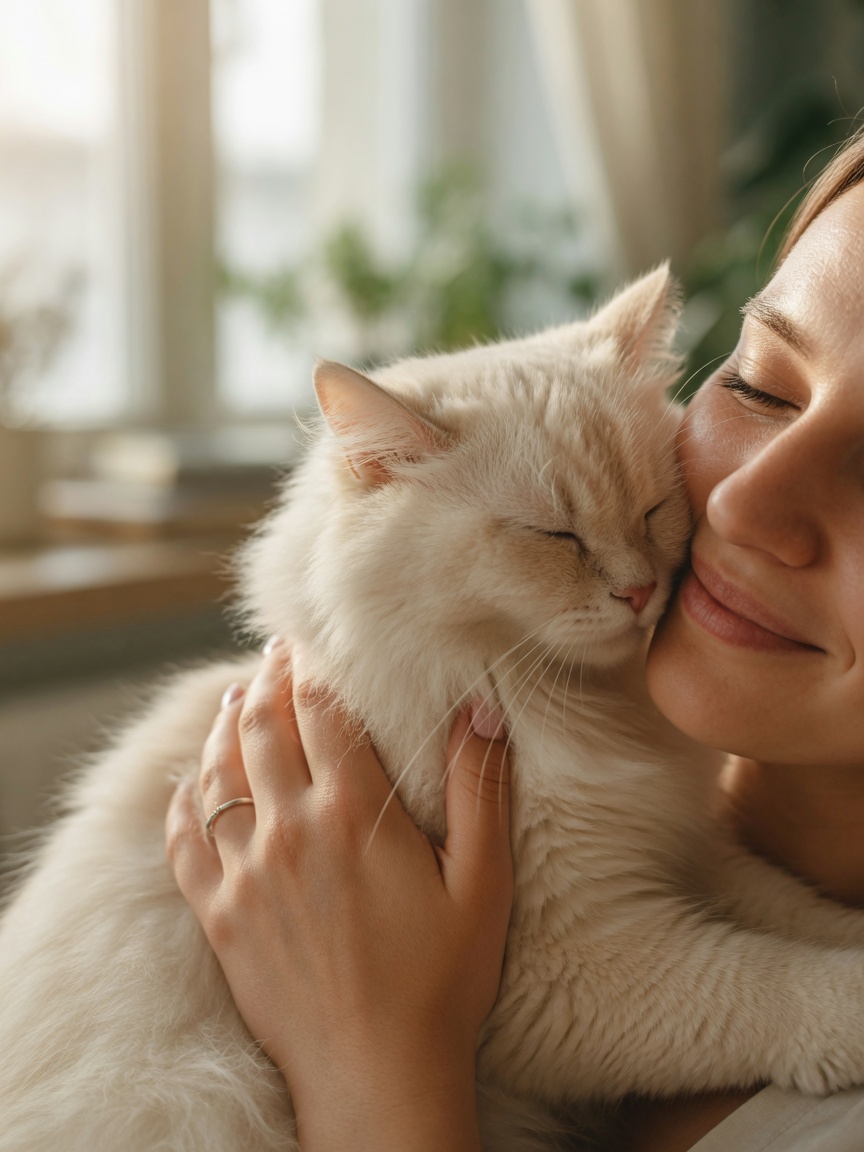
Cats have scent glands along their forehead, cheeks, and chin. When they press their head against you, they are depositing their personal scent — effectively marking you as part of their family group. This behaviour, called "bunting," is reserved for cats and people they feel completely safe around.
3. Kneading ("Making Biscuits")
Kneading is a behaviour that begins in kittenhood, when kittens press their mother's belly to stimulate milk flow. Adult cats that knead on you are regressing, in the best possible way, to a state of complete comfort and security. It means you feel like home to them.
4. Bringing You "Gifts"
A dead mouse or a toy mouse dropped at your feet is not a taunt — it is a contribution. Mother cats teach kittens to hunt by bringing them prey. When your cat does this for you, they are treating you as a beloved kitten who needs feeding and teaching. Gross? A little. Flattering? Absolutely.
5. Showing You Their Belly
The belly is the most vulnerable spot on a cat's body. A cat that rolls over and exposes it to you is demonstrating profound trust — though this is not always an invitation to touch. Read the full body language: a relaxed face and loose limbs mean they feel completely safe with you nearby.
6. Tail Straight Up, Tip Quivering
A vertical tail is a greeting signal. When cats approach each other or their favourite humans with the tail held high and the tip trembling slightly, it is the feline equivalent of "I'm so happy to see you!" This quiver is almost exclusively reserved for individuals they are genuinely attached to.
7. Following You From Room to Room
Cats are territorial animals that don't need to follow anyone. When yours trails you to the bathroom, the kitchen, and your home office, they are choosing your company over the comfort of their usual spot. In attachment-theory terms, they are using you as a "secure base" — just like a toddler stays close to a trusted parent.
8. Chirping and Trilling at You
Adult cats rarely meow at other cats. Meowing, chirping, and trilling are communication behaviours they develop specifically to "talk" to humans. A cat that greets you with a trill or checks in with a chirp is making an active effort to connect with you — linguistically speaking, they learned your language.
9. Sleeping on or Near You
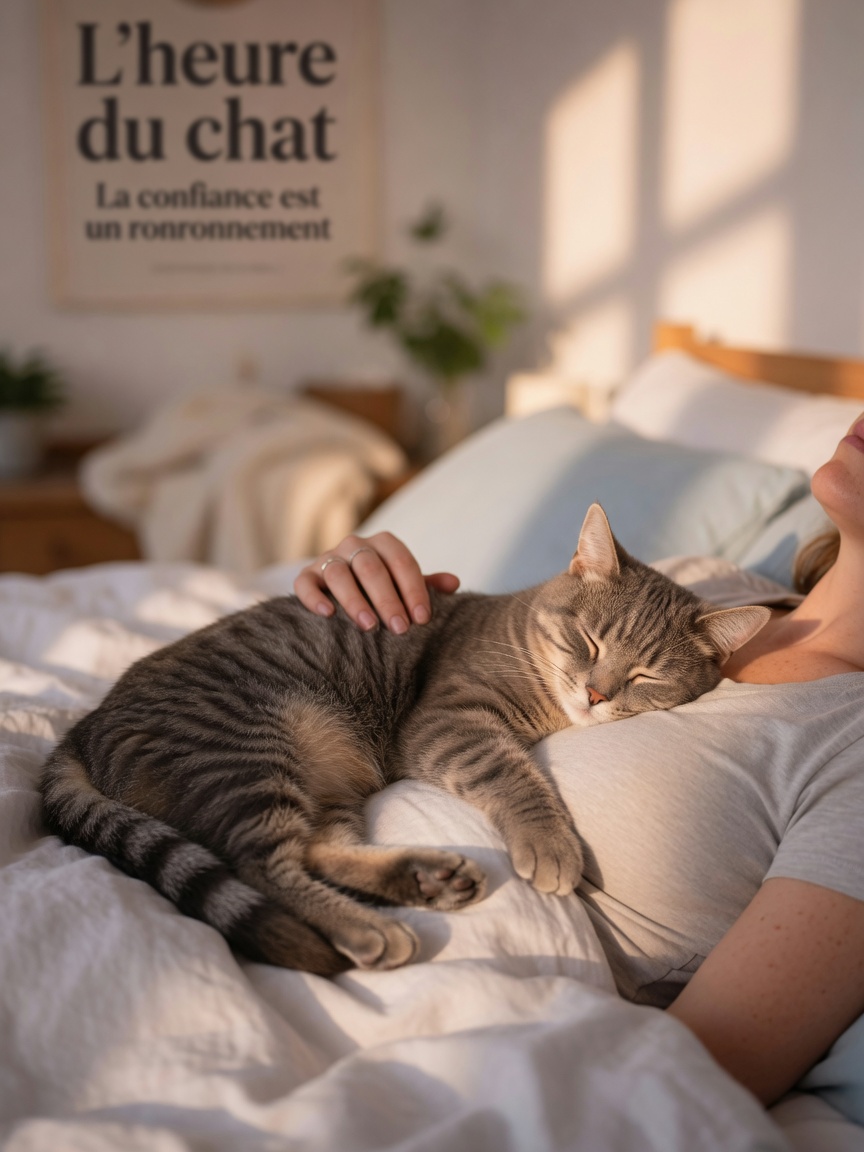
Cats are at their most vulnerable when asleep. Choosing to nap on your chest, at your feet, or pressed against your side is a major statement of trust. Research on feral cats shows they only sleep in close contact with individuals they consider allies. Your bed is their safe house, and you are the reason.
10. Grooming You (Allogrooming)
Mutual grooming — called allogrooming — is a social bonding behaviour cats use within their colony. When your cat licks your hair, eyebrows, or hand, they are including you in their inner circle. Studies show that cats only allogroom individuals they have a positive relationship with. It's the ultimate compliment.
11. Sitting Just Close Enough to Touch
Not every cat is a lap cat, but that doesn't mean they are not affectionate. A cat that positions themselves so their body barely touches yours — flank against your thigh, paw resting on your arm — is maintaining contact in their preferred way. This proximity-seeking is a textbook sign of attachment in feline ethology.
12. Purring Specifically Around You
Cats purr for many reasons, including self-soothing when anxious or unwell. But a "solicitation purr" — a low rumble with a subtle, higher-pitched cry embedded in it — is used specifically to communicate contentment with a trusted human. Researchers at the University of Sussex found that humans instinctively find this purr pleasing. You were biologically shaped to love it, and your cat evolved it to communicate with you. That is a bond built across millennia.
Show your cat some love back. Enrichment toys and interactive feeders help strengthen the bond between cats and their owners. Browse our curated selection at Zooplus Cat Toys — high-quality enrichment without breaking the bank.
Key Takeaways
- Cats form genuine attachment bonds with their owners, confirmed by behavioural science.
- Slow blinking, head bunting, and tail-up greetings are among the clearest affection signals.
- Sleeping near you, grooming you, and trilling at you are all signs of deep trust.
- Even subtle behaviours — like sitting just close enough to touch — count as meaningful connection.
- Mirror your cat's signals (slow blink back, calm body language) to strengthen the bond.
Scientific References
- Vitale Shreve, K. R., Mehrkam, L. R., & Udell, M. A. (2017). Social interaction, food, scent or toys? A formal assessment of domestic pet and shelter cat preferences. Behavioural Processes, 141, 322–328. PMID: 28284866
- Humphrey, T., Proops, L., Forman, J., Spooner, R., & McComb, K. (2020). The role of cat eye narrowing movements in cat–human communication. Scientific Reports, 10, 16503. PMID: 33020502