
Chinchilla Health Guide: Diet, Dust Baths & Common Illnesses
Chinchillas (Chinchilla lanigera) are extraordinary animals: soft-furred, intelligent, and capable of living 10 to 15 years — sometimes even longer — with excellent care. They originate from the cold, dry, high-altitude Andes of South America, and nearly every aspect of their care reflects this heritage. Their diet, temperature requirements, and grooming needs are all shaped by an environment that has nothing in common with the average household.
Chinchillas are not low-maintenance pets. They are long-lived, socially complex, and medically fragile when care is incorrect. This guide covers the essentials of diet, dust baths, temperature management, and the health conditions most likely to affect your chinchilla over the course of its life.
Diet: Hay Is Everything
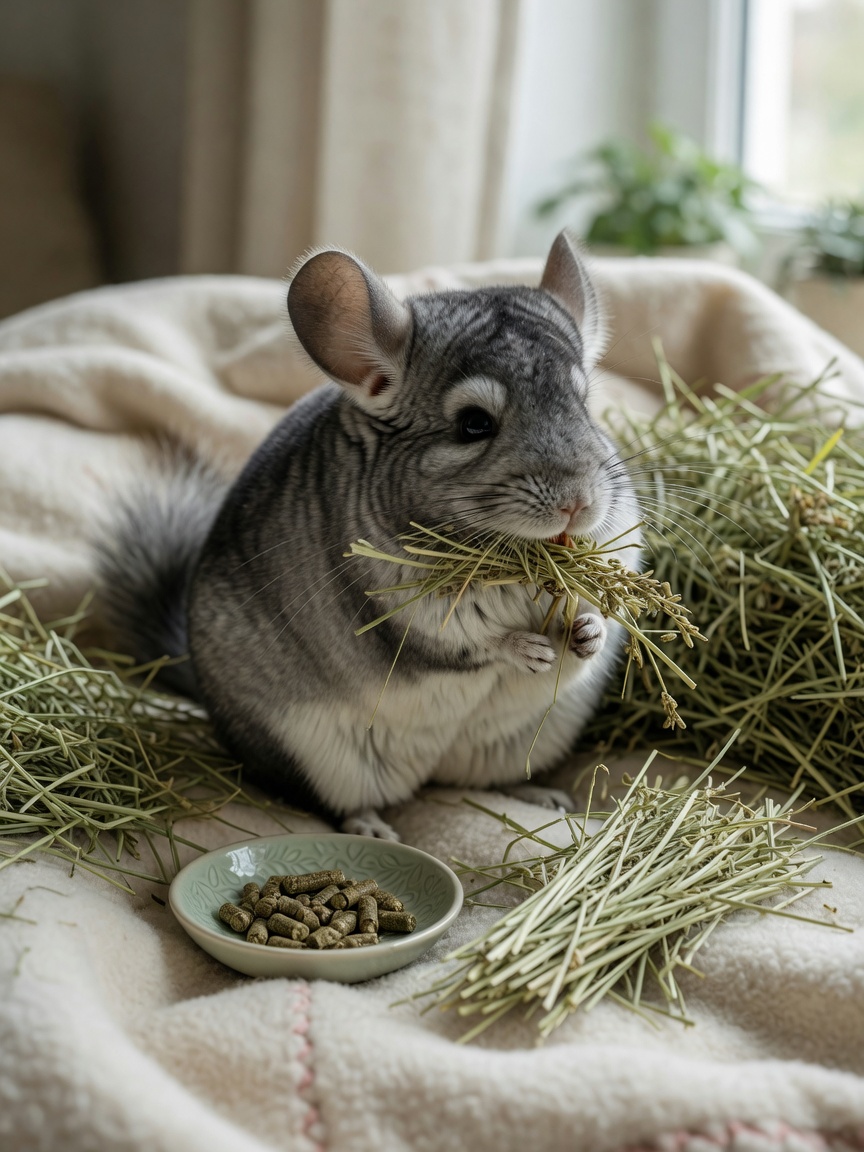
The foundation of a chinchilla's diet — roughly 80% of daily intake — must be unlimited, high-quality timothy hay. This is not a suggestion or a supplement; it is the primary food source. Hay serves two critical purposes: it provides the fiber necessary to keep the gut moving at its required pace, and it provides the grinding action needed to wear down chinchilla teeth, which grow continuously throughout their lives.
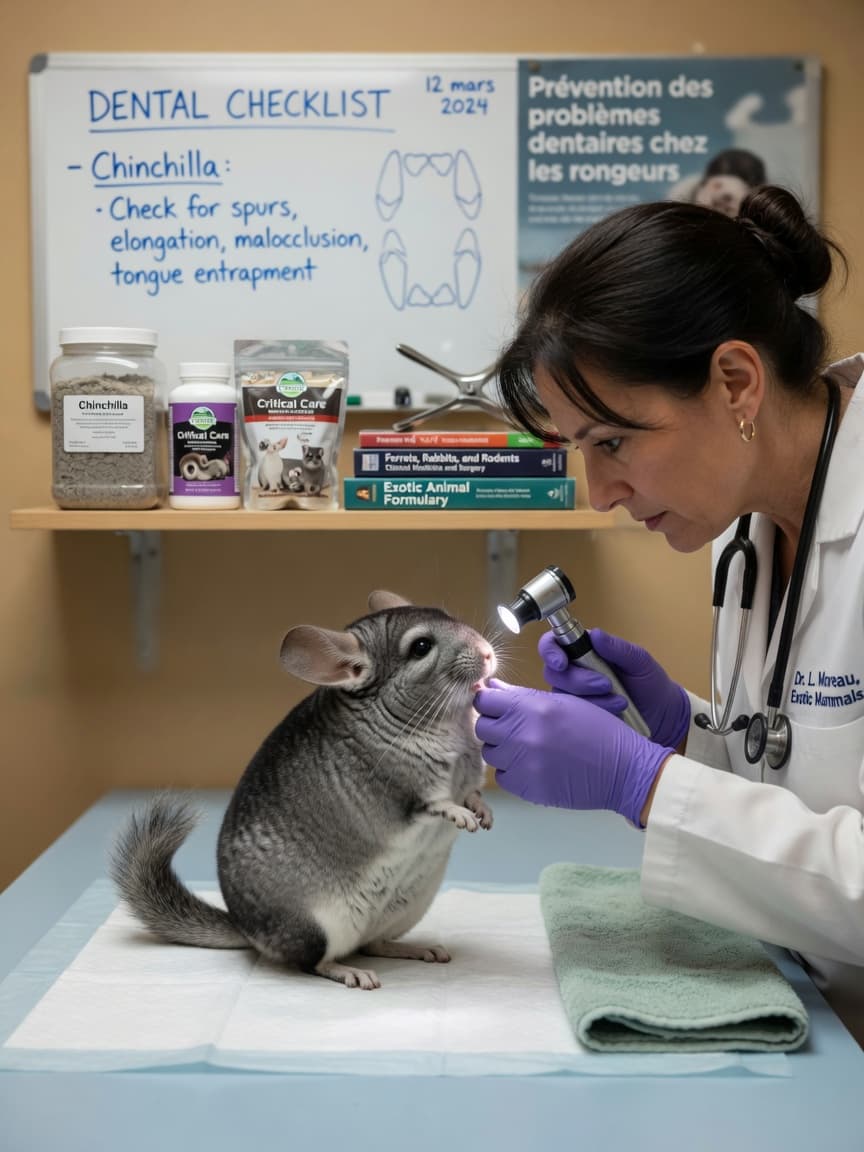
Chinchillas have open-rooted teeth that never stop growing. Without adequate hay to chew, their teeth grow abnormally, angling inward, cutting into the tongue and cheeks, and eventually preventing the animal from eating at all. This condition — malocclusion — is the most common serious health problem in captive chinchillas, and inadequate hay is the primary cause.
Pellets
A small daily portion of high-quality chinchilla pellets (approximately 1–2 tablespoons per day) rounds out the nutritional profile. Use plain, timothy-hay-based pellets without added seeds, colored bits, or dried fruit. Those additions increase sugar and fat content to dangerous levels and train chinchillas to pick around the pellets in favor of the tasty extras.
Treats: Strict Limits
Chinchillas have a very sensitive digestive system that did not evolve to handle sugar or fat. Treats must be given sparingly — no more than a tiny piece of dried fruit or a single raisin once or twice per week at most. Avoid: sugary commercial treats marketed for chinchillas, yogurt drops, nuts, seeds in large quantities, and anything high in fat or moisture.
Foods that seem harmless but are not: avocado, asparagus, peas, corn, and spinach (high oxalates). When in doubt, a plain strand of hay is always the safest treat.
Dust Baths: Essential, Not Optional
A chinchilla's coat is extraordinarily dense — up to 60 hairs per follicle compared to one in humans. This density makes it nearly impossible to dry once wet, which creates an environment where fungal and bacterial growth thrive against the skin. Never bathe a chinchilla with water. Getting the fur wet is a welfare problem, not just a cosmetic one.
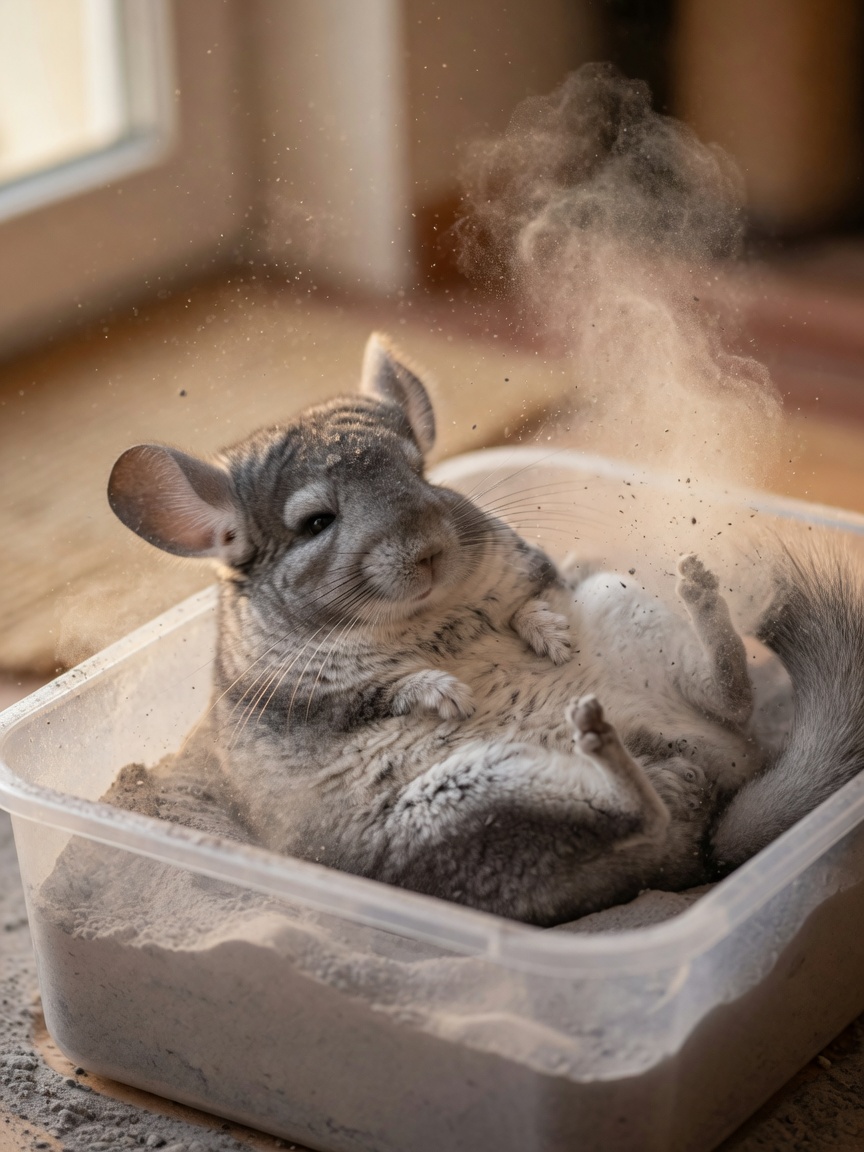
Chinchillas clean themselves by rolling in fine volcanic ash dust, which absorbs oils and moisture from the coat without wetting it. Provide a dust bath 2–3 times per week, for approximately 10–15 minutes per session. Use only dedicated chinchilla volcanic dust — not sand, not hamster bathing sand, not any other substitute. Proper dust is extremely fine and has a specific particle size that penetrates the coat. Regular sand particles are too large to penetrate the fur and will not clean it.
Do not leave the dust bath in the enclosure at all times. Over-bathing dries the skin, causing flakiness and irritation. 2–3 sessions per week is the correct frequency in most climates; in very humid environments, you may increase to 4 times per week.
For authentic volcanic chinchilla dust, Zooplus stocks several formulations of chinchilla bathing dust in sizes appropriate for regular use.
Temperature: A Life-or-Death Issue
Chinchillas are cold-adapted animals. They tolerate cool temperatures well but are highly susceptible to heatstroke at temperatures above 75°F (24°C). The ideal ambient temperature for a chinchilla is between 60–70°F (15–21°C). High humidity compounds heat risk significantly — a warm, humid environment is dangerous even at temperatures that might seem borderline safe.
Signs of heatstroke: panting or rapid breathing, bright red ears, lethargy, drooling, lying flat and unresponsive. Heatstroke is a veterinary emergency. Do not place the enclosure near a window with direct sunlight, near a heating vent, or in a room without air conditioning during warm months.
Common Illnesses and Health Concerns
Dental Disease (Malocclusion)
As noted above, this is the most prevalent serious condition in chinchillas. The back molars (not the incisors) are typically affected first, making it difficult to detect visually without veterinary examination. Symptoms include: progressive weight loss, dropping food while chewing, wet or matted chin (from drooling), reduced appetite. Annual dental checks by an exotic vet are strongly recommended, starting at age 2.
Gastrointestinal Stasis
GI stasis occurs when gut motility slows or stops. In chinchillas, this can escalate from discomfort to life-threatening in hours. Causes include: stress, inadequate fiber, dehydration, or pain from another condition. Signs: no fecal pellets or very small/dry ones, hunched posture, refusal to eat. This is an emergency requiring immediate veterinary care.
Respiratory Infections
Chinchillas are susceptible to bacterial respiratory infections, often triggered by drafts, damp bedding, or exposure to sick animals. Symptoms: nasal discharge, labored breathing, lethargy. Treatment requires veterinary antibiotics — home remedies are not effective and dangerous respiratory infections can progress rapidly.
Fur Ring (Males)
Male chinchillas can develop a condition where fur wraps around the penis behind the glans, constricting blood flow. This requires prompt removal, which can be done carefully at home if caught early, but severe cases require veterinary assistance. Check intact males regularly, especially after breeding activity.
Do Not Get the Fur Wet
This point deserves its own section because it is so frequently misunderstood. If your chinchilla gets wet — from spilled water, rain, or even damp hands — dry it immediately and thoroughly with a warm, gentle airflow (not hot). A chinchilla that remains damp for extended periods can develop fungal skin infections and hypothermia. Spot cleaning with a dry cloth is acceptable; any water exposure should be minimized and addressed immediately.
Key Takeaways
- Timothy hay must make up 80% of the diet — it is essential for both gut motility and dental wear.
- Dental disease (malocclusion) is the most common serious health problem in captive chinchillas — annual vet dental checks are essential.
- Dust baths with volcanic dust 2–3 times per week are essential; never bathe a chinchilla with water.
- Keep temperature below 75°F. Heatstroke above this threshold can be fatal within hours.
- GI stasis is a medical emergency — no fecal pellets and refusal to eat warrant immediate veterinary contact.
- Only an exotic mammal veterinarian can appropriately treat chinchilla health problems.
- Chinchillas are long-lived pets — expect a 10–15 year commitment with proper care.
Scientific References
- Crossley DA. "Dental disease in chinchillas in the UK." Journal of Small Animal Practice. 2001;42(1):12–19. PMID: 11233665.
- Jekl V, Hauptman K, Knotek Z. "Diseases in pet chinchillas: an analysis of 480 cases diagnosed at a university veterinary teaching hospital." Veterinary Record. 2008;163(14):432–435. PMID: 18836199.