
Ferret Overview
The domestic ferret (Mustela putorius furo) is a domesticated form of the European polecat and has been kept by humans for at least 2,500 years, originally as a working animal used for rabbit hunting (ferreting). Today, ferrets are popular companion animals across Europe and the UK, prized for their inquisitive, playful and intelligent nature.
Ferrets are legal to keep as pets across the European Union and the UK. Depending on the country, identification requirements may apply — microchipping and tattooing are used in some member states, and requirements for ferrets used in hunting may differ from those kept solely as pets. Owners should check the regulations in their own country. It is worth clarifying for any owners researching internationally that ferrets are banned in some US states, notably California and Hawaii — this is not relevant to EU or UK owners, where no such ban exists.
Temperament and Social Needs
Ferrets are highly social animals. They are curious, active and entertaining, but they do not thrive when kept alone or confined to a cage for most of the day. Ferrets should ideally be kept in pairs or small groups, and they need a minimum of four hours out-of-cage time daily for exercise and exploration. A bored, under-stimulated ferret is a ferret that is likely to develop behavioural problems and may suffer in terms of welfare.
Ferrets are notorious escape artists. Any space used for out-of-cage time must be ferret-proofed — gaps under doors, spaces behind appliances and accessible cables all present hazards. They can also be trained to use a litter tray and to come when called, and training sessions provide valuable mental stimulation.
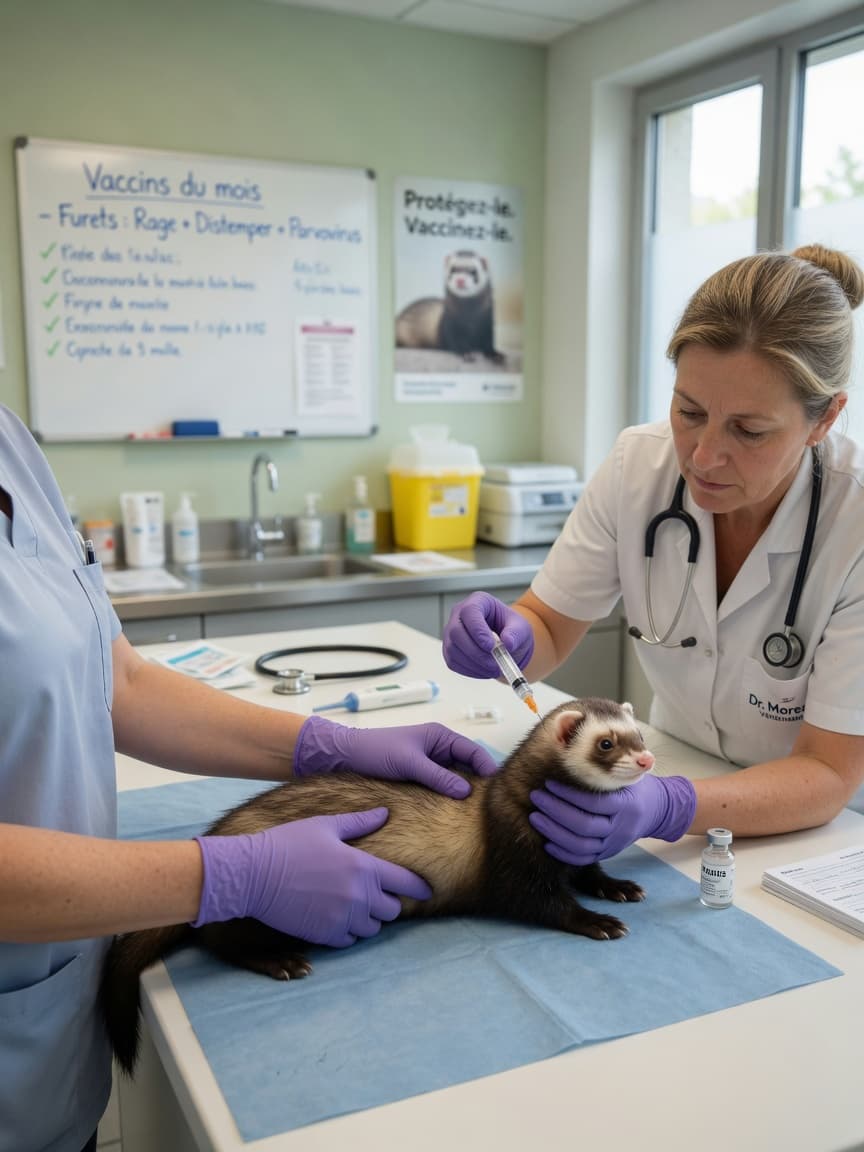
Vaccinations: Essential, Not Optional
Canine Distemper Virus (CDV)
Ferrets are highly susceptible to canine distemper virus, and infection is almost universally fatal. There is no effective treatment once clinical disease develops. Vaccination against CDV is therefore essential for all ferrets. Ferret-appropriate vaccines are used — in some EU countries, licensed ferret vaccines are available (such as Purevax Ferret, produced by Merial/Boehringer Ingelheim); in others, vets may use canine distemper vaccines off-label where no licensed ferret product is available. The vaccination protocol typically involves a first vaccine at 8 to 12 weeks of age, a second at 12 to 16 weeks, and then annual boosters. Discuss the most appropriate product with your vet.
Rabies
Rabies vaccination is required in many EU member states, both for standard pet keeping and for any travel between countries. It is also required for the Pet Passport, which is necessary for moving ferrets between EU countries and — post-Brexit — for travelling between the UK and EU. Requirements vary by country, and owners should verify the regulations in both their own country and any country they intend to visit with their ferret.
Aleutian Disease
Aleutian disease (AD) is caused by Aleutian Mink Disease Parvovirus (AMDV). It is a chronic, progressive disease that causes an abnormal immune response, leading to immune complex deposition in the kidneys, liver and other organs. Signs include weight loss despite a normal or increased appetite, hindlimb weakness and ataxia, tarry black stools (melaena, indicating digested blood in the gastrointestinal tract), and neurological signs in advanced cases. There is no treatment for Aleutian disease.
Diagnosis is by serological testing — the CEP (Counter Electrophoresis) test or ELISA. Before introducing a new ferret to an existing group, testing for AMDV is strongly recommended. There is no vaccine available. Managing the spread of the virus within a ferret-keeping household requires strict hygiene and careful introduction protocols.
Adrenal Disease
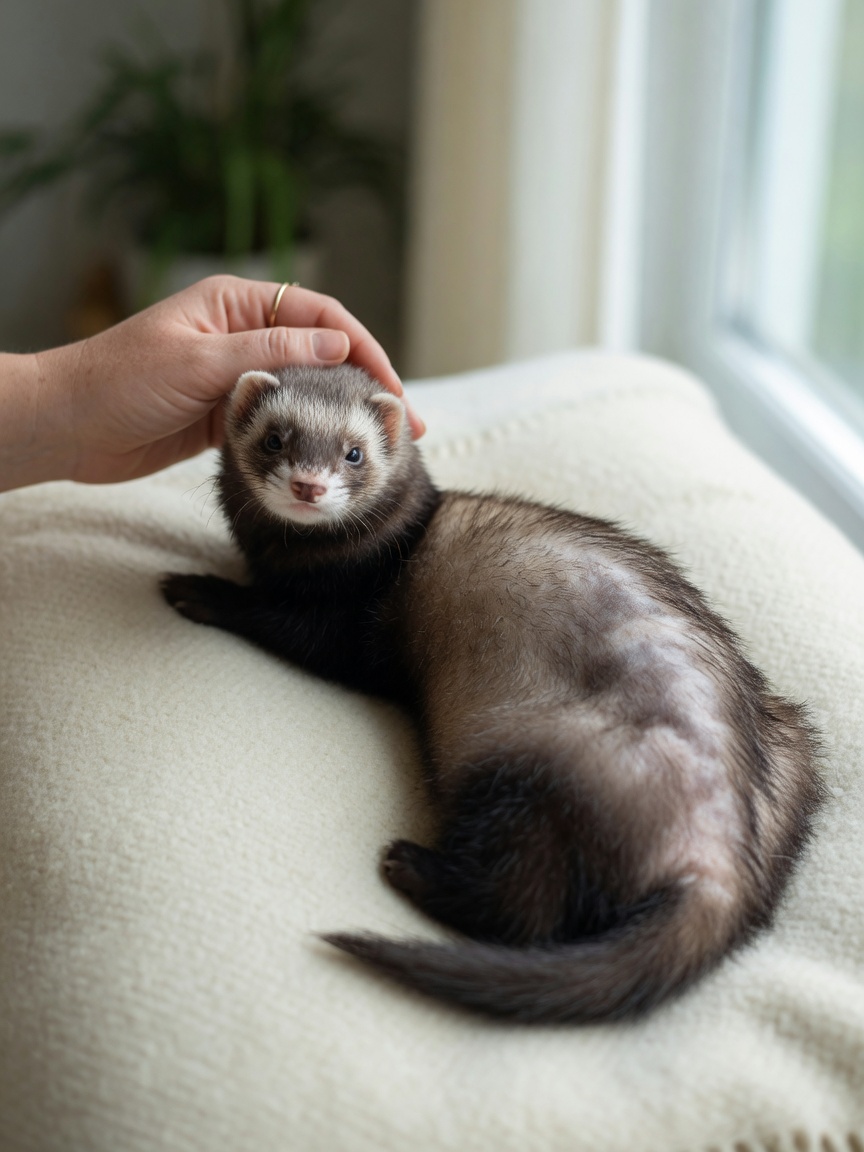
Adrenal disease is one of the most common conditions seen in ferrets, particularly in middle-aged and older animals, and it is especially prevalent in ferrets that have been surgically neutered. The condition involves overproduction of sex hormones by the adrenal glands, typically due to benign or malignant tumours of the adrenal cortex.
Signs include symmetrical hair loss beginning at the tail and rump and gradually spreading forwards, muscle wasting, lethargy and in spayed females, vulval swelling (which can mimic the appearance of being entire). Affected ferrets may also show pruritus (itching). Treatment options include surgical adrenalectomy (removal of the affected adrenal gland), Deslorelin implants (a GnRH agonist that suppresses sex hormone production — increasingly used as first-line treatment in Europe), and melatonin implants, which can help manage signs.
Insulinoma
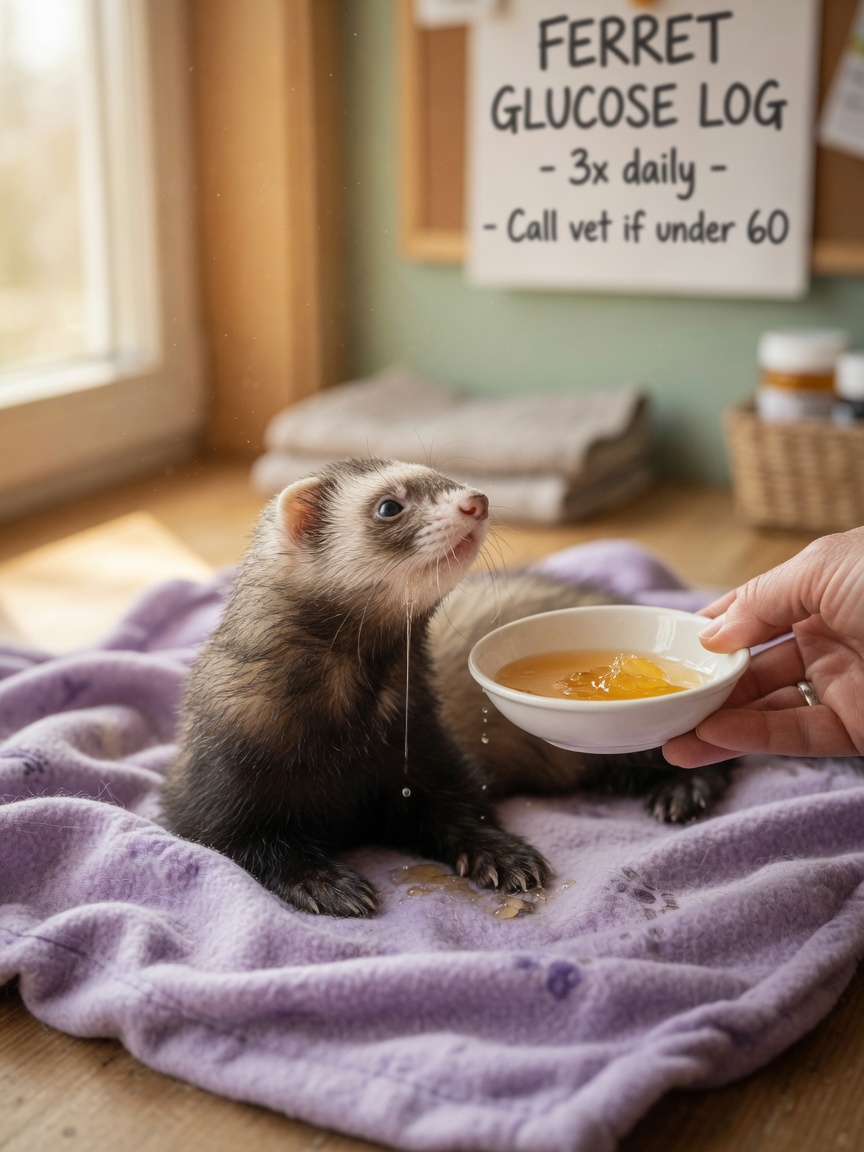
Insulinoma is a tumour of the insulin-producing beta cells of the pancreas, causing the gland to secrete excess insulin and driving blood glucose to dangerously low levels. It is very common in ferrets over three to four years of age and is one of the most important health concerns for older ferrets.
Episodes typically occur after a period of fasting and may present as sudden weakness, excessive drooling, pawing at the mouth, a fixed or glazed stare (sometimes described as "stargazing"), and in severe cases, collapse or seizures. If you observe these signs, offering the ferret a small amount of high-sugar food (such as a little honey) can temporarily raise blood glucose while you seek urgent veterinary attention. Diagnosis is confirmed by measuring blood glucose during a symptomatic episode.
Treatment may be surgical — removal of visible nodules on the pancreas offers the best long-term outcomes — or medical, using prednisolone to raise blood glucose and diazoxide to reduce insulin secretion. Offering small, frequent meals and avoiding high-sugar treats helps reduce the frequency of hypoglycaemic episodes.
Jill Reproductive Health: A Critical Consideration
Intact female ferrets (jills) are induced ovulators that enter oestrus as day length increases in spring. If a jill in oestrus is not mated, she remains in oestrus indefinitely. Prolonged exposure to high levels of oestrogen suppresses the bone marrow, leading to aplastic anaemia — a condition that is potentially fatal and that carries a poor prognosis if allowed to develop fully.
This means that every intact jill must be managed at the start of the breeding season. Options include mating, hormonal suppression of oestrus via a "jill jab" (deslorelin or proligestone injections), or surgical spaying. However, there is an important caveat regarding spaying: early surgical spaying — as is routinely performed in the United States — has been strongly associated with the development of adrenal disease in ferrets. Many European veterinary practitioners now favour hormonal management over routine surgical spaying to reduce this risk. This is an active area of veterinary discussion; owners should seek the advice of a vet with experience in ferret medicine when deciding on the best approach for their animal.
Other Health Conditions
- Epizootic Catarrhal Enteritis (ECE): also known as "green slime disease", this highly contagious coronavirus infection causes profuse green diarrhoea and significant weight loss. Supportive care is the mainstay of treatment.
- Lymphoma: one of the most commonly diagnosed cancers in ferrets; treatment options include surgery, chemotherapy and palliative care.
- Foreign body ingestion: ferrets frequently chew and swallow rubber, foam and fabric items. Gastrointestinal obstruction is a genuine risk and a surgical emergency.
- Dental disease: ferrets are prone to periodontal disease. Regular dental assessment is part of routine care.
Diet and Housing
Ferrets are obligate carnivores with a very short gastrointestinal tract and a rapid digestive transit time. They require a diet that is high in animal protein, high in fat and very low in carbohydrate. A raw meat diet or a high-quality ferret-specific or kitten food is appropriate. Fruit, vegetables and high-carbohydrate foods are inappropriate for ferrets and may contribute to the development of insulinoma over time. Raw meaty bones support dental health.
Housing should be a large, multi-level cage with soft bedding and hammocks, as ferrets spend much of their sleeping time in enclosed, cosy spaces. They are very sensitive to heat and are at risk of heatstroke at temperatures above approximately 26 degrees Celsius. Cages should be kept in a cool, well-ventilated area away from direct sunlight.