

Shih Tzu Health: BOAS, Eye Problems & Kidney Disease
The Shih Tzu is one of the most beloved toy breeds in the world, prized for its silky coat, affectionate temperament, and compact size. But behind those gorgeous eyes and adorable flat face lies a set of breed-specific vulnerabilities that every owner must understand. With proper care and early intervention, many Shih Tzus live well into their mid-teens — typical lifespan is 10–16 years. This guide covers the four most critical health concerns: brachycephalic obstructive airway syndrome, eye conditions, kidney disease, and dental crowding.
Brachycephalic Obstructive Airway Syndrome (BOAS)
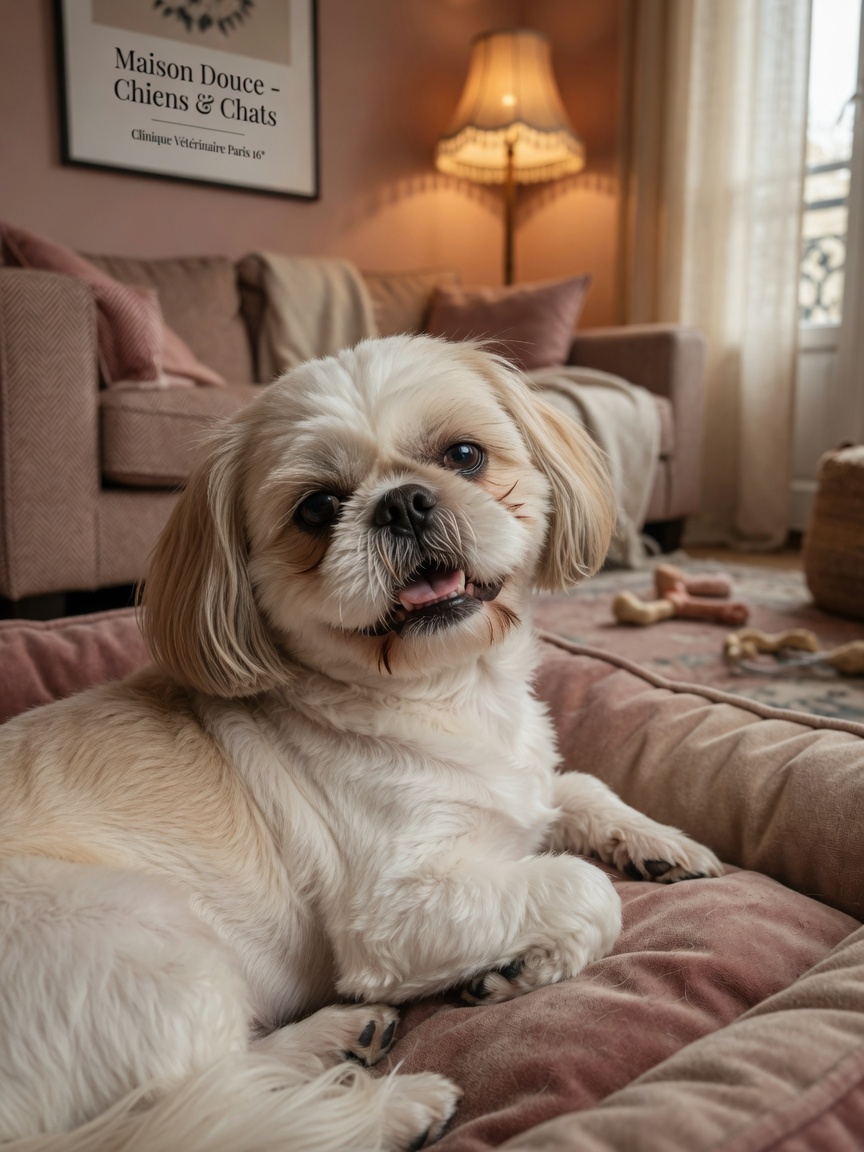
BOAS is not a single defect but a cluster of anatomical abnormalities arising from the Shih Tzu’s shortened skull. The four primary components are: stenotic nares (pinched nostrils), an elongated soft palate that partially blocks the airway, a hypoplastic trachea (abnormally narrow windpipe), and everted laryngeal saccules that worsen with chronic breathing effort.
Many owners normalise their dog’s noisy breathing, assuming it is simply a breed trait. In reality, dogs with significant BOAS are oxygen-deprived during every breath. Signs to watch include: persistent snoring even during calm waking hours, exercise intolerance, gagging or retching after minimal exertion, open-mouth breathing, and cyanotic (blue-tinged) gums — a veterinary emergency.
Surgical correction — widening the nostrils and shortening the soft palate — is highly effective when performed early (ideally before age 2). Dogs that undergo corrective surgery have significantly better long-term respiratory function and quality of life. Heat and humidity greatly worsen BOAS symptoms; Shih Tzus should never be left in hot cars or exercised in high temperatures.
Eye Conditions: Corneal Ulcers, Entropion & Proptosis
The Shih Tzu’s large, prominent eyes are among the breed’s most distinctive features — and among its greatest vulnerabilities. Because the eyes protrude from shallow orbits, they are constantly exposed and at risk of injury, drying, and infection.
Corneal ulcers are open sores on the surface of the eye. They can result from minor trauma, inadequate tear film, or foreign material. Even a strand of fur rubbing against the cornea can trigger ulceration. Signs include squinting, pawing at the eye, excessive tearing, cloudiness, and redness. Ulcers must be treated promptly — deep or infected ulcers can perforate the eye within days.
Entropion is an inward rolling of the eyelid, causing eyelashes to chronically rub against the cornea. It causes significant pain and, if left untreated, leads to scarring and vision loss. Surgical correction is straightforward and usually curative.
Proptosis — eyeball dislodgement from the socket — is perhaps the most alarming eye emergency. It can be triggered by restraining a Shih Tzu around the neck, a dog fight, or even a minor fall. If proptosis occurs, cover the eye with a moist cloth and rush to an emergency vet immediately. The prognosis for saving the eye depends entirely on how quickly treatment begins.
Daily inspection of the eyes, trimming facial fur away from the eyes, and keeping the area clean of discharge are essential preventive habits.
Renal Dysplasia & Chronic Kidney Disease
Shih Tzus have a documented predisposition to renal dysplasia — a congenital condition in which the kidneys fail to develop normally, resulting in poorly functioning kidney tissue from birth. Severely affected puppies may show kidney failure signs before age one. Mildly affected dogs may compensate for years before entering chronic kidney disease (CKD).
CKD is progressive and irreversible, but its progression can be substantially slowed with the right management. Early signs include increased thirst and urination (PU/PD), decreased appetite, weight loss, vomiting, and lethargy. Blood and urine tests (BUN, creatinine, SDMA, urine specific gravity) can detect kidney dysfunction before clinical signs appear — annual bloodwork from age 5 is strongly recommended.
Management pillars include a phosphorus-restricted, moderate-protein kidney diet, adequate hydration (sometimes supported with subcutaneous fluids), phosphorus binders, and blood pressure medication if indicated. Avoid nephrotoxic drugs (NSAIDs, certain antibiotics) unless absolutely necessary.
Dental Crowding
The Shih Tzu’s compressed skull means 42 adult teeth must fit into a much smaller jaw than nature originally designed. The result is severe dental crowding, rotation, and retention of deciduous (baby) teeth that fail to fall out on their own. This creates pockets where plaque and bacteria accumulate at an accelerated rate, causing periodontal disease that can progress to tooth root abscesses and jawbone loss.
Daily tooth brushing with a dog-safe toothpaste is the single most effective preventive measure. Annual professional dental cleanings under anaesthesia are typically needed from age 2–3. Retained baby teeth should be extracted by your vet — they do not resolve on their own and actively worsen crowding.
Key Takeaways
- BOAS surgical correction before age 2 dramatically improves lifelong respiratory health.
- Inspect eyes daily; any squinting or cloudiness warrants a same-day vet call.
- Annual bloodwork from age 5 can catch early kidney disease before symptoms appear.
- Daily tooth brushing and annual professional cleanings are non-negotiable for this breed.
- Keep Shih Tzus cool — they cannot thermoregulate effectively and are at serious risk of heatstroke.
- Typical lifespan: 10–16 years with proactive veterinary care.
Vet Visit Triggers — Act Immediately If You See:
- Blue or grey gum colour (oxygen deprivation emergency)
- Eye protruding from socket (proptosis emergency)
- Sudden collapse or extreme lethargy
- Squinting, pawing at eyes, or visible eye cloudiness
- Significant increase in water intake or urination
- Repeated vomiting or refusal to eat for more than 24 hours
Understanding your Shih Tzu’s vulnerabilities is the first step toward giving them a long, comfortable life. Partner with a vet experienced in brachycephalic breeds, stay current on annual health screens, and act quickly when warning signs appear.
References
- Liu N-C, Troconis EL, Kalmar L, et al. Conformational risk factors of brachycephalic obstructive airway syndrome (BOAS) in pugs, French bulldogs, and bulldogs. PLOS ONE. 2017;12(8):e0181928. PMID: 28771589
- Daminet S, Mooney CT, Huuskonen V, et al. Renal dysplasia in related Shih Tzu dogs. Journal of Small Animal Practice. 2002;43(10):433–438. PMID: 12400658