
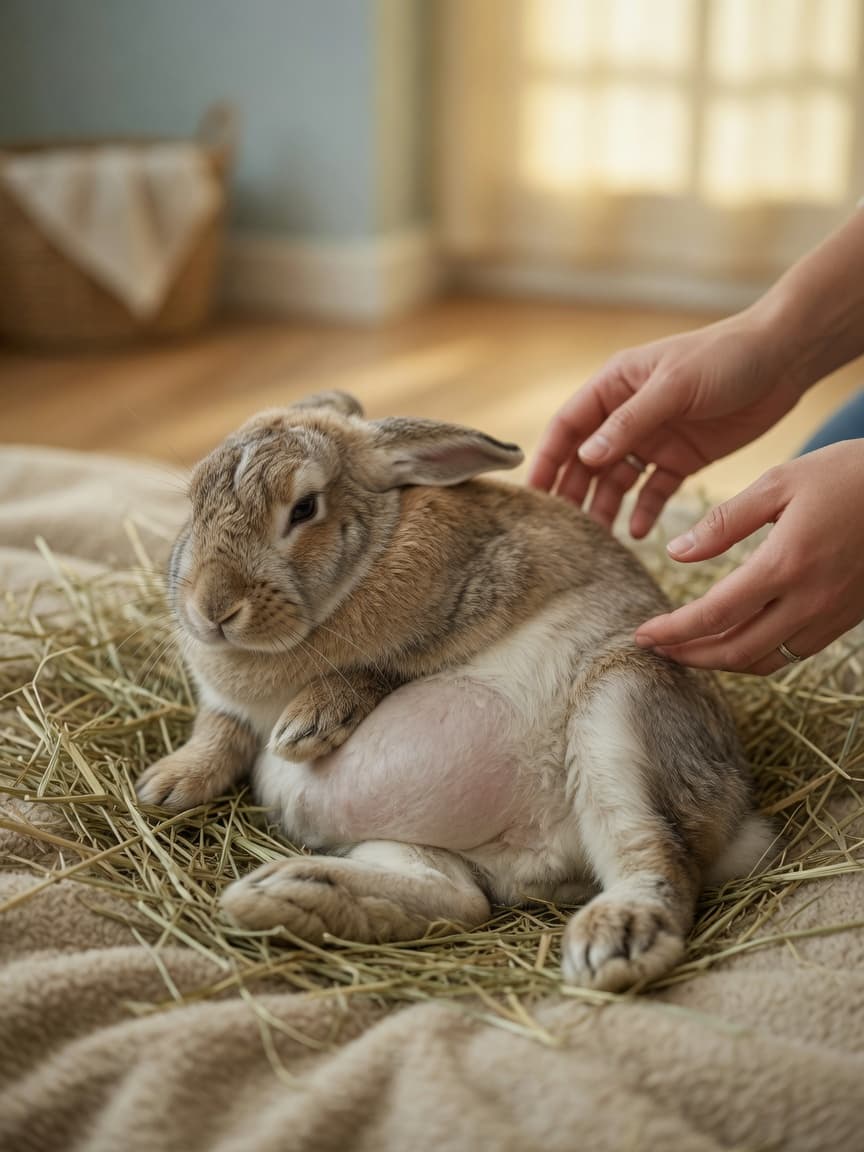
What Is Gastrointestinal Stasis in Rabbits?
Gastrointestinal stasis — commonly called GI stasis — is not a single disease but a dangerous syndrome in which a rabbit's digestive system slows down or stops entirely. Unlike dogs and cats, rabbits have a digestive tract that must remain in constant motion. When gut motility ceases, gas accumulates rapidly, bacteria proliferate in the intestines, and the rabbit enters a life-threatening spiral that can become fatal within hours.
It is vital to understand that GI stasis is always a symptom of an underlying problem, never a standalone diagnosis. Something has disrupted the gut — and identifying that cause is just as important as treating the stasis itself.
Why Is GI Stasis So Dangerous?
Rabbits cannot vomit. Once gas builds up in the gut, there is no natural mechanism for release. The pressure causes significant pain, which causes the rabbit to stop eating and moving, which slows the gut further, creating a devastating feedback loop. Within 24 to 48 hours of complete gut shutdown, organ failure can occur. This is why GI stasis must always be treated as a genuine emergency — hours matter, not days.
Common Causes of GI Stasis
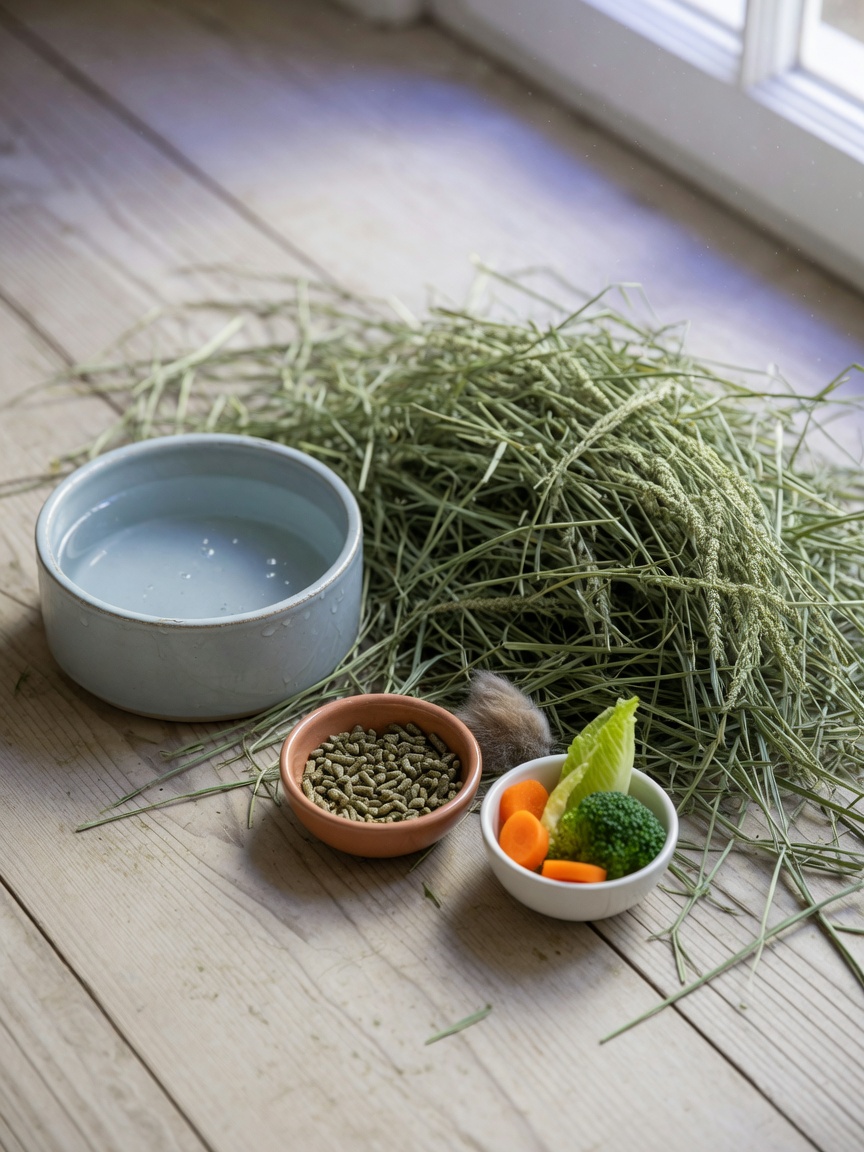
Understanding the causes of GI stasis helps owners both prevent the condition and communicate accurately with their vet during an emergency.
- Low fibre diet: Insufficient hay in the diet is the single most common cause. Hay keeps the gut moving and provides the roughage necessary for healthy peristalsis.
- Dehydration: A rabbit that is not drinking enough water will have sluggish gut contents that are difficult to move through the intestines.
- Pain from another source: Dental pain, urinary issues, or musculoskeletal discomfort can cause a rabbit to stop eating and trigger secondary stasis.
- Stress: Environmental stressors such as a house move, a new pet, loud noises, or extreme temperatures can suppress gut activity rapidly.
- Sudden diet change: Introducing new foods too quickly — particularly high-sugar treats or fresh vegetables — disrupts gut flora and motility.
- Hairballs: Unlike cats, rabbits cannot vomit fur. Ingested fur can accumulate and create blockages, especially during moulting season.
Recognising the Signs of GI Stasis
Early recognition is everything. The following signs should prompt an immediate call to a rabbit-savvy vet.
- No faecal droppings, or droppings that are dramatically smaller than usual
- Complete refusal to eat — even favourite foods and fresh hay
- Teeth grinding, known as bruxism, which indicates pain
- A hunched or loaf posture with the belly pressed to the ground
- A visibly bloated or hard abdomen
- Lethargy and reluctance to move
- Rapid, shallow breathing if pain is severe
Healthy rabbits produce dozens of droppings every hour. If you notice your rabbit has produced no droppings for two to three hours, do not wait to see whether things improve. Contact a vet immediately.
Emergency Treatment
GI stasis treatment must be provided by a veterinarian. Home remedies are not sufficient for this condition, and delaying professional care significantly worsens the prognosis. A vet treating GI stasis will typically employ the following approach.
- Gut motility drugs such as metoclopramide or cisapride to stimulate intestinal movement
- Subcutaneous or intravenous fluids to combat dehydration and soften gut contents
- Analgesia, typically meloxicam, to relieve pain and reduce the stress response that worsens stasis
- Assisted syringe feeding with Critical Care (a specialist herbivore recovery food) to maintain nutritional intake and stimulate gut activity
- Gentle gut massage to encourage gas movement
- Treatment of any underlying cause identified during examination
In severe cases where a blockage is suspected — as opposed to simple motility slowdown — surgery may be required. X-rays and ultrasound help distinguish between the two.
Syringe Feeding at Home
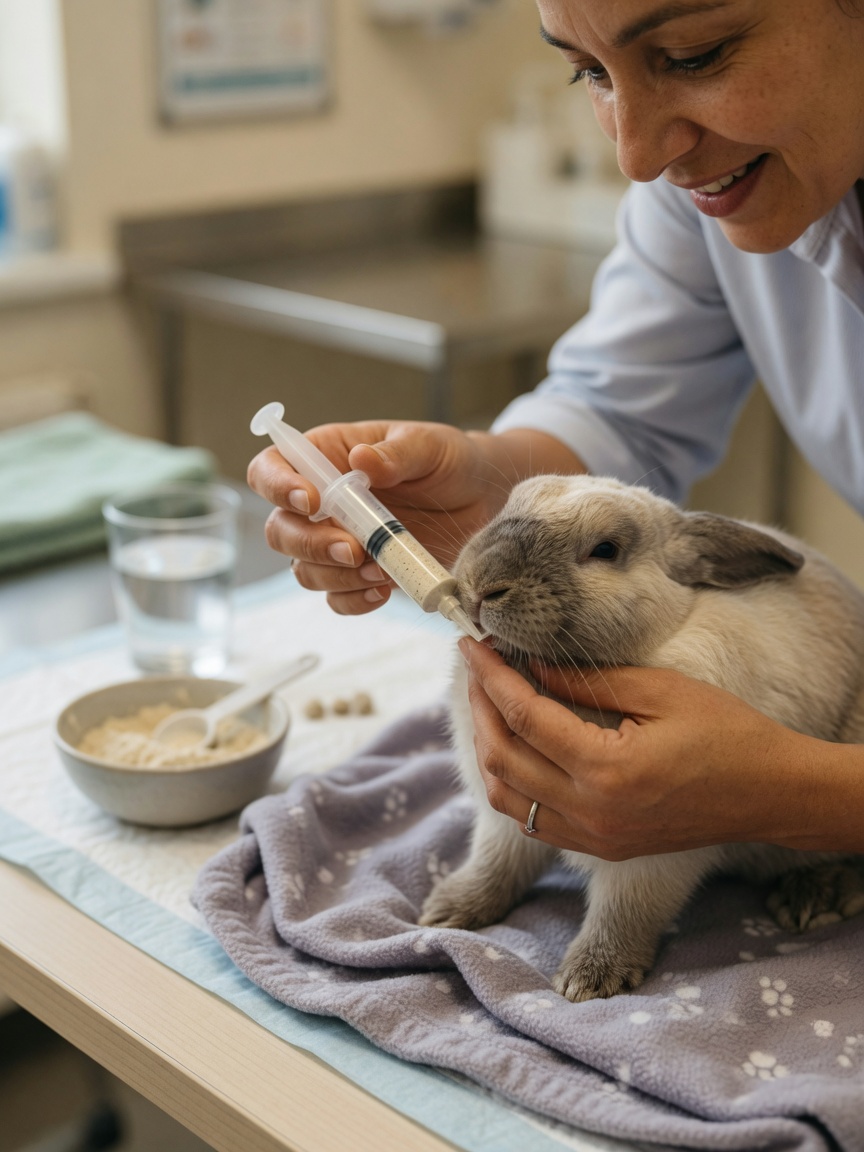
Once your rabbit is stabilised, your vet may send you home with Critical Care powder and a syringe. Syringe feeding keeps essential nutrients and fibre flowing through the gut. Always follow your vet's instructions for quantity and frequency. Most rabbits accept Critical Care reluctantly at first but improve as they begin to feel better.
Never force-feed a rabbit with a suspected blockage unless your vet has specifically instructed you to do so, as this can cause further harm.
Preventing GI Stasis
Prevention is straightforward but requires consistent commitment from every rabbit owner.
- Provide unlimited fresh hay at all times — this is non-negotiable. Timothy, meadow, and orchard grass hays are all excellent choices.
- Ensure constant access to fresh, clean water. Many rabbits prefer a bowl over a bottle as it allows a more natural drinking posture and faster flow.
- Introduce any new foods gradually over one to two weeks to allow gut flora to adjust.
- Minimise unnecessary stressors in your rabbit's environment.
- Brush your rabbit regularly, particularly during heavy moults, to reduce the volume of fur ingested during self-grooming.
- Schedule regular veterinary check-ups to catch underlying dental or health issues before they trigger secondary stasis.
When to Seek Help
If your rabbit has not eaten for more than two to three hours, has produced no droppings, or appears to be in pain, treat the situation as an emergency. Contact an emergency vet with rabbit experience immediately. Many standard veterinary practices lack expertise with rabbits, so it is worth identifying a rabbit-savvy practice in your area before a crisis occurs.
GI stasis is terrifying, but rabbits that receive prompt, appropriate treatment have a very good chance of full recovery. The key is never to wait and hope it resolves on its own — it will not.
--- AUTHOR: Julia Wrenfield