
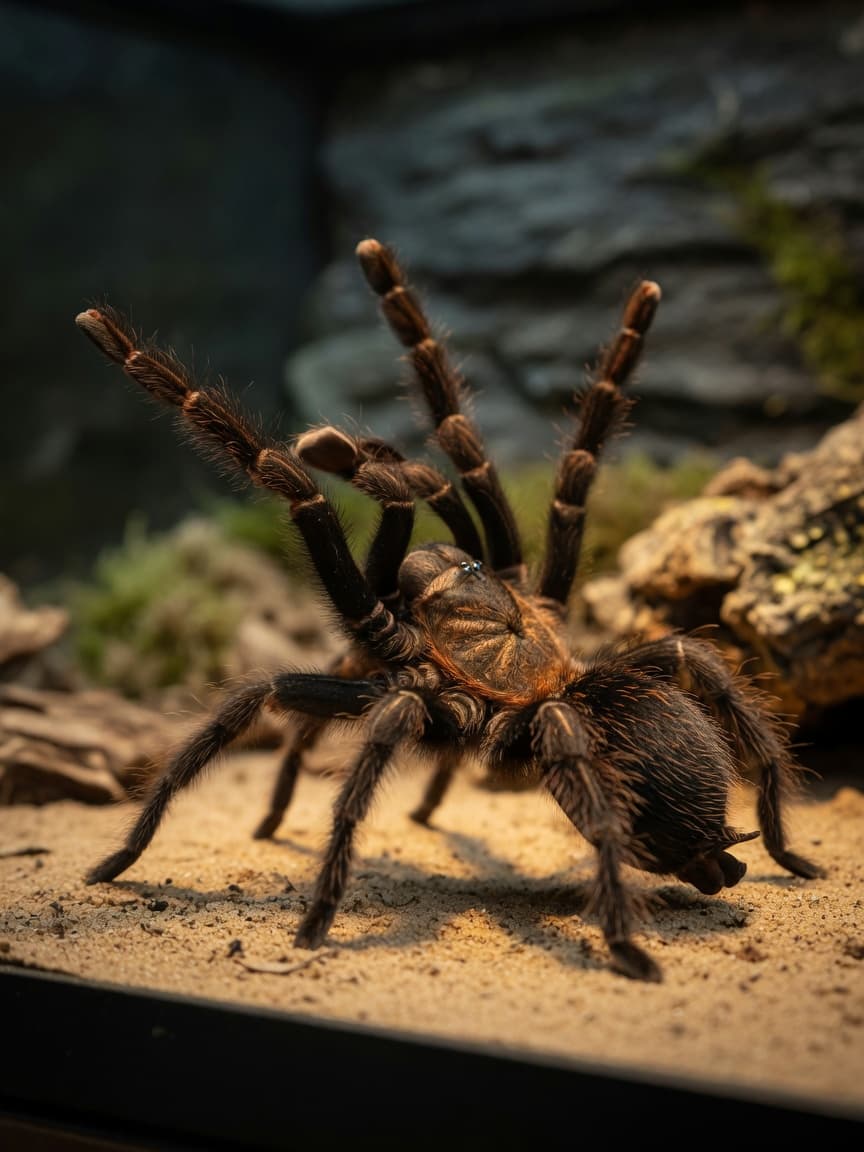
Tarantulas are fascinating arachnids that captivate pet owners worldwide with their impressive size and unique behaviours. However, one of the most intriguing aspects of tarantula biology remains largely misunderstood: their mating process. Unlike many other pets, tarantula reproduction involves elaborate courtship rituals, significant biological changes, and considerable risk—particularly for males. Whether you're a seasoned tarantula keeper or considering breeding your own, understanding how these remarkable creatures mate is essential for responsible pet ownership and successful breeding programmes.
The Male's Transformation: Preparing for Reproduction
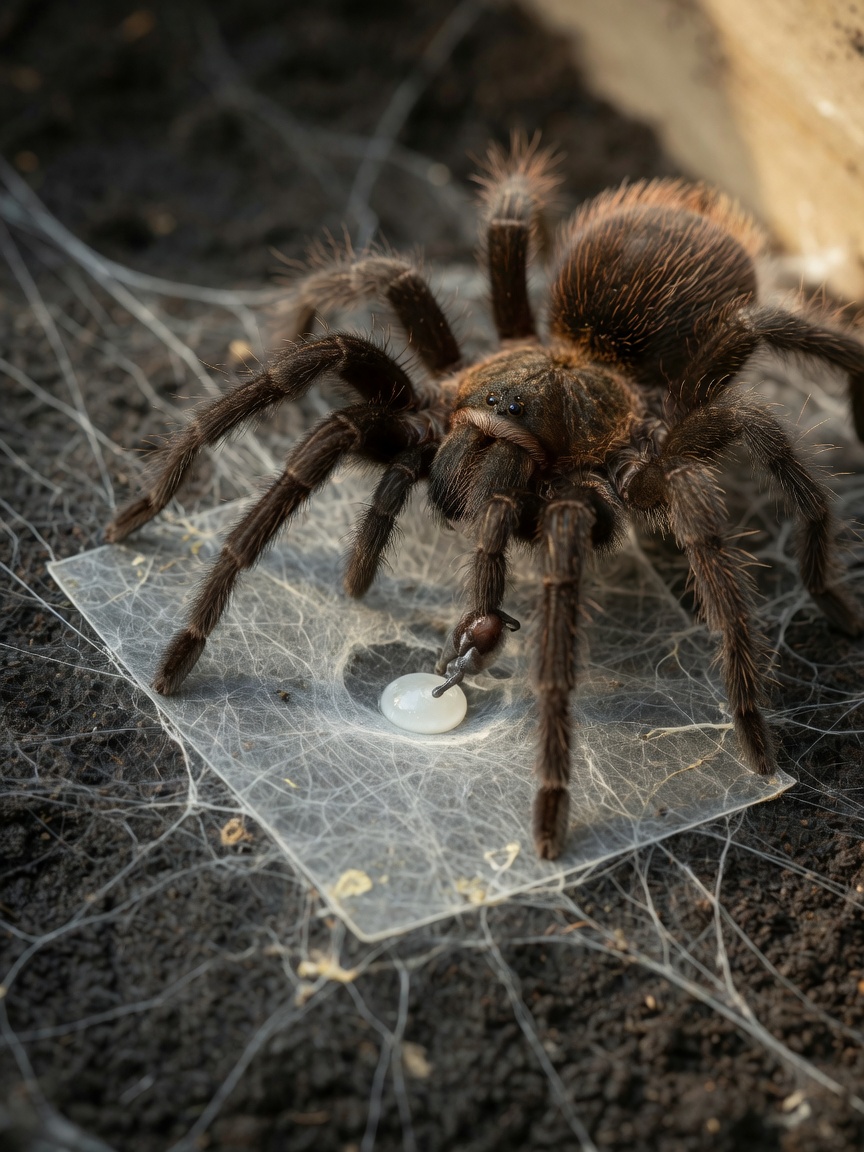
The journey towards mating begins with a significant biological milestone in a male tarantula's life: his final moult. Following this crucial developmental stage, the male undergoes remarkable changes that prepare him for reproduction. His body chemistry shifts, triggering the production of specialised silk that he weaves into a small web called a "sperm web."
During this process, the male deposits his sperm onto this silk pad and then uses his pedipalps (small appendages near his mouth) to collect the sperm into specialised structures. This transformation is irreversible—once a male reaches sexual maturity, he stops growing and begins his search for a mate, which typically lasts only a few months to a year, depending on the species.
The Courtship Dance: Ritualistic Communication
When a male encounters a female, he doesn't simply approach her. Instead, he performs an elaborate courtship ritual designed to communicate his intentions and, crucially, to signal that he isn't prey. These displays vary significantly between species but typically include:
- Vibrating his body and legs rhythmically
- Moving side-to-side in a distinctive dance pattern
- Raising his front legs in a threatening posture
- Producing vibrations through the substrate
- Displaying his pedipalps prominently
This courtship can last anywhere from a few minutes to several hours. If the female is receptive and in the correct reproductive condition, she'll typically remain still or respond with her own vibrations, signalling acceptance.
The Mating Process: A Delicate Transfer
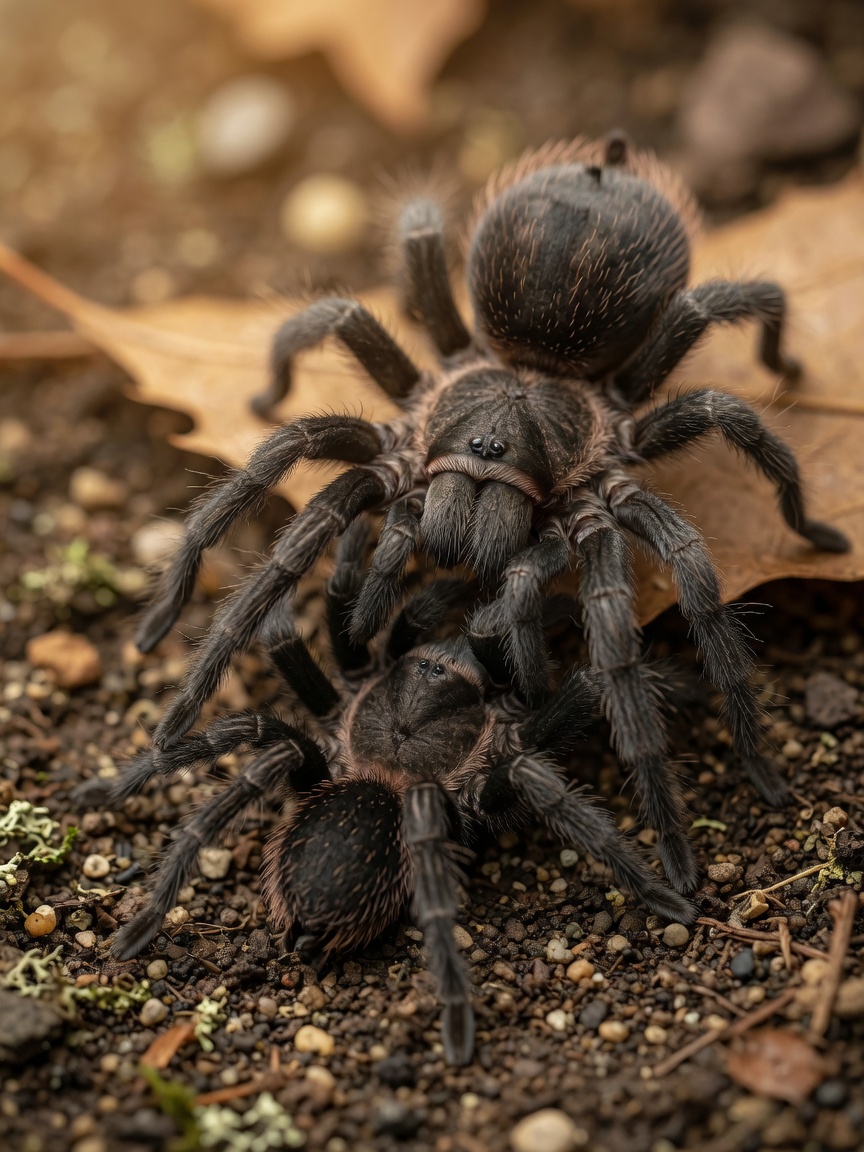
Once the female accepts the male's advances, mating occurs relatively quickly. The male positions himself beneath or alongside the female, using his pedipalps to insert sperm into her genital opening (the epigynum). This process typically lasts only seconds to a few minutes, making it one of nature's quickest reproductive acts.
The female stores this sperm internally, sometimes for months or even years, until she's ready to fertilise her eggs. This remarkable capability allows females to breed multiple times from a single mating.
Post-Mating Dangers: The Critical Period
After mating concludes, the male faces his most perilous moment. Despite his successful transfer of genetic material, he must quickly retreat—many females view the male as a potential meal once mating is complete. Males have evolved impressive speed and agility to escape, but not all succeed. This post-mating cannibalism is a natural behaviour and one of the primary reasons male tarantulas have significantly shorter lifespans than females.
Female Reproduction: From Eggs to Spiderlings
Females typically lay eggs 1-3 months after mating, creating an egg sac by wrapping hundreds of fertilised eggs in silk. She guards this sac fiercely, rotating it regularly to maintain proper humidity and prevent fungal growth. After 3-6 weeks, spiderlings emerge, cluster together briefly, then disperse to begin their solitary lives.
Key Takeaways for Tarantula Keepers
- Male tarantulas have a limited breeding window and significantly shorter lifespans than females
- Courtship rituals are species-specific and essential to successful mating
- Post-mating cannibalism is natural; remove males promptly after successful breeding
- Female tarantulas can store sperm for extended periods and produce multiple egg sacs
- Breeding requires careful planning, appropriate housing, and understanding of species-specific requirements
- If breeding, always prioritise animal welfare and responsible population management
Understanding tarantula mating behaviour deepens our appreciation for these remarkable creatures and ensures we can care for them responsibly, whether as solitary companions or breeding projects.
```