ForPetsHealthcare
Small & Exotic Pets

GI Stasis in Rabbits: The Silent Killer Every Owner Must Know

By Julia WrenfieldUpdated August 4, 20262 min read
Evidence-based · Sources checked
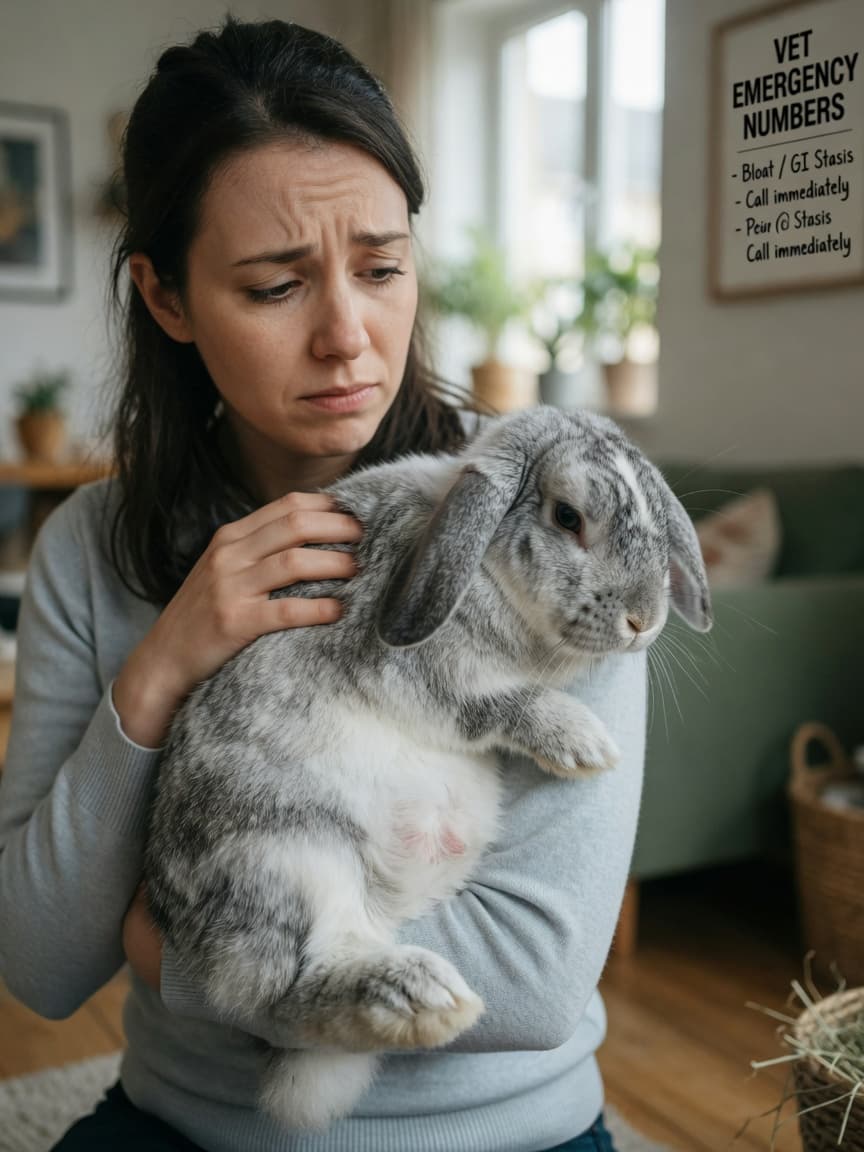
{"en": "Alert rabbit owner observing sick rabbit showing signs of gastrointestinal stasis and digestive distress", "es": "Due\u00f1o atento observando conejo enfermo con signos de estasis gastrointestinal y malestar digestivo", "fr": "Propri\u00e9taire vigilant observant un lapin malade pr\u00e9sentant des signes de stase gastro-intestinale", "de": "Aufmerksamer Kaninchenhalter beobachtet krankes Kaninchen mit Anzeichen von Magen-Darm-Stase", "nl": "Oplettende konijneneigenaar observeert ziek konijn met tekenen van gastro-intestinale stase", "pt": "Tutor atento observando coelho doente com sinais de estase gastrointestinal e desconforto digestivo", "it": "Proprietario vigile che osserva coniglio malato con segni di stasi gastrointestinale"}

Gastrointestinal stasis is the most common and deadly emergency in rabbits. Every rabbit owner must recognise the signs and know when to act.

What Is GI Stasis?

The digestive system of a rabbit must keep moving continuously. When gut movement slows or stops (stasis), gas builds up, the rabbit stops eating, and the situation becomes life-threatening within hours.

Signs of GI Stasis
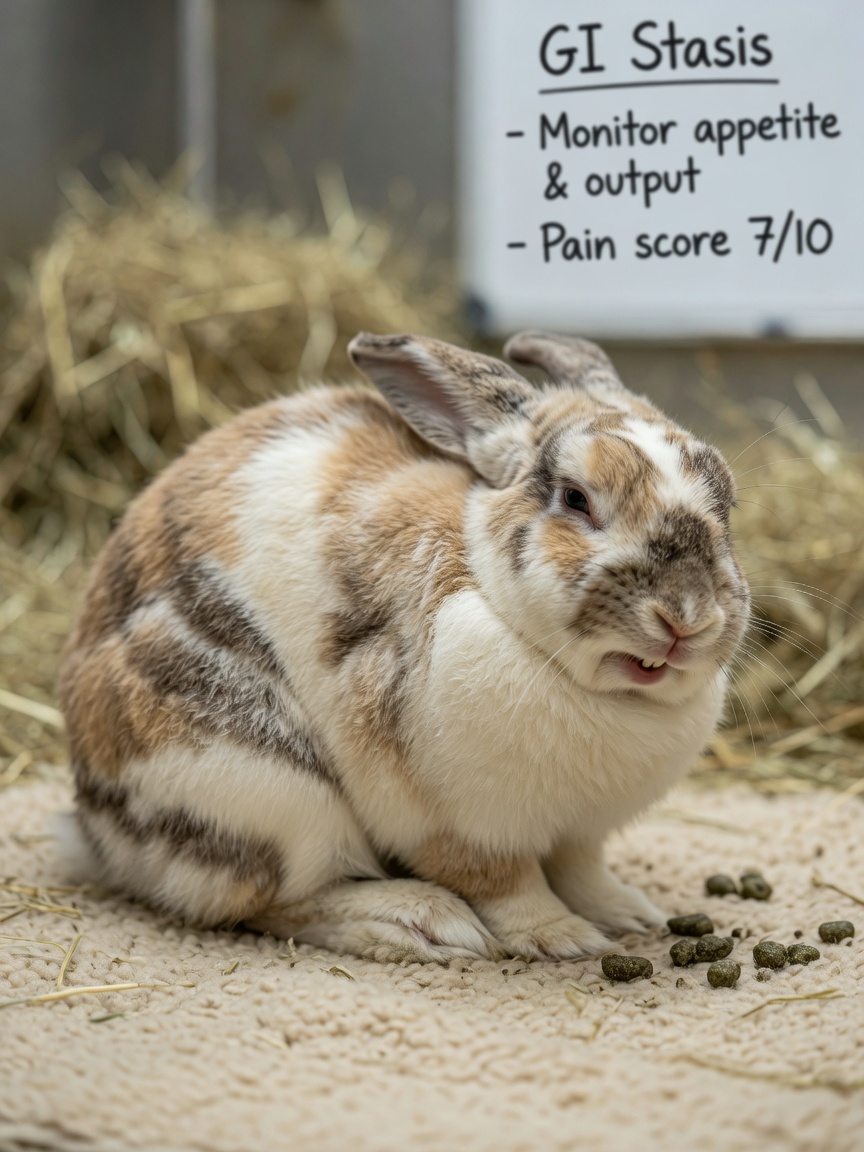
Rabbit displaying hunched posture and distress signals characteristic of GI stasis
  • Not eating — even refusing favourite foods
  • No or very few droppings
  • Hunched posture
  • Tooth grinding (sign of pain)
  • Bloated, hard, or gurgling abdomen
  • Lethargy and reluctance to move

When to Act

A rabbit that has not eaten for 4–6 hours and has reduced or absent droppings needs veterinary attention immediately. Do not wait overnight. GI stasis that goes untreated becomes fatal.

Treatment

  • Gut motility drugs (metoclopramide, cisapride)
  • Fluids (subcutaneous or IV)
  • Pain relief
  • Syringe feeding if the rabbit won't eat
  • Warmth and movement (gentle exercise)

Prevention
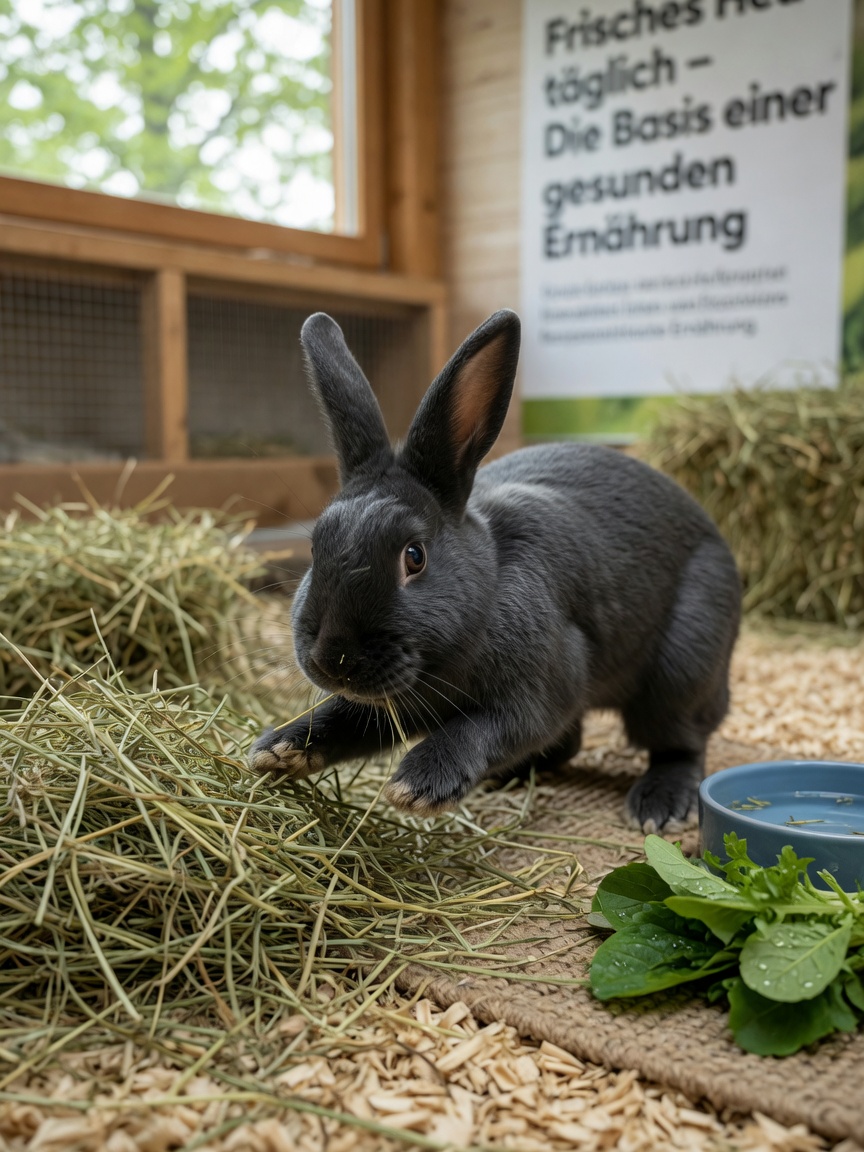
Healthy rabbit actively foraging through unlimited hay for GI stasis prevention
  • Unlimited hay is the most important prevention — hay keeps the gut moving
  • Adequate exercise daily
  • Stress reduction
  • Early treatment of any illness or dental pain
#rabbit gi stasis emergency#forpetshealthcare

Sources & further reading

This article is based on peer-reviewed veterinary research and reputable animal-health sources. Explore the underlying science in our Research Library.

Related articles

What Do Ferrets Like to Play With

Ferrets are among the most playful and intelligent pets you can own, possessing boundless energy and insatiable curiosity. These delightful creatures spend up to eight hours daily engaged in active play, making it essential to understand what types of toys and activities truly capture their interest…

Read more →

Should You Keep a Short-Tailed Opossum as a Pet?

Short-tailed opossums are fascinating exotic pets that have gained popularity amongst adventurous pet owners across Europe. These small, mouse-like marsupials from South America might seem like intriguing companions, but before you consider bringing one home, it's crucial to understand their specifi…

Read more →

Should You Keep a Kinkajou as a Pet?

Kinkajous, with their adorable appearance and seemingly cuddly nature, have captured the hearts of exotic pet enthusiasts across Europe. These small, golden-furred creatures native to Central and South America might seem like the perfect companion, but the reality of kinkajou ownership is far more c…

Read more →

How Do Tarantulas Mate?

Tarantulas are fascinating arachnids that captivate pet owners worldwide with their impressive size and unique behaviours. However, one of the most intriguing aspects of tarantula biology remains largely misunderstood: their mating process. Unlike many other pets, tarantula reproduction involves ela…

Read more →

Can Chinchillas Get Wet?

If you're a chinchilla owner, you've probably wondered about your pet's relationship with water. Unlike many other small mammals, chinchillas have a fascinating and rather unique approach to staying clean—and getting them wet can actually be harmful to their health. Understanding why water and chinc…

Read more →

Are Hedgehogs Good Pets?

Hedgehogs have become increasingly popular as exotic pets across Europe, and it's easy to see why. With their endearing appearance, curious nature, and relatively compact size, they seem like the perfect addition to many households. However, before bringing one of these spiky companions home, it's i…

Read more →
Disclaimer:This article is for informational purposes only and does not constitute veterinary advice. Always consult a qualified veterinarian for your pet's health concerns.

Free newsletter

Pet health tips, straight to your inbox

Weekly science-backed advice for dog & cat owners. No spam, unsubscribe anytime.