
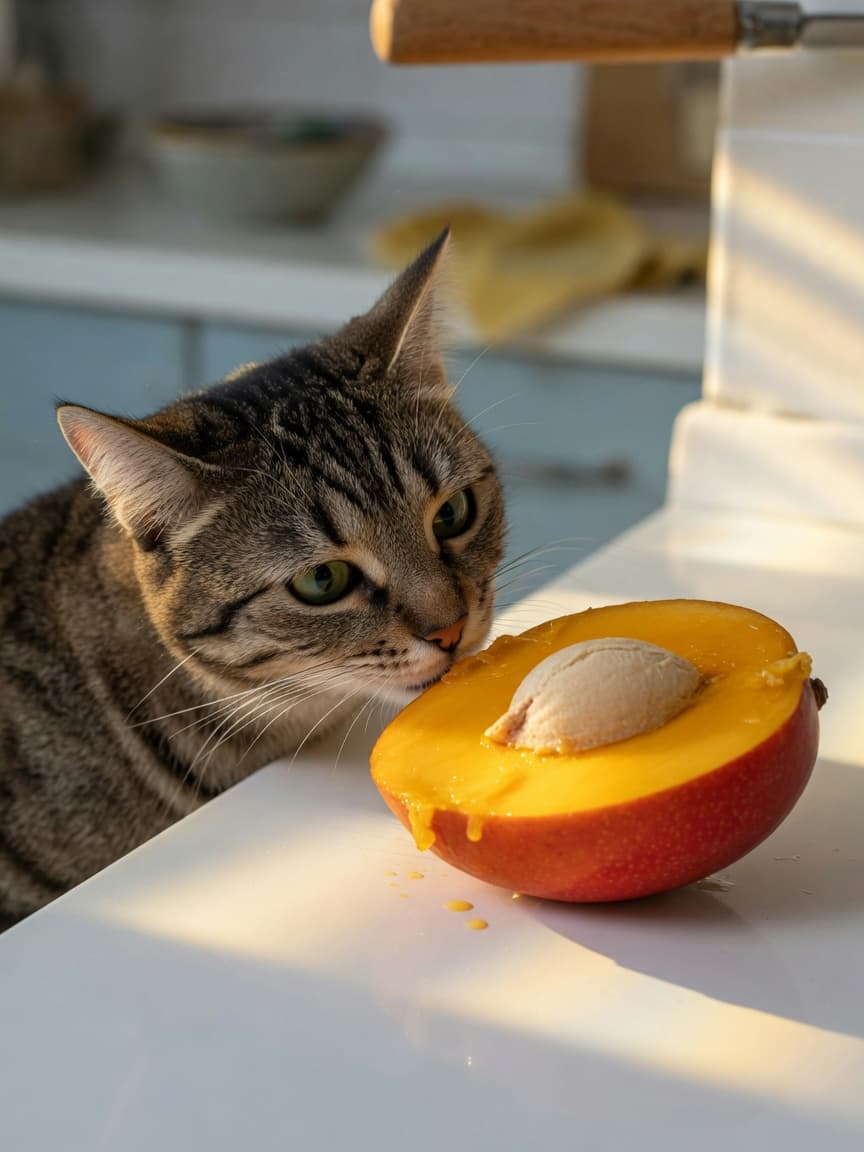
Can Cats Eat Mango?
By Julia Wrenfield, Pet Wellness Researcher
Mango is beloved by humans for its sweet, rich flavor and impressive nutritional profile — vitamins A, C, B6, and fiber in abundance. But does any of that goodness translate to cats? As obligate carnivores with a unique metabolic blueprint, cats interact with fruit very differently than we do. Here's what you need to know before letting your cat investigate that slice of mango.
Is Mango Safe for Cats?
The short answer is yes — with important caveats. The ripe flesh of a mango does not contain compounds known to be acutely toxic to cats. It is not on the ASPCA's list of toxic plants and foods for felines. Unlike grapes, raisins, or citrus, mango flesh is not associated with known organ damage in cats.
That said, several parts of the mango are problematic:
- The pit (stone): Mango pits contain amygdalin, a cyanogenic glycoside that can release hydrogen cyanide when metabolized. While a cat would need to consume a significant amount to reach toxic doses, the pit also presents a serious choking and intestinal obstruction hazard. It must be removed completely before any mango is offered.
- The skin: Mango skin contains urushiol — the same compound found in poison ivy — which can cause contact dermatitis in sensitive individuals. While cats are less likely than humans to have severe reactions, it can cause oral and gastrointestinal irritation. Always remove the skin.
- The leaves and sap: Similarly contain urushiol and should be kept away from cats.
Will Cats Even Want Mango?
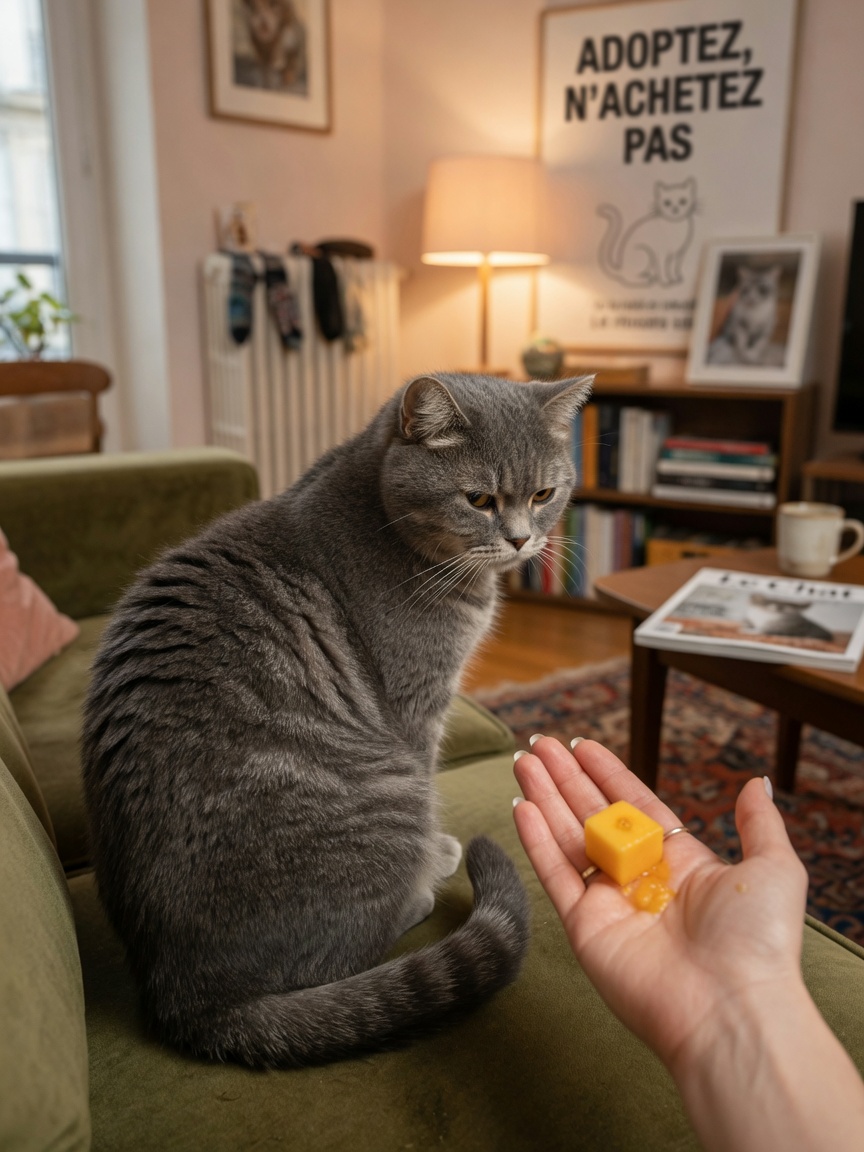
Probably not. Cats are famously indifferent to sweet flavors because they lack the taste receptor gene (Tas1r2) required to detect sweetness. The thing that makes mango so appealing to humans — its intensely sweet tropical flavor — is essentially imperceptible to cats. Most cats presented with a piece of mango will sniff it briefly and walk away.
However, a small minority of cats are attracted to the texture, smell, or the simple novelty of what their owner is eating. If your cat shows interest, that's curiosity rather than nutritional craving, and a tiny piece of flesh is unlikely to cause harm.
Any Nutritional Benefit for Cats?
This is where the obligate carnivore reality becomes important. While mango is excellent for humans — delivering vitamin C, folate, and antioxidants like mangiferin — cats derive minimal benefit from these nutrients when sourced from fruit.
Consider:
- Vitamin C: Cats synthesize their own vitamin C in the liver. They don't need dietary sources.
- Vitamin A: Cats require preformed vitamin A (retinol), which comes from animal liver. They cannot efficiently convert beta-carotene (the plant precursor) from mango into active vitamin A.
- Fiber: Cats are not designed to extract significant nutrition from plant fiber. It may benefit some cats with constipation in small amounts, but mango's sugar content outweighs any fiber benefit.
- Sugar: Mango is relatively high in fructose. Cats' livers are not optimized for fructose metabolism, and excess sugar contributes to obesity, dental disease, and over time, insulin dysregulation.
How Much Mango Is Too Much?
If you choose to offer mango as an occasional curiosity, keep the serving tiny — a piece no larger than a pea, no more than once or twice a week at most. Monitor your cat afterward for any signs of digestive upset: vomiting, diarrhea, or unusual lethargy. Cats with diabetes, obesity, or sensitive stomachs should not be given mango at all.
Never offer dried mango. The drying process concentrates the sugar content dramatically, and many commercial dried mango products contain added sugar or preservatives that make them even less appropriate for cats.
What About Mango Sorbet or Smoothies?
No. Commercial mango products — sorbets, smoothies, juices, ice creams — often contain added sugars, artificial sweeteners (potentially xylitol, which is toxic), dairy ingredients (cats are largely lactose intolerant in adulthood), and other additives. None of these products are appropriate for cats under any circumstances.
Shop species-appropriate cat treats at Zooplus — protein-rich options that match your cat's biologyBetter Treat Alternatives
If you're looking to diversify your cat's treat repertoire, focus on protein-based options. Small pieces of plain cooked chicken breast, poached salmon, or turkey are biologically appropriate and far more nutritionally meaningful than any fruit. Commercial cat treats from quality brands are formulated to deliver the right nutrients in controlled portions without the sugar load of fruit.
Key Takeaways
- Ripe mango flesh is not toxic to cats but offers no meaningful nutritional benefit.
- Remove the pit (cyanogenic compounds, choking hazard) and skin (urushiol irritant) completely.
- Most cats won't be interested in mango — they cannot taste its sweetness.
- Mango's high sugar content makes it unsuitable for regular feeding, especially in diabetic or overweight cats.
- Dried mango, sorbets, and mango-based products are not appropriate for cats.
Scientific References
- Li, X., Li, W., Wang, H., et al. (2006). Cats lack a sweet taste receptor. Journal of Nutrition, 136(7 Suppl), 1932S–1934S. PMID: 16772461
- Morris, J. G. (2002). Idiosyncratic nutrient requirements of cats appear to be diet-induced evolutionary adaptations. Nutrition Research Reviews, 15(1), 153–168. PMID: 19087395