

Can Cats Eat Grapes? NO — This Is a Veterinary Emergency
ASPCA Animal Poison Control Center: (888) 426-4435 (available 24/7)
The Danger Is Real — Do Not Minimize This
This is not a situation where "a little bit is probably fine." Grapes and raisins have been associated with sudden, severe acute kidney failure (acute renal failure) in companion animals. While much of the documented research involves dogs, veterinary toxicologists warn that cats must be considered equally at risk. The toxic mechanism is not yet fully understood, which makes this even more dangerous — there is no known safe dose.
Do not wait to see if your cat develops symptoms. By the time clinical signs of kidney failure appear, significant and potentially irreversible organ damage may already have occurred. Time is the critical variable. Act immediately.
What Makes Grapes Toxic? The Unknown Mechanism
Despite extensive veterinary research, scientists have not yet identified the exact compound in grapes and raisins responsible for kidney toxicity. Several hypotheses have been investigated, including mycotoxins, salicylates, and tannins, but none has been confirmed as the definitive cause.
What is known:
- Toxicity has been documented in animals that consumed seedless grapes, seeded grapes, red grapes, green grapes, organic grapes, and commercially produced grapes — ruling out a specific pesticide or variety as the sole cause.
- Raisins (dried grapes) appear to be even more concentrated in toxic potential, meaning a smaller quantity can cause the same or worse damage.
- There is no established minimum toxic dose. Some animals have experienced kidney failure after eating just a few grapes. Others have eaten more with no apparent effect. This unpredictability is precisely why no amount can be considered safe.
- Grape juice, grape extract, and baked goods containing raisins or grapes (such as raisin bread or fruitcake) carry the same risk.
Symptoms of Grape or Raisin Toxicity in Cats
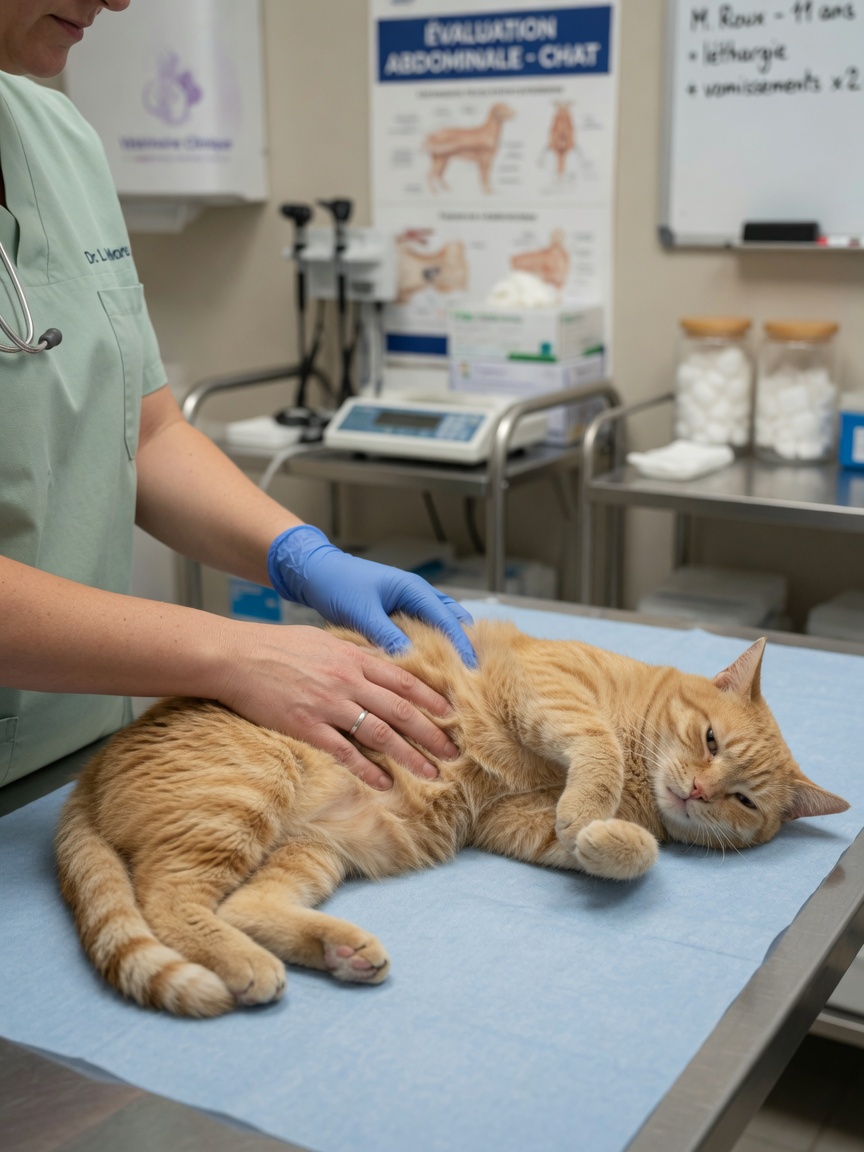
Symptoms may appear within hours of ingestion and progress rapidly. Even if your cat seems fine right now, kidney damage can be occurring silently. Do not use the absence of symptoms as a reason to delay calling a vet.
Watch for:
- Vomiting — often one of the first signs, appearing within 1–2 hours of ingestion
- Diarrhea
- Lethargy and unusual weakness
- Loss of appetite (anorexia)
- Abdominal pain or tenderness
- Decreased urination or complete inability to urinate (oliguria/anuria) — a critical warning sign of kidney shutdown
- Increased thirst and increased urination in early stages (before kidney failure sets in)
- Tremors or muscle weakness
- Dehydration
Acute kidney failure can develop within 24–72 hours of ingestion. Without aggressive veterinary intervention — IV fluids, supportive care, and close monitoring of kidney function — the outcome can be fatal.
What to Do Right Now If Your Cat Ate Grapes
This is a genuine emergency. Follow these steps without delay:
- Call your veterinarian immediately. If your regular vet is unavailable, go to the nearest emergency animal hospital.
- Call ASPCA Animal Poison Control: (888) 426-4435. They are available 24 hours a day, 7 days a week. A consultation fee may apply, but they provide expert toxicology guidance and will work with your vet.
- Do not induce vomiting without professional instruction. Only attempt this if specifically directed by a vet or poison control specialist. Inducing vomiting incorrectly can cause additional harm.
- Bring the grape or raisin source with you to the vet if possible, including the packaging — the type, quantity eaten, and any other ingredients may be relevant to treatment decisions.
- Note the time of ingestion as accurately as possible. This helps vets assess how far along the exposure timeline your cat is and what interventions are still viable.
Why Cats Are at High Risk
Cats are obligate carnivores. Their kidneys, metabolic enzymes, and detoxification pathways evolved to process animal protein — not plant compounds. They lack certain liver enzymes that omnivores and herbivores use to neutralize plant-derived substances. This makes cats potentially more vulnerable than dogs to certain plant toxins, not less.
The cat's kidney is also particularly efficient at concentrating urine — a trait that evolved for life in arid environments. This same efficiency means that any toxic substances filtered through the kidneys are concentrated in the renal tubules, increasing the risk of localized damage.
Other Grape-Related Products That Are Also Dangerous
Many people think of whole grapes when they hear this warning, but the risk extends to a wide range of products. Keep all of the following completely away from your cat:
- Raisins (dried grapes) — higher concentration of toxin by weight
- Currants (black, red, and white — all related to the grape family)
- Grape juice and grape-flavored drinks
- Grape jelly and jam
- Raisin bread, trail mix with raisins, granola bars, fruitcake
- Wine (also toxic due to alcohol content)
- Any food where grapes or raisins are listed as an ingredient
Prevention: Keeping Grapes Away from Your Cat
Cats are opportunistic and curious. Even cats that have never shown interest in human food can be tempted by something left on a counter or table. Prevention is the only safe strategy:
- Store grapes and raisins in sealed containers inside cabinets, not in fruit bowls on counters.
- Never share snacks containing raisins with your cat, even as a small "taste."
- Inform all household members and visitors about the danger — children especially may not know that sharing food with pets can be harmful.
- Be vigilant about dropped food during meals or food preparation.
- Grapes and raisins are potentially toxic to cats and can cause acute kidney failure.
- The toxic mechanism is unknown — there is no established safe dose.
- If your cat ate any amount of grapes, raisins, or related products: call a vet immediately.
- ASPCA Poison Control is available 24/7: (888) 426-4435.
- Do not wait for symptoms — kidney damage can occur silently before clinical signs appear.
- Raisins, currants, grape juice, grape jelly, and baked goods with raisins are all equally dangerous.
- Cats are obligate carnivores — plant foods are non-essential and some, like grapes, are actively dangerous.
References
- Eubig PA, Brady MS, Gwaltney-Brant SM, et al. "Acute renal failure in dogs after the ingestion of grapes or raisins: a retrospective evaluation of 43 dogs (1992–2002)." J Vet Intern Med. 2005;19(5):663–674. PMID: 16220870.
- Gwaltney-Brant SM, Holding JK, Donaldson CW, et al. "Renal failure associated with ingestion of grapes or raisins in dogs." J Am Vet Med Assoc. 2001;218(10):1555–1556. PMID: 11393362.
- Verbrugghe A, Bakovic M. "Peculiarities of one-carbon metabolism in the strict carnivore, the domestic cat (Felis catus)." Nutrients. 2013;5(7):2811–2835. PMID: 23873295.