

The Clock Starts the Moment You Open That Carrier Door
Around 3.2 million cats and kittens enter new homes in the UK every year, and the majority of behavioural problems that persist into adulthood — hiding, aggression, litter avoidance — have their roots in those first two days. Getting the first 48 hours right is not about grand gestures. It is about creating the conditions for a small, stressed animal to feel safe enough to begin trusting you.
Before the Kitten Arrives: Setting Up a Base Room
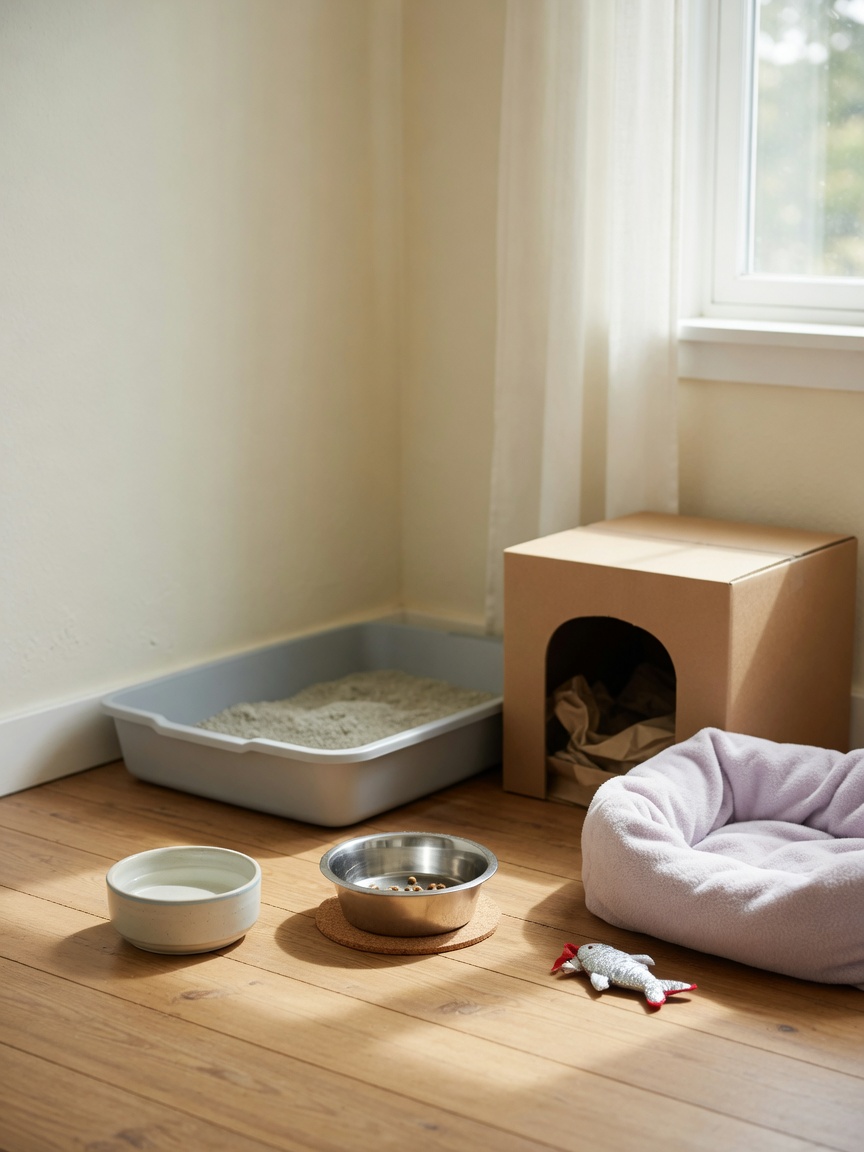
Resist the impulse to give a new kitten the run of the house. A kitten arriving into a large, unfamiliar space will almost always retreat somewhere inaccessible and refuse to come out. Instead, designate a single quiet room — a spare bedroom or a study works well — and set it up completely before collection day.
What Belongs in the Base Room
- A litter tray, placed as far from the food and water bowls as space permits
- Fresh water in a bowl or fountain; avoid placing it directly beside the food bowl
- Age-appropriate kitten food, ideally the same brand the breeder or rescue centre was using
- At least one hiding spot at floor level — a cardboard box with a cut-out entrance is sufficient
- A soft sleeping area that is not inside the hiding box, giving the kitten a choice
- A small, low-stimulus toy or two — a crinkle ball or a feather on a short wand
If you have used a pheromone diffuser such as a synthetic feline facial pheromone plug-in, switch it on 24 hours before arrival. The evidence behind these products is modest but consistent enough to be worthwhile, particularly for anxious kittens.
The Journey Home and the First Moments
Keep the carrier covered with a light cloth during the journey to reduce visual stimulation. Speak in a low, calm voice if the kitten vocalises, but do not open the carrier in a moving vehicle. When you arrive home, take the carrier directly to the base room, close the door, set the carrier on the floor, open the door, and then sit quietly nearby. Do not reach in. Let the kitten decide when to emerge. This can take anywhere from five minutes to two hours.
When the kitten does come out, allow it to sniff and explore the room without being followed or picked up. The instinct to cuddle is understandable, but physical handling before the kitten has oriented itself adds to an already high stress load. If children are present, brief them firmly: watch, do not chase, do not grab.
Feeding in the First 48 Hours
Do not change the kitten's diet during the first week, even if you intend to switch brands eventually. Stress combined with a sudden food change is a reliable formula for digestive upset, which adds physical discomfort to an already difficult transition. Ask the breeder or rescue for a small supply of the current food, or identify the brand and purchase it yourself before collection.
How Much to Feed
Kittens between eight and twelve weeks typically require four small meals per day. Follow the feeding guide on the packaging as a starting point, adjusted for your kitten's actual weight. Do not free-feed dry food at this stage, as it makes it harder to monitor appetite — and appetite is one of your earliest signals that something may be wrong. A kitten that refuses two consecutive meals in the first 48 hours warrants a call to your vet.
The Litter Tray: First Use is Critical
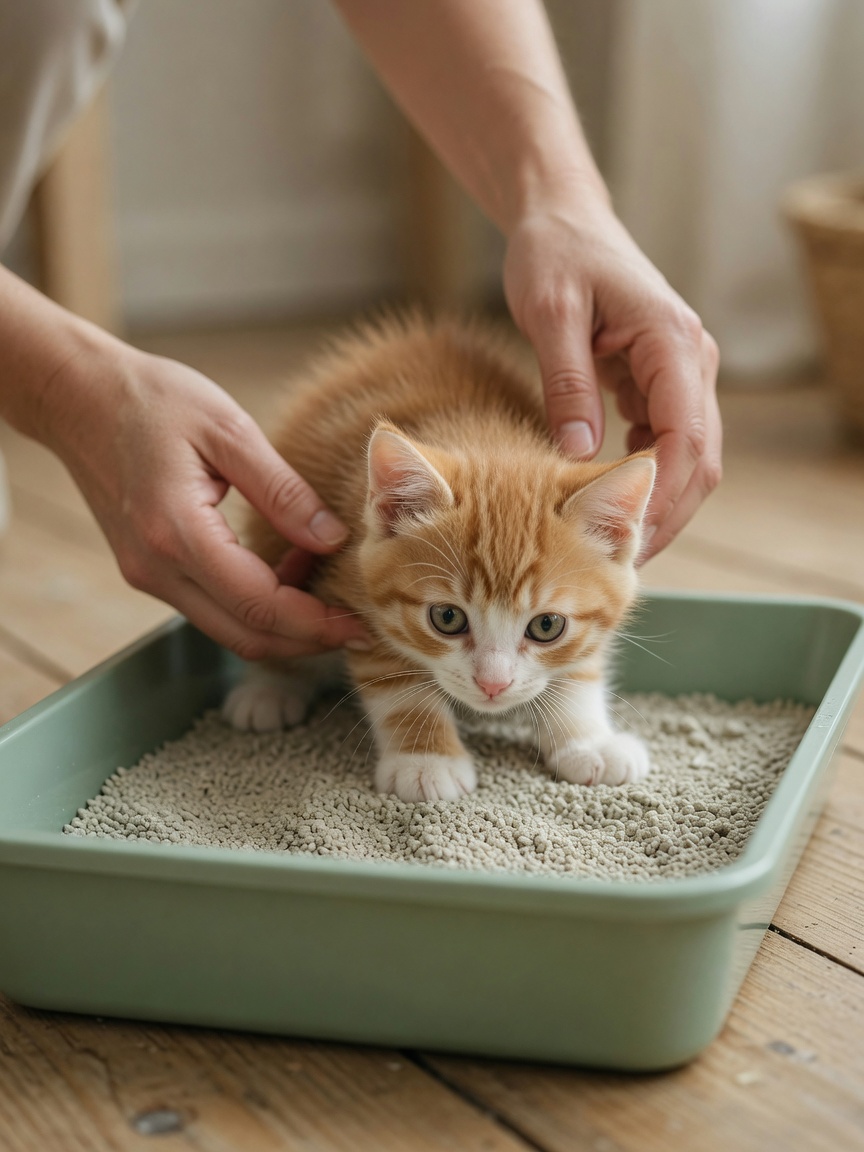
Within an hour of the kitten emerging from the carrier, gently place it in the litter tray and allow it to sniff and step around. Do not force it to stay. Most kittens instinctively associate the texture of litter with elimination and will use the tray unprompted within a few hours. If you see the kitten sniffing the floor or beginning to crouch outside the tray, pick it up calmly and place it inside. Praise quietly after any successful use; do not scold accidents.
Use an unscented, clumping litter for a new kitten. Heavily perfumed varieties are aversive to cats and can discourage tray use from the outset.
Night One: Expectations and Sleep
Vocalising at night is common, particularly in kittens that have come from a litter and have never slept alone. Placing a warm (not hot) covered water bottle under a fleece in the sleeping area can help. A low-volume radio or white noise machine running nearby has been shown in some studies to reduce distress vocalisation in young cats. Do not bring the kitten into your bed on the first night unless you are prepared to do so indefinitely, as this becomes a habit quickly.
Check on the kitten once during the night if you are concerned, but keep the visit brief and low-key. The goal is for the kitten to begin learning that quiet equals safety, and that you are not required for that safety to exist.
When to Call the Vet
A healthy kitten arriving in a new home may be quiet and cautious, but should be alert and responsive within a few hours. Contact your vet promptly if you observe any of the following in the first 48 hours:
- Persistent sneezing, discharge from the eyes or nose, or laboured breathing
- Diarrhoea lasting more than one episode, or any vomiting
- Complete refusal to eat or drink beyond 24 hours
- Extreme lethargy — not just hiding, but unresponsive when approached
- Signs of pain, such as hunching, guarding the abdomen, or crying when touched
Book a routine new-kitten appointment regardless, ideally within the first week. Your vet will confirm vaccination status, discuss parasite prevention, and flag anything that may have been missed during the initial health check.
A Simple First-48-Hours Checklist
- Base room prepared with food, water, litter, hiding spot and bedding before arrival
- Pheromone diffuser running 24 hours before collection if using one
- Carrier opened in the base room; kitten allowed to emerge in its own time
- Same food as previous home; four small meals per day
- Litter tray introduced within the first hour of emergence
- Children and other pets kept out of the base room for at least 48 hours
- Vet appointment booked for within the first week