
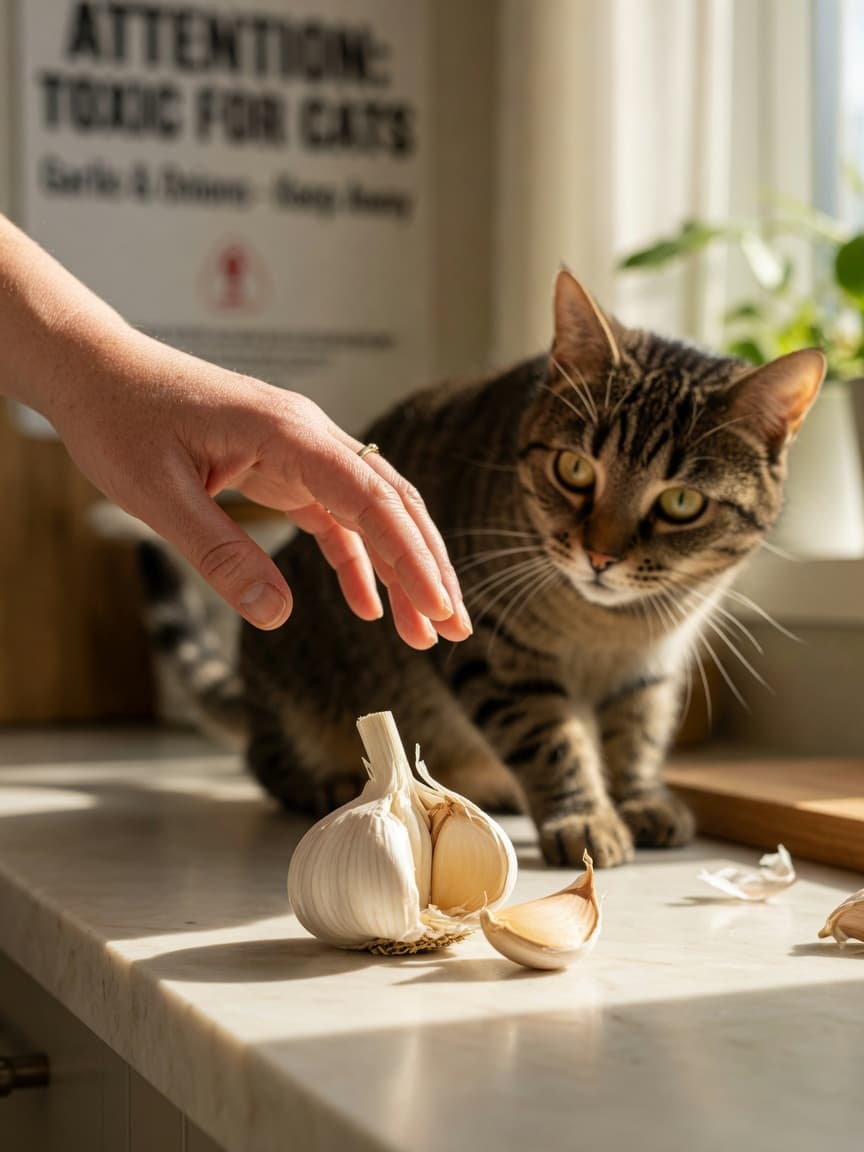
Can Cats Eat Garlic? No — It Is Extremely Toxic and Can Be Fatal
Garlic is one of the most dangerous foods you can give a cat. It is 5 times more toxic to cats than to dogs per unit of body weight. Even a tiny amount — a single clove, a pinch of garlic powder, or garlic-flavored food — can trigger life-threatening hemolytic anemia. If your cat has eaten any form of garlic, call your veterinarian or the ASPCA Animal Poison Control Center immediately: (888) 426-4435. Do not wait for symptoms to appear. Time is critical.
Garlic belongs to the Allium family of plants, alongside onions, leeks, chives, and shallots. While humans have used garlic medicinally and culinarily for thousands of years, this bulb is a genuine emergency for cats. Despite old myths circulating online that garlic can "deworm" cats or boost their immunity, no scientific evidence supports these claims — and acting on them can kill your cat.
This article explains exactly why garlic is so dangerous, what happens inside your cat's body after ingestion, what symptoms to watch for, and what you must do if your cat has been exposed.
Why Is Garlic So Toxic to Cats? The Mechanism of Poisoning
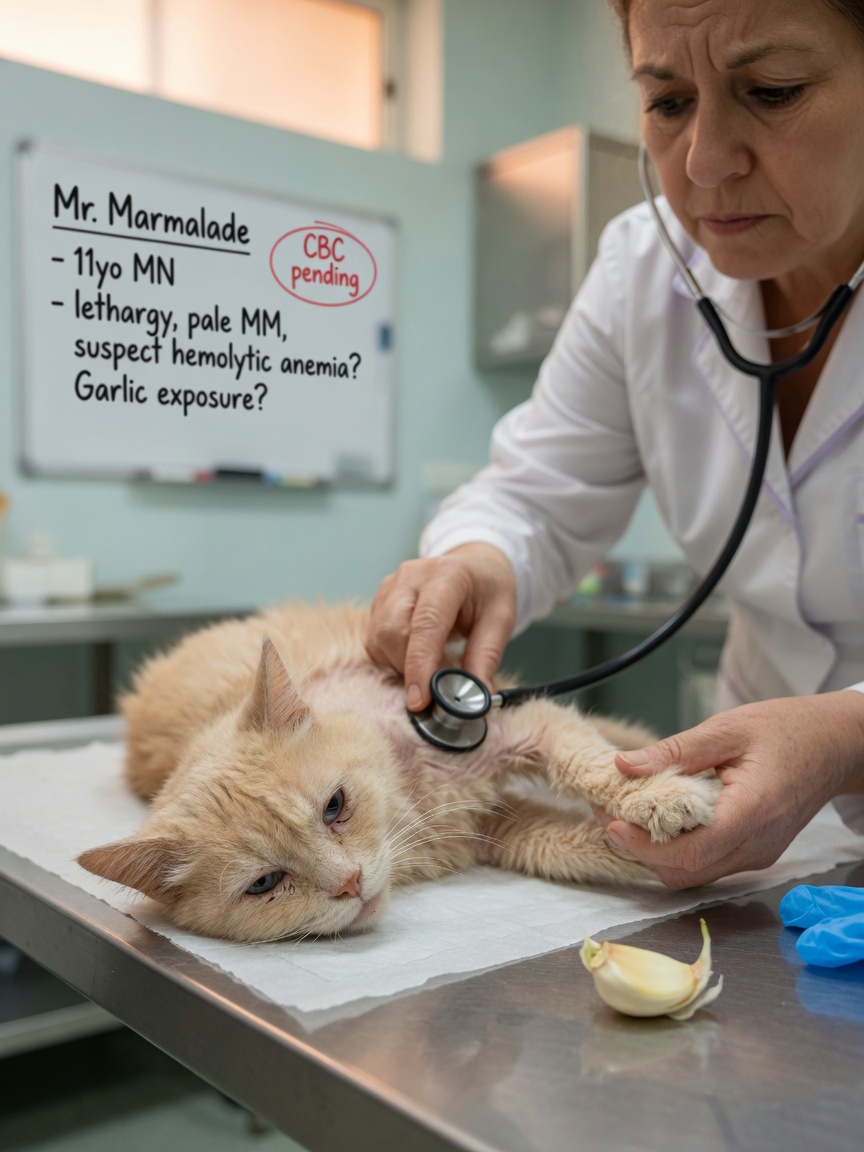
The toxicity of garlic in cats comes down to a specific chemical compound: N-propyl disulfide (also called thiosulfate). This organosulfur compound is found throughout the garlic plant — in the flesh, skin, juice, and powder. When cats ingest garlic, N-propyl disulfide enters the bloodstream and begins to interfere with the red blood cells in a catastrophically dangerous way.
Here is what happens at a cellular level: N-propyl disulfide binds to the hemoglobin molecules inside red blood cells. Hemoglobin is the protein responsible for carrying oxygen throughout the body. Once bound by N-propyl disulfide, the hemoglobin is oxidized — it becomes damaged and structurally deformed. The cat's immune system then recognizes these damaged red blood cells as foreign invaders and destroys them.
This destruction of red blood cells is called hemolysis, and the resulting condition is known as Heinz body hemolytic anemia. The name comes from the "Heinz bodies" — clumps of denatured hemoglobin that form inside damaged red blood cells and are visible under a microscope. Cats are particularly vulnerable to Heinz body formation because feline hemoglobin has a unique molecular structure with more sulfhydryl groups than dog or human hemoglobin, making it far more susceptible to oxidative damage.
As red blood cells are destroyed faster than the bone marrow can replace them, the cat develops severe anemia. Without enough functional red blood cells, the body cannot deliver oxygen to organs and tissues. Organs begin to fail. Without emergency veterinary treatment, this process can be fatal.
All Forms of Garlic Are Dangerous — No Safe Amount Exists
One of the most critical things cat owners must understand is that every form of garlic is toxic. There is no preparation method that removes the danger:
- Raw garlic — the most immediately toxic form
- Cooked garlic — cooking does NOT destroy N-propyl disulfide
- Garlic powder — highly concentrated and extremely dangerous; a fraction of a teaspoon can be a lethal dose
- Dehydrated or dried garlic — similarly concentrated
- Garlic supplements or garlic-infused oils — marketed for pets by irresponsible sellers, these are genuinely life-threatening
- Garlic in cooked human food — sauces, soups, broths, or meat dishes containing garlic are not safe to share with your cat
Garlic powder deserves special emphasis. Because it is dehydrated, garlic powder is dramatically more concentrated than raw garlic. A small sprinkling of garlic powder represents the toxin equivalent of several raw cloves. If your cat licks a plate or countertop where garlic powder was used, or eats any food seasoned with it, that is a veterinary emergency.
Symptoms of Garlic Poisoning in Cats
Garlic poisoning does not always cause immediate symptoms, which makes it particularly insidious. The anemia may take 2 to 4 days to develop after ingestion. By the time visible symptoms appear, the damage to red blood cells is often already severe. Watch for any of the following warning signs:
- Lethargy and extreme weakness — your normally active cat suddenly cannot stand or seems exhausted
- Pale, white, or yellowish gums — healthy cat gums should be pink; discoloration signals severe anemia
- Rapid or labored breathing — the body tries to compensate for low oxygen by breathing faster
- Elevated heart rate
- Loss of appetite and vomiting
- Dark, orange, or red-tinged urine — caused by hemoglobin released from destroyed red blood cells
- Collapse or unresponsiveness — an extreme emergency requiring immediate intervention
Do not wait to see if symptoms resolve on their own. If your cat has eaten garlic in any amount and form, call poison control or your vet right now, even before symptoms appear. Early decontamination — inducing vomiting within the first few hours — can save your cat's life. Waiting until symptoms appear means the anemia is already underway.
Garlic Is 5 Times More Toxic to Cats Than to Dogs
Many pet owners are aware that garlic is dangerous for dogs, but what they may not know is that cats are approximately 5 times more sensitive to garlic toxicity per unit of body weight compared to dogs. This is due to the unique biochemistry of feline red blood cells. The sulfhydryl groups on feline hemoglobin react more readily with the thiosulfate compounds in garlic, meaning a dose that might cause mild illness in a dog can be fatal in a cat.
A cat's small body size compounds this risk. A 4 kg cat could suffer severe hemolytic anemia from ingesting less than a single clove of garlic. This is not a food where a small taste can be considered "probably fine." It cannot.
What to Do If Your Cat Ate Garlic — Act Immediately
This is a time-sensitive emergency. Follow these steps without delay:
- Do not induce vomiting yourself without veterinary guidance — some methods used in humans can harm cats.
- Call the ASPCA Animal Poison Control Center: (888) 426-4435. This line is staffed 24 hours a day, 365 days a year by veterinary toxicologists. There may be a consultation fee.
- Call your nearest emergency veterinary clinic and describe exactly what your cat ate, how much, and how long ago.
- Bring the garlic packaging or a sample of the food your cat ingested — ingredient lists help the vet assess the dose.
- Do not give your cat any home remedies, milk, or other foods while waiting for veterinary care.
Treatment at the vet may include induced vomiting (if the ingestion was very recent), activated charcoal to reduce absorption, intravenous fluids, blood transfusions in severe cases, and supportive care to help the bone marrow recover.
- Garlic is one of the most toxic foods for cats — more dangerous than for dogs.
- The toxin N-propyl disulfide destroys red blood cells, causing hemolytic anemia.
- All forms are toxic: raw, cooked, powder, supplements, garlic in sauces.
- Symptoms may not appear for 2–4 days, but damage begins immediately.
- Any garlic exposure = veterinary emergency. Call (888) 426-4435 or your vet now.
- Never give garlic supplements to cats — these products are dangerous regardless of marketing claims.
Safe Alternatives: What You Can Feed Your Cat
Your cat's diet should consist primarily of high-quality commercial cat food formulated to meet feline nutritional needs. Cats are obligate carnivores — they require animal-derived protein and cannot synthesize certain essential nutrients (like taurine and arachidonic acid) from plant sources. A balanced commercial diet provides everything your cat needs without the risk of toxic exposure.
If you want to supplement your cat's diet with safe treats, look for products that are specifically formulated for cats, contain no Allium ingredients, and are free from artificial preservatives that could be harmful over time.
Ver alimentos para gatos en Zooplus →Choosing veterinarian-recommended, species-appropriate food is the single best thing you can do to protect your cat's health — and to ensure they are never accidentally exposed to hidden toxic ingredients like garlic.
References and Further Reading
- Cope RB. "Allium species poisoning in dogs and cats." Vet Med. 2005;100(8):562–566.
- Kovalkovicova N, Sutiakova I, Pistl J, Sutiak V. "Some food toxic for pets." Interdiscip Toxicol. 2009;2(3):169–76. PMID: 21217842
- Lee KW, Yamato O, Tajima M, et al. "Hematologic changes associated with the appearance of eccentrocytes after intragastric administration of garlic extract to dogs." Am J Vet Res. 2000;61(6):582–8. PMID: 10850838