
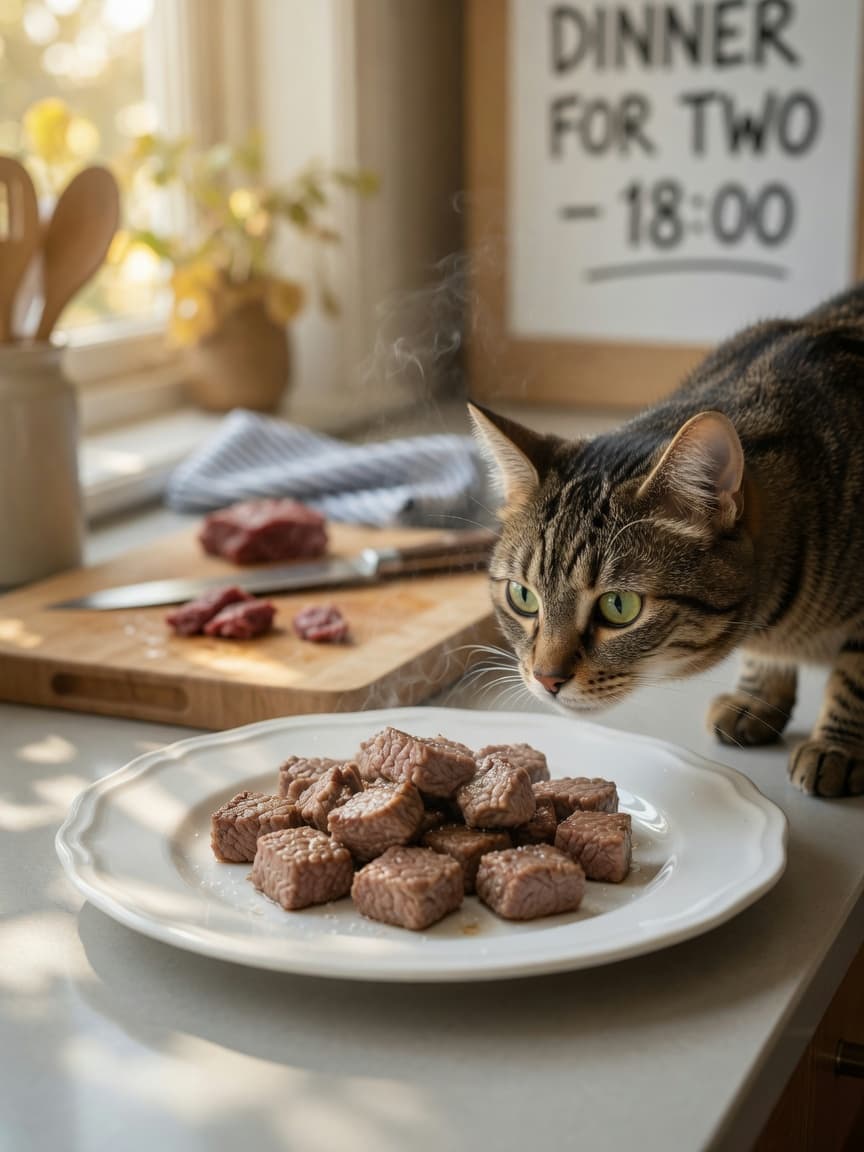
Can Cats Eat Beef? Everything You Need to Know
Beef is one of the most common proteins found in commercial cat food formulas, and for good reason. It is nutrient-dense, highly digestible for cats, and delivers amino acids that an obligate carnivore's metabolism is perfectly equipped to use. But there is a meaningful gap between plain cooked beef and the beef-based foods that humans typically consume — and that gap matters enormously when it comes to feline safety.
Why Beef Works Well for Cats
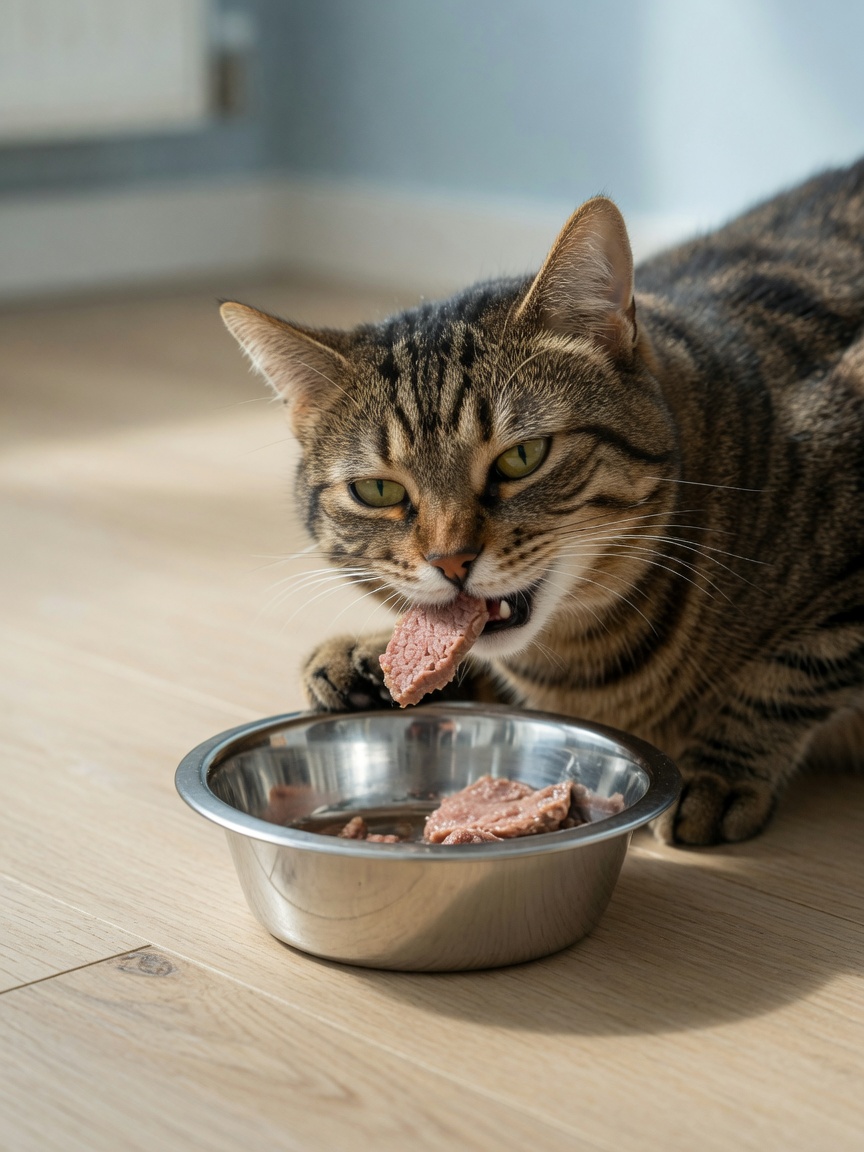
Cats are obligate carnivores, a classification that goes beyond dietary preference. Cats have evolved over millennia to obtain all their essential nutrients from animal tissue. They cannot convert plant-based precursors into the forms their bodies require — for instance, they cannot synthesize taurine, arachidonic acid, or vitamin A from plant sources the way omnivores can. Beef, as red meat, is an outstanding source of all three in their preformed, bioavailable forms.
This is why you will find beef, beef liver, and beef meal in many of the most reputable commercial cat food formulas. Veterinary nutritionists include it precisely because it aligns with feline nutritional needs. When offered as a plain, properly cooked treat, it is one of the most natural and appropriate things a cat can eat outside of a complete commercial diet.
Nutritional Value of Beef for Cats
Lean cooked beef provides a strong nutritional profile for cats:
- Protein: Lean beef is typically 25-30% protein by weight — a concentrated source of amino acids including taurine, which cats must get from their diet.
- Taurine: Beef heart in particular is very high in taurine. Regular beef muscle meat contains meaningful amounts as well, supporting cardiac and retinal health.
- Iron and zinc: Red meat is among the richest dietary sources of both minerals, which support oxygen transport and immune function.
- Vitamin B12 and niacin: Both are found in abundance in beef and support neurological health and energy metabolism.
- Creatine: Beef contains creatine, which supports muscle energy metabolism — relevant for active cats.
Fatty Cuts and the Risk of Pancreatitis
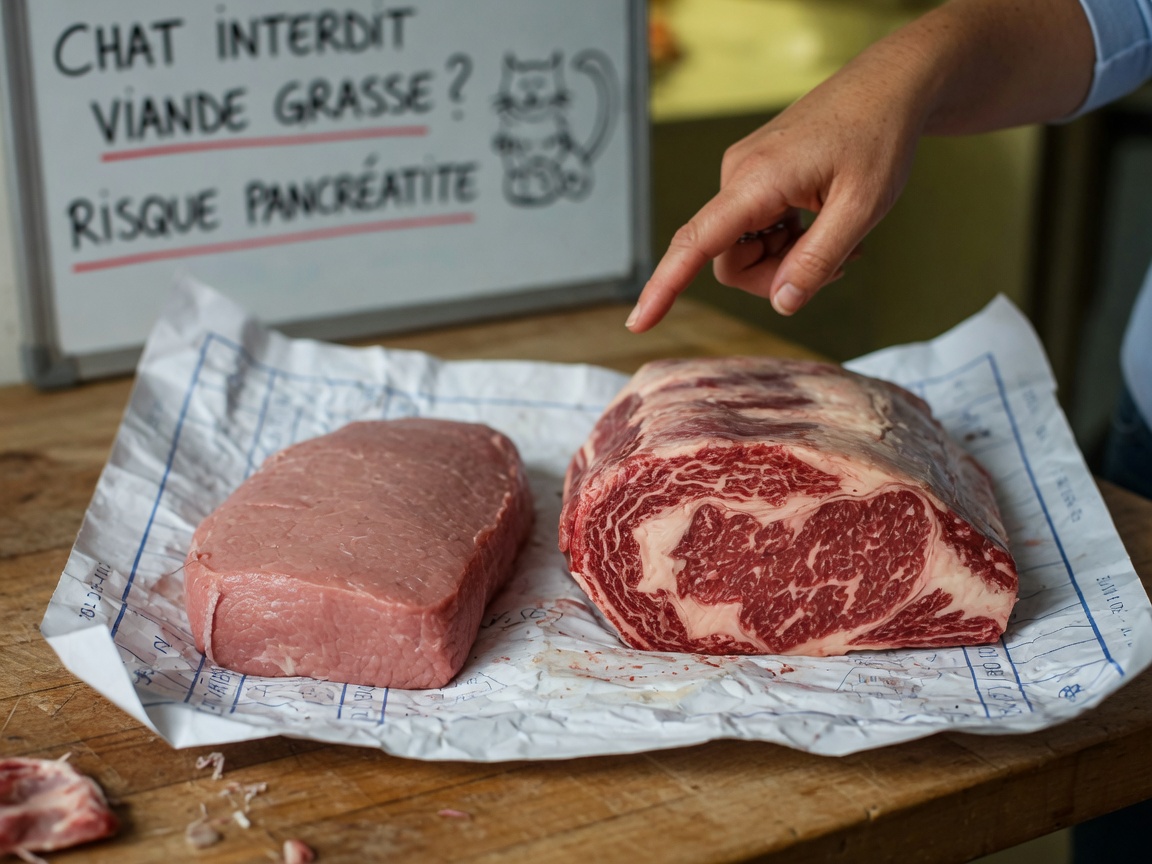
Not all beef is created equal when it comes to cat safety. The fat content varies dramatically between cuts. Lean cuts such as sirloin, round, or extra-lean ground beef (90% lean or higher) are appropriate. Fatty cuts — ribeye, brisket, short ribs, or heavily marbled beef — contain far more saturated fat than cats can comfortably handle in treat quantities.
In cats, a high-fat meal can trigger pancreatitis, an inflammation of the pancreas that ranges from mild digestive upset to a severe, life-threatening condition. Symptoms include vomiting, lethargy, loss of appetite, and abdominal pain. Cats with a prior history of pancreatitis are especially vulnerable. Always trim visible fat from beef before offering it to your cat, and lean toward leaner cuts as a matter of routine.
The Problem With Raw Beef
Raw beef is a topic that generates genuine debate in the pet nutrition community. Proponents of raw diets argue that cats in the wild consume raw prey, and that cooking denatures proteins and destroys some nutrients. These are valid theoretical points, but raw beef from a grocery store carries practical risks that wild prey does not.
Commercial beef can be contaminated with Salmonella, E. coli O157:H7, Listeria monocytogenes, and in some cases, Toxoplasma gondii — a parasite of particular concern because cats are the definitive host and infected cats shed oocysts in their feces, posing a risk to pregnant women and immunocompromised individuals in the household. Cooking beef to an internal temperature of 160°F (71°C) for ground beef, or 145°F (63°C) for whole cuts, eliminates these pathogens without meaningfully diminishing the protein value.
If you are committed to a raw diet for your cat, do so under the guidance of a veterinary nutritionist using commercially prepared, pathogen-tested raw cat food products — not raw grocery store beef.
Ver alimentos para gatos en Zooplus →Processed Beef: Why It Is Off-Limits
Processed beef products — hot dogs, deli meat, beef jerky, canned corned beef, salami, bologna — are not appropriate for cats under any circumstances. These products share several characteristics that make them problematic:
- Extremely high sodium: A single hot dog can contain 500mg of sodium or more. Cats have very low sodium tolerance; excess sodium stresses the kidneys and raises blood pressure.
- Preservatives and additives: Nitrites, nitrates, and other curing agents used in processed meats are not studied for feline safety and should be avoided.
- Garlic and onion: Many processed beef products contain garlic or onion powder for flavoring — both are toxic to cats.
- Artificial flavors and sweeteners: Some products contain xylitol (highly toxic) or other sweeteners. Always check labels.
The rule is simple: if the beef comes with a long ingredient list, it is not appropriate for your cat. Plain means plain — just meat, nothing added.
How to Serve Beef Safely
Cook lean ground beef fully, or slice a lean cut and cook it through. Allow it to cool, then offer a small amount — a teaspoon or two — as a treat. Cut or crumble it into appropriately small pieces. Never season with salt, pepper, garlic, onion, herbs, or cooking oils. Plain is the operating principle.
Beef liver is worth a special mention: it is extremely nutrient-dense and cats tend to find it highly palatable. However, because it is so rich in vitamin A, overfeeding beef liver can lead to vitamin A toxicity in cats over time. Small amounts occasionally are fine, but beef liver should not be a regular large-portion treat.
- Plain, lean, fully cooked beef is safe and nutritionally appropriate for cats.
- Beef provides protein, taurine, iron, zinc, and B vitamins cats genuinely need.
- Avoid fatty cuts — excess fat can cause pancreatitis in cats.
- Raw beef carries genuine bacterial and parasitic risks; always cook it thoroughly.
- Processed beef (hot dogs, deli meat, jerky) is off-limits due to sodium, additives, and often garlic/onion.
- Beef liver is nutritious but feed sparingly due to high vitamin A content.
- Cats are obligate carnivores — plain cooked beef is one of the most biologically appropriate treats you can offer.
References
- Verbrugghe A, Bakovic M. "Peculiarities of one-carbon metabolism in the strict carnivore, the domestic cat." Nutrients. 2013;5(7):2811-35. PMID: 23873295
- Plantinga EA, Bosch G, Hendriks WH. "Estimation of the dietary nutrient profile of free-roaming feral cats: possible implications for nutrition of domestic cats." Br J Nutr. 2011;106 Suppl 1:S35-48. PMID: 22005436
- Morris JG. "Idiosyncratic nutrient requirements of cats appear to be diet-induced evolutionary adaptations." Nutr Res Rev. 2002;15(1):153-68. PMID: 19087395