
A Virus That Has Killed More Cats Than Most Owners Realise
Before widespread vaccination, feline panleukopenia was one of the leading causes of death in cats globally. It still kills unvaccinated kittens — quickly and with devastating efficiency. In shelter environments, an outbreak can sweep through an entire kitten population within days. Despite being entirely preventable with a safe and effective vaccine, panleukopenia remains a genuine threat wherever vaccination rates are low. Every cat owner should understand what this disease does and why prevention is non-negotiable.
The Causative Virus and How It Spreads
Feline Panleukopenia Virus (FPV) belongs to the Parvovirus family — it is closely related to canine parvovirus type 2, which explains why modified live FPV vaccines can cross-protect against CPV-2 strains in some circumstances. FPV is extraordinarily hardy in the environment. It can survive for months to years on contaminated surfaces, resists many common disinfectants, and is stable across a wide range of temperatures. Only certain disinfectants — sodium hypochlorite (bleach) diluted appropriately is the most accessible — reliably inactivate it.
The virus spreads through direct contact with infected faeces, urine, vomit, or nasal secretions, as well as indirectly via contaminated objects — cages, clothing, hands, feeding equipment. Kittens and unvaccinated cats are at highest risk. Queens infected during pregnancy can transmit the virus to foetuses, causing stillbirth, foetal resorption, or — in kittens infected in the final weeks of gestation or shortly after birth — a distinctive neurological syndrome.
What Panleukopenia Does to the Body
The name panleukopenia means "reduction in all white blood cells" — which captures one of the virus's key mechanisms. FPV selectively attacks rapidly dividing cells. In bone marrow, it destroys the precursors of white blood cells, gutting the immune system at its source. In the intestinal tract, it destroys the cells lining the gut wall (enterocytes), causing the characteristic vomiting and haemorrhagic diarrhoea. In unborn or neonatal kittens, the rapidly dividing cells of the cerebellum are prime targets, producing cerebellar hypoplasia — affected kittens develop with a malformed cerebellum and display a lifelong wobbly, high-stepping gait.
The combined effect of immune suppression and gut damage creates a cycle of severe illness: secondary bacterial septicaemia, profound dehydration, and multi-organ stress. In kittens under 12 weeks of age, death can occur within 12 to 24 hours of the onset of symptoms. Mortality rates in unvaccinated kittens can exceed 90%.
Clinical Signs to Recognise
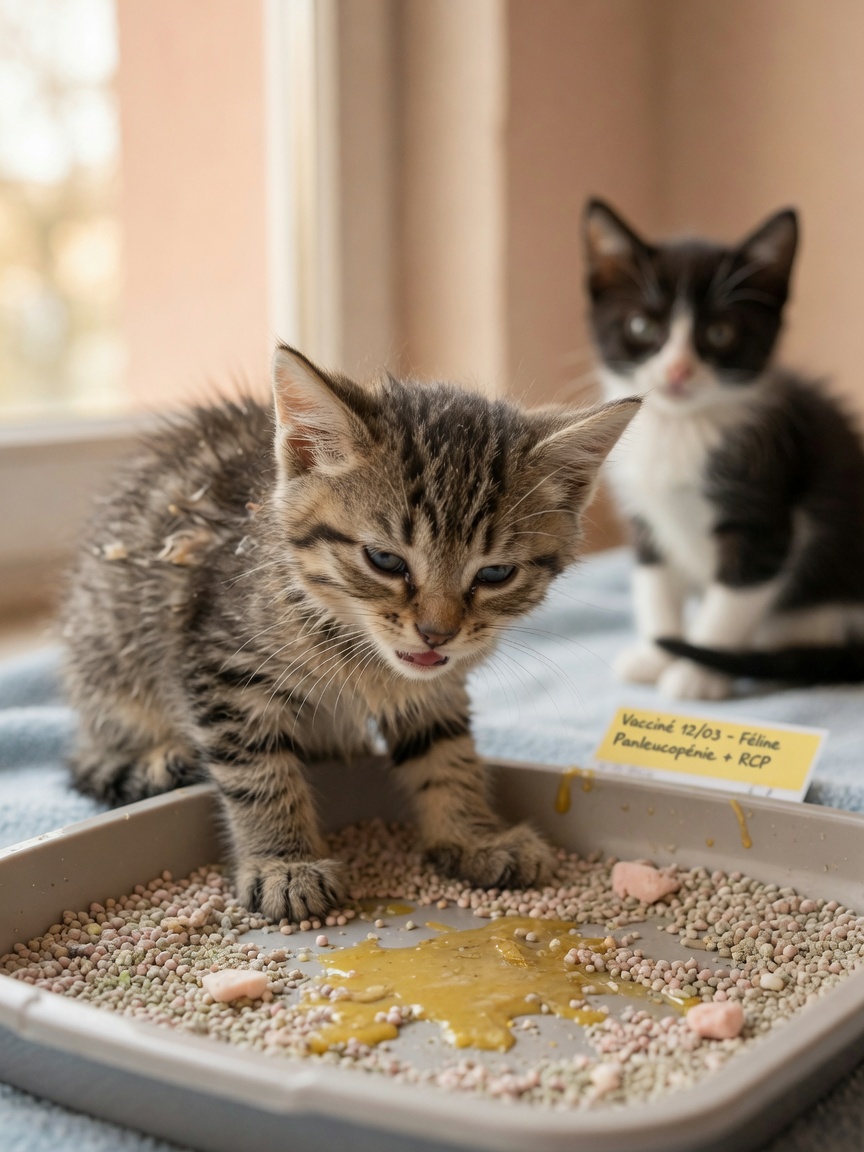
Early signs of panleukopenia include sudden and profound lethargy, anorexia, and high fever (though terminal cases may become hypothermic). Vomiting follows — typically bilious and persistent — along with severe, often bloody diarrhoea. Affected cats frequently adopt a characteristic hunched posture with their head hanging over their water bowl, appearing desperately thirsty but unable to drink. Abdominal pain is evident on palpation. Some cats deteriorate and die before diarrhoea even develops, particularly very young kittens.
Any kitten or unvaccinated cat showing this combination of signs requires emergency veterinary attention. Do not delay: the window for effective intervention is narrow.
Diagnosis and Treatment
Diagnosis is aided by the characteristic blood picture — a precipitous drop in white blood cells, often to critically low levels, is strongly suggestive. Canine parvovirus rapid antigen tests can detect FPV antigen in faeces and are widely used in practice as an initial screening tool. PCR testing provides more definitive confirmation.
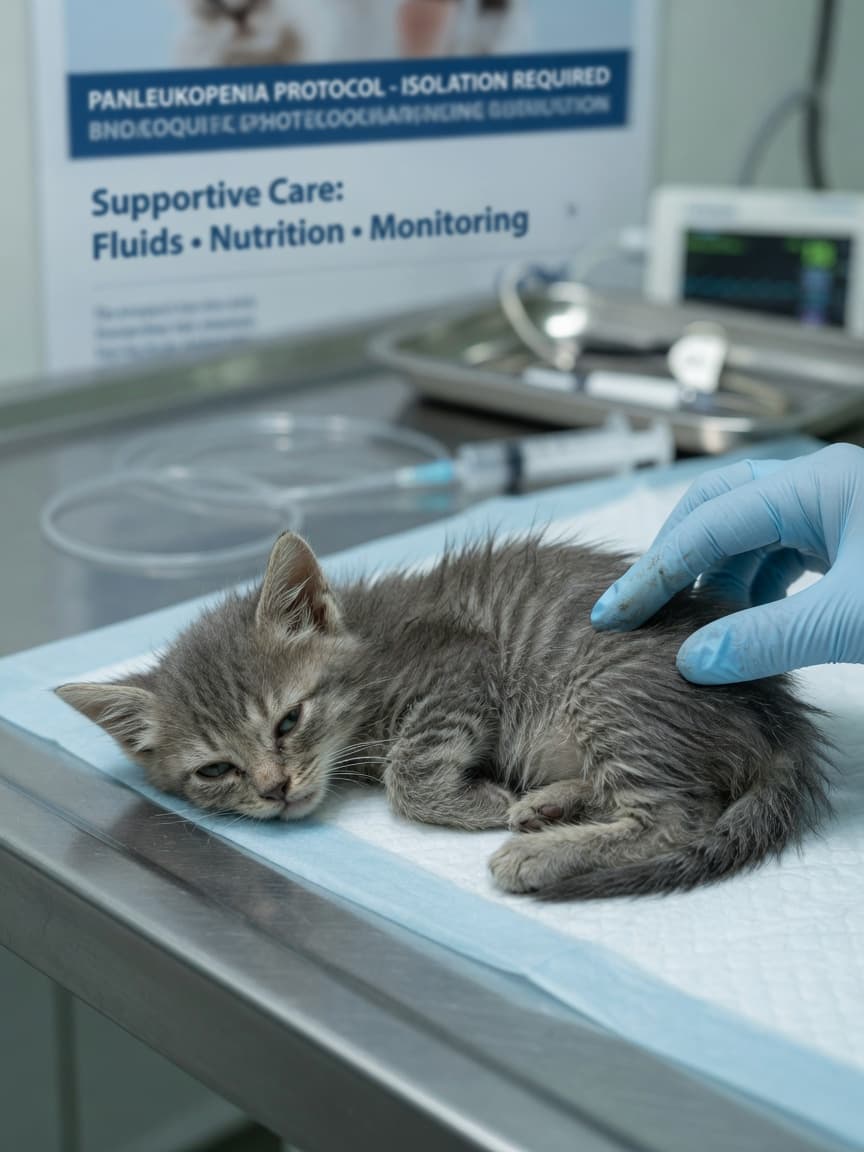
Treatment is entirely supportive — there is no specific antiviral therapy available in practice. Aggressive intravenous fluid therapy to correct dehydration and electrolyte imbalances is the cornerstone of treatment. Broad-spectrum antibiotics address secondary bacterial infection arising from the compromised gut barrier. Nutritional support, anti-nausea medications, and intensive nursing care are essential. Cats that survive the first five to seven days typically recover fully, though recovery requires sustained supportive care and carries significant veterinary costs. Isolation of suspected cases is critical to prevent spread.
Prevention: The Vaccine That Actually Works
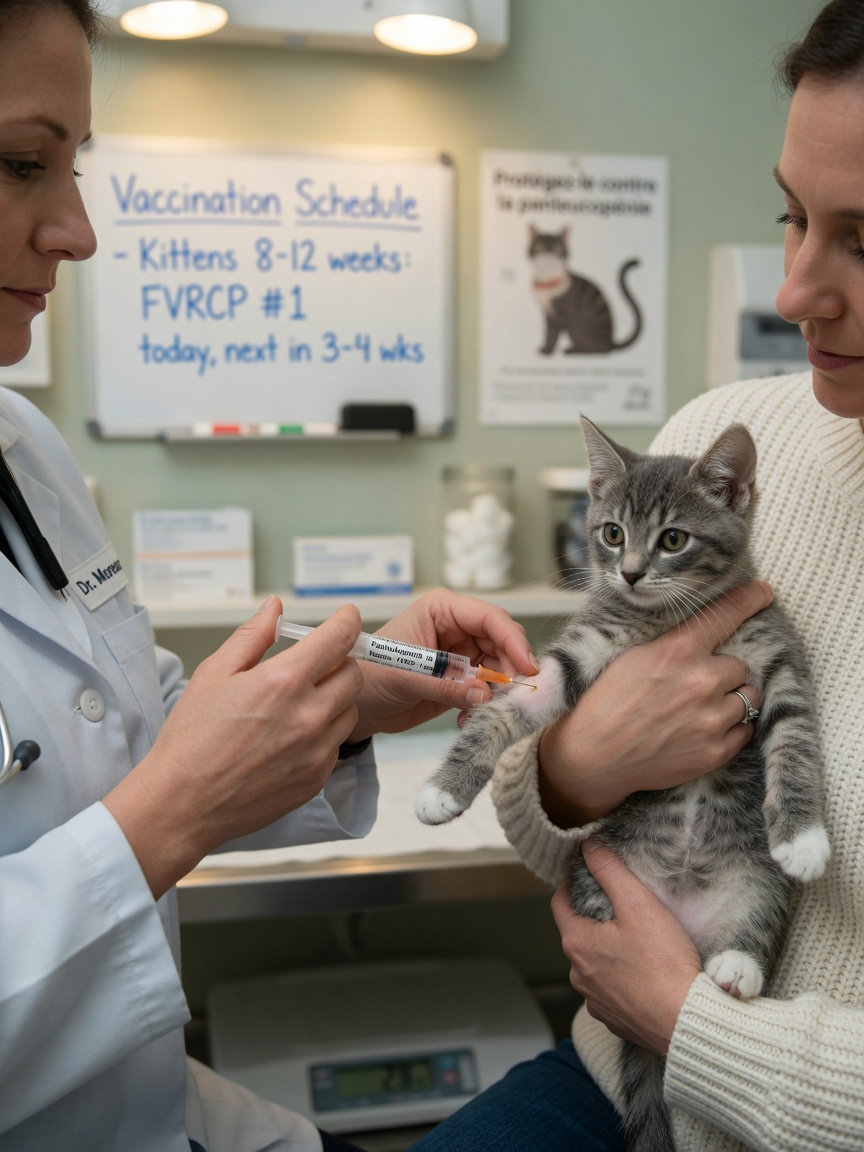
The FPV vaccine is one of the most effective vaccines in veterinary medicine. It reliably induces strong, long-lasting immunity. Kittens receive a primary course starting at eight to nine weeks of age, with boosters at 12 and 16 weeks to overcome interference from maternal antibodies. A booster is given at one year, and triennial boosters are generally recommended thereafter for adult cats — though your vet may advise different intervals based on your cat's lifestyle and local disease prevalence.
In a contaminated environment, vaccination alone is insufficient for immediate protection — cleaning with an appropriate virucidal disinfectant is essential before introducing unvaccinated or newly vaccinated cats. Given how long FPV can persist in the environment, any property with a history of panleukopenia should be treated with thoroughness before new cats arrive.
Key Points for Cat Owners
- Feline panleukopenia is caused by a parvovirus that can persist in the environment for months to years.
- It destroys white blood cell precursors and gut lining — causing immune collapse, severe gastroenteritis, and often death in kittens.
- Kittens under 12 weeks face mortality rates exceeding 90% without treatment.
- Any kitten with sudden lethargy, vomiting, and bloody diarrhoea needs emergency veterinary care immediately.
- The vaccine is highly effective and forms part of the core vaccination schedule — do not skip or delay it.
- Bleach-based disinfectants are required to decontaminate affected environments; standard cleaners are insufficient.