

Raw Feeding and the Obligate Carnivore: What Makes Cats Different
Cats are obligate carnivores, meaning their metabolism is hardwired to derive energy and essential nutrients exclusively from animal tissue. Unlike omnivores such as dogs or humans, cats lack several enzymatic pathways that would allow them to synthesise key nutrients from plant sources. This biological reality is the foundation of every conversation about raw feeding — and the reason diet composition matters so profoundly for feline health.
Two nutrients in particular illustrate why cats cannot thrive on diets designed for other species: taurine and arachidonic acid. Taurine is an amino sulphonic acid that cats cannot synthesise in adequate quantities from dietary precursors; they depend entirely on preformed taurine from meat. Deficiency causes dilated cardiomyopathy and retinal degeneration — both irreversible if not caught early. Arachidonic acid, an omega-6 fatty acid, must also be supplied pre-formed from animal fat, since cats lack sufficient delta-6-desaturase activity to convert linoleic acid as other mammals can. These requirements make the formulation of any feline diet — raw or commercial — a precise nutritional undertaking.
What Is a Raw Diet for Cats?
Raw diets for cats broadly fall into two philosophies: the Biologically Appropriate Raw Food (BARF) model and the prey model. Understanding the difference is important before choosing an approach.
BARF (Biologically Appropriate Raw Food)
The BARF model combines raw meaty bones with muscle meat, organ meat, and a small proportion of vegetables, fruits, and supplements. The intent is to replicate a nutritionally complete diet through formulation, supplementing where whole prey would fall short. Proponents argue this approach offers flexibility and is easier to balance when done correctly.
Prey Model Raw
The prey model attempts to replicate whole-prey feeding, aiming for a ratio of approximately 80% muscle meat, 10% raw edible bone, and 10% organ meat (of which half should be liver). It excludes plant matter on the grounds that cats in the wild do not consume it significantly. Critics note that without careful sourcing and variety, this model can produce nutritional gaps — particularly in vitamins D and E, iodine, and manganese.
Nutritional Risks and Imbalance
Both the World Small Animal Veterinary Association (WSAVA) and the European Pet Food Industry Federation (FEDIAF) have raised significant concerns about home-prepared and commercial raw diets. WSAVA's nutrition guidelines recommend that any diet fed to a pet be assessed against established nutrient profiles, and the organisation has expressed caution about raw feeding due to the documented risk of nutritional imbalance.
FEDIAF publishes detailed nutritional guidelines for cats and dogs that are widely used by responsible manufacturers. These guidelines highlight specific concerns with raw home-prepared diets, including:
- Calcium-to-phosphorus imbalance when bones are excluded or over-represented
- Vitamin D deficiency, as raw muscle meat is a poor source
- Iodine deficiency, which can affect thyroid function over time
- Taurine inadequacy, particularly in diets relying on a narrow range of muscle meats
- Excess of certain fat-soluble vitamins, particularly vitamin A from excess liver
Studies have shown that a substantial proportion of home-prepared raw diets, when analysed, do not meet FEDIAF minimum standards. If you choose to feed raw, having your recipe reviewed by a board-certified veterinary nutritionist is strongly recommended.
Microbiological Hazards: Salmonella, Listeria, and Beyond
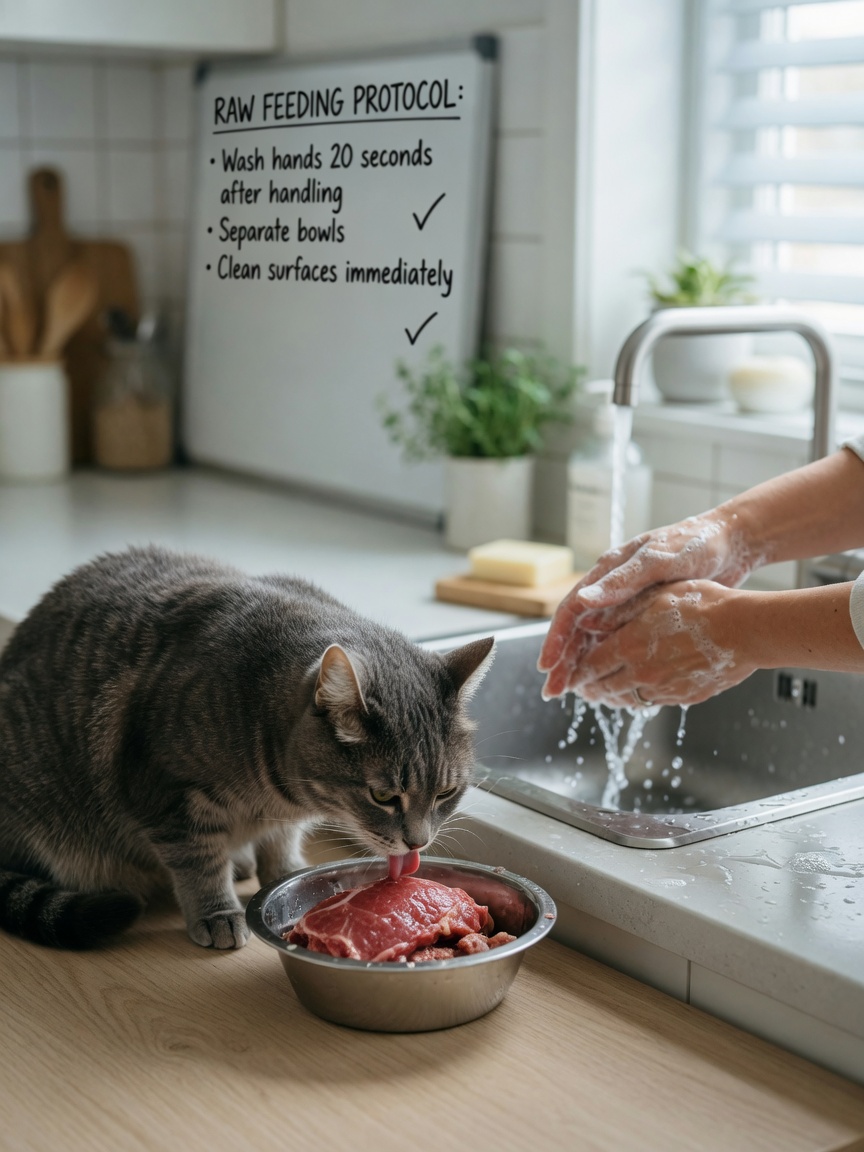
Perhaps the most well-evidenced concern with raw feeding is the microbiological risk — both to the cat and to the human household. Raw meat, particularly poultry, is a recognised vehicle for Salmonella, Listeria monocytogenes, Campylobacter, and Clostridium species. Multiple peer-reviewed studies have confirmed the presence of these pathogens in commercial raw pet foods at rates substantially higher than in heat-processed diets.
Cats can shed Salmonella asymptomatically after consuming contaminated raw meat, creating an ongoing environmental and human health risk — particularly relevant in households with immunocompromised individuals, elderly people, young children, or pregnant women. Both WSAVA and the British Veterinary Association (BVA) have issued cautions on this basis.
In the European Union, pet food safety is regulated under EC Regulation 853/2004, which sets hygiene requirements for animal-derived products used in pet food production. Commercial raw pet foods must meet these standards; however, home-prepared raw diets fall outside this regulatory framework entirely, meaning the consumer bears full responsibility for sourcing and handling safety.
EU Regulatory Context: What the Law Says
EU feed legislation, specifically EC Regulation 767/2009, governs the placing on the market and use of feed for animals, including pet food. It sets requirements for labelling, composition declarations, and the use of feed materials. Commercial raw pet food products sold in the EU must comply with these rules, including accurate declaration of protein, fat, moisture, and crude ash content.
Raw pet food manufacturers operating in the EU are also subject to EC 853/2004 hygiene requirements, and products should carry appropriate traceability. When purchasing commercial raw food — whether frozen patties, minces, or complete meals — look for manufacturers who can demonstrate compliance with these regulations and who conduct routine microbiological testing.
Buying Raw Food: Practical Considerations
For cat owners who decide to proceed with raw feeding, sourcing from reputable suppliers matters enormously. Retailers such as Zooplus stock a range of commercial raw cat food products from established brands, including frozen and freeze-dried options that have been formulated to meet FEDIAF nutritional standards. Complete commercial raw foods represent a lower-risk entry point than home preparation, provided they carry appropriate regulatory compliance and nutritional declarations.
When evaluating any raw product, check that it is labelled as "complete" rather than "complementary" — complementary products are not nutritionally sufficient as a sole diet and must be combined with other foods to meet requirements.
Safe Handling Practices
If you feed raw, food safety discipline is non-negotiable. The following practices are advised by veterinary and public health bodies:
- Thaw raw food in the refrigerator, never at room temperature
- Wash hands thoroughly with soap and water before and after handling raw pet food
- Disinfect all surfaces, bowls, and utensils that contact raw meat after each use
- Do not allow cats to lick human faces after eating raw food
- Dispose of uneaten raw food after 30 minutes; do not leave it down
- Store raw food separately from human food in the refrigerator or freezer
Is Raw Feeding Right for Your Cat?
The evidence base for raw feeding in cats is currently insufficient to support strong clinical recommendations in either direction. WSAVA's position is that raw diets carry documented risks and that the claimed benefits — improved coat condition, dental health, digestibility — lack robust clinical evidence in peer-reviewed literature. FEDIAF similarly advocates for nutritionally complete, commercially tested diets as the safest option for the majority of cats.
That said, some cat owners successfully feed raw under veterinary guidance, using nutritionally complete commercial formulations or professionally reviewed home-prepared recipes. If you are considering raw feeding, the most important step is an honest conversation with your veterinarian or a veterinary nutritionist before making any changes. Your cat's life stage, health status, and your household's risk profile should all inform the decision.
Whatever diet you choose, nutritional completeness — verified against FEDIAF guidelines — is the non-negotiable starting point for feline health.