
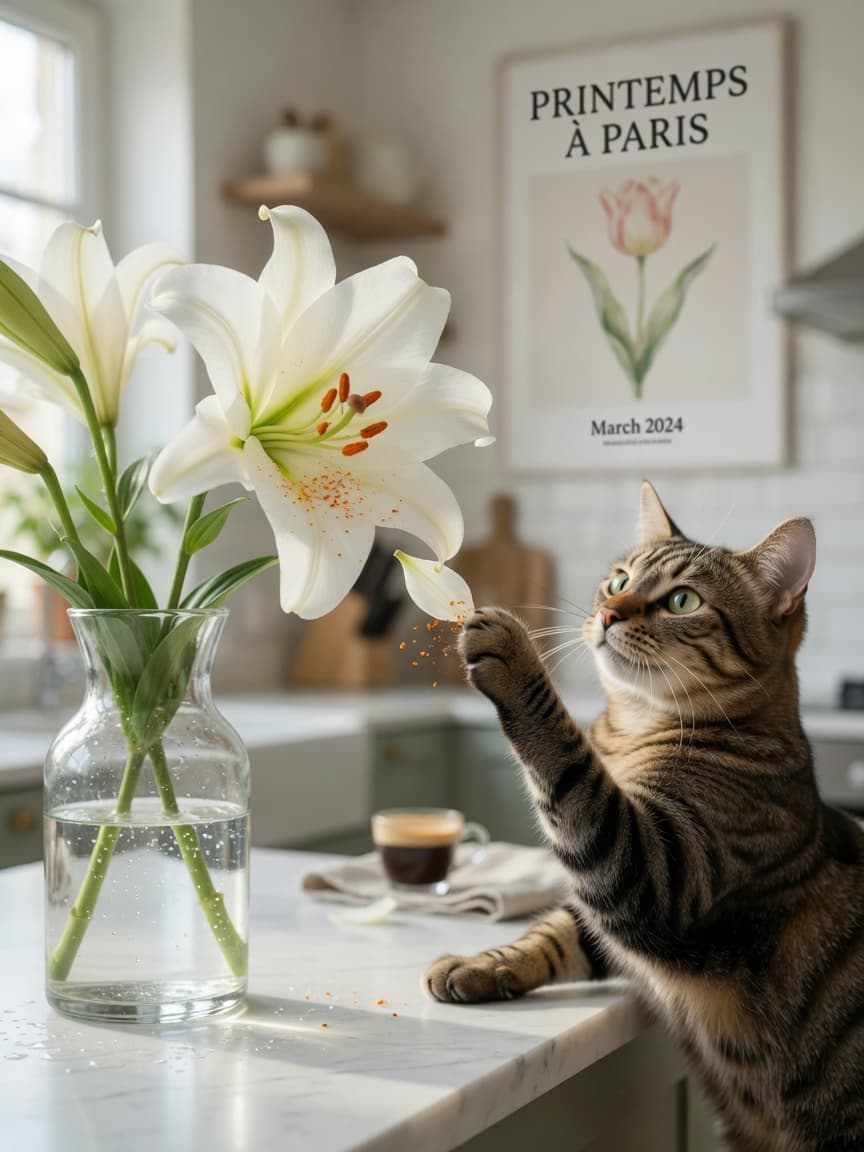
Are Lilies Toxic to Cats?
Updated: June 2026
Why Lilies Are So Deadly to Cats
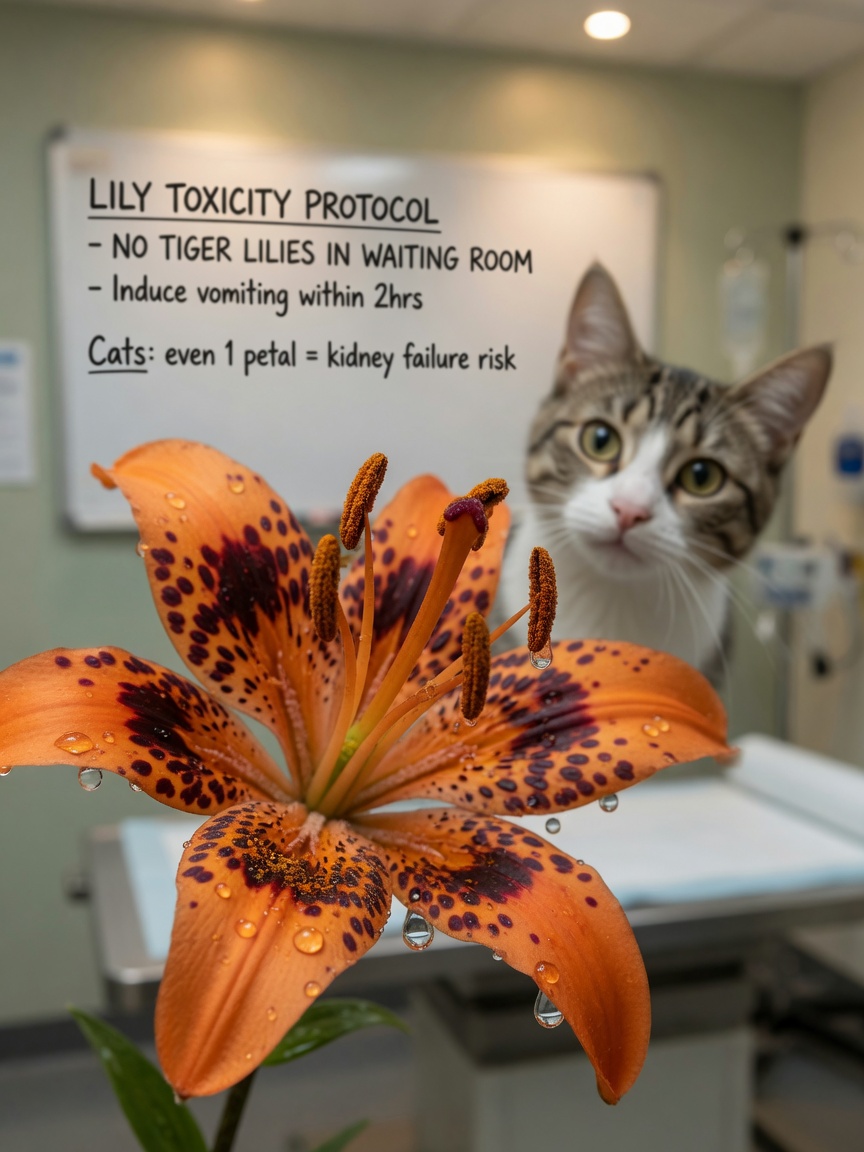
Few plant toxicities in veterinary medicine are as severe or as well-documented as lily poisoning in cats. What makes lilies uniquely terrifying is that the specific toxic compound has not yet been fully identified — yet the catastrophic effect on feline kidneys is well established and consistent. Researchers know that the toxin is water-soluble and present in all parts of the plant, but the precise molecule responsible for the kidney destruction remains under active investigation.
What we do know with certainty is this: true lilies cause acute tubular necrosis — the death of the cells lining the kidney tubules. These cells are responsible for filtering waste from the blood and reabsorbing water and nutrients. When they die, they cannot regenerate quickly enough to restore function, and the kidneys shut down. Without aggressive treatment within hours of exposure, this shutdown is permanent and fatal.
The "true lilies" that are lethal to cats include:
- Easter Lily (Lilium longiflorum) — among the most commonly reported causes of lily poisoning, often gifted during spring holidays
- Tiger Lily (Lilium tigrinum) — commonly found in gardens and cut flower arrangements
- Asiatic Lily (Lilium asiaticum) — another popular garden variety
- Stargazer Lily (Lilium orientalis) — extremely popular in floral bouquets
- Day Lily (Hemerocallis species) — often found in outdoor gardens; equally deadly
- Japanese Show Lily (Lilium speciosum)
- Rubrum Lily (Lilium speciosum var. rubrum)
It is critical to understand that this is not a minor gastrointestinal upset. This is organ failure. The difference between a cat that survives and one that does not often comes down to whether the owner acted immediately.
The Shocking Truth: Every Part Is Toxic
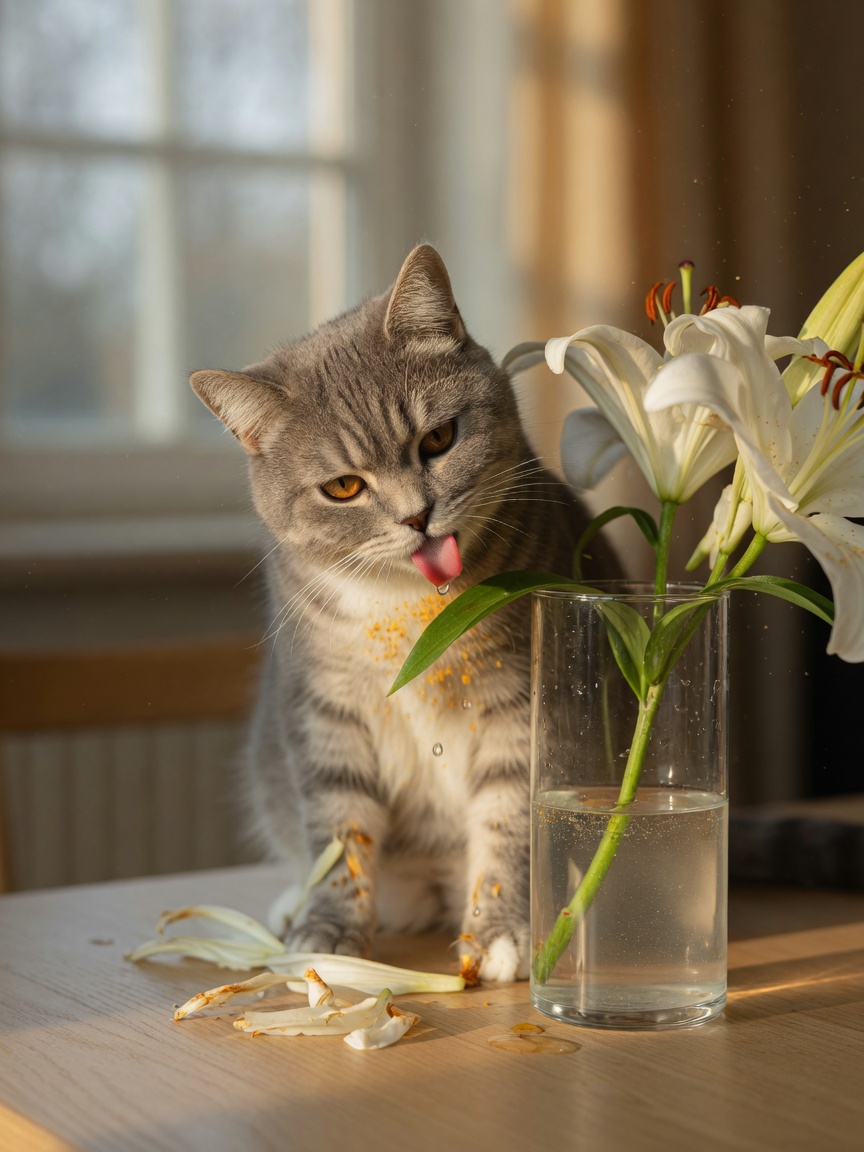
There is no safe part of a true lily for a cat. This cannot be overstated. Veterinarians have documented kidney failure in cats from:
- Eating petals or leaves
- Chewing on the stem
- Ingesting the bulb
- Contacting pollen (which is then groomed off the fur and ingested)
- Drinking water from a vase in which lilies were displayed
That last point deserves particular emphasis. The water in a lily vase becomes toxic within hours of the flowers being placed in it. If your cat drinks from a vase of lilies — even if they never touched the plant itself — they have been poisoned. Cats that walk near fresh lilies and get pollen on their coats, then groom themselves, are also at risk.
Symptoms of Lily Poisoning in Cats
The clinical timeline of lily poisoning is deceptively calm at first, which is part of what makes it so dangerous. Owners who see their cats appear to "recover" from initial symptoms often delay further treatment — with fatal results.
Phase 1 (0–12 hours after ingestion):
- Vomiting (often profuse)
- Lethargy and depression
- Drooling
- Loss of appetite
Phase 2 (12–24 hours): The cat may appear to feel better. This is a false recovery. Kidney damage is actively progressing during this window.
Phase 3 (24–72 hours):
- Acute kidney failure signs: increased urination followed by decreased or no urination
- Severe lethargy and collapse
- Disorientation or seizures
- Swollen, painful abdomen
- Death if untreated
If treatment is not initiated within the first few hours of ingestion, the prognosis worsens dramatically. Cats treated within six hours of exposure have a significantly better chance of survival than those treated after 18 hours.
What to Do Right Now
If you have any reason to believe your cat has had contact with a lily — even if you only suspect it — call your vet immediately or contact the ASPCA Animal Poison Control Center at (888) 426-4435. Do not wait for symptoms. Do not monitor at home. This is not a wait-and-see situation.
Treatment involves aggressive intravenous fluid diuresis to flush the kidneys and support renal function. Your vet may also induce vomiting and administer activated charcoal if the ingestion was very recent. In severe cases, peritoneal dialysis or hemodialysis may be necessary, though these options are not available at all clinics.
Never Keep Lilies in a Home with Cats
The only truly safe approach is to eliminate lilies from your home and garden entirely if you share your space with cats. Refuse lily bouquets as gifts. Inform florists about your cat when ordering flowers. Check the contents of any mixed bouquet before bringing it indoors. Train everyone in your household to recognize lily species by sight.
If you receive lilies unexpectedly, place them immediately in a room the cat cannot access, then dispose of them safely — or better yet, give them to a neighbor without cats.
Key Takeaways
- True lilies (Lilium and Hemerocallis species) cause fatal kidney failure in cats — this is a genuine emergency.
- All parts of the plant are toxic, including pollen and the water in flower vases.
- Symptoms progress through a false recovery phase before organ failure sets in — never assume your cat is "fine."
- Treatment must begin within hours of ingestion to have the best chance of survival.
- Call your vet immediately or ASPCA Poison Control at (888) 426-4435 if there is any suspicion of lily exposure.
- The only safe solution is to never keep lilies in a home with cats.
References
- Fitzgerald KT. "Lily toxicity in the cat." Topics in Companion Animal Medicine. 2010 Aug;25(3):213-7. PMID: 20937490
- Bennett AJ, Reineke EL. "Outcome following gastrointestinal tract decontamination and intravenous fluid diuresis in cats with known lily ingestion: 25 cases (2001–2010)." Journal of the American Veterinary Medical Association. 2013 Oct 15;243(8):1110-6. PMID: 24094261