
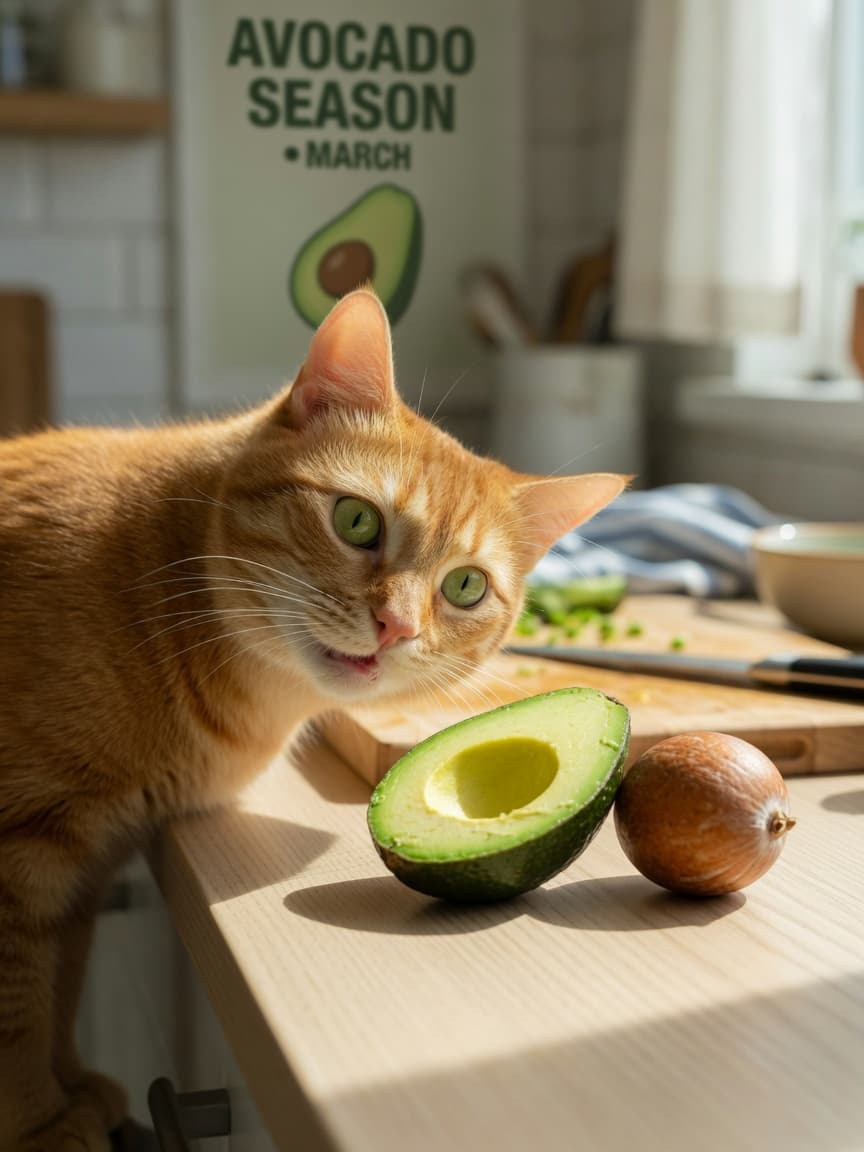
Can Cats Eat Avocado? No — Every Part of Avocado Is Toxic to Cats
Avocados contain a fungicidal toxin called persin, which causes vomiting, diarrhea, respiratory distress, and life-threatening fluid accumulation around the heart and lungs in cats. The flesh, skin, pit, and even the leaves of the avocado plant are all toxic. The large pit also presents a severe choking and gastrointestinal obstruction hazard. If your cat has eaten any part of an avocado, call your veterinarian or the ASPCA Animal Poison Control Center immediately: (888) 426-4435.
Avocado has become one of the most celebrated superfoods in human nutrition — praised for its healthy fats, fiber, and vitamins. It appears in everything from salads and sandwiches to smoothies, dips, and even pet food products marketed for dogs. But for cats, avocado is not a superfood. It is a poison. Every part of the avocado plant contains compounds that can cause severe illness and potentially fatal organ damage in cats — and cats are more sensitive to these compounds than dogs.
This article covers exactly what makes avocado toxic, what happens when a cat is exposed, how to recognize the symptoms, and the emergency steps you must take if your cat has ingested any part of this plant.
What Makes Avocado Toxic to Cats? The Role of Persin
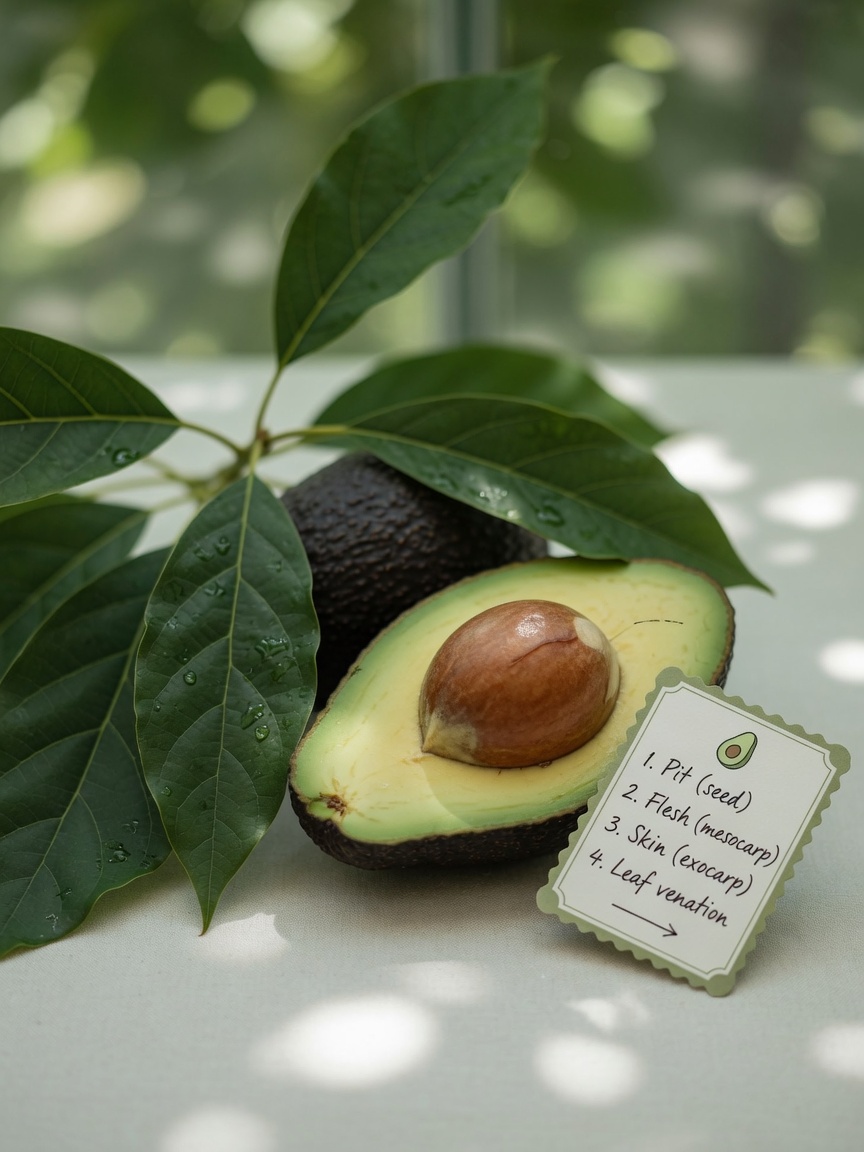
The primary toxic agent in avocados is a natural fungicidal compound called persin. Persin is produced by the avocado plant (Persea americana) as a defense mechanism against fungal infections. It is present throughout the entire plant — in the leaves, bark, skin, flesh, and the large central pit. Even the avocado tree itself, if you have one in your garden, poses a risk to a curious cat who might chew on its leaves or bark.
Persin is classified as a polyhydroxylated fatty acid — a type of fat-soluble toxin. In mammals, persin disrupts normal cellular function. The exact molecular mechanism is still being studied, but research indicates that persin interferes with the normal production of fatty acids in cells, particularly in cardiac muscle cells, mammary gland cells, and the cells lining the respiratory tract. This disruption leads to cell death in these tissues.
The result in affected animals is a cluster of severe cardiovascular and respiratory symptoms: inflammation and fluid accumulation around the heart (pericardial effusion), fluid accumulation in and around the lungs (pulmonary edema and pleural effusion), and significant digestive tract distress. In severe cases, the fluid around the heart compresses cardiac function to the point of heart failure.
Cats Are More Sensitive Than Dogs to Avocado Toxicity
It is important to note that while avocado toxicity is a concern for many species, cats appear to be more sensitive to persin than dogs. Some avocado-derived dog food products exist because the persin content has been reduced through processing and dogs show somewhat greater tolerance. These products are categorically not appropriate for cats. Do not make the mistake of assuming that because a dog food contains avocado it is safe to share with your cat. The physiology is different, the sensitivity is different, and the risk is real.
Cats' unique metabolic characteristics — including their limited ability to metabolize certain fat-soluble compounds — may contribute to their heightened vulnerability. The feline liver lacks some of the detoxification enzymes found in dogs and humans, making it harder for cats to process and eliminate toxic lipid-based compounds like persin.
All Parts of the Avocado Plant Are Toxic
There is no safe part of the avocado for a cat to eat. Every component of the plant contains persin at varying concentrations:
- The flesh (pulp) — the soft green part humans eat. Contains persin. Even a small amount can cause gastrointestinal distress and, in sufficient quantities, cardiorespiratory damage.
- The skin — contains persin in concentrated form. A cat chewing on avocado skin is at serious risk.
- The pit (seed) — contains persin and poses an additional physical danger. The large, dense pit is a severe choking hazard and, if swallowed, can cause a life-threatening intestinal obstruction requiring emergency surgery.
- The leaves — highly concentrated in persin. If you grow an avocado plant or tree, keep it completely inaccessible to your cat.
- The bark — also contains persin.
- Avocado oil — while some of the persin content is reduced during oil extraction, avocado oil is still not considered safe for cats.
- Guacamole and avocado-containing prepared foods — these are doubly dangerous because they often also contain garlic, onion, chives, or other toxic ingredients.
The concentration of persin is highest in the leaves, skin, and pit. The flesh contains lower concentrations but is still toxic — and when you consider that even the "safest" part of the plant is poisonous, the only appropriate course of action is to keep all avocado products completely away from your cat.
The Pit: A Double Danger
The avocado pit warrants a separate warning because it presents two distinct hazards. First, it contains persin and is therefore chemically toxic. Second, it is extremely large relative to a cat's digestive tract and is covered in a smooth, slippery coating that makes it very easy for a curious cat to accidentally swallow partially or fully.
If a cat swallows an avocado pit, the result can be a complete or partial obstruction of the esophagus, stomach, or intestine — a surgical emergency. Signs of obstruction include repeated vomiting, inability to keep food down, distended or painful abdomen, and complete cessation of bowel movements. This is a life-threatening condition that requires immediate emergency surgery to resolve.
Always dispose of avocado pits securely — in a sealed bin your cat cannot access — and never leave them on countertops where a curious cat might investigate.
Symptoms of Avocado Poisoning in Cats
The symptoms of avocado toxicity in cats can range from gastrointestinal upset (in minor exposures) to severe cardiorespiratory distress (in larger exposures or in cats with heightened sensitivity). Be alert to any of the following warning signs:
- Vomiting — often one of the first signs, may appear within hours of ingestion
- Diarrhea — may be severe and lead to dangerous dehydration
- Abdominal pain — the cat may be reluctant to be touched on the belly, adopt a hunched posture, or cry out
- Lethargy and weakness — the cat is unresponsive, inactive, and lacks energy
- Difficulty breathing — labored, rapid, or shallow breathing; open-mouth breathing; wheezing. This indicates fluid is accumulating in the chest cavity and is an extreme emergency.
- Coughing
- Swollen or distended abdomen — fluid accumulation
- Rapid or irregular heartbeat — pericardial effusion is affecting cardiac function
- Pale or bluish gums — indicating inadequate oxygenation of the blood
- Collapse — an immediately life-threatening situation
Respiratory symptoms — any difficulty breathing — are a particular alarm signal. Fluid around the lungs (pleural effusion) or heart (pericardial effusion) can rapidly become fatal. If your cat shows any signs of breathing difficulty after potential avocado exposure, this is a maximum-urgency emergency. Get to a veterinary clinic within minutes.
What to Do If Your Cat Has Eaten Avocado
Act immediately. Do not adopt a "wait and see" approach with potential avocado poisoning — the cardiovascular and respiratory complications can develop quickly and escalate to crisis with little warning.
- Call the ASPCA Animal Poison Control Center: (888) 426-4435. Staffed 24 hours a day by veterinary toxicology specialists. A consultation fee may apply.
- Contact your veterinarian or nearest emergency animal hospital immediately. Describe what part of the avocado your cat ate, the approximate amount, and how long ago.
- Do not attempt to induce vomiting at home without direct instructions from a veterinarian. If the pit was swallowed, inducing vomiting could cause it to become lodged in the esophagus.
- Monitor your cat's breathing constantly while arranging emergency transport. Any labored or unusual breathing means go to the emergency vet immediately — do not wait to call first.
- Bring the avocado packaging or a sample of what your cat ate.
At the clinic, treatment may include induced vomiting (if exposure was recent), activated charcoal, intravenous fluids, chest drainage to remove accumulated fluid in severe cases, cardiac monitoring, and intensive supportive care until the toxin clears the system.
- Avocados contain persin, a fungicidal toxin harmful to cats in all parts of the plant: flesh, skin, pit, leaves, and bark.
- Cats are more sensitive to persin than dogs — never assume a dog-safe avocado product is safe for cats.
- Persin causes vomiting, diarrhea, respiratory distress, and fluid around the heart and lungs.
- The pit is a double hazard: chemically toxic AND a choking/obstruction risk.
- Breathing difficulty after avocado exposure is a maximum-urgency emergency.
- Any avocado exposure = call (888) 426-4435 and go to the vet immediately. Do not wait for symptoms.
Safe Fats for Cats: What Actually Belongs in Your Cat's Diet
Cats do need dietary fat — it is essential for energy, fat-soluble vitamin absorption, and maintaining healthy skin and coat. But the fats cats need should come from animal sources: chicken fat, salmon oil, and other species-appropriate lipids found in high-quality commercial cat foods. These provide the omega-3 and omega-6 fatty acids cats need without any of the risks posed by plant-based fats like avocado.
If you are looking for high-quality, vet-formulated nutrition for your cat that is completely free from toxic ingredients, explore dedicated cat food ranges from reputable manufacturers.
Ver alimentos para gatos en Zooplus →Your cat depends on you to make safe nutritional choices on their behalf. When it comes to avocado, the choice is clear: keep it away from your cat entirely, in every form.
References and Further Reading
- Kovalkovicova N, Sutiakova I, Pistl J, Sutiak V. "Some food toxic for pets." Interdiscip Toxicol. 2009;2(3):169–76. PMID: 21217842
- Buoro IB, Nyamwange SB, Chai D, Munyua SM. "Putative avocado toxicity in two dogs." Onderstepoort J Vet Res. 1994;61(1):107–9. PMID: 7898156
- Cope RB. "Allium species poisoning in dogs and cats." Vet Med. 2005;100(8):562–566.