
When to Spay a Kitten: Age, Benefits & Recovery
Spaying (ovariohysterectomy — surgical removal of the ovaries and uterus) is one of the most common surgical procedures performed on cats across Europe. In the UK, Spain, France, Germany, the Netherlands, Belgium and Portugal, it is considered standard preventive healthcare for female cats not intended for breeding. But many owners are uncertain about timing, what the procedure involves, what the recovery looks like, and whether there are any risks. This comprehensive guide covers everything you need to know.
What Is Spaying? Ovariohysterectomy vs Ovariectomy
Traditional spaying (ovariohysterectomy) removes both the ovaries and the uterus. An increasingly common alternative in Europe is ovariectomy — removal of the ovaries only, leaving the uterus in place. Long-term studies from the Netherlands (where ovariectomy has been standard practice for decades) show no increase in uterine disease in ovariectomy patients, confirming that removing the hormone-producing ovaries is sufficient to prevent oestrogen- and progesterone-driven conditions. Both techniques are safe and effective; your vet will advise based on their training and preference.
Laparoscopic (keyhole) spaying — using small incisions and a camera — is available at specialist centres and some progressive general practices across Europe. It typically results in less pain and faster recovery than open surgery, though it is more expensive and not universally available.
Why Spay? The Medical Benefits
Mammary (Breast) Cancer Prevention
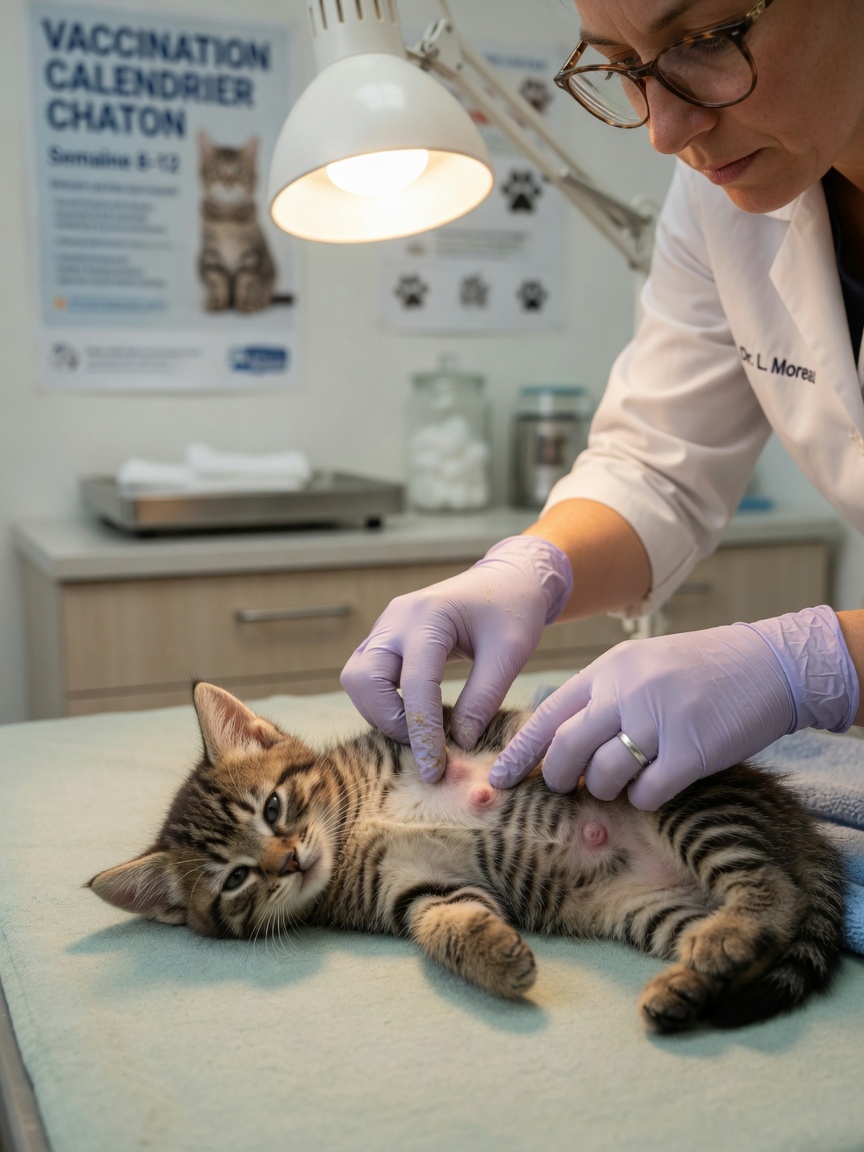
This is the most compelling medical argument for early spaying. Feline mammary tumours are the third most common cancer in cats, and approximately 85–90% are malignant in cats (a much higher proportion than in dogs). The risk is directly linked to oestrogen exposure:
- Spaying before the first heat cycle (before approximately five to six months): reduces mammary tumour risk by approximately 91%
- Spaying after the first heat but before the second: reduces risk by approximately 86%
- Spaying after two heat cycles: approximately 11% reduction only
These figures — derived from well-established veterinary research cited in PDSA guidance and multiple peer-reviewed sources — make the case for early spaying extraordinarily compelling from a cancer prevention standpoint.
Pyometra Prevention
Pyometra is a life-threatening infection of the uterus that affects intact queens (unspayed females), particularly in middle age. The uterus fills with pus, and without emergency surgery, the condition is fatal. It is estimated that up to 25% of intact female cats develop pyometra by the age of ten. Spaying eliminates this risk entirely.
Elimination of Reproductive Complications
Queens in heat cycle approximately every two to three weeks during breeding season (which in much of Europe runs from early spring to late autumn, and year-round in indoor cats under artificial light). Each heat cycle involves potentially distressing vocalisation (calling), restlessness, rolling and attempts to escape. Repeated "false pregnancies" and the physical demands of continuous cycling without mating can cause welfare concerns and nutritional depletion.
Population Control
Europe has a substantial feral and stray cat problem. In Southern European countries including Spain, Portugal, France and Italy, feral cat colonies are a significant welfare and public health issue. Responsible spaying of owned cats is a meaningful contribution to preventing overpopulation. BBC reporting has highlighted the scale of the stray cat problem and the role of neutering campaigns in managing it.
When to Spay: Current European Recommendations

The Traditional Approach: Six Months
Most European vets have historically recommended spaying at five to six months of age — just before or around the time of the first heat cycle. This remains the most common recommendation and is well-supported by the cancer prevention evidence outlined above.
Early or Paediatric Spaying: From Eight Weeks
Paediatric spaying — performed at eight to sixteen weeks — is standard practice in rescue organisations across the UK, US, Australia and increasingly mainland Europe. Large rescue networks and breeding associations sometimes spay kittens prior to rehoming to guarantee population control. Extensive studies show paediatric spaying is safe: complication rates are comparable to or lower than adult spaying (smaller, more resilient tissue; faster recovery), and there are no demonstrated long-term health disadvantages in cats spayed young. This contrasts with dogs, where early neutering has demonstrable musculoskeletal effects in large breeds.
Before the First Heat: The Ideal Window for Owned Cats
For most owned cats — not rescue kittens already covered by early spaying — the recommendation across European veterinary bodies is to spay between four and six months of age, before the first heat cycle, to maximise mammary cancer prevention. Some vets prefer to wait until five to six months when the kitten is slightly larger and the surgery marginally more straightforward; both are entirely acceptable approaches. ESCCAP and the major European veterinary associations support this general timeline.
The Spay Procedure: What Happens
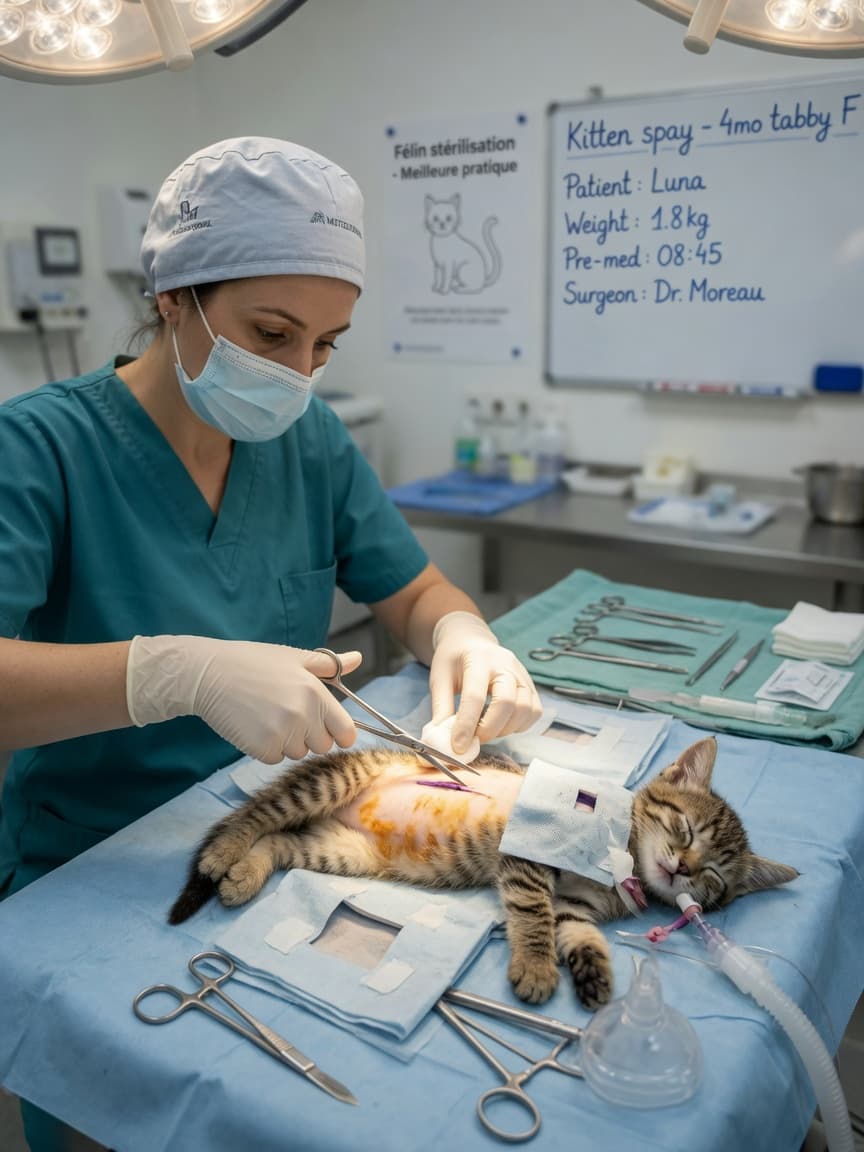
Your kitten will be admitted on the morning of surgery after fasting overnight (typically from midnight — follow your vet's specific instructions). A pre-anaesthetic examination and, depending on the patient and vet preference, blood tests are performed. The kitten is sedated, then placed under general anaesthetic. The surgical site on the abdomen is clipped and cleaned. The surgeon makes a small incision, locates and removes the ovaries (and uterus in OHE), then closes with absorbable sutures internally and skin sutures or skin glue externally. The procedure typically takes twenty to forty minutes in a routine spay of a young, healthy kitten.
Most kittens go home the same day, often within a few hours of waking from anaesthesia. Modern anaesthetic protocols and multimodal pain management mean most cats are walking, eating and reasonably comfortable within hours of surgery.
Recovery: What to Expect
Day of Surgery
Your kitten will be groggy and may be unsteady for several hours. Keep her in a warm, quiet room — ideally the same small, safe base room she knows. Offer a small amount of water and a little food once she is fully awake. Do not leave her near stairs or high surfaces while she is unsteady.
Days 1–3
Most kittens improve rapidly. Some are almost normal within 24 hours; others remain quieter for two to three days. Pain management prescribed by your vet (typically a short course of anti-inflammatory medication) is important — give it as directed even if the kitten seems comfortable, as cats are stoic animals that hide pain effectively.
Days 3–10
Rest from jumping and vigorous play is required for ten to fourteen days to allow the incision to heal. An Elizabethan collar (cone) or medical pet shirt should be used to prevent licking the wound — even a single licking episode can introduce bacteria and cause infection or wound breakdown. Check the incision site daily for redness, swelling, discharge or gaping edges.
Long-Term
Spayed cats have reduced energy requirements due to hormonal changes (approximately 20–25% lower than intact females). Adjust food intake accordingly within the first few months post-surgery to prevent the weight gain that commonly follows spaying. Many manufacturers produce specific "neutered" kitten or adult cat foods formulated for this reduced energy requirement.
Shop post-operative care & neutered cat food on Zooplus →Spaying and Behaviour: What Changes, What Doesn't
Spaying eliminates heat-related behaviours: the calling, rolling and restlessness associated with oestrus. Territorial urine spraying, which can occur in queens as well as males, is reduced but not eliminated by spaying (spraying in cats has both hormonal and non-hormonal components). Personality, playfulness and affectionate behaviours are not negatively affected by spaying — the changes are selective, targeting reproductively-driven behaviours only.
Key Takeaways
- Spaying before the first heat (around four to six months) reduces mammary tumour risk by approximately 91%
- Spaying eliminates the risk of pyometra — a potentially fatal uterine infection affecting up to 25% of intact females
- Paediatric spaying from eight weeks is safe and is standard practice in rescue organisations
- Cats should not have a heat cycle before spaying — this belief reduces cancer prevention benefit
- Recovery takes ten to fourteen days; restrict jumping and use a cone to protect the wound
- Adjust diet post-spaying to account for approximately 20–25% lower energy needs