
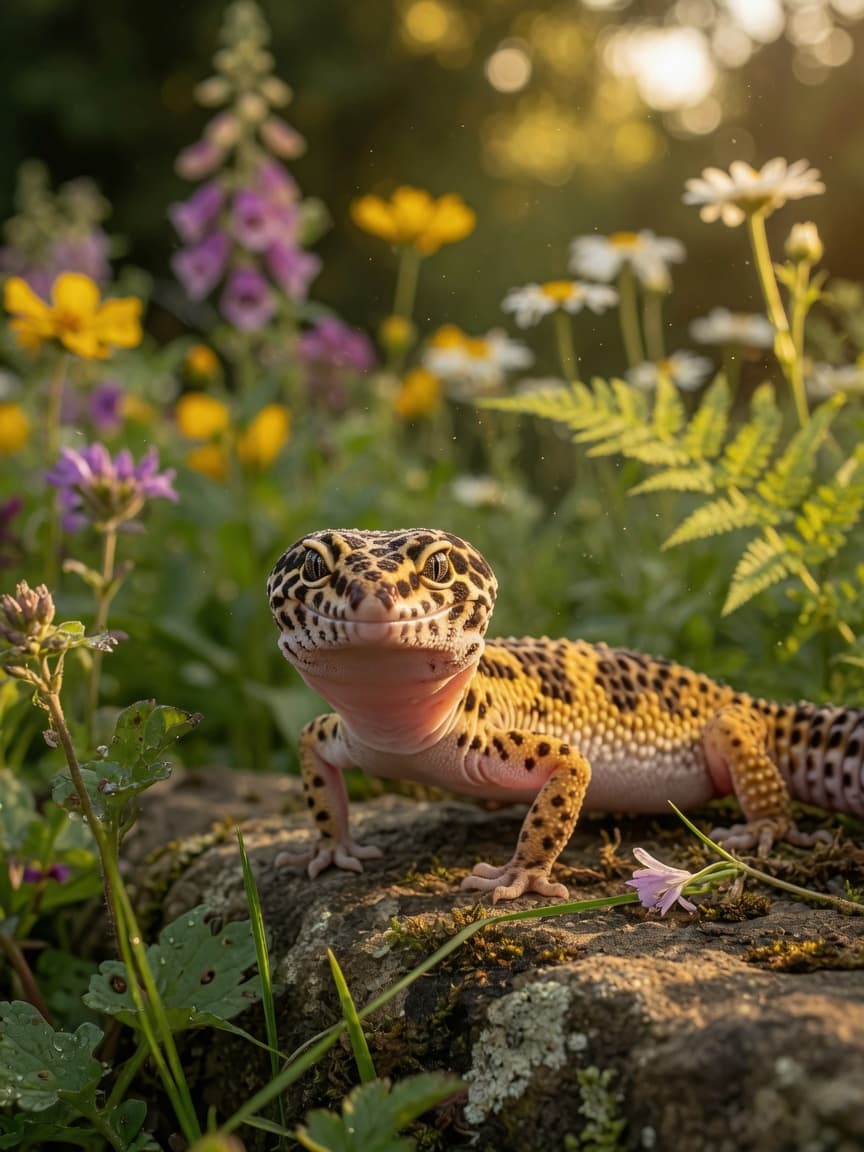
Leopard Gecko Care: The Best First Reptile & Why
By Julia Wrenfield, Pet Wellness Researcher
Walk into any reptile rescue in the UK or Europe and you will find leopard geckos. Not because they are difficult — quite the opposite. They end up in rescues because their reputation for being "easy" leads people to impulse-buy them without understanding even basic care. The reality is that leopard geckos are forgiving compared to many exotic pets, but they still have real needs that must be met. Get those right, and you will have a healthy, interactive, fascinating companion that lives 15–20 years.
Why Leopard Geckos Are the Best Beginner Reptile
No reptile is truly maintenance-free, but leopard geckos come closer than most. Here is why they consistently top the recommended list:
- Size: Adults reach 18–25 cm and 45–65 g. They are easy to handle without the risk of injury that comes with larger species.
- No UVB requirement (in theory): Unlike most reptiles, leopard geckos are crepuscular (active at dawn and dusk) and can metabolise vitamin D3 through diet supplementation rather than UV exposure. However, current evidence from Ferguson et al. (2010, updated 2020 literature) suggests that low-level UVB (5.0 or 6% strength) still improves bone density and activity levels in captive specimens.
- Manageable feeding schedule: Adults eat every 2–3 days. No daily feeding required.
- Docile temperament: Wild-caught geckos can be nippy, but captive-bred leopard geckos — the only type you should ever purchase — are typically calm and tolerant of handling from a young age.
- Lifespan: 15–20 years in captivity with good care. Males tend to live longer than females.
Enclosure Setup: Size, Substrate, and Furnishing
A single adult leopard gecko requires a minimum of 60 cm × 45 cm × 30 cm (approximately a 60-litre or 20-gallon equivalent). Bigger is always better — enrichment space matters for gecko wellbeing. A 90 cm × 45 cm × 30 cm enclosure is ideal for a single adult.
For two geckos (two females can usually coexist; never house two males together, and be very cautious with male-female pairs due to breeding stress on females), a minimum of 90 cm × 45 cm × 30 cm is required.
Substrate — the great debate: The reptile hobby has long argued about leopard gecko substrate. The current evidence-based consensus is:
- Avoid loose calcium sand or play sand — impaction risk, particularly in young geckos, juveniles, or those that are unwell and accidentally ingest it while hunting.
- Recommended options: Reptile carpet (easy to clean), ceramic tiles (great for thermoregulation and hygienic), paper towel (for hatchlings and sick geckos), or a bioactive soil mix of 70% topsoil / 30% play sand for adult geckos with naturalistic setups.
The RSPCA lizard welfare guidance specifically warns against fine particle substrates for insectivorous lizards.
Hides and enrichment: Leopard geckos are secretive animals. They need at least three hides:
- A warm hide (on the hot end)
- A cool hide (on the cool end)
- A moist hide (placed in the middle or warm side, filled with damp sphagnum moss) — used during shedding and sometimes for egg-laying
Heating: Mats vs. Overhead — What the Science Says
This is one of the most debated topics in leopard gecko husbandry. Historically, under-tank heat mats (UTH) were the go-to recommendation. More recent guidance, including that from the British Veterinary Association, increasingly favours overhead radiant heat sources. Here is why:
Under-tank heat mats:
- Provide belly heat, which is how geckos digest food in the wild (warming themselves on sun-heated rocks)
- Must always be connected to a thermostat (mat stat or dimmer stat) — uncontrolled, they can reach 50–60°C and cause severe burns
- Do not heat the ambient air of the enclosure effectively
- Appropriate warm side surface temperature: 28–32°C
Overhead heating (low-wattage deep heat projector or CHE):
- Heats both air and substrate more naturally
- Better replicates the radiant heat geckos experience from warm rocks
- Also requires a thermostat
- Warm side air temp: 28–30°C; basking surface: up to 32°C; cool end: 22–25°C
In practice, combining a heat mat (on a mat stat) for belly heat AND a low-wattage overhead heat source (on a thermostat) for ambient warmth is increasingly considered the gold standard. Night temperatures should not drop below 18°C.
Feeding: Mealworms vs. Crickets — and Everything Else
Leopard geckos are insectivores. Their diet in captivity should consist of gut-loaded, calcium-dusted live insects. The two most common debates among owners are mealworms versus crickets, and how often to supplement.
Crickets (Acheta domesticus or black crickets Gryllus bimaculatus):
- Higher in protein and lower in fat than mealworms
- Stimulate hunting behaviour — geckos respond well to moving prey
- Noisy and more difficult to keep alive at home
- Must be gut-loaded (fed nutritious foods like leafy greens, carrot, dry dog food) for 24–48 hours before feeding to your gecko
Mealworms (Tenebrio molitor):
- Higher in fat — suitable as a staple only for adults in moderation; not ideal for juveniles as a primary food
- Easy to store in the fridge (slows their development)
- Readily accepted even by picky geckos
- Can also be gut-loaded with bran and fresh vegetables
Excellent variety feeders: Dubia roaches (high protein, low fat, no noise or smell — the ideal feeder insect), black soldier fly larvae (high in calcium), and waxworms (high fat — treat only, maximum once per week).
Supplementation schedule:
- Every feed: dust with pure calcium carbonate (no D3)
- Once per week: dust with a calcium + D3 supplement
- Once per week: dust with a full reptile multivitamin
A study in Zoo Biology (2014) confirmed that captive insectivorous lizards frequently develop metabolic bone disease (MBD) when calcium and D3 supplementation is inconsistent — a preventable but devastating condition.
Common Health Issues
Healthy leopard geckos are alert, have plump tails (fat stored in the tail is an indicator of condition), clean vents, clear eyes, and shed skin cleanly in one piece. Watch for:
- Dysecdysis (incomplete shedding): Retained shed on toes causes constriction and can lead to digit loss. Provide a moist hide and soak the gecko in lukewarm water if shed is retained.
- Metabolic Bone Disease (MBD): Caused by calcium/D3 deficiency. Symptoms include tremors, rubbery jaw, bent limbs, and inability to support body weight. Requires urgent veterinary care.
- Cryptosporidiosis: A parasitic gut infection ("Crypto") with no reliable cure. Symptoms include progressive weight loss despite good appetite ("stick tail disease"). Any gecko showing this should be isolated and seen by a reptile vet immediately.
- Impaction: Caused by ingesting substrate. Symptoms include lethargy, loss of appetite, and bloating.
Find a reptile-experienced vet before you need one — ScienceDaily has reported on the growing shortage of exotic animal vets across Europe and North America, making advance planning essential.
For live feeder insects, calcium supplements, and enclosure accessories, Zooplus UK offers a well-stocked reptile range with regular deals on feeder insect supplies — a useful ongoing resource for gecko keepers.
Key Takeaways
- Leopard geckos are the best beginner reptile: docile, manageable in size, and relatively tolerant of husbandry mistakes — but they still have real needs.
- Minimum enclosure size for one adult: 60 cm × 45 cm × 30 cm. Three hides are required: warm, cool, and moist.
- Heat mats must always be on a thermostat. Combining belly heat with overhead ambient heating is the current best practice.
- A varied insect diet (crickets, dubia roaches, mealworms in moderation) with consistent calcium and D3 supplementation prevents the most common health problem: metabolic bone disease.
- Avoid loose sand substrates — impaction risk is real, especially in juveniles.
- Lifespan is 15–20 years — this is a long-term commitment, not an impulse buy.