
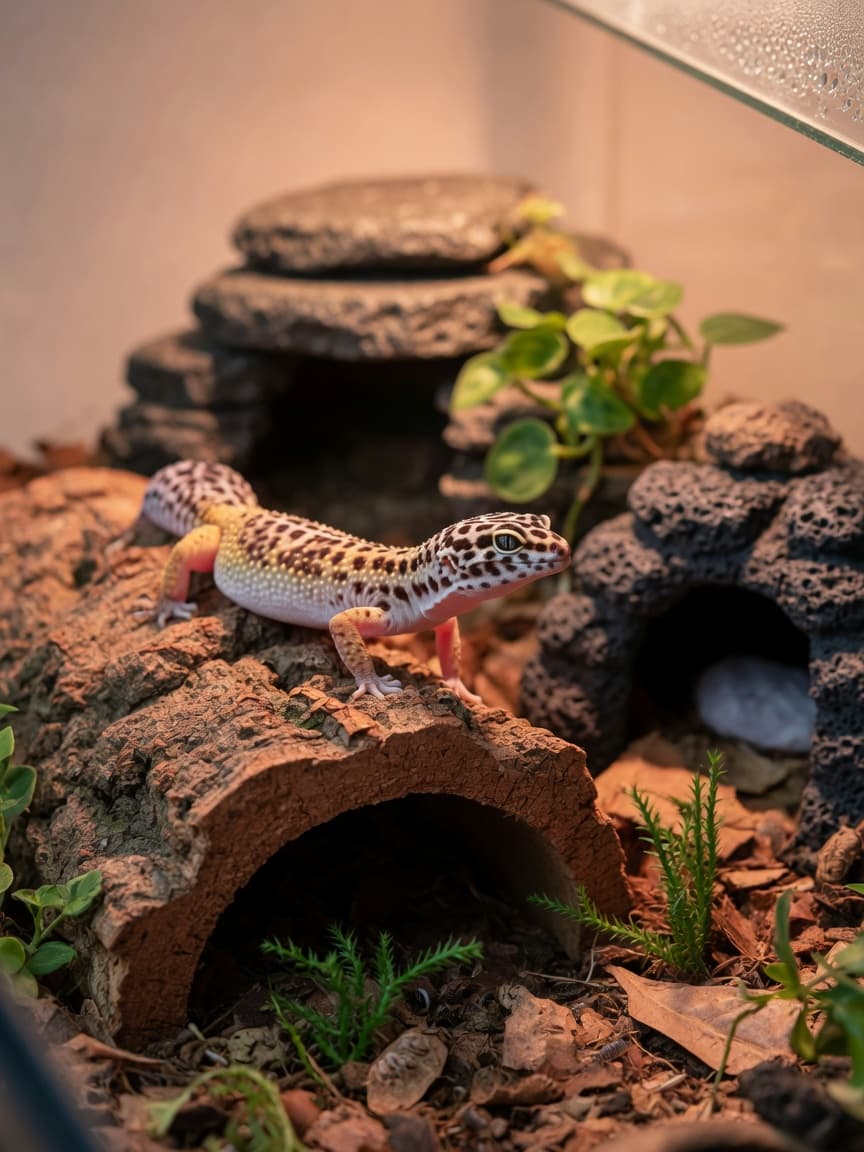
If you're considering a leopard gecko as a pet or already caring for one, you've likely wondered about UVB lighting. This question sits at the heart of modern reptile care, with passionate opinions on both sides. The truth is nuanced: whilst leopard geckos are primarily nocturnal and don't require UVB in the same way diurnal reptiles do, the evidence suggests that providing appropriate UVB lighting offers significant health benefits. Let's explore what the science tells us and how to make the best decision for your gecko.
Understanding UVB and Its Role
UVB (ultraviolet B) radiation is essential for synthesising vitamin D3, which in turn helps your gecko absorb calcium and maintain healthy bones. In the wild, leopard geckos are indeed nocturnal hunters, spending daylight hours sheltering in burrows where UVB exposure is minimal. This has led many keepers to assume that captive geckos don't need UVB at all. However, research increasingly suggests that even low levels of UVB exposure can support overall health and natural behaviours.
What Research Tells Us About Leopard Geckos and UVB
Recent studies indicate that leopard geckos can and do benefit from UVB exposure, particularly at lower intensities than required for diurnal species. Geckos exposed to appropriate UVB have demonstrated:
- Improved calcium metabolism and bone density
- Enhanced immune function
- More natural activity patterns and behaviours
- Better appetite regulation
- Increased reproduction success in breeding programmes
That said, leopard geckos don't need the intense UVB exposure required by bearded dragons or uromastyx. A lower, more subtle approach works best for these nocturnal species.
The Case for Providing UVB
Many experienced herpetologists now recommend including UVB as part of a comprehensive care plan. The reasoning is straightforward: whilst not strictly essential if you're providing excellent calcium supplementation, UVB represents natural conditions and supports physiological processes that evolved over millions of years. Think of it as offering your gecko the best possible chance at optimal health rather than merely surviving.
Additionally, providing a gentle day-night cycle with low-level UVB can help maintain natural circadian rhythms, which influences sleep, appetite, and digestive function.
How to Implement UVB Safely for Leopard Geckos
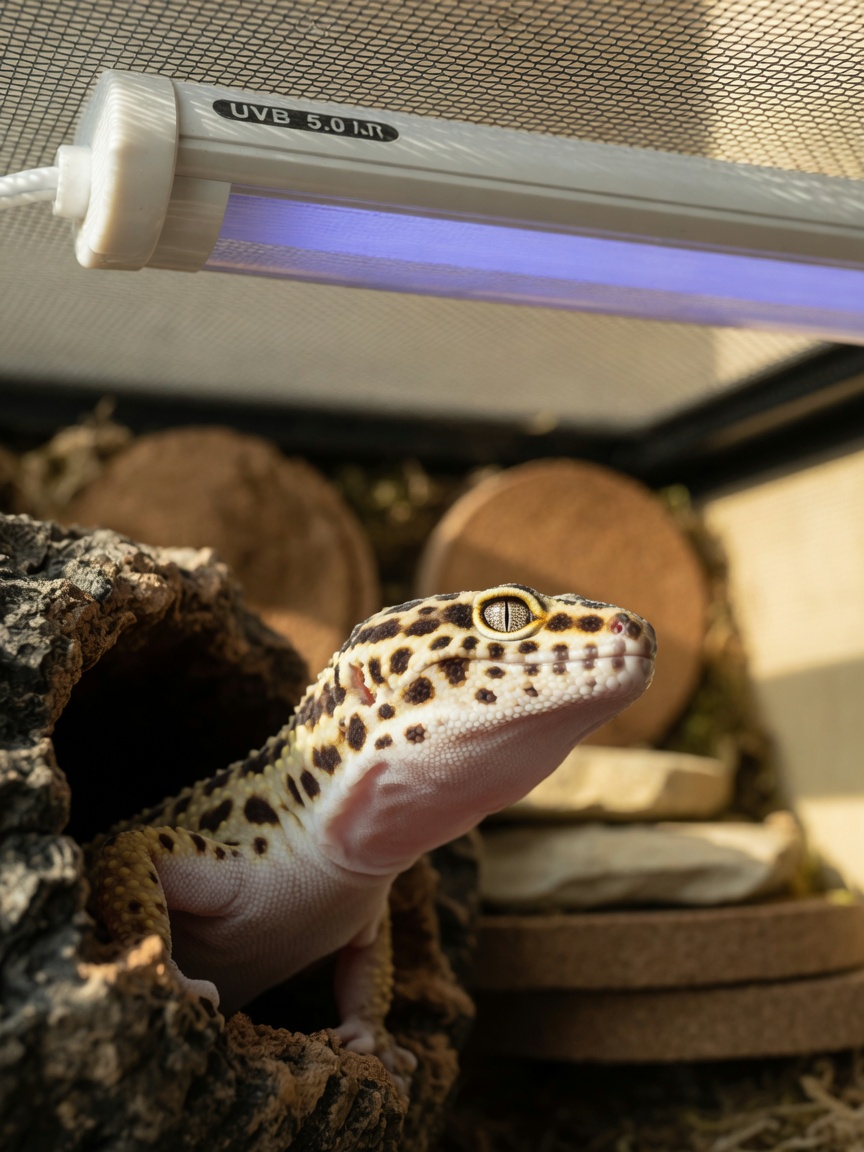
If you decide to offer UVB, implementation matters. Here's what you need to know:
- Choose low-output bulbs – Use 2-5% UVB bulbs (or T8 tubes in the 2.0-5.0 range), positioned 20-30 centimetres above your gecko's resting areas
- Provide hiding spots – Always ensure your gecko can retreat to dark shelters. Nocturnal species should never feel forced into light
- Limit exposure duration – Offer UVB for 8-12 hours daily with a proper dark period for rest
- Use appropriate fixtures – Standard glass or acrylic screens block most UVB, so use mesh or specialised enclosures if possible
- Monitor and adjust – Watch for behavioural changes and adjust intensity or duration if needed
The Non-UVB Alternative
If you choose not to provide UVB, your gecko can still thrive with meticulous husbandry. This approach requires:
- Regular calcium supplementation (3-4 times weekly)
- Calcium supplements with vitamin D3 included
- A varied, nutritious diet
- Consistent veterinary monitoring
Key Takeaways
Do leopard geckos need UVB? The honest answer is: not strictly, but they likely benefit from it. Modern evidence suggests that low-level UVB exposure supports natural health and behaviours. However, if you can't provide UVB, your gecko can live a healthy life with excellent supplementation and care. The choice ultimately depends on your individual circumstances, but many veterinarians and experienced keepers now recommend including gentle UVB as part of comprehensive leopard gecko care. Whatever you decide, consistency, proper supplementation, and regular veterinary checks remain the foundation of good gecko health.
```