
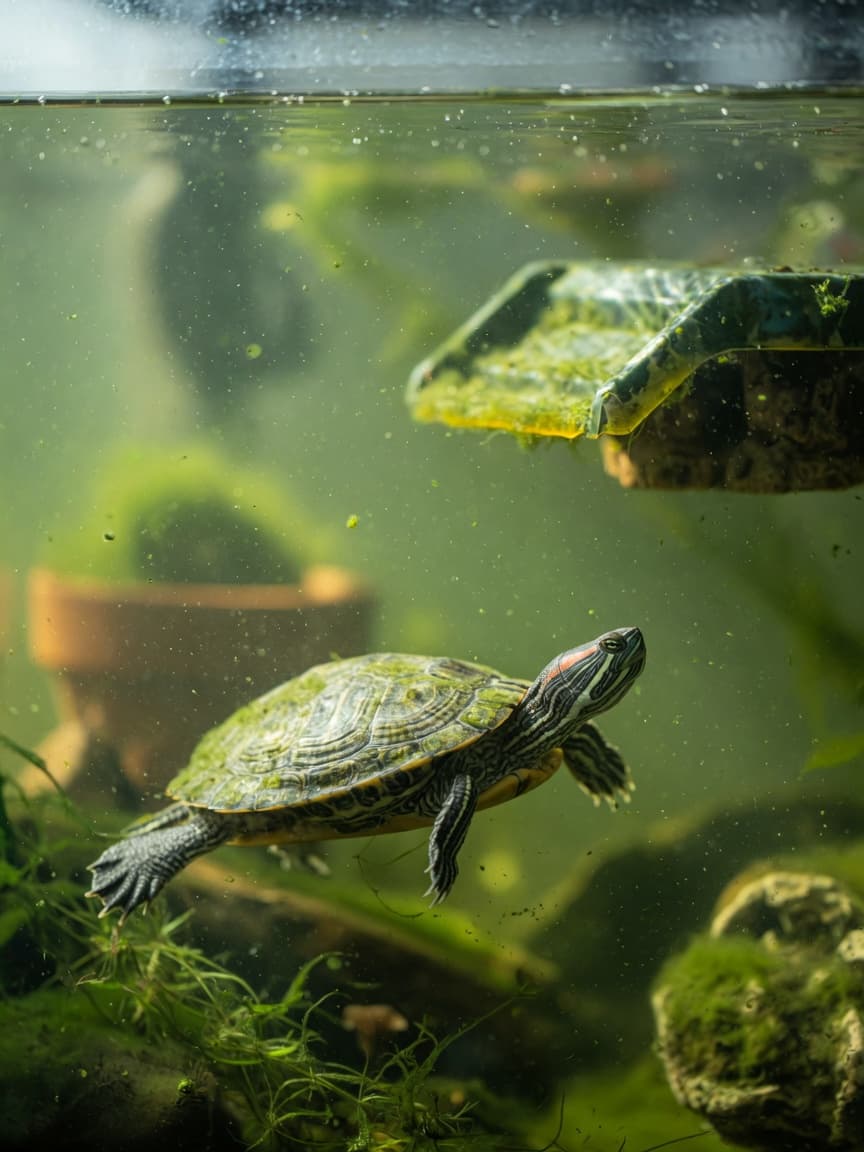
If you've noticed your turtle's tank water has turned an unpleasant shade of green, you're not alone. This common problem frustrates many turtle owners and indicates that something needs attention. The good news is that green tank water is entirely preventable once you understand what causes it. In this guide, I'll explain the science behind green water and show you exactly how to keep your turtle's environment clean, healthy, and crystal clear.
Understanding the Green Water Problem
Green water in turtle tanks is caused by algae bloom—a rapid multiplication of microscopic algae suspended throughout the water. Unlike the algae that grows on tank surfaces (which is often brown or green and easier to spot), this suspended algae makes the water look murky and gives it that characteristic green tint. This happens when conditions favour algae growth, which ironically, often means your tank has plenty of nutrients that should support your turtle's health.
The Main Culprits Behind Algae Growth
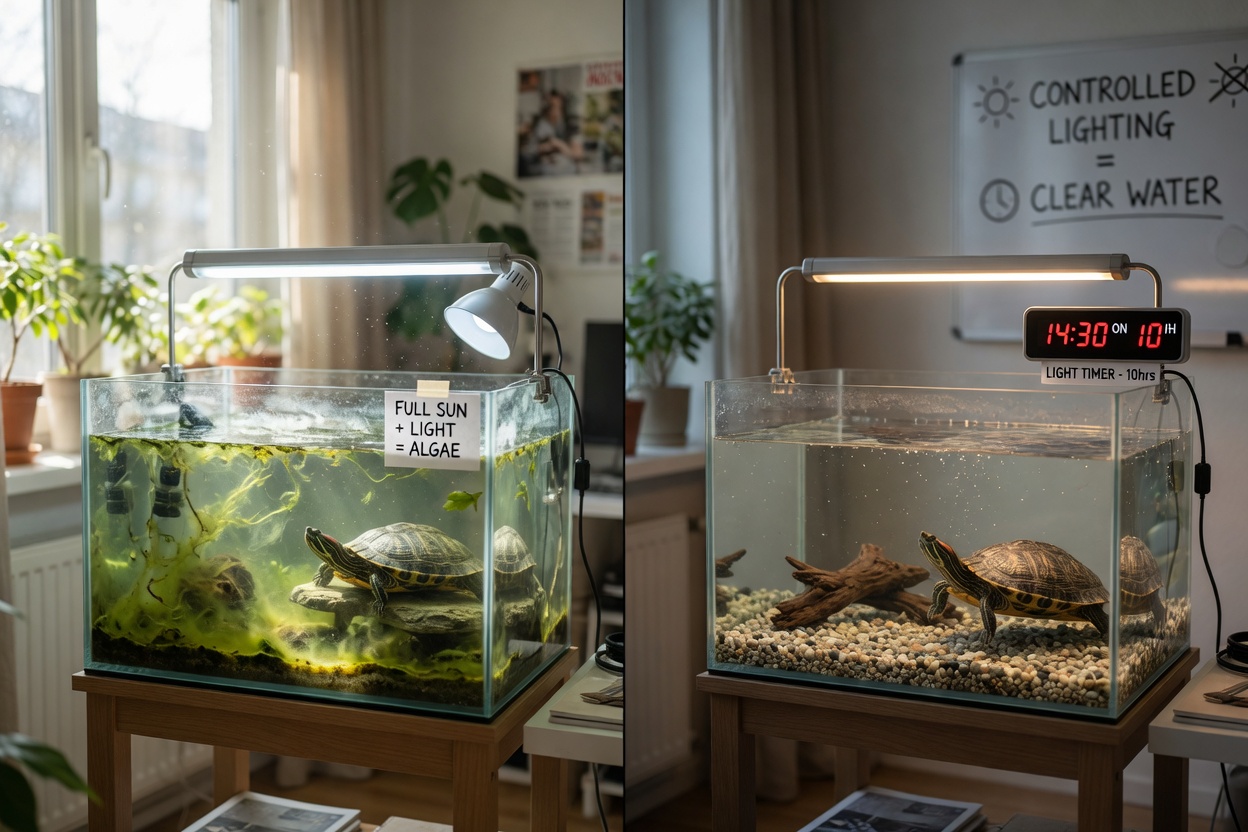
- Excess Light Exposure: Algae thrives on light. If your tank receives direct sunlight or you're using the tank light for more than 10-12 hours daily, you're inadvertently creating an algae factory. Algae needs light to photosynthesise, so excessive illumination is often the primary cause.
- Nutrient Build-up: Turtle waste contains nitrogen and phosphorus—essential nutrients that algae loves. Without regular water changes, these nutrients accumulate and fuel algae blooms. The more turtles you have, the faster this happens.
- Poor Water Circulation: Stagnant water is an algae magnet. Without adequate filtration and water movement, dead spots develop where debris and nutrients settle, creating perfect algae-growing conditions.
- Inadequate Filtration: Your filter might be undersized for your tank volume or not changed frequently enough. Filters should process the entire tank volume at least three times per hour to effectively remove suspended particles and excess nutrients.
- Warm Water Temperature: Whilst turtles need warm water, temperatures above 28°C accelerate algae growth significantly. Maintaining the correct temperature range (typically 24-28°C depending on species) helps keep algae in check.
Practical Solutions for Clear Water
Adjust Your Lighting Schedule: Reduce light exposure to 8-10 hours daily. Use a timer to maintain consistency, and avoid placing the tank where it receives direct sunlight. Your turtle needs light to regulate their circadian rhythms, but less is often better for water clarity.
Perform Regular Water Changes: This is your first line of defence. Change 25-50% of the tank water every week, depending on tank size and turtle population. More frequent, smaller changes are better than infrequent large ones.
Upgrade Your Filtration System: Invest in a filter rated for a tank larger than yours. Biological filtration (using beneficial bacteria) combined with mechanical filtration (removing particles) works best. Change filter media according to manufacturer recommendations—usually every 2-4 weeks.
Monitor Water Temperature: Use a reliable thermometer and maintain temperature within your species' optimal range. Cooler water naturally inhibits algae growth whilst keeping your turtle healthy.
Additional Prevention Strategies
- Consider adding aquatic plants—they consume the same nutrients algae needs, creating natural competition
- Avoid overfeeding, as uneaten food decays and adds excess nutrients
- Clean the tank interior weekly, including decorations and surfaces where algae settles
- Use a protein skimmer if your budget allows—these devices remove organic waste before it breaks down
Key Takeaways for Clear, Healthy Tank Water
Green water isn't a sign of failure—it's simply your tank telling you it needs adjustment. By managing light exposure, maintaining consistent water changes, upgrading filtration if necessary, and keeping temperature stable, you'll restore clarity within days to weeks. Remember that prevention is far easier than cure. A well-maintained turtle tank requires approximately 15-20 minutes of maintenance weekly, which is a small investment for your turtle's health and your viewing pleasure. Your turtle deserves crystal-clear water, and with these strategies, that's entirely within your reach.