
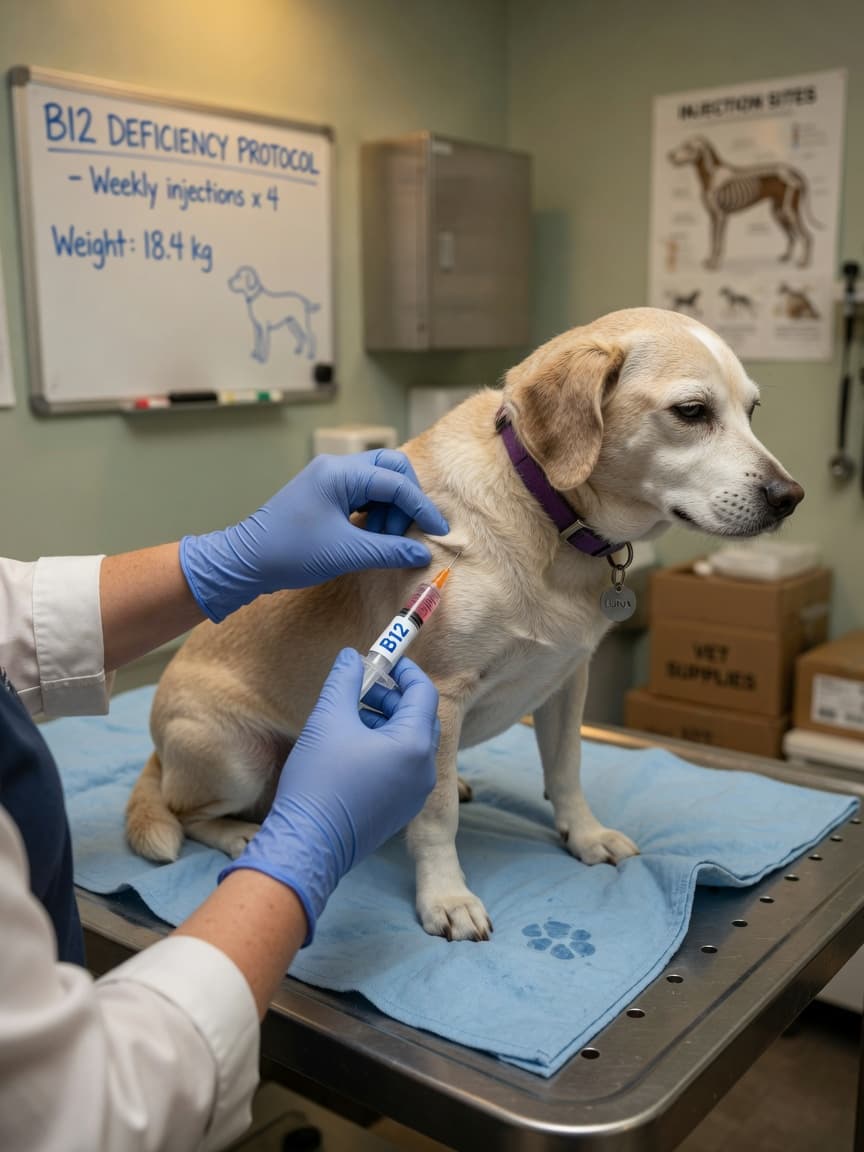
What Is Vitamin B12 and Why Is It Important?
Vitamin B12, known scientifically as cobalamin, is a water-soluble B vitamin that plays an indispensable role in several fundamental biological processes. It functions as a cofactor for enzymes involved in DNA synthesis and methylation, neurological integrity (myelin sheath maintenance), red blood cell production in the bone marrow, and the health and repair of gastrointestinal epithelial cells. Because the GI tract has one of the highest cell turnover rates in the body, adequate B12 is particularly critical for maintaining intestinal architecture.
Cobalamin deficiency does not always produce dramatic signs immediately, but over time it causes a cascade of problems affecting the nervous system, the gut, the blood, and overall body condition — making it one of the more significant and underdiagnosed nutritional deficiencies in small animal practice.
How Dogs and Cats Absorb Vitamin B12
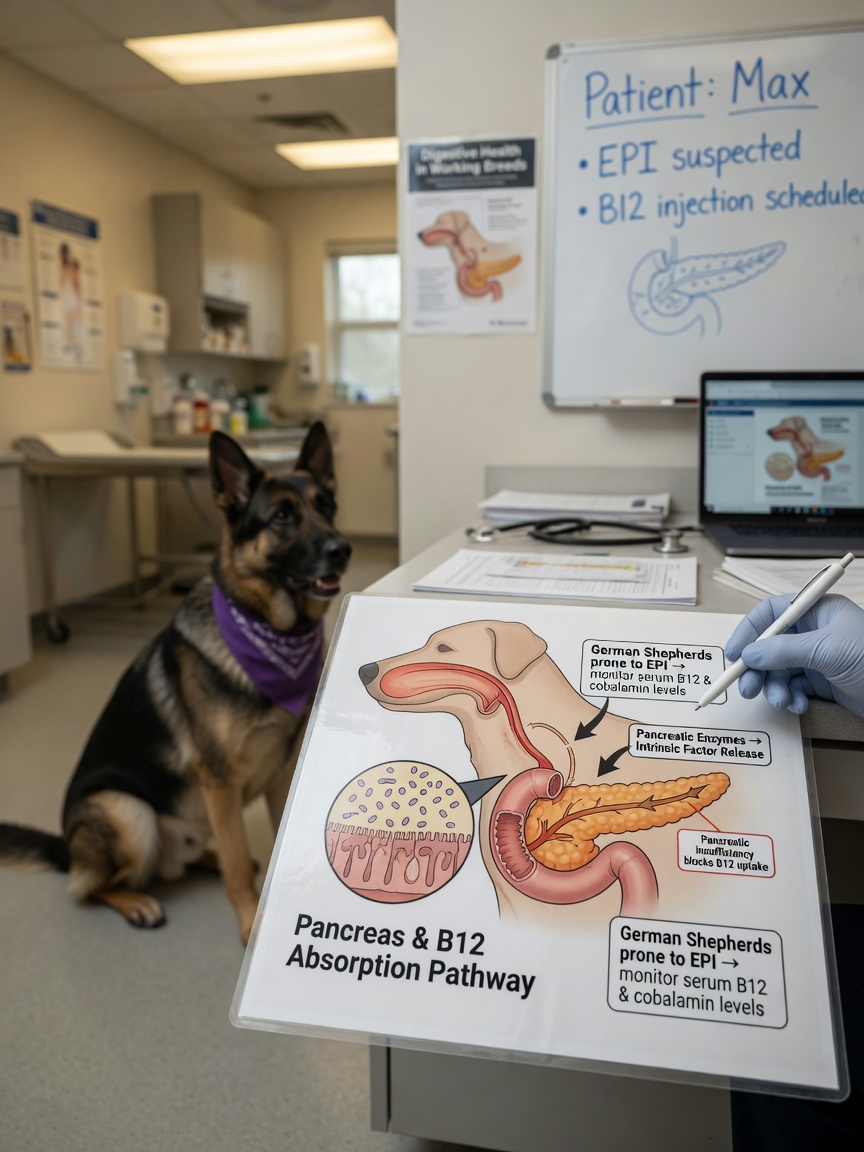
The absorption of B12 is a complex, multi-step process. In the stomach and small intestine, dietary B12 is released from food proteins and bound to a carrier protein called intrinsic factor (IF). The IF-B12 complex is then recognised by specific receptors in the ileum (the final section of the small intestine), where it is absorbed into the bloodstream.
Importantly, the source of intrinsic factor differs between species. In dogs, intrinsic factor is produced primarily by the exocrine pancreas. In cats, both the stomach and the pancreas contribute to IF production. This anatomical difference has significant clinical implications: in dogs, disease of the pancreas (particularly exocrine pancreatic insufficiency, EPI) is the most common route to B12 deficiency, whilst in cats, primary GI disease tends to predominate.
Causes of Vitamin B12 Deficiency
Exocrine Pancreatic Insufficiency (EPI)
EPI is the leading cause of B12 deficiency in dogs. It results from insufficient production of digestive enzymes by the pancreas, leading to maldigestion, malabsorption, and — because IF is produced in the pancreas — failure of B12 absorption. German Shepherd Dogs are predisposed to EPI due to pancreatic acinar atrophy, but any breed can be affected. Virtually all dogs with EPI will develop cobalamin deficiency without supplementation, and low B12 levels can impair response to pancreatic enzyme replacement therapy.
Severe Small Intestinal Disease
Any condition that damages the ileum or significantly reduces the absorptive surface of the small intestine can impair B12 uptake even when pancreatic function is normal. Key conditions include:
- Inflammatory bowel disease (IBD)
- Intestinal lymphoma
- Protein-losing enteropathy (PLE)
- Chronic intestinal dysbiosis — bacterial overgrowth can consume dietary B12 before it reaches absorption sites
Dietary Deficiency
Dietary B12 deficiency is rare in dogs and cats eating commercially complete foods, as animal-derived ingredients are rich in cobalamin. It can theoretically occur in animals fed exclusively plant-based diets without supplementation, as B12 is found almost exclusively in foods of animal origin.
Clinical Signs

B12 deficiency presents across multiple body systems, and signs are often non-specific, making it easy to overlook as a contributing factor:
- Weight loss: Often progressive despite apparently normal or increased appetite in EPI cases
- Poor appetite and generalised malaise
- Chronic diarrhoea: Frequently the presenting complaint, particularly in cats with IBD and concurrent B12 deficiency
- Failure to thrive: Young animals may fail to grow normally
- Neurological signs: Proprioceptive deficits (the animal knuckling over or scuffing the feet), ataxia, and in severe or prolonged deficiency, seizures — reflecting impaired myelin synthesis
- Anaemia: Megaloblastic anaemia can develop due to impaired DNA synthesis in red blood cell precursors, though this is less commonly noted in veterinary patients than in humans
Diagnosis
Serum cobalamin concentration is the standard diagnostic test. Established deficiency thresholds are:
- Dogs: Serum cobalamin below 250 ng/L (pg/mL) is considered deficient; values between 250 and 350 ng/L may warrant supplementation in symptomatic individuals
- Cats: Serum cobalamin below 290 ng/L is considered deficient
B12 testing should be performed as part of the diagnostic work-up for any dog or cat with chronic GI signs, unexplained weight loss, or neurological abnormalities — particularly where EPI, IBD, or lymphoma is suspected or confirmed. Serum folate is often measured simultaneously, as the combination of low B12 and elevated folate is classically associated with dysbiosis, whilst low B12 with normal or low folate points more strongly to ileal disease or pancreatic insufficiency.
Additional diagnostics to identify the underlying cause may include TLI (trypsin-like immunoreactivity) to assess pancreatic exocrine function, abdominal ultrasound, and intestinal biopsy.
Treatment
Injections vs Oral Supplementation
Historically, cobalamin was administered by subcutaneous injection (cyanocobalamin or hydroxycobalamin), bypassing the compromised intestinal absorption mechanism entirely. Weekly injections are typically given for 6 weeks, followed by monthly maintenance dosing.
However, evidence from veterinary clinical studies — including work by the Gastrointestinal Laboratory at Texas A&M University — has demonstrated that oral cobalamin supplementation is effective in dogs with EPI and GI disease, likely because a small proportion of B12 is absorbed passively across the intestinal wall independently of intrinsic factor. This finding has made management more straightforward for many owners.
Cobalequin is an EU-available oral supplement formulated for dogs and cats, used in clinical practice across Europe as an alternative to injections. Dosing is once daily and response is monitored by repeat serum B12 measurement after 4–8 weeks.
Monitoring and Long-Term Management
Serum cobalamin should be rechecked 4–8 weeks after commencing supplementation to confirm an adequate response. In animals with EPI or chronic enteropathy, lifelong supplementation is often required even when the underlying condition is managed, as the absorptive deficit may be permanent. Animals that respond well to B12 supplementation often show marked improvement in appetite, body weight, and stool consistency within weeks — a response that in itself supports the diagnosis.
A Note on FEDIAF Context
FEDIAF nutritional guidelines specify minimum B12 requirements for complete dog and cat foods. These requirements assume normal GI absorption, and are met by all commercially complete diets containing adequate animal protein. The deficiencies discussed in this article arise not from dietary inadequacy in otherwise healthy animals, but from impaired absorption — underscoring the importance of identifying and managing the root cause rather than simply changing the diet.
Written by Julia Wrenfield, pet health writer at ForPetsHealthcare.com. This article is for informational purposes only and does not replace professional veterinary advice.