
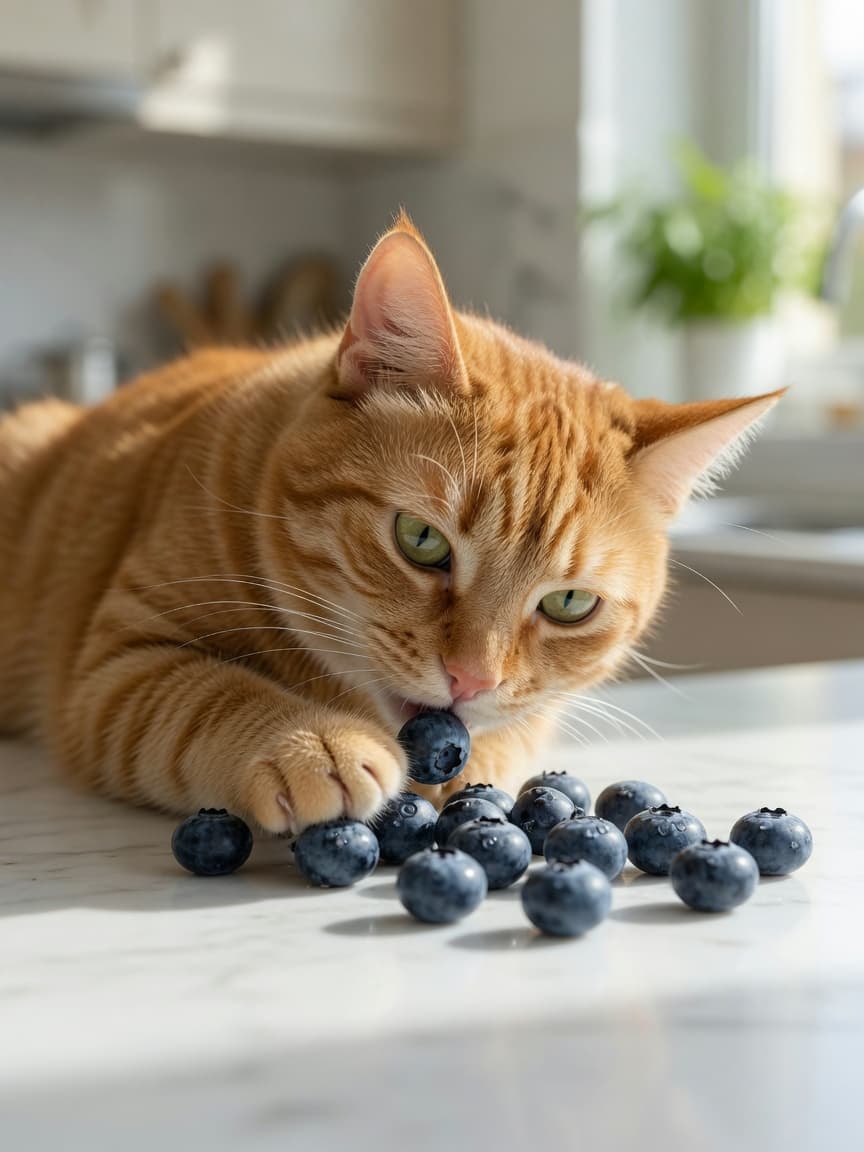
Can Cats Eat Blueberries? What You Need to Know
Are Blueberries Safe for Cats?
Blueberries do not appear on any major veterinary toxicology lists — they are not toxic to cats. The ASPCA does not classify blueberries as a dangerous food for felines. So if your cat has snatched a blueberry off the counter or shows curiosity about the fruit, you do not need to panic.
That said, "not toxic" is not the same as "beneficial." The conversation around blueberries and cats requires a clear understanding of feline biology, which is fundamentally different from our own.
Why Cats Cannot Really Benefit from Antioxidants in Blueberries
Blueberries are celebrated in human nutrition for their high anthocyanin content — plant-based antioxidants linked to reduced inflammation and cellular protection. Pet food marketing has borrowed this framing to promote "superfoods" for animals, including cats.
The problem is that cats are obligate carnivores. Their digestive systems and metabolic pathways evolved entirely around animal protein and fat. Unlike humans or even dogs, cats:
- Lack sufficient amylase in their saliva to begin breaking down plant starches efficiently.
- Have a shortened intestinal tract that limits fermentation and absorption of plant compounds.
- Cannot synthesize certain essential nutrients (taurine, arachidonic acid, vitamin A from beta-carotene) from plant sources at all.
This means the antioxidants in blueberries, however impressive in a human context, are largely irrelevant to your cat's health. Research on one-carbon metabolism in strict carnivores confirms that the pathways used to process many plant-derived micronutrients simply do not function the same way in cats as they do in omnivores.
Do Cats Even Like Blueberries?
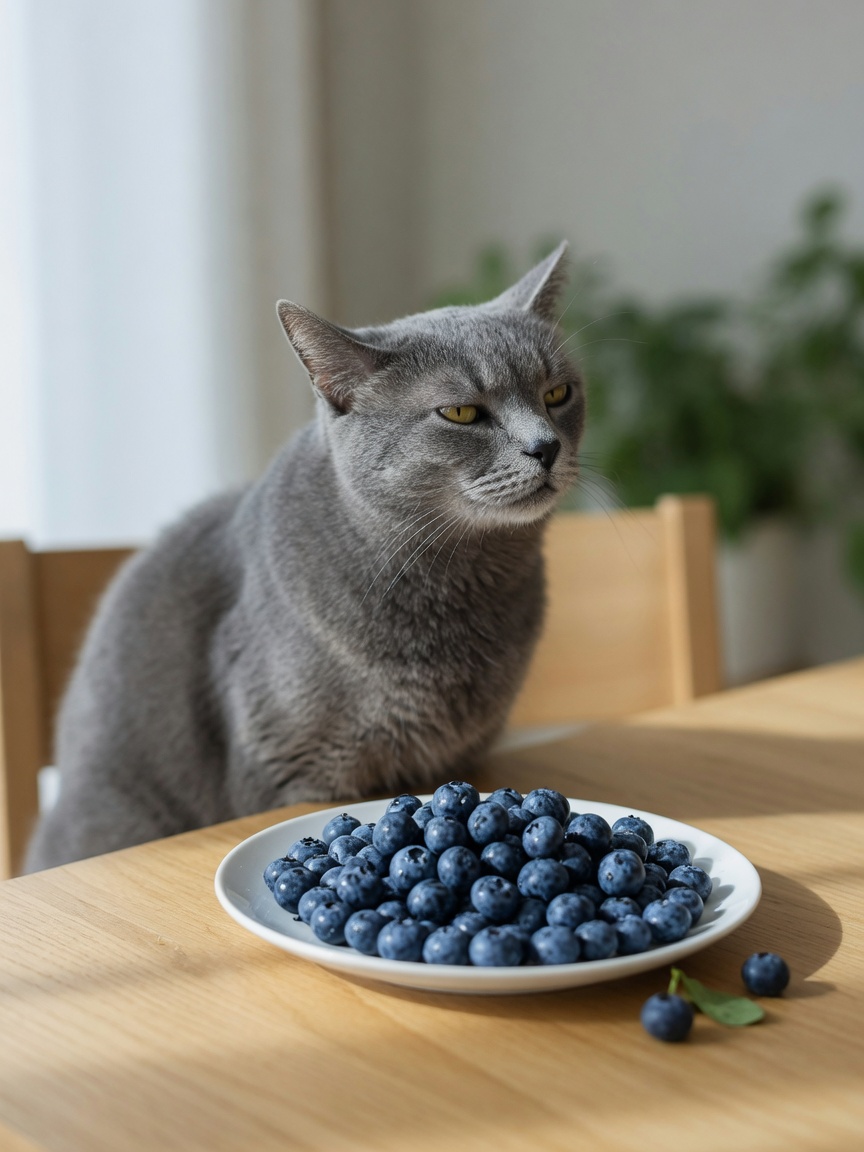
Cats lack functional sweet taste receptors — they are one of the few mammals that literally cannot taste sweetness. Most cats show no interest in fruit at all. If your cat does investigate or eat a blueberry, it is almost certainly responding to the texture, smell, or simply the novelty of a new object, not to any flavor appeal.
Some cats will eat almost anything placed in front of them out of curiosity. This does not mean the food is appropriate for regular consumption.
Potential Risks of Feeding Blueberries to Cats
While a single blueberry is unlikely to cause harm, there are a few things to keep in mind:
- Choking hazard: Whole blueberries are round and firm. For small cats or kittens, they can present a minor choking risk. If you offer one, consider cutting it in half.
- Sugar content: Blueberries contain natural sugars. Cats do not need dietary sugar, and regular exposure — even in small amounts — could be a concern for cats prone to obesity or diabetes.
- Gastrointestinal upset: Any unfamiliar food can cause loose stools or vomiting in sensitive cats. If your cat eats a blueberry and develops digestive symptoms, discontinue and monitor.
- Displacement of proper nutrition: Offering treats — even harmless ones — too frequently can reduce a cat's appetite for nutritionally complete food.
How Many Blueberries Can a Cat Eat?
If you want to let your cat try a blueberry, limit it to 1–2 small berries on an occasional basis — not daily, not weekly. There is no health reason to include blueberries in your cat's diet at all. They provide no essential nutrients that a meat-based diet does not already supply in a more bioavailable form.
Think of it this way: if your cat shows interest, one blueberry once in a while causes no harm. But do not go out of your way to add fruit to your cat's meals.
What About Blueberry-Flavored Cat Food or Treats?
Some commercial cat treats include blueberry extract or blueberry flavoring. These are generally present in tiny amounts and are unlikely to cause harm. However, their inclusion is more of a marketing decision than a nutritional one. When choosing treats or food for your cat, prioritize high animal protein content over ingredient novelty. Look for named meat sources (chicken, salmon, turkey) as the first ingredients.
Ver alimentos para gatos en Zooplus →Better Treat Alternatives for Cats
If you want to give your cat an occasional treat, the best options are always animal-based. Small pieces of cooked chicken, plain cooked fish, or commercial treats made from freeze-dried meat are far more aligned with what a cat's body is designed to process. These provide protein and amino acids that cats actually need, rather than plant compounds they cannot use effectively.
Cats thrive on consistency and nutritional completeness. A high-quality complete cat food — wet or dry — formulated to AAFCO or FEDIAF standards covers everything your cat needs. Treats, regardless of how "natural" they sound, should make up no more than 10% of your cat's daily caloric intake.
Ver alimentos para gatos en Zooplus →- Blueberries are not toxic to cats — 1–2 berries occasionally is safe.
- Cats are obligate carnivores and receive no meaningful nutritional benefit from blueberries or their antioxidants.
- Cats cannot taste sweetness, so any interest in blueberries is curiosity, not craving.
- Risks are minor but real: sugar, potential GI upset, and choking in small cats.
- Plant foods are non-essential for cats — always prioritize a complete, meat-based diet.
- If your cat eats a blueberry, no emergency action is needed. Simply monitor for any digestive changes.
References
- Verbrugghe A, Bakovic M. "Peculiarities of one-carbon metabolism in the strict carnivore, the domestic cat (Felis catus)." Nutrients. 2013;5(7):2811–2835. PMID: 23873295.
- Morris JG. "Idiosyncratic nutrient requirements of cats appear to be diet-induced evolutionary adaptations." Nutr Res Rev. 2002;15(1):153–168. PMID: 19087381.
- Li X, Li W, Wang H, et al. "Pseudogenization of a sweet-receptor gene accounts for cats' indifference toward sugar." PLoS Genet. 2005;1(1):27–35. PMID: 16103917.