
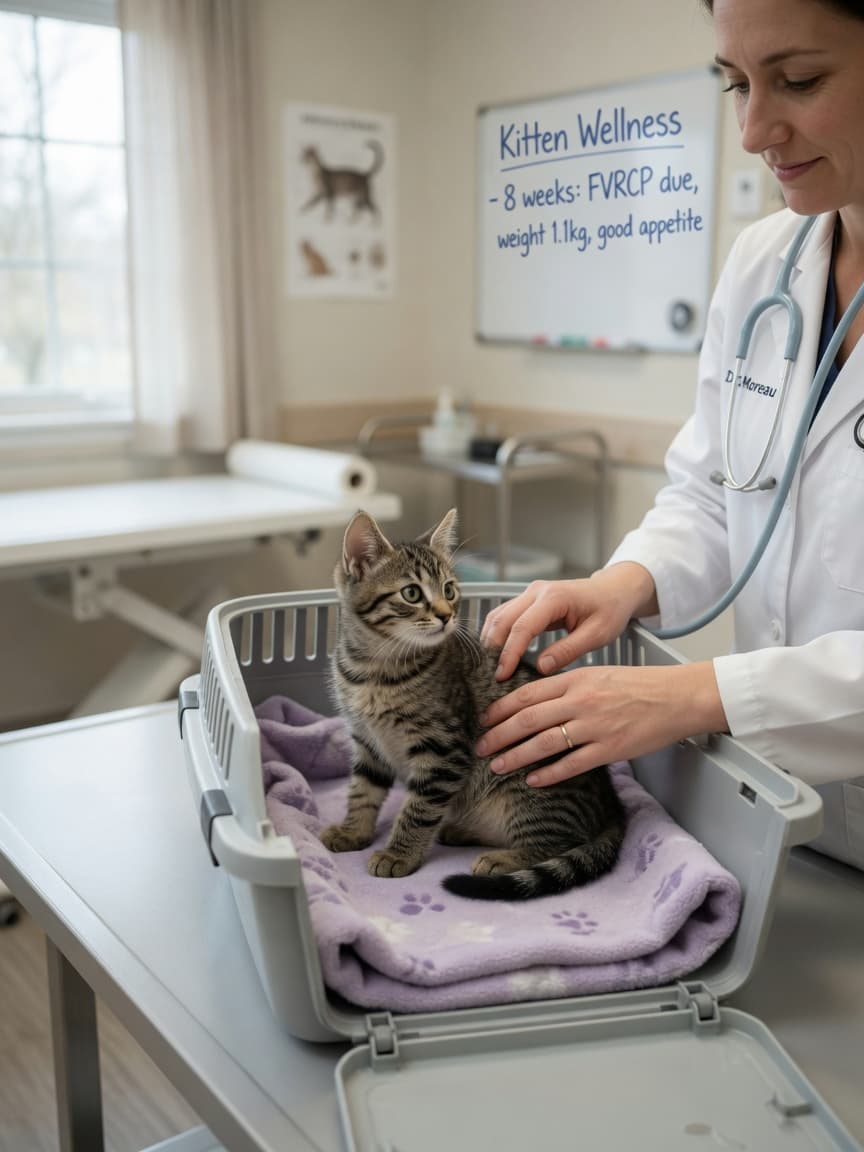
Kitten First Vet Visit: What to Expect & How to Prepare
- When: Within 1–3 days of bringing kitten home (ideally before, if possible)
- Bring: Stool sample, any records from breeder/shelter, a list of questions
- Duration: 30–60 minutes
- Cost range: $50–$150 for the exam; additional costs for vaccines, deworming, and tests
- Goal: Establish baseline health, start vaccine series, build a relationship with your vet
By Julia Wrenfield, Pet Wellness Researcher | Published June 25, 2026
The first veterinary visit sets the tone for your kitten's lifelong relationship with healthcare. Done well, it is a calm, informative experience that leaves you confident and your kitten unstressed. Done poorly — rushed, frightening, or missing key steps — it can make future vet visits unnecessarily difficult. Whether you are a first-time kitten owner or it has simply been a while since you navigated a new kitten's medical needs, this guide covers everything: what happens at the appointment, what to bring, what questions to ask, how to prepare your kitten for the journey, and what it is all likely to cost.
When Should You Go?
Ideally, schedule your kitten's first vet visit before you bring them home — or within 24–72 hours of arrival. Many adoption contracts and purchase agreements require a health check within a specific window. More importantly, early detection of health problems (parasites, heart murmurs, infections, developmental issues) is far easier to address than problems caught weeks later. Even if your kitten appears completely healthy, that appearance can be deceiving — many common kitten conditions, from intestinal parasites to upper respiratory infections, are not visually obvious until they become significant.
Choosing the Right Vet
Not all veterinary practices are equally cat-friendly. Look for a practice that has achieved Cat Friendly Practice designation (from the International Society of Feline Medicine or the American Association of Feline Practitioners) or at minimum designates separate waiting areas for cats and dogs. Stress from a dog-filled waiting room can be avoided entirely with feline-specific or fear-free certified practices, and the difference to a kitten's first experience is substantial.
How to Prepare Your Kitten for the Trip
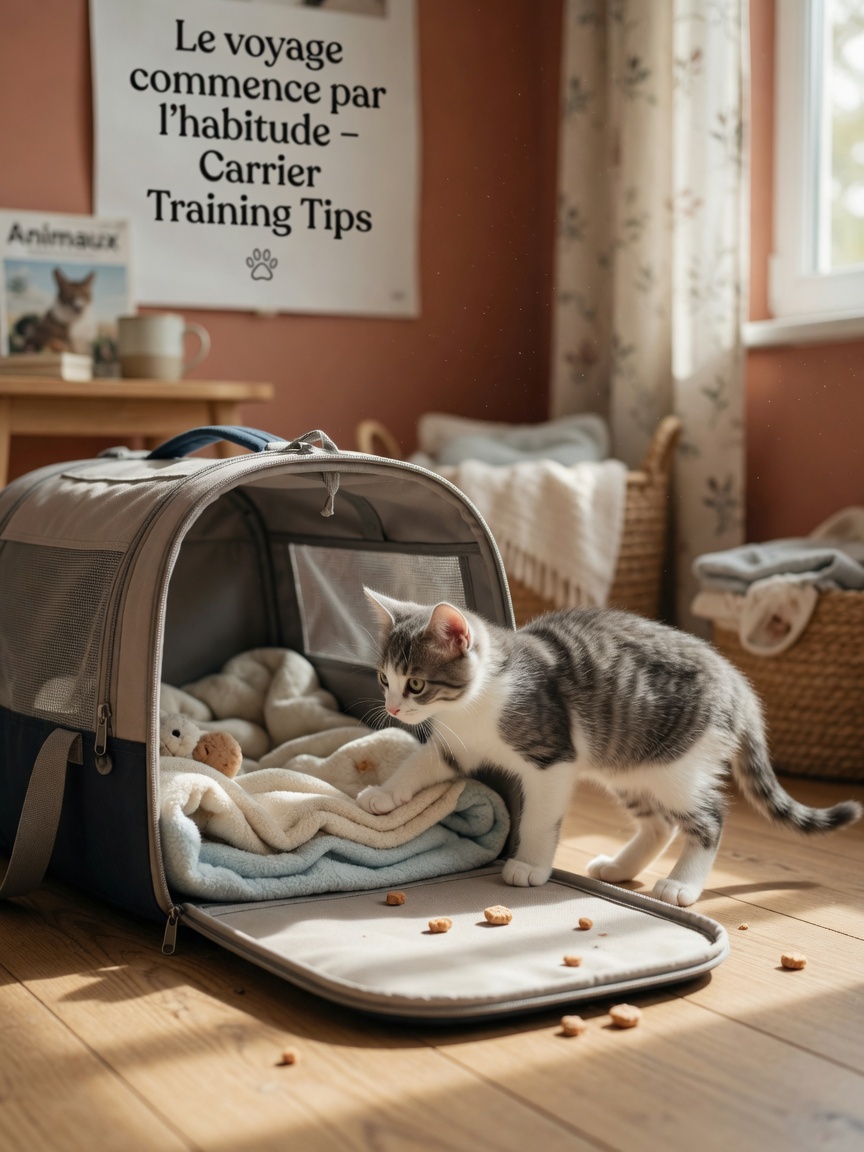
Carrier Acclimation (Start at Least 3–5 Days Before)
The carrier should not be a place your kitten only sees before stressful events. Leave it out in your home with the door open, a soft blanket inside, and treats scattered near and inside it. Let your kitten explore and sleep in it voluntarily. By the time the appointment arrives, the carrier will be a familiar, comfortable space rather than a trap. This single step dramatically reduces travel stress.
Minimize Pre-Trip Feeding
Feeding a large meal right before car travel often leads to nausea and vomiting. A light meal 2–3 hours before travel is appropriate for most kittens. Tiny kittens under 3 months should not be fasted significantly, as hypoglycemia is a real risk.
Cover the Carrier
Draping a blanket over the carrier reduces visual stimulation and helps keep the kitten calmer in the car and waiting room. Spray the inside of the blanket with a feline pheromone product (Feliway) 30 minutes before travel — the synthetic calming pheromone can reduce travel anxiety in cats.
What Happens at the First Appointment
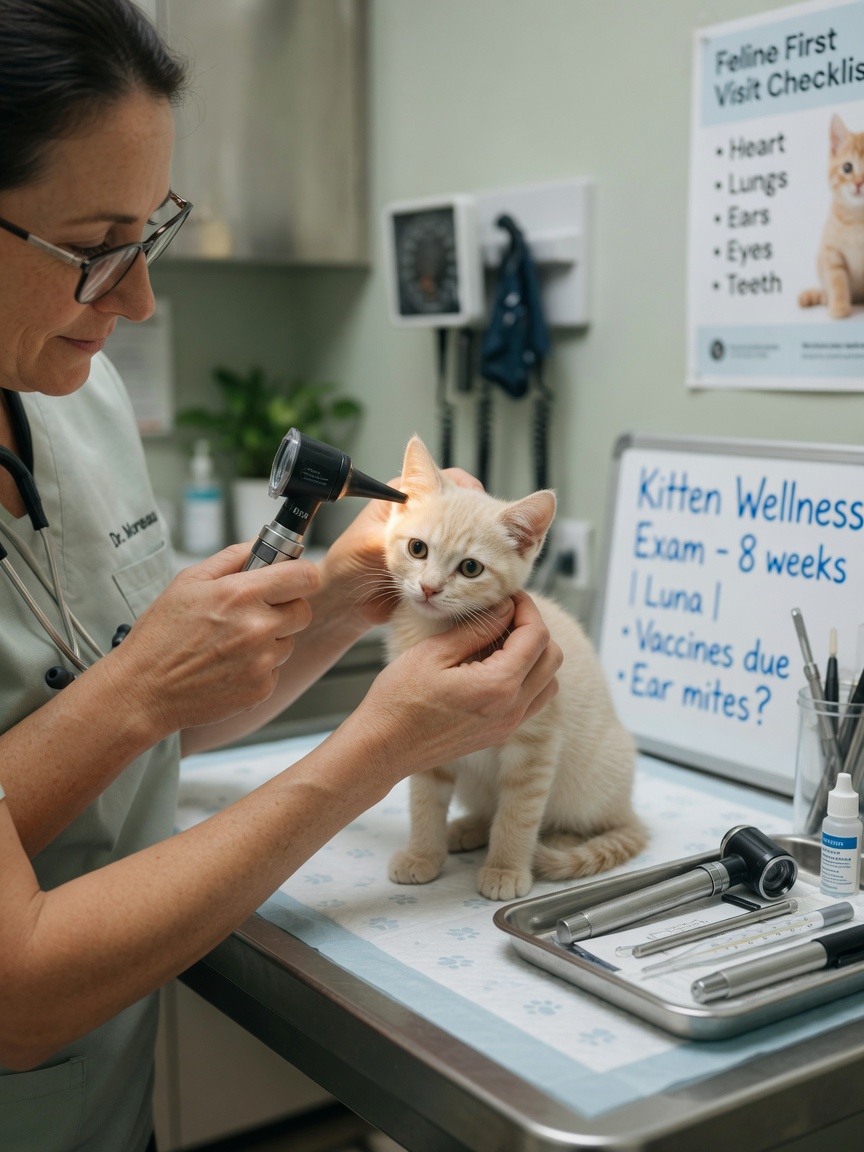
Physical Examination
The vet will perform a thorough nose-to-tail physical examination, assessing:
- Eyes: Discharge, cloudiness, conjunctivitis, signs of herpesvirus or chlamydia
- Ears: Ear mite infection (dark crumbly debris), bacterial or yeast infection
- Nose/throat: Congestion, discharge, signs of upper respiratory infection
- Mouth: Teeth and bite alignment, gum color, signs of stomatitis
- Heart and lungs: Murmur auscultation, respiratory rate and effort
- Abdomen: Palpation for organ size, gas, or pain
- Skin and coat: Ringworm, fleas, dermatitis, parasites
- Musculoskeletal: Limb symmetry, gait, any developmental abnormalities
- Genitalia: Sex confirmation, cryptorchidism check in male kittens
Parasite Testing and Treatment
Intestinal parasites are extremely common in kittens — roundworms (Toxocara cati) infect the majority of kittens either in utero or through nursing. Bring a fresh stool sample (collected within 24 hours, stored in a sealed bag in the refrigerator). The vet will perform a fecal flotation or fecal PCR test to check for roundworms, hookworms, giardia, coccidia, and other parasites. Most vets will also administer a routine dewormer even if the sample appears negative, given the prevalence.
Vaccination
Depending on your kitten's age and what vaccines they have already received from the breeder or shelter, the vet will administer the appropriate vaccine in the series — typically FVRCP at the first visit, with additional vaccines scheduled. Bring any paperwork from the breeder or shelter documenting prior vaccines. Vet visits are also the time to establish a schedule for the rest of the kitten series (see our complete kitten vaccination guide).
FeLV/FIV Testing
The vet may recommend testing your kitten for feline leukemia virus (FeLV) and feline immunodeficiency virus (FIV), particularly if the kitten's origin is unknown or if they came from a shelter. This simple blood test provides important baseline information and determines whether FeLV vaccination is appropriate (infected cats should not receive the FeLV vaccine).
Questions to Ask Your Vet
Come prepared with a list. Good questions for the first kitten visit include:
- What vaccine schedule do you recommend for this kitten's lifestyle?
- When should I schedule the spay/neuter?
- What parasite prevention do you recommend (flea, tick, heartworm — if applicable)?
- What food do you recommend, and how much should I feed?
- What are the signs of illness I should watch for in the first weeks?
- How do I handle the introduction if I have other pets?
- Is this kitten an appropriate weight for their age?
Understanding the Costs
| Service | Typical US Cost | Typical EU Cost |
|---|---|---|
| Physical exam | $50–$100 | €40–€80 |
| FVRCP vaccine | $20–$40 | €15–€35 |
| Fecal test | $25–$55 | €20–€45 |
| Deworming | $15–$30 | €10–€25 |
| FeLV/FIV test | $40–$75 | €30–€60 |
| Microchipping | $40–$60 | €20–€50 |
- Book the first vet visit within 1–3 days of bringing your kitten home — don't wait until problems arise.
- Bring a fresh stool sample, any vaccination records, and a written list of questions.
- Start carrier acclimation 3–5 days before the appointment to reduce travel stress.
- The first visit covers physical exam, parasite testing, first vaccines, and baseline health screening.
- Budget $150–$300+ for the first visit when vaccines, testing, and deworming are included.
References
- Rodan I, et al. "AAFP and ISFM feline-friendly handling guidelines." Journal of Feline Medicine and Surgery. 2011;13(5):364-375. PMID: 21515215
- Little S. "The Cat: Clinical Medicine and Management." Elsevier Saunders, 2012. Chapter 3: Preventive Healthcare.
- Companion Animal Parasite Council (CAPC). "CAPC Recommendations for Kittens." capcvet.org. Accessed June 2026.