
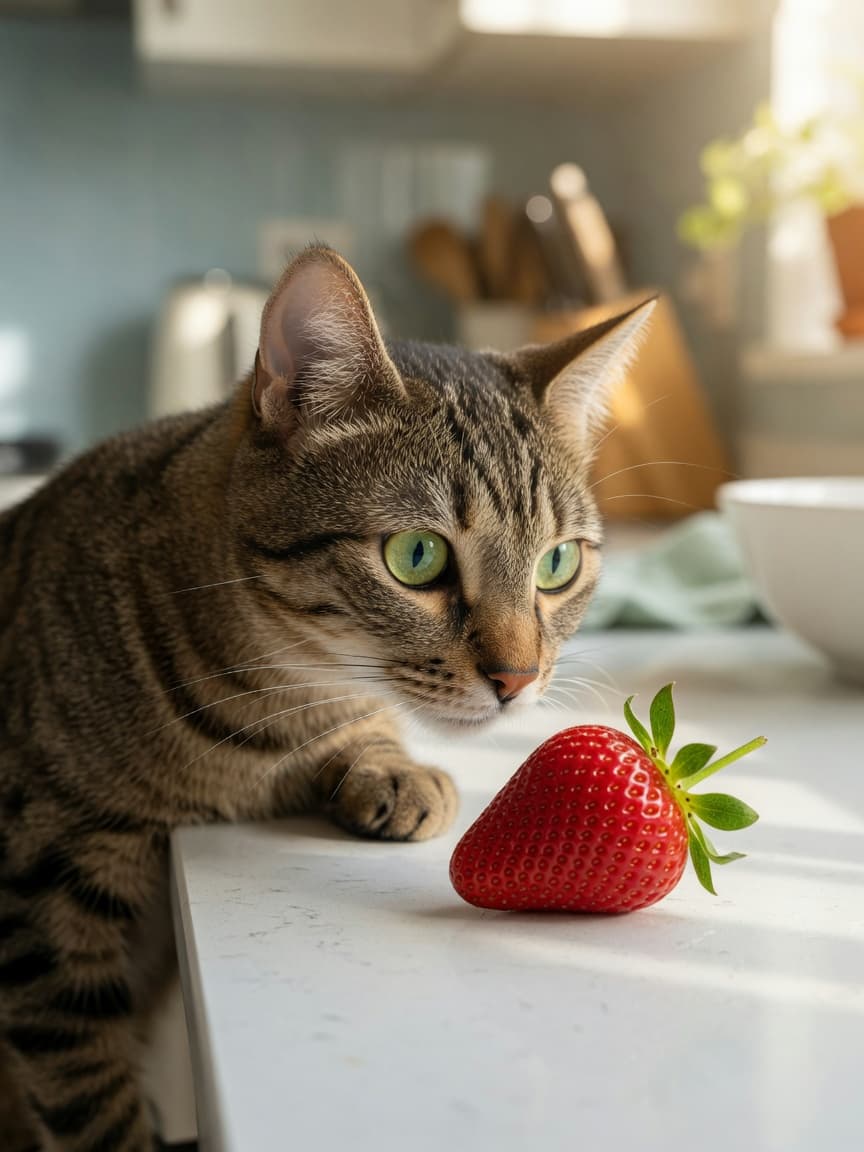
As a cat owner, you've probably wondered whether it's safe to share your favourite fruits with your feline friend. Strawberries are a delicious, nutrient-rich treat for humans, but can cats enjoy them too? The short answer is yes — in moderation. Unlike some fruits and foods that are genuinely toxic to cats, strawberries are generally safe. However, there are important guidelines you should follow to ensure your cat can enjoy this juicy treat without any adverse effects. Let's explore what you need to know about cats and strawberries.
Are Strawberries Safe for Cats?
Strawberries are non-toxic to cats, which means they won't poison your pet if consumed in small quantities. This is good news if your cat is curious about the fruit sitting on your kitchen counter. Unlike grapes, raisins, and certain other fruits that can cause serious health problems in felines, strawberries pose no direct toxicity risk.
However, it's important to remember that cats are obligate carnivores. This means their bodies are designed to thrive on meat-based proteins, not fruits and vegetables. Whilst strawberries are nutritionally benign, they should never form a significant part of your cat's diet.
Nutritional Considerations
Strawberries do contain some beneficial compounds that are valuable for many animals:
- Vitamin C: Though cats can synthesise their own vitamin C, small amounts from food sources don't hurt
- Fibre: Can support digestive health in appropriate quantities
- Antioxidants: May help reduce cellular damage
- Water content: Strawberries are approximately 91% water, making them hydrating
That said, cats don't need these nutrients from fruit. A balanced, high-quality feline diet already provides everything your cat requires to thrive.
How to Safely Offer Strawberries to Your Cat

If you'd like to offer your cat a strawberry treat, follow these practical guidelines:
- Start small: Offer just a tiny piece (roughly the size of a pea) to see how your cat reacts
- Remove the leaves: Always remove the green leafy top, as it poses a choking hazard and serves no nutritional purpose
- Wash thoroughly: Rinse the strawberry under running water to remove any pesticides or dirt
- Cut into small pieces: Slice the strawberry into appropriately sized chunks to prevent choking
- Observe for 24 hours: After the first taste, watch for any signs of digestive upset like diarrhoea or vomiting
- Limit frequency: If your cat tolerates strawberries well, offer them only occasionally — no more than once or twice per week
Potential Risks and Allergic Reactions
Whilst strawberries are generally safe, some cats may experience mild adverse reactions. Watch for these warning signs:
- Vomiting or retching
- Diarrhoea or loose stools
- Loss of appetite
- Excessive drooling
- Itching or skin irritation
If your cat shows any of these symptoms after eating strawberries, discontinue offering them and consult your veterinary surgeon. Additionally, cats with sensitive digestive systems, diabetes, or those taking certain medications should only have strawberries under veterinary guidance.
Better Treat Alternatives for Cats
If you're looking to reward your cat with something special, consider these cat-appropriate options instead:
- Small pieces of cooked chicken or turkey
- Specially formulated cat treats
- Freeze-dried meat snacks
- Small amounts of cooked pumpkin (excellent for digestive health)
Key Takeaways
Strawberries can be a safe, occasional treat for most cats, but they're not necessary or particularly beneficial. The high sugar content and fruit composition make them less than ideal for obligate carnivores. If your cat shows interest in strawberries, a tiny piece now and then won't cause harm — but always prioritise species-appropriate treats and balanced nutrition. When in doubt, consult your veterinary surgeon before introducing any new foods to your cat's diet. Remember, the best way to show your cat love is through proper nutrition, play, and companionship, not necessarily through sharing your snacks.