
Kitten Feeding Schedule: What to Feed and How Often
Kittens are not simply small cats. Their nutritional requirements during growth are substantially different from those of adult cats, and meeting those requirements correctly has a profound effect on their health, development, and longevity. This guide covers everything you need to know about feeding your kitten from the moment they are weaned through to their first year of life, drawing on FEDIAF nutritional guidelines and WSAVA recommendations to ensure your advice is grounded in science.
Weaning: The Starting Point
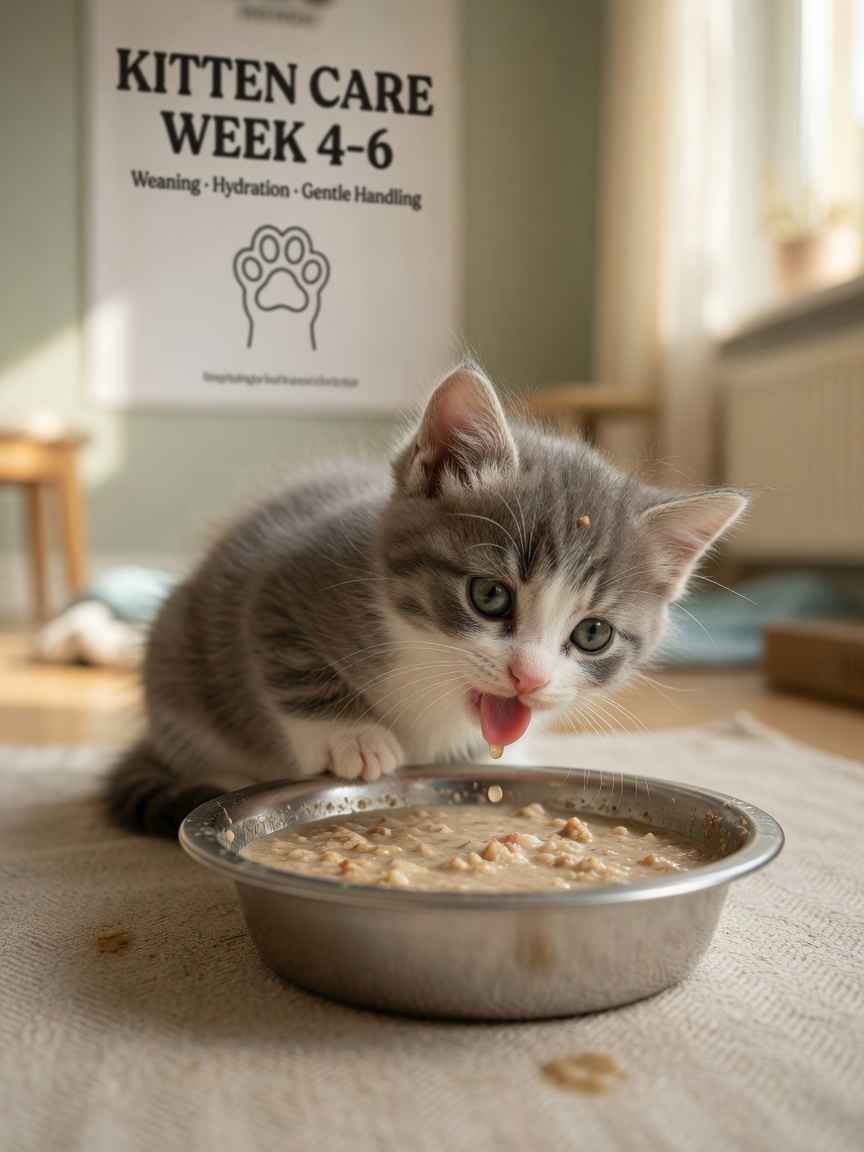
Kittens begin the weaning process at around three to four weeks of age. Up to this point, they rely entirely on their mother's milk for nutrition, immune support, and hydration. Weaning involves gradually introducing solid food while the kitten continues to nurse, with the process typically complete by six to eight weeks of age.
During weaning, kittens can be introduced to a gruel — wet kitten food mixed with a small amount of warm water to achieve a smooth, easily lapped consistency. Offer this in a shallow dish and allow the kittens to explore at their own pace. As they develop competence and confidence with solid food, reduce the amount of water added until they are eating standard wet food.
If you are involved in hand-rearing orphaned kittens younger than four weeks, commercial kitten milk replacer (KMR) should be used rather than cow's milk or other substitutes, which lack the correct nutritional profile and can cause serious digestive problems.
FEDIAF Nutritional Requirements for Kittens
The European Pet Food Industry Federation (FEDIAF) publishes comprehensive nutritional guidelines that set out the minimum and recommended nutrient levels for complete pet food at different life stages. For kittens in the growth phase, the guidelines specify notably higher requirements than for adult cats in several key areas:
- Protein: Kittens require a minimum of 25% crude protein on a dry matter basis, significantly higher than adult cats. Protein supports muscle development, organ growth, and immune function. As obligate carnivores, cats must obtain certain amino acids — including arginine and taurine — exclusively from animal-source protein.
- Fat: A minimum of 9% crude fat on a dry matter basis is recommended for growth. Fat provides essential fatty acids including arachidonic acid, which cats cannot synthesise themselves and must obtain from the diet.
- Calcium and Phosphorus: These minerals are essential for bone and teeth development. FEDIAF guidelines specify that these must be present in appropriate amounts and in the correct ratio — excessive calcium supplementation in growing cats can be as harmful as deficiency.
- Energy density: Growing kittens have high energy requirements per kilogram of body weight. Kitten-specific foods are formulated to be more energy-dense than adult maintenance diets.
The WSAVA recommends feeding a diet that has either undergone AAFCO or FEDIAF feeding trials or has been formulated by a board-certified veterinary nutritionist, as these standards provide the most robust assurance of nutritional completeness.
The Importance of Taurine
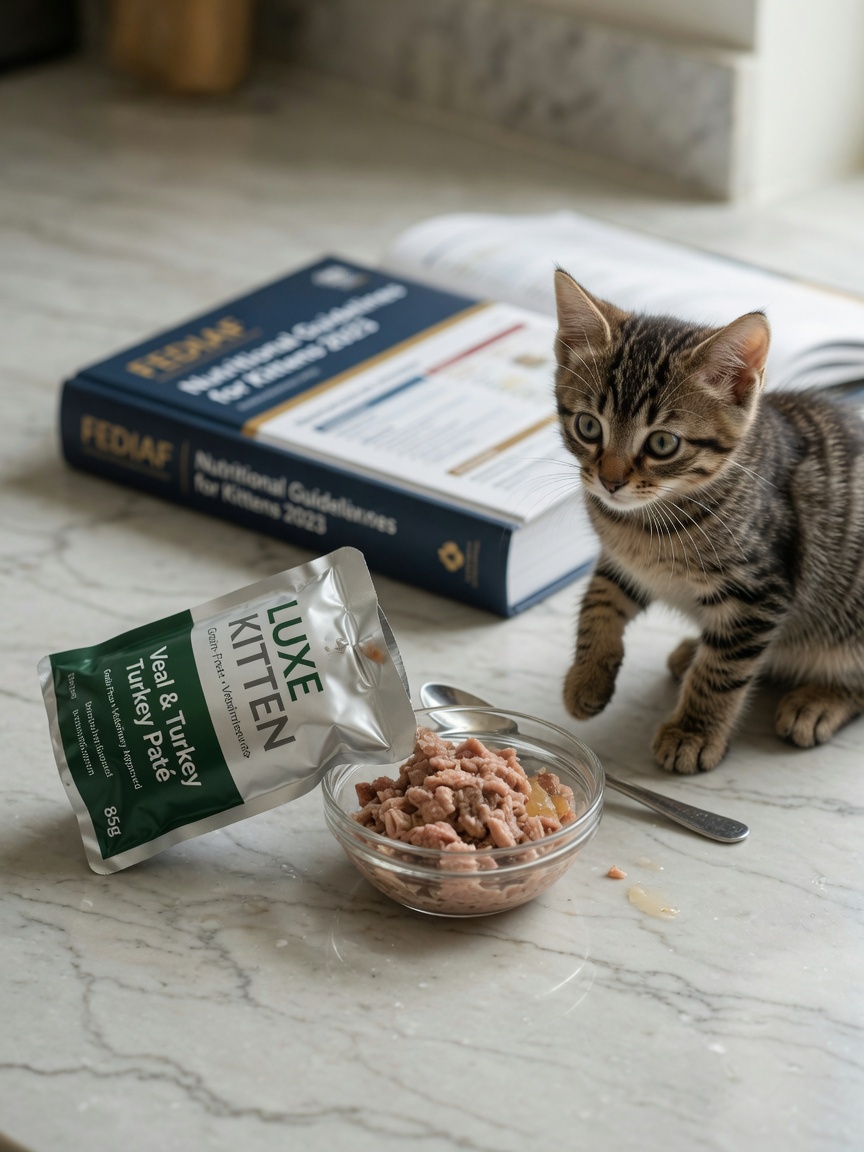
Taurine deserves special mention because its importance to feline health cannot be overstated. Unlike dogs and humans, cats cannot synthesise adequate taurine from precursor amino acids and must consume it preformed in their diet. Taurine is found almost exclusively in animal tissue — particularly heart muscle and other organ meats.
Taurine deficiency in cats causes dilated cardiomyopathy (a potentially fatal heart condition), central retinal degeneration leading to blindness, and reproductive failure in breeding queens. All reputable commercial kitten foods formulated in accordance with FEDIAF guidelines must contain adequate taurine. This is one of several reasons why homemade diets, unless carefully formulated by a veterinary nutritionist, carry significant nutritional risk for cats.
Wet vs Dry Food: Which Is Better for Kittens?
Both wet and dry kitten foods can provide complete and balanced nutrition if they meet FEDIAF standards. However, there are important practical and physiological considerations:
- Hydration: Cats evolved in arid environments and have a low thirst drive. They obtain much of their water intake through food. Wet food, which typically contains 70–80% moisture, supports urinary tract health and helps prevent the formation of bladder crystals and stones — a common problem in adult cats fed exclusively dry food. For this reason, many vets recommend incorporating wet food into a kitten's diet from the outset.
- Palatability: Wet food is generally more palatable to young kittens and is easier to chew before adult teeth fully develop.
- Dental health: Dry food has a mild mechanical cleaning effect on teeth. Some dental diets are specifically designed to reduce plaque and tartar accumulation. However, the benefits of dry food for dental health are often overstated — regular toothbrushing remains the gold standard for feline dental hygiene.
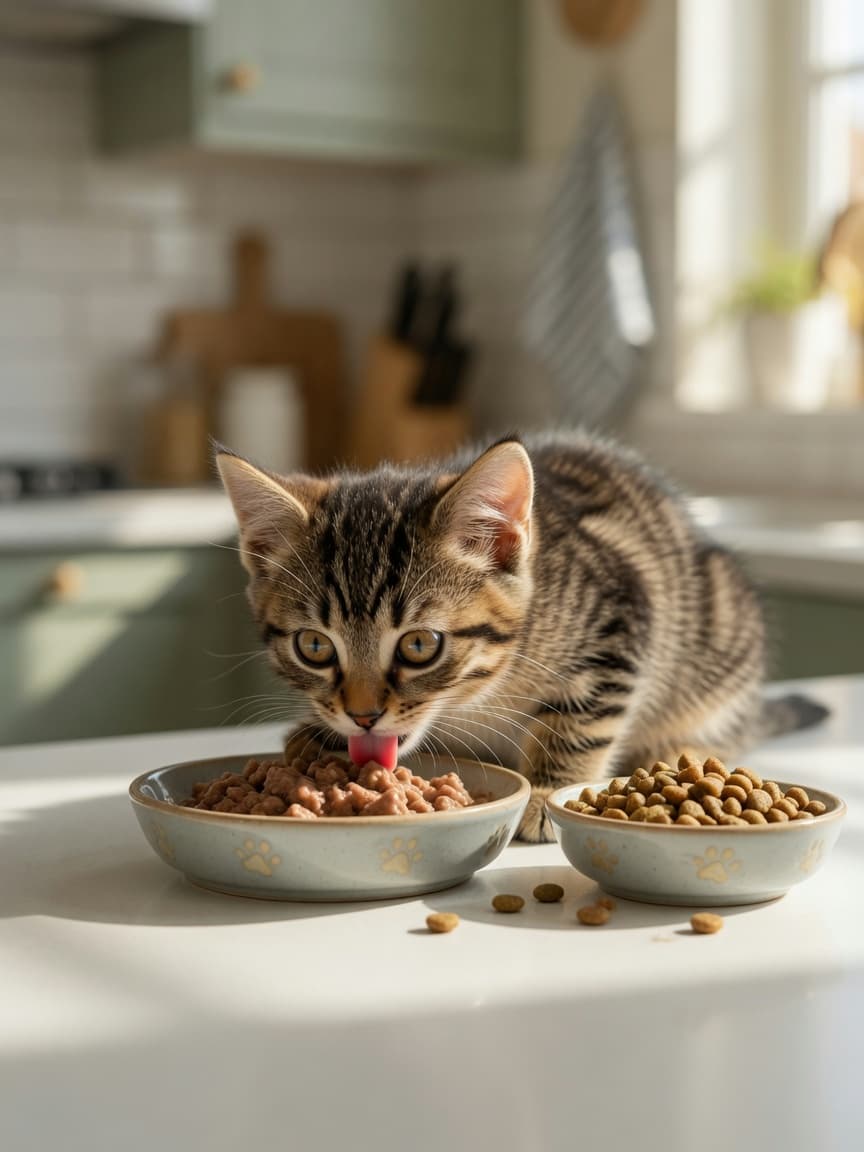
- Convenience and cost: Dry food is easier to store, measure, and leave out for extended periods without spoiling. A mixed feeding approach — wet food for hydration, dry food for convenience — is a popular and practical option for many owners.
Meal Frequency by Age
Kittens have small stomachs and fast metabolisms, requiring frequent meals to maintain stable blood glucose levels and support growth:
- Weaning to three months: Four meals per day. Small, frequent portions allow the developing digestive system to cope without becoming overwhelmed, and prevent the energy crashes that can occur between long gaps.
- Three to six months: Three meals per day. As the kitten grows and their stomach capacity increases, meal frequency can be reduced without compromising intake.
- Six months to twelve months: Two to three meals per day. Most kittens can manage twice-daily feeding by six months, though three times daily remains appropriate if preferred. Consistency in timing supports digestion and reduces the likelihood of food guarding or anxiety around mealtimes.
Do not leave dry food out for free feeding unless your kitten shows good self-regulation, as unrestricted access can contribute to obesity — a growing problem in domestic cats that carries serious health consequences including diabetes, joint disease, and reduced life expectancy.
Transitioning Between Foods
If you need to change your kitten's food — whether switching brands, life stages, or food formats — always do so gradually over seven to ten days to minimise the risk of gastrointestinal upset:
- Days 1–2: 75% current food, 25% new food
- Days 3–4: 50% current food, 50% new food
- Days 5–7: 25% current food, 75% new food
- Days 8–10: 100% new food
If your kitten shows signs of loose stools, vomiting, or reduced appetite during the transition, slow the process and consult your vet if symptoms persist beyond a few days.
Choosing the Right Kitten Food
When selecting a kitten food, look for products that explicitly state "complete" on the label (indicating the food meets all nutritional requirements as a standalone diet), carry a life stage statement appropriate for kittens or growth, and list named animal proteins as the primary ingredients. Zooplus stocks an extensive range of kitten foods from leading brands across both wet and dry formats, with full nutritional information available for each product, making it straightforward to compare options and find a food that meets your kitten's needs and your budget.
Transitioning to Adult Food at Twelve Months
Most cats can begin transitioning from kitten to adult food at around twelve months of age, when growth has slowed significantly and the increased caloric density of kitten food is no longer required. However, larger breeds — including Maine Coons, Norwegian Forest Cats, and Ragdolls — may continue growing until eighteen months of age and should remain on a kitten or all-life-stages formula until their development is complete.
Your vet can advise on the right timing based on your cat's breed, body condition, and overall development. The WSAVA and FEDIAF both recommend that life stage transitions be guided by body condition score rather than age alone, as individual variation in growth rate is significant.
Fresh Water: An Essential Companion to Every Meal
Fresh, clean water must always be available alongside your kitten's meals. Cats are notoriously reluctant to drink from bowls placed near their food — a preference thought to be rooted in instinctive behaviour around water source contamination near prey. Place water bowls in a separate location from the feeding area, and consider a pet water fountain, which encourages drinking through the appeal of moving water. Adequate hydration from kittenhood helps protect urinary tract health throughout life.
Getting your kitten's nutrition right from the very beginning is one of the most impactful things you can do for their long-term health. A diet grounded in FEDIAF guidelines, appropriate to their life stage, and served on a consistent schedule gives your kitten the best possible foundation for a long, healthy, and active life.