
Discovering fleas on your kitten can be distressing, but you're not alone—flea infestations are one of the most common parasitic problems affecting young cats across Europe. The good news is that with the right approach, you can eliminate fleas safely and effectively, even on tiny kittens. This guide will walk you through evidence-based methods to protect your kitten whilst addressing the infestation quickly.
Understanding Flea Infestations in Kittens
Kittens are particularly vulnerable to fleas because their immune systems are still developing, and heavy flea burdens can cause serious complications such as anaemia and flea allergy dermatitis. Adult fleas represent only 5% of the flea population in your home—the remaining 95% exists as eggs, larvae, and pupae in your environment, which is why treating both your kitten and your home is essential.
Age-Appropriate Flea Treatments
The first step is determining your kitten's age, as this dictates which treatments are safe:
- Under 8 weeks: Consult your veterinarian before using any flea treatment. Manual removal and environmental control are your primary options at this stage.
- 8-12 weeks: Limited treatment options are available. Your vet may recommend specialist products specifically formulated for young kittens.
- Over 12 weeks: Most topical treatments and oral medications become available, though always verify age requirements with your vet.
Never use dog flea products on kittens, as they often contain different active ingredients at inappropriate concentrations for feline safety.
Veterinary Treatment Options
Your veterinarian can prescribe several effective treatments:
- Topical treatments: Spot-on solutions applied to the back of the neck, where kittens cannot lick them. These typically kill fleas within 12-24 hours.
- Oral medications: Prescription tablets that work systemically through the bloodstream, offering convenient monthly protection.
- Injectable treatments: Longer-acting options administered by your vet that provide extended protection.
These veterinary products are significantly more effective and safer than over-the-counter alternatives, particularly for young kittens.
Home Treatment and Environmental Control
Treating your kitten alone won't solve the problem if fleas remain in your home environment:
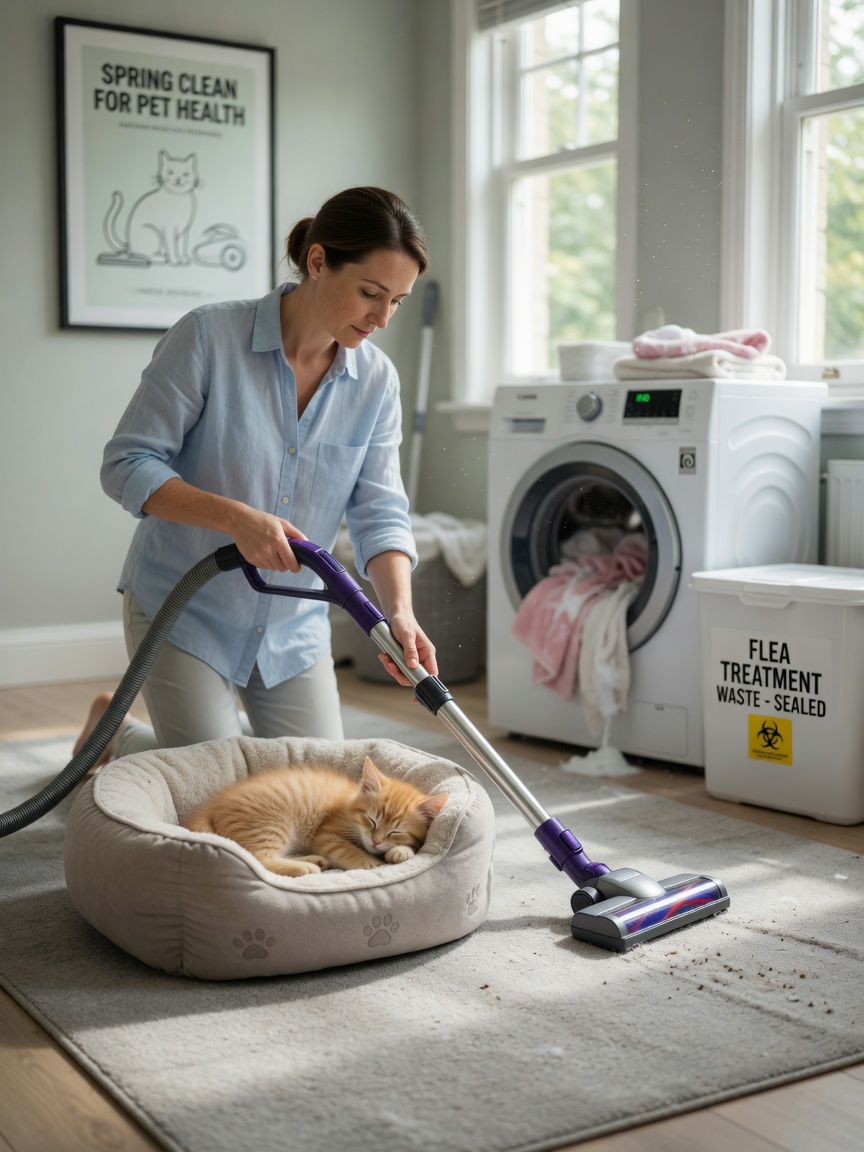
- Wash all bedding, blankets, and soft furnishings at 60°C or higher to kill flea eggs and larvae.
- Vacuum all carpets, rugs, and upholstered furniture thoroughly, paying particular attention to areas where your kitten rests.
- Dispose of the vacuum bag immediately in a sealed bin.
- Consider environmental flea sprays or foggers designed for pet homes if the infestation is severe.
- Repeat vacuuming every 2-3 days for at least two weeks.
Manual Flea Removal
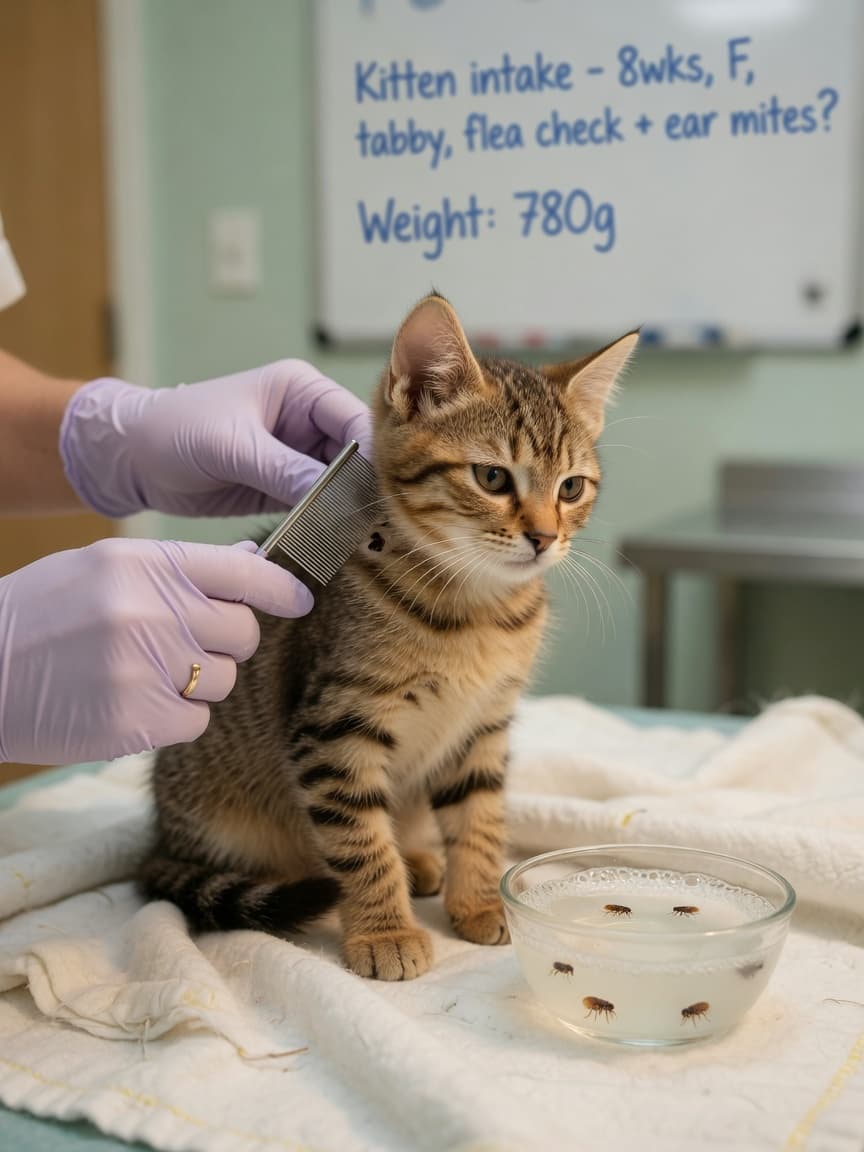
For very young kittens or whilst awaiting veterinary treatment, you can manually remove fleas using a fine-toothed flea comb. Comb through the kitten's fur regularly, dipping the comb in warm soapy water to drown any fleas collected. Whilst labour-intensive, this method provides immediate relief and is completely safe.
Prevention and Long-Term Management
Once fleas are eliminated, prevention is far easier than treatment. Discuss year-round flea prevention with your veterinarian—most modern products are safe from 12 weeks onwards and protect against reinfestation effectively.
Key Takeaways
- Always consult your veterinarian before treating kittens under 12 weeks old.
- Prescription treatments are safer and more effective than shop-bought alternatives.
- Treat your home environment simultaneously to break the flea life cycle.
- Implement year-round prevention once fleas are eliminated.
- Monitor your kitten for signs of flea allergy dermatitis or anaemia and seek veterinary advice if concerned.
With prompt veterinary guidance and thorough environmental treatment, your kitten will be flea-free and comfortable within weeks.